Real reason streetcars are making a comeback: with friends like @voxdotcom, light rail should prefer its enemies @TaxpayersUnion
18 Feb 2019 Leave a comment
in applied price theory, applied welfare economics, politics - New Zealand, politics - USA, Public Choice, public economics, rentseeking, transport economics Tags: expressive voting
Is 1 chance in 12 of developing a new drug succcesfully to the market high or low as a entrepreneurial venture?
17 Feb 2019 Leave a comment
in applied price theory, economics of regulation, entrepreneurship, financial economics, industrial organisation, politics - USA, survivor principle Tags: drug lags

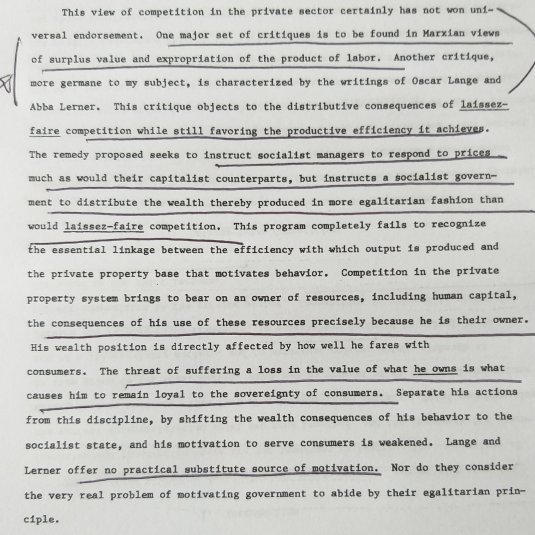
Demsetz on market socialism
17 Feb 2019 Leave a comment
in applied price theory, comparative institutional analysis, entrepreneurship, financial economics, industrial organisation, Marxist economics, property rights, survivor principle, theory of the firm Tags: economics of socialism
Thomas Sowell on the second edition of Intellectuals and Society
17 Feb 2019 Leave a comment
in applied price theory, discrimination, economics of information, economics of media and culture, economics of regulation, history of economic thought, labour economics, law and economics, politics - USA, property rights, Public Choice, Thomas Sowell
Study: how the Little Ice Age impacted parts of Australia
16 Feb 2019 Leave a comment

 Queensland, Australia
The cause(s) of the Little Ice Age is (are) uncertain, but Wikipedia puts forward some ideas with varying degrees of plausibility, including ‘inherent variability in global climate’ (indeed), and ‘decreases in the human population’ (what?). Now some interesting evidence of it has been found in Australia.
A study by University of Adelaide researchers and Queensland Government scientists has revealed what south-east Queensland’s rainfall was like over the last 7000 years – including several severe droughts worse and longer lasting than the 12-year Millennium Drought, reports Phys.org.
The study – published in Scientific Reports—used preserved paper-bark tea tree leaves from North Stradbroke Island’s Swallow Lagoon that have been collecting in the sediment for the past 7700 years.
View original post 210 more words
Jonathan Haidt and the Illiberal Left
16 Feb 2019 Leave a comment

by Grania
For those of you who have been following the rise and rise of the Illiberal Left and especially the melt-downs on various campuses; this is a heads-up for an interesting discussion on The Rubin Report with Jonathan Haidt.
Haidt is a professor at the Stern School of Business at New York University, but is probably more familiar to readers for his discussions on subjects like morality and religion.
The conversation with host Dave Rubin covers a range of political subjects. In particular, Haidt has been watching the campus trends carefully and has some (perhaps unsurprising) insights into the main forces behind the current style of protest as well as a prediction for the future of this activism.
It’s well worth a watch or listen if you’ve been baffled by the tendency of some Leftists towards censorship and other misguided and illiberal practices.
Part 1
Part 2
Jon Haidt on religion, self-transcendence, and altruism: are they evolutionary?
16 Feb 2019 Leave a comment
Jonathan Haidt is a professor of social psychology at the University of Virginia and a bit of a woo-ish self-help guru. He’s also known for attacking New Atheism. In an essay on “Moral psychology and the misunderstanding of religion” at Edge, for example (drawn from his first book, The Happiness Hypothesis: Finding Modern Truth in Ancient Wisdom), Haidt accused the Gnus of superficiality in their treatment of religion and of “polluting the scientific study of religion with moralistic dogma and damaging the prestige of science in the process”. Sam Harris provided a characteristically acerbic response on Richard Dawkins’s site, including the following:
Haidt concludes his essay with this happy blandishment: “every longstanding ideology and way of life contains some wisdom, some insights into ways of suppressing selfishness, enhancing cooperation, and ultimately enhancing human flourishing.” Surely we can all agree about this. Our bets have been properly hedged…
View original post 1,290 more words
E. O. Wilson mistakenly touts group selection (again) as a key factor in human evolution
16 Feb 2019 Leave a comment
As most of you know, Edward O. Wilson is one of the world’s most famous and accomplished biologists. He was the founder of evolutionary psychology (known as “sociobiology” back then), author of two Pulitzer-Prize-winning books, one of the world’s great experts on ants, an ardent advocate for biological conservation, and a great natural historian. His legacy in the field is secure.
So it’s sad to see him, at the end of his career, repeatedly flogging a discredited theory (“group selection”: evolution via the differential propagation and extinction of groups rather than genes or individuals) as the most important process of evolutionary change in humans and other social species. Let me back up: group selection is not “discredited,” exactly; rather, it’s not thought to be an important force in evolution. There’s very little evidence that any trait (in fact, I can’t think of one, including cooperation) has evolved via the differential…
View original post 2,081 more words
4 Ways Economists Think We’re All Wrong – Econ Chronicles – Learn Liberty
16 Feb 2019 Leave a comment
in applied price theory, applied welfare economics, comparative institutional analysis, constitutional political economy, economic history, economics of regulation, income redistribution, international economics, labour economics, labour supply, law and economics, politics - USA, Public Choice, public economics, unemployment Tags: anti-foreign bias, anti-market bias, make-work bias, rational irrationality
Religious “vilification” not unlawful in NSW
16 Feb 2019 Leave a comment
Australia seems to be slowly outlawing the basis of the age of Enlightenment which was blasphemy

In an important decision on religion and free speech in NSW, the NSW Civil and Administrative Tribunal has ruled today in Ekermawi v Nine Network Australia Pty Limited [2019] NSWCATAD 29 (15 Feb 2019) that it is not a breach of the law in NSW to make offensive comments about a religion. However, the case involved some difficult issues of law, and while the outcome seems correct, it may foreshadow a restrictive approach to free speech in other cases in the future.
View original post 2,533 more words
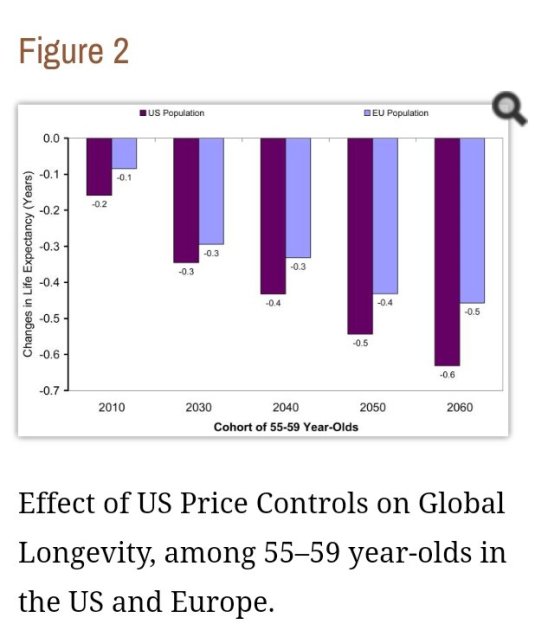
The dead will be many from @SenSanders @AOC’s virtue signalling on drug price controls (effects of 22% manufacturing price cut)
16 Feb 2019 Leave a comment
in applied price theory, applied welfare economics, health economics, politics - USA Tags: drug lags, price controls, The fatal conceit
CAMELOT’S END: KENNEDY VERSUS CARTER AND THE FIGHT THAT BROKE THE DEMOCRATIC PARTY by Jon Ward
16 Feb 2019 Leave a comment
Another top-notch review from an excellent book review blog

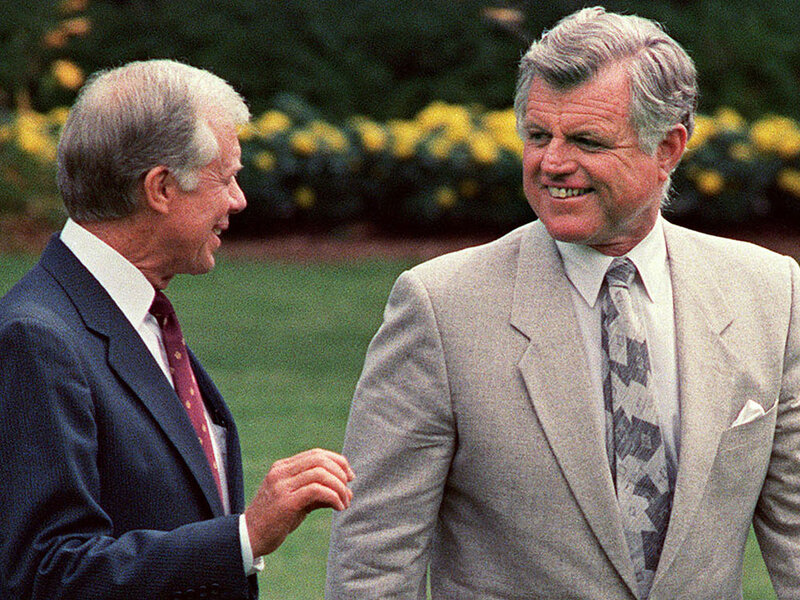
(Former President Jimmy Carter and Senator Ted Kennedy)
Today we find ourselves at the beginning of the 2020 presidential campaign even though the Iowa caucuses are eleven months away. It seems that each day another Democrat announces their candidacy, and President Trump does what President Trump does. Talking heads on cable news programs ask each candidate why they are running and what sets them apart from the competition. For me, it brings back memories of watching a 60 Minutes program in 1980 where Roger Mudd interviewed Ted Kennedy and asked him why he was challenging President Carter for their parties’ nomination. Kennedy’s response went along way in destroying his candidacy as his rambling response lacked coherence, and in no way answered the question, leaving the American electorate in the dark as to why he was running.
At a time when the Democratic Party seems split between its progressive and moderate…
View original post 1,055 more words
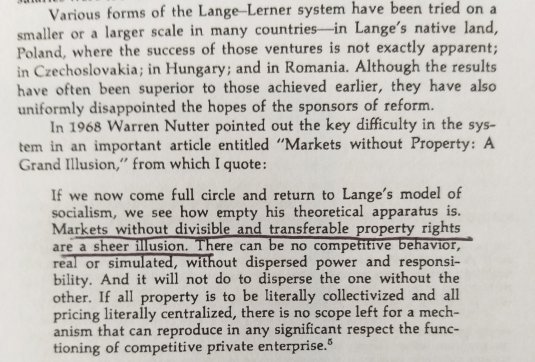
Milton Friedman on the flaws of market socialism
16 Feb 2019 Leave a comment
in applied price theory, comparative institutional analysis, entrepreneurship, financial economics, industrial organisation, law and economics, Marxist economics, Milton Friedman, property rights, survivor principle Tags: economics of socialism


Recent Comments