Saving jobs thwarts the emergence of better paid new jobs
09 Apr 2015 Leave a comment
in applied price theory, applied welfare economics, economic history, industrial organisation, survivor principle Tags: creative destruction, Henry Hazlett, Joseph Schumpeter
People forget California is pretty much a desert, yet it is a major producer of fruit and vegetables
08 Apr 2015 Leave a comment
in applied price theory, Public Choice, rentseeking Tags: California, drought, water pricing
Why California's drought is a disaster for your favorite fruits and vegetables bit.ly/1c11TGf #WorldWaterDay http://t.co/1GoecvI1WH—
Mother Jones (@MotherJones) March 22, 2015
Anthony Downs’ law of peak hour traffic congestion
08 Apr 2015 Leave a comment
in applied price theory, transport economics Tags: Anthony Downs, congestion pricing
In 1962, Anthony Downs put forward the fundamental law of peak hour congestion on urban commuter expressways: peak-hour traffic congestion rises to meet maximum capacity.

Larger bus and train networks and more cycleways are never the solution. Just as more highways leads to more congestion because more people would drive to work, with fewer people driving to work if they fit enough to ride on the new cycleways, other people will start driving to work, instead of taking public transport, go shopping or otherwise do their transit business to take up the freed-up place in the traffic jam because a few more people are riding their bikes. Traffic expands to meet the available road space.
No highway or public transit systems in the world can handle all those people who want to move simultaneously without overloading the systems’ capacity. So delays inevitably arise as all those people try to use the same roads and the same transit systems during the same periods.
Down’s law of peak hour congestion means that road will be as congested at before after any new investment in road capacity because fewer people are taking public transport or postponing their trips to outside the peak hour times. The same principle means more telecommuting or staggered work hours will not relieve peak-hour jam because other drivers will shift into these periods. More commercial driving in peak hours such as by trucks and delivery vans is an obvious response to more road capacity.
If that expressway’s capacity were doubled overnight, the next day’s traffic would flow rapidly because the same number of drivers would have twice as much road space.
But soon word would spread that this particular highway was no longer congested. Drivers who had once used that road before and after the peak hour to avoid congestion would shift back into the peak period. Other drivers who had been using alternative routes would shift onto this more convenient expressway. Even some commuters who had been using the subway or trains would start driving on this road during peak periods.
Within a short time, this triple convergence onto the expanded road during peak hours would make the road as congested as it was before its expansion.

Peak-hour congestion is inherent to how modern societies operate:
- most people will work during the same hours each day thereby increasing society’s productivity, but this requires most workers and students to travel at the same times;
- metropolitan growth is accompanied by rising prosperity, so more households buy more cars, and roads become more congested; and
- high volumes of traffic generated incidents and accidents.
Road capacity expansions and extensions to bus and train networks do not reduce traffic congestion. Congestion pricing is the main candidate tool to curb traffic congestion successfully. Pending that unlikely outcome, this is what Downs suggests we live with congestion as the sole viable option:
If you can’t commute by transit, as most people can’t, get an air-conditioned vehicle with a stereo radio, books on tape, a hands-free telephone, a CD player and perhaps even a microwave oven, and commute with someone you really like. Then regard the time you spend stuck in traffic as part of your regular leisure time, and learn to enjoy it—especially since congestion here is less intense in the summer.
Don’t get your hopes up about congestion pricing because they do not attack the main form of traffic congestion, which is on highways, not in the inner cities:
Limited road-pricing schemes that have been adopted in Singapore, Norway, and London only affect congestion in crowded downtowns, which is not the kind of congestion on major arteries that most Americans experience.

In a cautionary note from Downs, that is a shot at the green movement and public transport activists, Down said:
Traffic congestion is not primarily a problem, but rather the solution to our basic mobility problem, which is that too many people want to move at the same times each day.
Why? Because efficient operation of both the economy and school systems requires that people work, go to school, and even run errands during about the same hours so they can interact with each other.
That basic requirement cannot be altered without crippling our economy and society. The same problem exists in every major metropolitan area in the world.
The reality is despite all the protestations of the Anti-science, anti-progress progressive left, most people drive in rush hours because they live in low-density areas that buses, trains and cycleways cannot efficiently serve. Traffic congestion is the result of prosperity:
Peak-hour traffic congestion in almost all large and growing metropolitan regions around the world is here to stay. In fact, it is almost certain to get worse during at least the next few decades, mainly because of rising populations and wealth. This will be true no matter what public and private policies are adopted to combat congestion.
But this outcome should not be regarded as a mark of social failure or misguided policies. In fact, traffic congestion often results from economic prosperity and other types of success.
More importantly, privately owned cars are more comfortable, faster, more private, more convenient in trip timing, and more flexible for multiple tasks on one trip than any form of public transit. What cannot be avoided is:
As household incomes rise around the world, more and more people shift from slower, less expensive modes of movement to privately owned cars and trucks.
Downs argues that it is time to settle down and accept what cities are:
….peak-hour traffic congestion is inescapable in large modern metropolitan areas the world over. Business firms want most people on the job during the same hours so that workers can interact efficiently. Many firms also want to locate in low-density establishments scattered across the landscape.
Households want a range of choices of where to live and work, and most want to live in low-density settlements that are separate from poorer households, use private vehicles for most travel and be able to carry out multiple errands on a single trip.
I was surprised to learn that Anthony Downs was still alive. He wrote the Economic Theory of Democracy in 1957 and Inside Bureaucracy in 1967, but I just discovered that he was in his mid-twenties and 30s when he did that. Downs has gone on to be an excellent transport economist. A transport economist not enamoured with public transport, but instead with transport systems that suit the needs of real people with real lives.
@NZNationalParty housing policy defies the laws of supply and demand for land
05 Apr 2015 1 Comment
in applied price theory, economics of regulation, politics - New Zealand, urban economics Tags: housing affordability, RMA, supply of land, zoning
If homebuyers access additional lines of funding because they can tap into their KiwiSaver retirement savings, they will use this to bid up the price of housing and land.
If the supply of land is fixed or otherwise constrained from expanding much, such as by the Resource Management Act and the metropolitan urban limit in Auckland, the only thing that will happen is that the price will go up with more money chasing the same amount of land and housing.

The price of land and housing must go up in the absence of some reforms that increase the supply of land. Rather than increase access to housing among those with don’t own a house, allowing homebuyers to access their KiwiSaver retirement savings entrenches the prospects of Generation Rent.

It is not enough to say that the status quo is imperfect. It is important to offer alternatives.
04 Apr 2015 Leave a comment

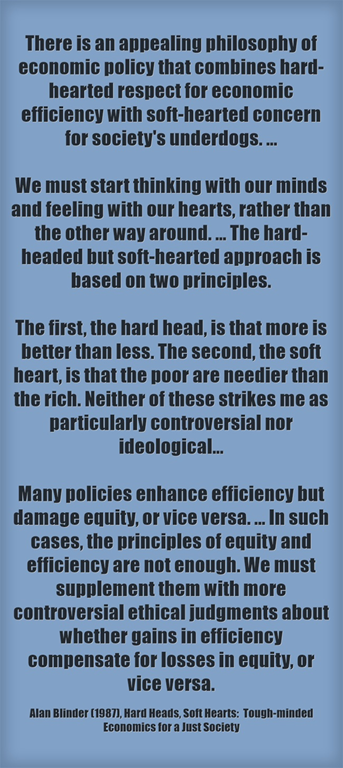
Partisan Politics and the Inequality Gap — Atlantic Mobile
01 Apr 2015 Leave a comment
in applied price theory, applied welfare economics, income redistribution, Public Choice, rentseeking Tags: top 1%
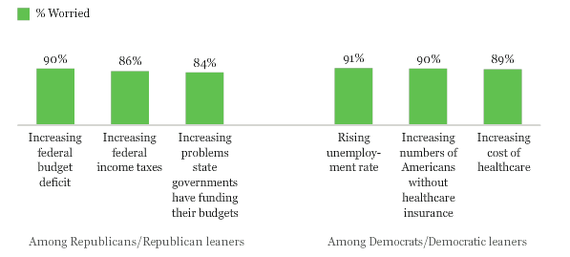
How Obamacare affected employment
30 Mar 2015 Leave a comment
in applied price theory, health economics, job search and matching, labour economics, labour supply, macroeconomics Tags: Obamacare

Five years later, how has the #ACA affected U.S. employment? brook.gs/1OtYpvy http://t.co/yrN5aWP4Ns—
Brookings (@BrookingsInst) March 28, 2015
This admission has much wider application than Anarcho-communism
27 Mar 2015 Leave a comment
in applied price theory, Marxist economics Tags: expressive politics, expressive voting, Leftover Left, rational ignorance, rational irrationality
No one says this about economists
27 Mar 2015 Leave a comment
in applied price theory, applied welfare economics, Austrian economics, comparative institutional analysis, constitutional political economy, F.A. Hayek, liberalism, Public Choice, rentseeking Tags: evidence-based policy, offsetting behaviour, science and public policy, The fatal conceit, The pretence to knowledge, unintended consequences
Scientists dream about what could be.
Economists remind you of price tags and unintended consequences
California’s Almonds Suck as Much Water Annually as Los Angeles Uses in Three Years | Mother Jones
27 Mar 2015 Leave a comment
in applied price theory, applied welfare economics, politics - USA Tags: water pricing
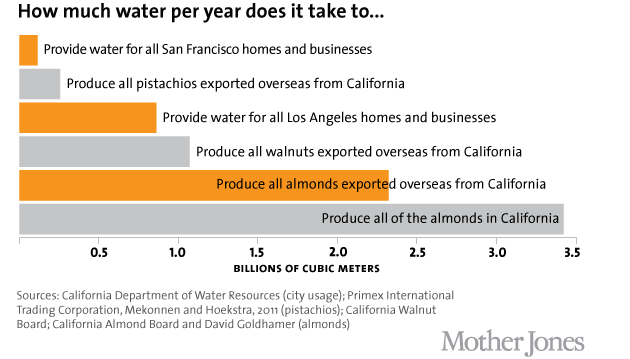

Paul Krugman on the importance of not taking cheap shots in public policy discussions
25 Mar 2015 1 Comment
in applied price theory, applied welfare economics, history of economic thought, industrial organisation, international economics, Public Choice Tags: conjecture and refutation, Paul Krugman, pop internationalism, public intellectual
There is no housing bubble in US cities with a flexible land supply
21 Mar 2015 Leave a comment
in applied price theory, economics of regulation, environmental economics, politics - New Zealand, politics - USA, urban economics Tags: land supply, land use regulation, RMA, supply and demand, zoning

In areas with a readily available supply of land on which to construct new homes—either because of geography or few land-use restrictions—builders have been sensitive to increases in local demand and existing-home prices. When existing houses rise in price relative to the cost of new homes, prospective buyers are willing and able to buy new units.
Supply conditions determine how house price and construction react to shifting demand. When housing demand rises—perhaps due to rising incomes, lower mortgage interest rates or easier credit standards—the outward shift in demand produces sharply higher house prices with a small increase in the supply of newly built units in areas with less-plentiful land. By comparison, when there is a more-plentiful land supply, the amount of housing is more supply sensitive and a rise in demand results in a less-pronounced rise in house prices and a greater increase of newly constructed homes.
As a result, house prices rise less in these supply-sensitive areas during booms and they fall less in downturns. Similarly, prices swing more and homebuilding varies less in regions with less-sensitive housing supply.


Recent Comments