
Economics as Incredulity : Working conditions during the Industrial Revolution
16 Feb 2015 Leave a comment
How public funding of elections makes politics even more polarized
14 Feb 2015 Leave a comment
in applied price theory, law and economics, Public Choice Tags: campaign finance reform


Prop 2’s Eventual Effect on California Egg Prices — Jayson Lusk
13 Feb 2015 Leave a comment
in applied price theory, applied welfare economics, economics of media and culture, economics of regulation Tags: Animal welfare



Deirdre McCloskey on big bills on the sidewalk
08 Feb 2015 Leave a comment
in applied price theory, entrepreneurship, market efficiency Tags: Deirdre McCloskey, efficient markets hypothesis, entrepreneurial alertness, forecasting

HT: Cafe Hayek
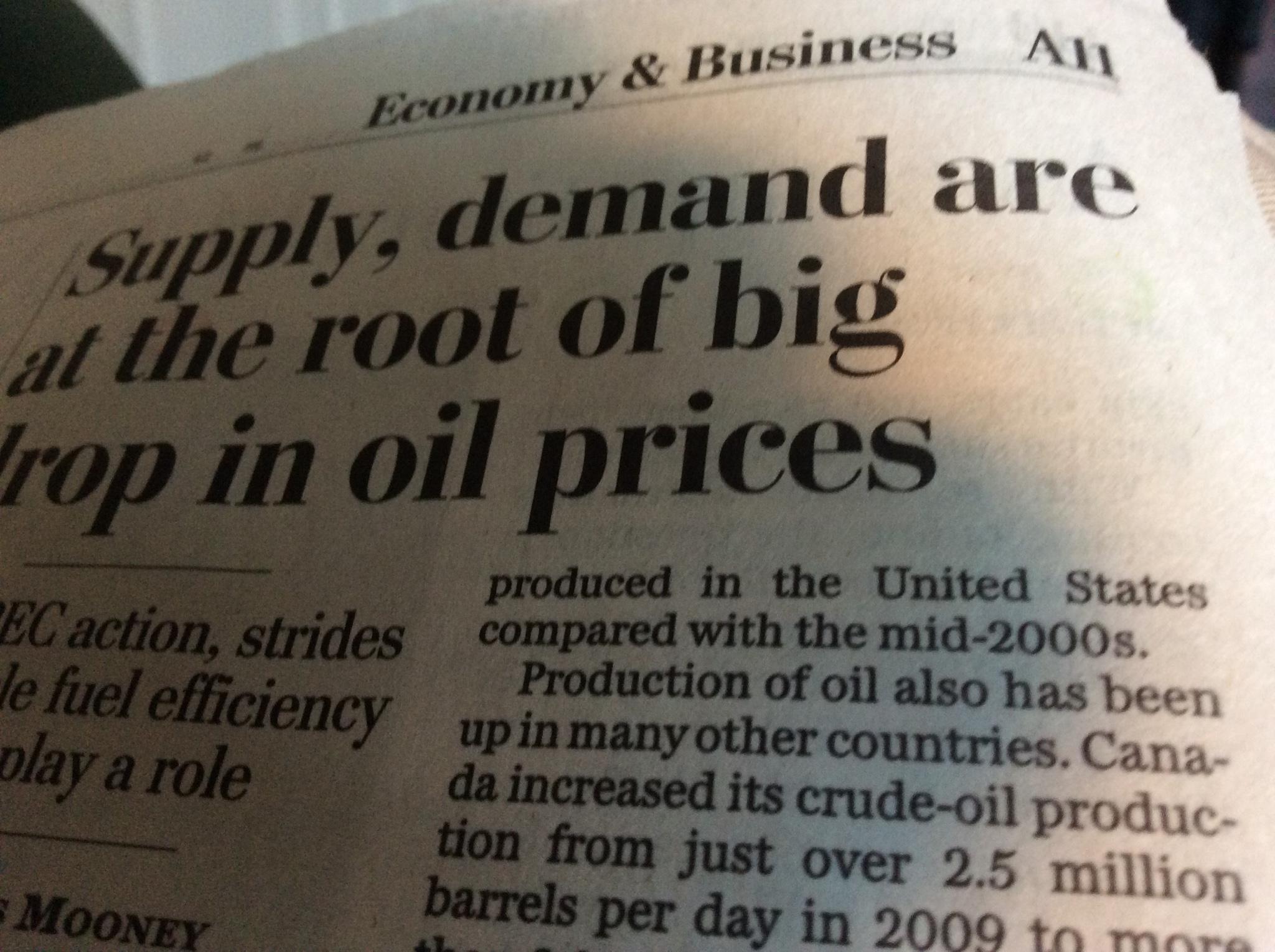
Newsflash: economics used to explain oil price ups and down
06 Feb 2015 Leave a comment
in applied price theory, energy economics, politics - USA Tags: Oil prices
HT – David_Boaz’s Tweet: https://twitter.com/David_Boaz/status/538770368270721024?s=09
FA Hayek on the market as an engine of liberation, tolerance and social peace
06 Feb 2015 Leave a comment

Uncertainty bedevils the best system | Edmund Phelps
02 Feb 2015 Leave a comment
in applied price theory, economic history, entrepreneurship, macroeconomics Tags: Edmund Phelps

HT: http://blogs.ft.com/capitalismblog/2009/04/15/uncertainty-bedevils-the-best-system/#axzz3EezojKXs
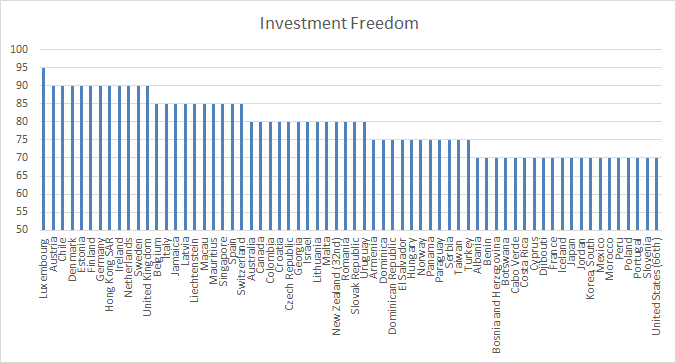
Why is NZ so hostile to foreign investment, 32nd in the Index of Economic Freedom 2015? USA is 66th!
02 Feb 2015 Leave a comment
in applied price theory, applied welfare economics, economics of media and culture, economics of regulation, international economics, politics - New Zealand Tags: bootleggers and baptists, foreign direct investment, foreign investment, free trade, Index of Economic Freedom
Source: 2015 Index of Economic Freedom
According to the Index of Economic Freedom 2015, in New Zealand
Foreign investment is welcomed, but the government may screen some large investments.
There was a major review of New Zealand foreign investment regulations about 10 years ago. The purpose of that review commissioned by the Labour government’s Minister of Finance, Dr Michael Cullen, was to deregulate the regulation of foreign investment in New Zealand.
At the time,under the Overseas Investment Act, the Minister of Finance could refuse permission to any investment. Australia’s current overseas investment regulations are the same. The federal treasurer may reject foreign investment proposals on the basis of an open-ended definition of national interest.
The last time that foreign investors had been refused permission to invest in New Zealand was in the early 1980s under then National Party Government Prime Minister Robert Muldoon. In a fit of pique, he refused permission to an Australian investor.
The revised foreign investment regulations limits the ability of government to reject foreign investors to narrow criteria such as the acquisition of sensitive land and large New Zealand companies. As part of this theme that foreign acquisitions of land was the main policy concern regarding foreign investment, the administration of the foreign investment regulations was moved out of a Overseas Investment Commission housed at the Reserve Bank of New Zealand to the very low key Land Information Office:
The Overseas Investment Office (OIO) assesses applications from overseas investors seeking to invest in sensitive New Zealand assets – being ‘sensitive’ land, high value businesses (worth more than $100 million) and fishing quota.
Naturally, subsequent to this genuine attempt by the Labour government of 10 years ago to deregulate foreign investment regulation, a number of investments have been refused since then often on the pretext that some part of the investment acquired sensitive coastal land door or rural land. The criteria for regulating foreign investment is as follows:
As regards the criteria relating to the relevant “overseas person”, the OIO needs to be satisfied that:
- the “overseas person” has demonstrated financial commitment to the investment; and
- the “overseas person” or (if that person is not an individual) the individuals with ownership and control of the overseas person (such as the shareholders and directors of the overseas purchaser):
- have the business experience and acumen relevant to that investment;
- are of good character; and
- are not prohibited from entering New Zealand by reason of sections 15 or 16 of the Immigration Act 2009 (e.g. persons who have been imprisoned for certain periods of time).
As regards the criteria relating to the particular investment, the OIO needs to be satisfied that the overseas investment will, or is likely to, benefit New Zealand (or any part of it or group of New Zealanders). When considering this, the OIO has a range of factors that it must consider (including, for example, whether the investment will create new job opportunities, introduce new technology or business skills, advance a significant Government policy or strategy, or bring other consequential benefits to New Zealand).
The New Zealand Initiative recently reviewed this criteria for regulating overseas investment into New Zealand and found that:
the report finds that the criteria for approval do not test the economic benefit to New Zealanders, where sensitive land is sold to an overseas person not intending to live in New Zealand indefinitely.
Indeed, the criteria are unambiguously hostile, even excluding the gain to a New Zealand vendor. This opens the way for the imposition of approval conditions that could impose net costs on New Zealanders given the regime’s potentially adverse effects on land values
The regulation of foreign investment in other countries is much more specific about what it is trying to achieve,as New Zealand Initiative also noted in its recent review:
New Zealand’s comprehensive screening regime accounts for our poor international ranking in the OECD’s FDI Regulatory Restrictiveness Index.
Most other countries focus their regimes more narrowly on national security considerations, often relating to particularly sensitive industries or sectors.
The main reason the public supports foreign investment regulation is because the public doesn’t like foreigners, and politicians pander to that xenophobia. If foreign investment is reduced, more of total investment spending has to be funded from domestic saving.

Access to foreign savings – trade in savings – allows investment to be made sooner, consumption to be smoothed over hiatuses such as recessions, and consumption to be bought forward in the light of better times such higher output and higher future incomes as because of foreign investment.The

The large national gains from foreign capital inflows is not part of that debate. A recent review of the gains from foreign capital inflows to New Zealanders found access to foreign saving led to national income per head, net of the servicing cost of foreign capital:
- average income gains of $2,600 per worker arising on a cumulative basis from capital inflow over the period 1996 – 2006; and
- growth in the value of New Zealand’s assets has greatly exceeded the rise in external liabilities to the extent that national wealth per head has risen by $14,000 in 2007 prices between 1996 and 2006.
You can’t let facts bugger a good story.
The foreign investment is in response to the high returns in the local market and the inflow of foreign capital will continue until local rates of return match those in other countries. Equalisation of risk-adjusted rate of returns is central to the operation of capital markets.
Stopping this process of equalisation of returns on capital through regulation only benefits the capitalists inside the country because the curbing of foreign investment stops rates of return falling to those overseas. Foreign investment regulation reduces the wages of New Zealand workers because they have less capital and fewer modern technologies to work with.
Fortunately, local capitalists can work in league with economic populists on the left and the right and the anti-foreign bias of the voting public to make it more difficult for foreign investors to come to New Zealand and drive down the profits of New Zealand capitalists. Who gains from that? As Paul Krugman said:
The conflict among nations that so many policy intellectuals imagine prevails is an illusion; but it is an illusion that can destroy the reality of mutual gains from trade.
Why do economic consulting firms exist?
02 Feb 2015 1 Comment
in applied price theory, economics of bureaucracy, economics of information, financial economics, law and economics, managerial economics, organisational economics, survivor principle Tags: advice giving industries, corporate law, Deirdre McCloskey, directors duties, economic consultants

Directors’ duties are the reason why the companies hire economic consultants. What consultants say isn’t important; the fact that simply the directors of a company sought advice is what matters. Same goes for the public sector: you must know what you’re doing, you took advice from outside experts.
Central to avoiding being sued if the company goes broke, or otherwise gets into a spot of bother, is the directors show that they acted responsibly.
Central to this is they can show they took advice from esteemed advisers: an accountant, a lawyer and an economist. If they did so, they must be responsible prudent directors because they took advice.

Deirdre McCloskey argued that the advising industry lives off 19th century case law on directors’ and trustees’ duties.
If you take advice – from an accountant, a lawyer or an economist – and the business or investment still fails, it can’t be your fault that you lost the widow’s and orphans’s inheritance.
You took advice. That is what that 19th-century court held with regard to what directors do and do not have to do given the fact that are not involved in the business on a day to day basis.
James Burk, a sociologist and former stockbroker… found that the advice giving industry sprang from legal decisions in the early 19th century.
The courts began to decide that the trustee of the pension fund or a child’s inheritance could be held liable for bad investing if they did not take advice. The effect would have been the same had the court decided that prudent man should consult a Ouija boards or the flight of birds…
America decided through its courts than an industry giving advice on the stock market should come into existence, whether or not it was worthless.
Therefore, it doesn’t matter what you say as a consultant economist to a company, the fact you’ve said something to them is more important to them than what you are saying. Seeking and receiving your advice excused them from being sued for breach of their directors duties for a couple of days.

Why Can’t Public Transit Be Free? – The Atlantic
01 Feb 2015 Leave a comment
in applied price theory, politics - Australia, politics - New Zealand, politics - USA, transport economics Tags: activists, do gooders, free public transport, The fatal conceit, The pretence to knowledge

The earliest urban experiment in free public transit took place in Rome in the early 1970s. The city, plagued by unbearable traffic congestion, tried making its public buses free.
At first, many passengers were confused: “There must be a trick,” a 62-year-old Roman carpenter told The New York Times as he boarded one bus. Then riders grew irritable. One “woman commuter” predicted that “swarms of kids and mixed-up people will ride around all day just because it doesn’t cost anything.”
Romans couldn’t be bothered to ditch their cars—the buses were only half-full during the mid-day rush hour, “when hundreds of thousands battle their way home for a plate of spaghetti.” Six months after the failed, costly experiment, a cash-strapped Rome reinstated its fare system.
Three similar experiments in the U.S.—in Denver, Colorado, and Trenton, New Jersey, in the late 70s, and in Austin, Texas, around 1990—also proved unfruitful and shaped the way American policy makers viewed the question of free public transit.
All three were attempts to coax commuters out of their cars and onto subway platforms and buses. While they succeeded in increasing ridership, the new riders they brought in were people who were already walking or biking to work. For that reason, they were seen as failures.
A 2002 report released by the National Center for Transportation Research indicated that the lack of fares attracted hordes of young people, who brought with them a culture of vandalism, graffiti, and bad behavior—which all necessitated costly maintenance. The lure of “free,” the report implied, attracted the “wrong” crowd—the “right” crowd, of course, being wealthier people with cars, who aren’t very sensitive to price changes.

HT: http://m.theatlantic.com/business/archive/2015/01/why-cant-public-transit-be-free/384929/


Recent Comments