One of the most persistent criticisms of law & economics is that it rests on unrealistic assumptions. Economic models often assume firms maximize profits, investors respond rationally to incentives, and market participants systematically adjust their behavior in predictable ways. Critics frequently point to these assumptions as evidence that economic analysis is detached from reality. Real…
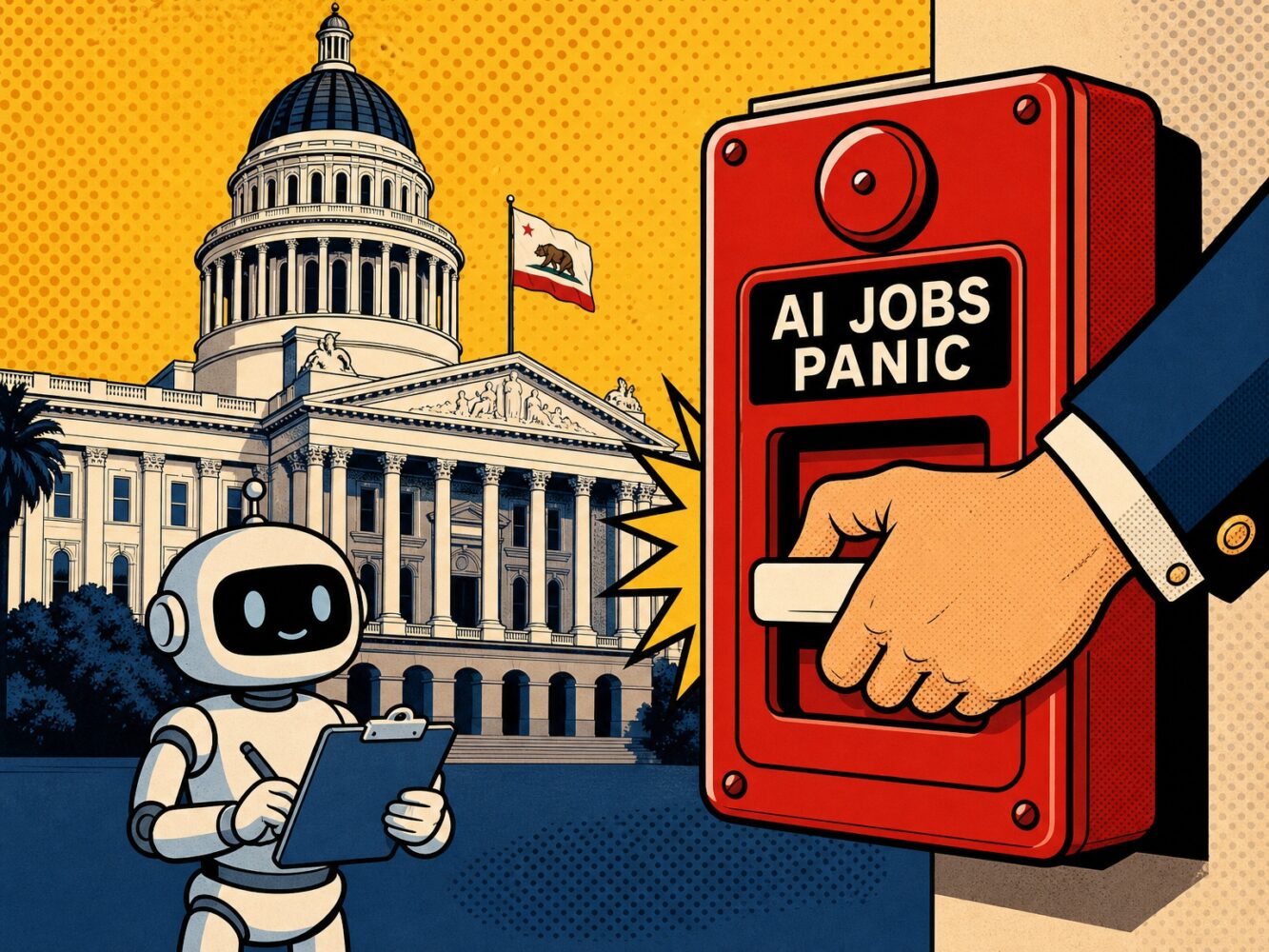
California has seen the future of work, and Sacramento’s first instinct is to convene 14 task forces about it. Gov. Gavin Newsom signed Executive Order N-6-26 today, setting California’s workforce agencies in motion on directives involving research reviews, revisions to the state’s Worker Adjustment and Retraining Notification (WARN) Act, studies of new safety-net programs, a…
I don’t often claim to be ahead of the curve, but I’m going to pat myself on the back in today’s column about Swedish economic policy. More than 16 years ago, I started writing about Sweden’s shift from statism to markets. More than 14 years ago, I praised Swedish policy makers for significantly reducing the […]
My best read of the evidence is that a union raises wages by around 7% for currently unionized employees. The wage gains from a redistribution of rents evenly across workers. Wage compression exists, but redistribution from worker to worker is only a small part. These are the current effects – unionizing more of the economy […]
The Commerce Commission’s “State of Competition in New Zealand” report landed on Tuesday. It is arguably the most important economic document of the political year. It names four sectors as the country’s least competitive: electricity, gas, water and waste services; financial and insurance services; information media and telecommunications; and mining. The night before the report […]
TweetHere’s a letter to a new correspondent. Mr. H__: Thanks for your email. You write, in response to this post of mine, that I am “too quick at second guessing the president and his administration on its determination of the trade behaviors of other countries.” You say that I “owe the administration the benefit of…
March 9 was the 250th anniversary of the publication of Adam Smith’s Wealth of Nations. I wanted to celebrate that occasion yesterday, but decided acknowledging Argentina’s rapid improvement in the Index of Economic Freedom was more timely. So let’s pay tribute today to Smith, starting with this video from the Fraser Institute (part of a […]
The Spinoff reports: Both Labour and National governments have considered the idea of breaking up the big two but ultimately decided against it. A 2023 analysis by MBIE suggested forcibly breaking up the supermarkets could cost as much as $3.8 billion over 20 years, mostly due to the loss of economies of scale. It could make wholesale and distribution…
Tweet… is from page 8 of Scott Lincicome’s and Huan Zhu’s superb September 2021 paper, “Questioning Industrial Policy: Why Government Manufacturing Plans Are Ineffective and Unnecessary”: A core part of industrial policy’s knowledge problem is timing: because markets and personal preferences are constantly evolving, the facts (products, investments, supply and demand, etc.) on which an…
When I’m in Britain or Ireland, one of my favourite sightseeing trips is to visit medieval castles. Even the ruined ones are fun to visit. Actually, maybe the ruined ones are more fun to visit, because you get to imagine what they would have looked like in their heyday. Britain and Ireland are full of castles,…
SummaryIn this chapter, Rothbard advocates the abolition of publicly-owned streets and roads:Abolition of the public sector means, of course, that all pieces of land, all land areas, including streets and roads, would be owned privately, by individuals, corporations, cooperatives, or any other voluntary group ings of individuals and capital.He begins by explaining that in a…
Why Evolution is True is a blog written by Jerry Coyne, centered on evolution and biology but also dealing with diverse topics like politics, culture, and cats.
In Hume’s spirit, I will attempt to serve as an ambassador from my world of economics, and help in “finding topics of conversation fit for the entertainment of rational creatures.”
“We do not believe any group of men adequate enough or wise enough to operate without scrutiny or without criticism. We know that the only way to avoid error is to detect it, that the only way to detect it is to be free to inquire. We know that in secrecy error undetected will flourish and subvert”. - J Robert Oppenheimer.






 Utopia, you are standing in it!
Recent Comments