Max Salmon writes: Last week the Commerce Commission announced its concern with a proposed merger between Foodstuffs North Island and Foodstuffs South Island. Their concern is a decrease in competition in the market. It sounds crazy when you first hear it, but it’s even weirder when you see what the Commerce Commission is actually worried […]
Is the Commerce Commission for consumers or suppliers
Is the Commerce Commission for consumers or suppliers
24 Apr 2024 Leave a comment
in applied price theory, applied welfare economics, economics of regulation, industrial organisation Tags: competition law, merger law enforcement
Why the Global Free Market Will Save the World
23 Apr 2024 Leave a comment
in applied price theory, applied welfare economics, comparative institutional analysis, constitutional political economy, development economics, economic growth, economic history, energy economics, environmental economics, global warming, growth disasters, growth miracles, health economics, history of economic thought, income redistribution, labour economics, law and economics, liberalism, macroeconomics, Marxist economics, politics - Australia, politics - New Zealand, politics - USA, poverty and inequality, property rights, Public Choice, public economics, rentseeking Tags: anticapitalist mentality, capitalism and freedom
Dumb Idea of the Month: Currency Devaluation
23 Apr 2024 Leave a comment
in applied price theory, applied welfare economics, industrial organisation, international economics
Five years ago, I shared this video explaining why trade deficits generally don’t matter. The most important thing to understand is that a trade deficit is the same thing as a financial account surplus (formerly known as a capital surplus), which is easy to understand when reviewing this graph. And that type of surplus occurs […]
Dumb Idea of the Month: Currency Devaluation
Globalization is Win-Win
11 Apr 2024 Leave a comment
in applied price theory, applied welfare economics, comparative institutional analysis, development economics, economic history, industrial organisation, international economics Tags: free trade
TweetIn this wonderful new video, John Stossel and Scott Lincicome bust six myths – peddled by the likes of Trump and Biden – about globalization. The post Globalization is Win-Win appeared first on Cafe Hayek.
Globalization is Win-Win
Deirdre McCloskey: Innovation Begins in Our Minds
09 Apr 2024 Leave a comment
in applied price theory, applied welfare economics, comparative institutional analysis, constitutional political economy, development economics, economic history, entrepreneurship, growth miracles, history of economic thought
Unfettered: Fishback 25 Years Later
04 Apr 2024 Leave a comment
in applied price theory, applied welfare economics, comparative institutional analysis, discrimination, economic history, health and safety, human capital, labour economics, labour supply, law and economics, occupational choice, poverty and inequality, unemployment, unions Tags: racial discrimination
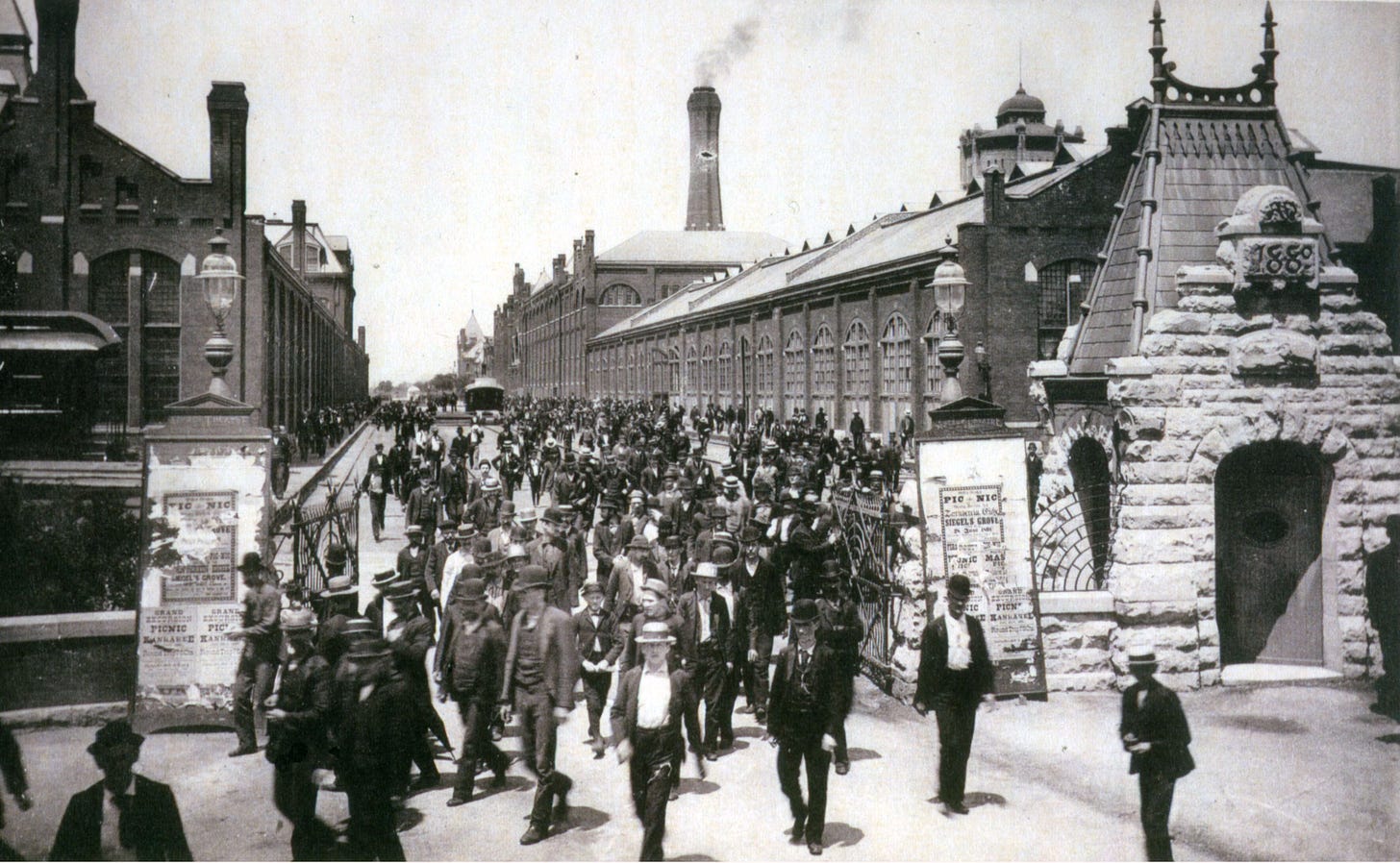
A quarter century ago, economist Price Fishback published “Operations of ‘Unfettered’ Labor Markets: Exit and Voice in American Labor Markets at the Turn of the Century” 1,762 more words
Unfettered: Fishback 25 Years Later
How the Carbon Cult Subverts Political Discourse
30 Mar 2024 Leave a comment
in applied price theory, applied welfare economics, comparative institutional analysis, economics of regulation, energy economics, environmental economics, global warming Tags: Canada, climate alarmism

Trudeau Turns the Carbon Tax Screws on Canadians April 1 Ross Mckitrick explains the smoke and mirrors in Trudeau’s justifications for his racheting carbon tax in a National Post article Wanted: A leader who is honest about climate policy. Excerpts in italics with my bolds and added images. Pierre Poilievre is leading anti-carbon tax rallies […]
How the Carbon Cult Subverts Political Discourse
Universal Basic Income: The Freiman-Caplan Debate
27 Mar 2024 Leave a comment
in applied price theory, applied welfare economics, fiscal policy, human capital, income redistribution, labour economics, labour supply, macroeconomics, politics - USA, poverty and inequality, Public Choice Tags: child poverty, family poverty, negative income tax
As expected, I really enjoyed the Institute for Liberal Studies’ UBI debate between myself and Chris Freiman. Chris was definitely the least enthusiastic UBI supporter I’ve debated. All the way to the point of, “Given all the truly promising ideas we have, and the downside risks of the UBI, perhaps I shouldn’t even publicly defend…
Universal Basic Income: The Freiman-Caplan Debate
Eat the Rich: Warren Plan Would Impose Wealth Tax, Captivity Tax, and $100 Billion for Increasing Tax Audits
23 Mar 2024 Leave a comment
in applied price theory, applied welfare economics, economic growth, fiscal policy, income redistribution, labour economics, labour supply, macroeconomics, poverty and inequality, Public Choice, public economics Tags: taxation and entrepreneurship, taxation and investment, taxation and labour supply

The wealth tax is back. We have previously discussed the constitutional and policy concerns surrounding the push by Democrats like Sen. Elizabeth Warren (D., Mass.) to introduce a wealth tax that would start with billionaires. It would not likely end there. The law would also apply the same type of California approach to wealthy families […]
Eat the Rich: Warren Plan Would Impose Wealth Tax, Captivity Tax, and $100 Billion for Increasing Tax Audits
Do Me a Personal Favor: Please Pre-Order *Build, Baby, Build* Now
22 Mar 2024 Leave a comment
in applied price theory, applied welfare economics, comparative institutional analysis, constitutional political economy, economics of bureaucracy, economics of regulation, income redistribution, law and economics, liberalism, Marxist economics, politics - USA, property rights, Public Choice, public economics, rentseeking Tags: land supply, zoning

I started writing Build, Baby, Build: The Science and Ethics of Housing Regulation, in the early weeks of Covid. Now, with the kind cooperation of the Cato Institute, my second non-fiction graphic novel releases on May 1, 2024. That’s less than six weeks away.The official coverPlease forgive my laughable arrogance, but I assure you that…
Do Me a Personal Favor: Please Pre-Order *Build, Baby, Build* Now
The cost of net zero
21 Mar 2024 Leave a comment
in applied price theory, applied welfare economics, energy economics, environmental economics, global warming, politics - New Zealand Tags: climate alarmism
Emeritus Professor of Engineering Mike Kelly has published a paper estimating the costs to New Zealand to achieve net zero emissions. He says three major projects would need to be completed: And this has to be done within the next 26 years. The electricity sector would need to grow from 155 PJ to 425 PJ. […]
The cost of net zero
Bonus Quotation of the Day…
15 Mar 2024 Leave a comment
in applied price theory, applied welfare economics, Austrian economics, comparative institutional analysis, liberalism, Marxist economics
Tweet… is from page 434 of the final (2016) volume – Bourgeois Equality – of Deirdre McCloskey’s soaring trilogy on the essence of bourgeois values, on their transmission, and on their essential role in modern life: Zero-sum is the default in thinking about my gain and thine. It is the chief error in economic thinking…
Bonus Quotation of the Day…
An Open Letter to Nobel-laureate Economist Angus Deaton
13 Mar 2024 Leave a comment
in applied price theory, applied welfare economics, Austrian economics, comparative institutional analysis, economic history, entrepreneurship, history of economic thought, income redistribution, international economics, labour economics, labour supply, poverty and inequality, Public Choice, rentseeking, survivor principle, unemployment Tags: creative destruction, free trade, tariffs
TweetProf. Angus Deaton Princeton University Prof. Deaton: Over the years I’ve learned much from your writings, and I regard your 2013 The Great Escape as one of the most important books published in the past 15 years. So I was quite surprised and disappointed to read that you, as you say, are now “much more…
An Open Letter to Nobel-laureate Economist Angus Deaton
The RCT Agenda
12 Mar 2024 Leave a comment
in applied price theory, applied welfare economics, comparative institutional analysis, development economics, econometerics, economic history, economics of bureaucracy, economics of education, economics of information, economics of regulation, experimental economics, growth disasters, growth miracles, history of economic thought, human capital, labour economics, labour supply, law and economics, managerial economics, market efficiency, Marxist economics, occupational choice, organisational economics, property rights, Public Choice, public economics Tags: The fatal conceit

Randomized Controlled Trials: Could you be any more scientific? The book I’m now writing, Unbeatable: The Brutally Honest Case for Free Markets, insists that the randomistas of the economics profession actually have a thinly-veiled political agenda. Namely: To get economists to humbly serve the demagogues that rule the world instead of bluntly challenging their unabated…
The RCT Agenda
Former World Bank economist warns of energy transition’s fiscal risks
08 Mar 2024 Leave a comment
in applied price theory, applied welfare economics, development economics, econometerics, energy economics, environmental economics, global warming Tags: climate alarmism
By Paul Homewood London, 5 March – In the run-up to Budget Day (6 March), a new paper by a former World Bank economist and published by the Global Warming Policy Foundation warns that the UK’s current decarbonisation timeframe is unrealistic and threatens to be economically and socially unsustainable.
Former World Bank economist warns of energy transition’s fiscal risks
 Utopia, you are standing in it!
Recent Comments