The insanity of Net Zero becomes clearer by the day.
Population is Not Being Told the True Cost of Net Zero, Warns Former World Bank Economist
Population is Not Being Told the True Cost of Net Zero, Warns Former World Bank Economist
07 Mar 2024 Leave a comment
in applied price theory, applied welfare economics, development economics, econometerics, energy economics, environmental economics, global warming Tags: climate alarmism
Statewide Rent Control Being Considered in Washington
27 Feb 2024 Leave a comment
in applied price theory, applied welfare economics, economics of regulation, politics - USA, urban economics Tags: rent control
Five things to know about WA proposal to limit rent hikes | The Seattle Times Isn’t rent control one of the most studied economic experiments? And hasn’t it been shown to be, over the long term, a disaster for everyone involved? What does economic evidence tell us about the effects of rent control? | Brookings […]
Statewide Rent Control Being Considered in Washington
ROBERT MacCULLOCH: Former PM Hipkins & Profs Bloomfield & Baker should be held accountable for quoting statistics that have now been shown to be wrongly estimated
27 Feb 2024 1 Comment
in applied welfare economics, econometerics, economic history, economics of regulation, health economics, politics - New Zealand Tags: economics of pandemics
Why are we still talking about Covid when many countries – like the US – have moved on? Well the US economy is currently booming and ours is stuck in the mud. The reason has emerged over time. Although our response to the virus was to be commended in early 2020 when no-one knew what…
ROBERT MacCULLOCH: Former PM Hipkins & Profs Bloomfield & Baker should be held accountable for quoting statistics that have now been shown to be wrongly estimated
Child poverty – complex or simple?
26 Feb 2024 Leave a comment
in applied price theory, applied welfare economics, labour economics, labour supply, politics - New Zealand, poverty and inequality, unemployment, welfare reform Tags: child poverty, family poverty
Question: Do you understand how the child poverty statistics are derived? Clearly some people do not. Last week the latest child poverty statistics were all over the media. But there are a number of misunderstandings that need addressing. Like this one from NewstalkZB’s John MacDonald who wrote: “Living in households that get-by on less than…
Child poverty – complex or simple?
Worry Not About So-Called “Trade Deficits”
10 Feb 2024 Leave a comment
in applied price theory, applied welfare economics, economic history, international economics, politics - USA Tags: current account
TweetThis piece by Rapoza also features a discussion of the U.S. trade deficit in “goods” – any mention of which is a sure sign that the writer is a poor economist. A trade deficit in tangible things is no more economically meaningful than is a trade deficit in yellow things or things that start with…
Worry Not About So-Called “Trade Deficits”
Some Links
06 Feb 2024 Leave a comment
in applied price theory, applied welfare economics, comparative institutional analysis, constitutional political economy, development economics, economic history, economics of regulation, health economics, history of economic thought, labour economics, law and economics, macroeconomics
TweetWriting in the Wall Street Journal, David Henderson and Charley Hooper explain why we should be thankful for high drug prices. Two slices: For Americans, paying for the discovery and development of new drugs rests on our shoulders. If we pay, we get new lifesaving medicines. If we don’t, we don’t. Almost all new drugs…
Some Links
Life is full of tradeoffs: it costs money to keep chemicals out of our water systems
27 Jan 2024 Leave a comment
in applied price theory, applied welfare economics, comparative institutional analysis, economics of regulation, health economics
See Who Pays to Get Forever Chemicals Out of Drinking Water? It Could Be You: Officials say settlements with 3M and DuPont won’t cover all of the costs of building new filtration systems by John Keilman and Kris Maher of The WSJ. Excerpts:”Water systems are spending millions of dollars to filter out PFAS, the long-lasting compounds…
Life is full of tradeoffs: it costs money to keep chemicals out of our water systems
Quotation of the Day…
24 Jan 2024 Leave a comment
in applied price theory, applied welfare economics, history of economic thought, international economics
Tweet… is from page 4 of the 1976 second edition of my late, great teacher Leland Yeager’s magisterial International Monetary Relations: Theory, History, and Policy (original emphases; footnote deleted): Our opportunity for gain is genuine regardless of why foreigners sell so cheaply. Perhaps the foreign widgets are cheap because the climate is ideal for their…
Quotation of the Day…
Deirdre McCloskey: What Is Classical Liberalism? | Robinson’s Podcast #145
17 Jan 2024 Leave a comment
in applied price theory, applied welfare economics, comparative institutional analysis, economic history, economics of climate change, energy economics, environmental economics, global warming, history of economic thought, law and economics, liberalism, libertarianism, Marxist economics, political change, Public Choice, public economics
Professional Sports and the Lack of Local Economic Payoffs
15 Jan 2024 Leave a comment
in applied price theory, applied welfare economics, econometerics, Public Choice, public economics, rentseeking, sports economics, urban economics
I’m a sports fan, which in this case may represent a conflict of interest, because it means I’m conflicted about public subsidies going to sports stadiums. The economic evidence on this point is pretty clear: such subsidies can transfer how people spend their entertainment dollars from one area of a city to another, but the net…
Professional Sports and the Lack of Local Economic Payoffs
David Friedman: What is Anarcho-Capitalism? | Robinson’s Podcast #160
12 Jan 2024 Leave a comment
in applied price theory, applied welfare economics, comparative institutional analysis, constitutional political economy, David Friedman, development economics, economics of climate change, economics of crime, energy economics, environmental economics, global warming, law and economics, liberalism, libertarianism, Marxist economics, property rights, Public Choice, Rawls and Nozick
40 years on
08 Jan 2024 Leave a comment
in applied price theory, applied welfare economics, comparative institutional analysis, economic growth, economic history, fiscal policy, inflation targeting, international economics, labour economics, macroeconomics, monetary economics, politics - New Zealand
Why Britain’s economy is failing
04 Jan 2024 Leave a comment
in applied price theory, applied welfare economics, economics of regulation, energy economics, environmental economics, global warming Tags: British politics, land supply, zoning
In the past five years, the number of applications to connect to the electricity grid — many of them for solar energy generation and storage — has increased tenfold, with waits of up to 15 years. The underinvestment is restricting the flow of cheap energy from Scottish wind farms to population centers in England and adding to […]
Why Britain’s economy is failing
04 Jan 2024 Leave a comment
in applied welfare economics, economic history, environmental economics, global warming Tags: climate alarmism
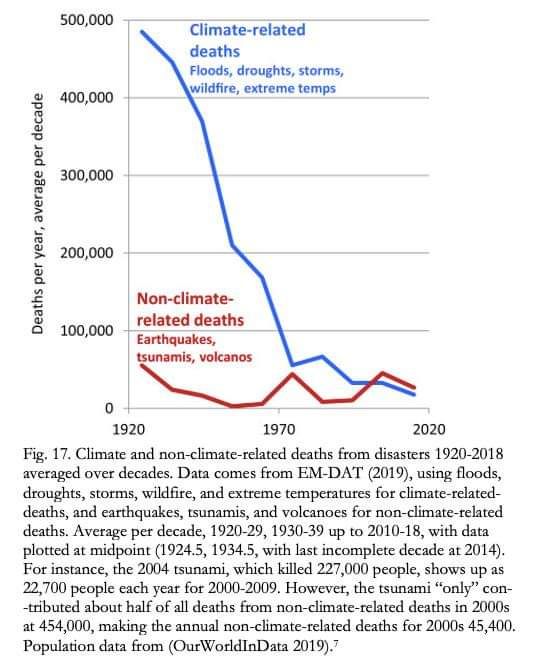
📸 Look at this post on Facebook
https://www.facebook.com/share/vgwUyVUuHEtTgyif/?mibextid=RXn8sy
From Now To 2100 Emission Reduction Policy Costs Greatly Exceed Any Net Benefit from Averted Warming
20 Dec 2023 Leave a comment
in applied price theory, applied welfare economics, development economics, econometerics, economic history, energy economics, environmental economics, global warming, growth disasters, growth miracles Tags: climate alarmism
The benefits of not meeting Paris Accord emissions-reduction targets outweigh the costs associated even with worst-case-scenario global warming throughout the 21st century.
From Now To 2100 Emission Reduction Policy Costs Greatly Exceed Any Net Benefit from Averted Warming
 Utopia, you are standing in it!
Recent Comments