A Facebook photo by Mary Ruwart reminded me of the question I posed in previous blog posts about whether there will be poverty on the Star Trek enterprise. Those security officers in the red tunics get a really bad deal, especially if they beam down to the planet with Captain Kirk.
Will there be poverty on the Starship Enterprise?
26 Feb 2016 Leave a comment
in applied welfare economics, economic history, poverty and inequality
Data chauvinism versus the 1st law of public policy development
25 Feb 2016 Leave a comment
in applied welfare economics, comparative institutional analysis, economics of bureaucracy, Public Choice
I learnt at the Australian Productivity Commission that the first law of public policy development is plagiarise, plagiarise, plagiarise. Why be original? Copy the successes of others, improve upon them, but do not repeat their failures, just learn from them.
I developed this policy insight from my experience at the Productivity Commission with a smart-arse Commissioner – that was the chairman’s private description of him in a conversation with me, not mine.
This Commissioner with whom I had countless arguments would respond to the many US studies I had marshalled by always asking for Australian evidence – what is the Australian evidence?
He knew that there was no Australian data or studies so he could slow the whole policy process down through this appeal to data chauvinism. The Americans are swimming in data and that is before you get to their cross-sectional data with 50 states.
 Ever since then, I regarded data chauvinism – the request for Australian evidence and studies or New Zealand evidence and studies – as a stalling tactic designed either to defend the status quo.
By and large, all the local evidence shows when it augments the US studies is how a local regulation or tax screws things up further. Local evidence rarely served the interests of my opponents who were fighting against deregulation or privatisation.

It is a good public policy – you are much more likely to implement a proposal or act on a particular empirical study – if there are half a dozen to a dozen overseas studies preferably in several different countries showing much the same thing. Beware the man of one study. Milton Friedman (1957) rightly preferred to emphasize the congruence of evidence from a number of different sources and with due attention to the quality of the data:
I have preferred to place major emphasis on the consistency of results from different studies and to cover lightly a wide range of evidence rather than to examine intensively a few limited studies.
The role of empirical evidence is to resolve disagreements – to bring people closer together. One study in one country rarely does that. Many studies in many countries about the same topic of controversy is far more persuasive.
The role of inheritance in top incomes
25 Feb 2016 Leave a comment
in applied welfare economics, economic history, entrepreneurship, human capital, labour economics, poverty and inequality Tags: entrepreneurial alertness, superstars, top 1%
Think Again: The Green Economy @janlogie @GarethMP
23 Feb 2016 Leave a comment
in applied welfare economics, energy economics, environmental economics, politics - New Zealand, politics - USA, Public Choice, resource economics Tags: climate alarmism, green economy, green rent seeking
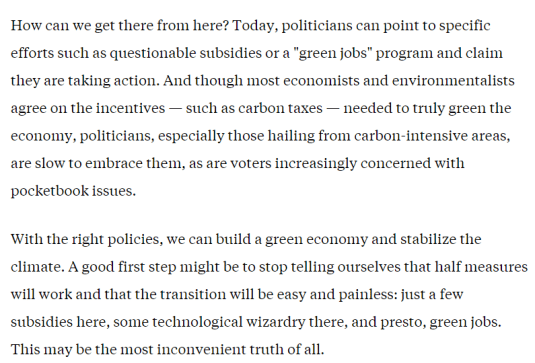
Source: Matthew Kahn (2009) Think Again: The Green Economy | Foreign Policy
@berniesanders If Denmark were your home instead of US you would
22 Feb 2016 Leave a comment
in applied welfare economics, politics - USA

Source: Compare The United States To Denmark.
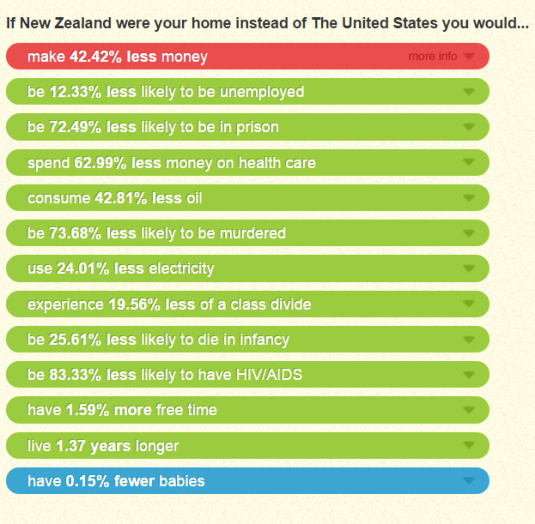
If New Zealand were your home instead of The US you would
22 Feb 2016 Leave a comment
in applied welfare economics, politics - New Zealand
@RusselNorman Why 1.3 billion people without access to electricity can’t afford to divest from fossil fuels
20 Feb 2016 Leave a comment
in applied welfare economics, economics, energy economics, environmental economics, global warming, growth disasters, growth miracles Tags: fossil fuel disinvestment, Fossil Fuels, rational irrationality
Public, mandatory & voluntary private social expenditure, G7, Nordics, Australia & New Zealand
20 Feb 2016 Leave a comment
in applied welfare economics, economics of regulation, fiscal policy, labour economics, politics - Australia, politics - New Zealand, politics - USA, welfare reform Tags: British economy, Canada, Denmark, Finland, France, Germany, Italy, Japan, Norway, social insurance, Sweden, welfare state
Mandatory and voluntary private social expenditure makes a big difference to the degree of social insurance in some countries but not others. The calculation of these numbers in purchasing power parity would be much more interesting.
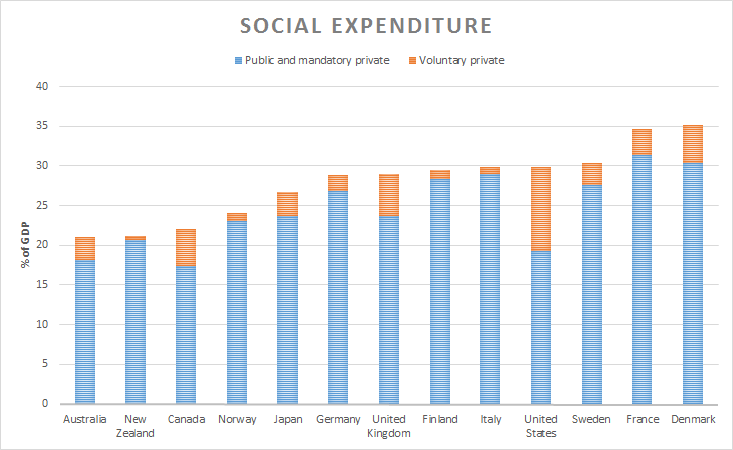
Source: OECD Income Distribution database.
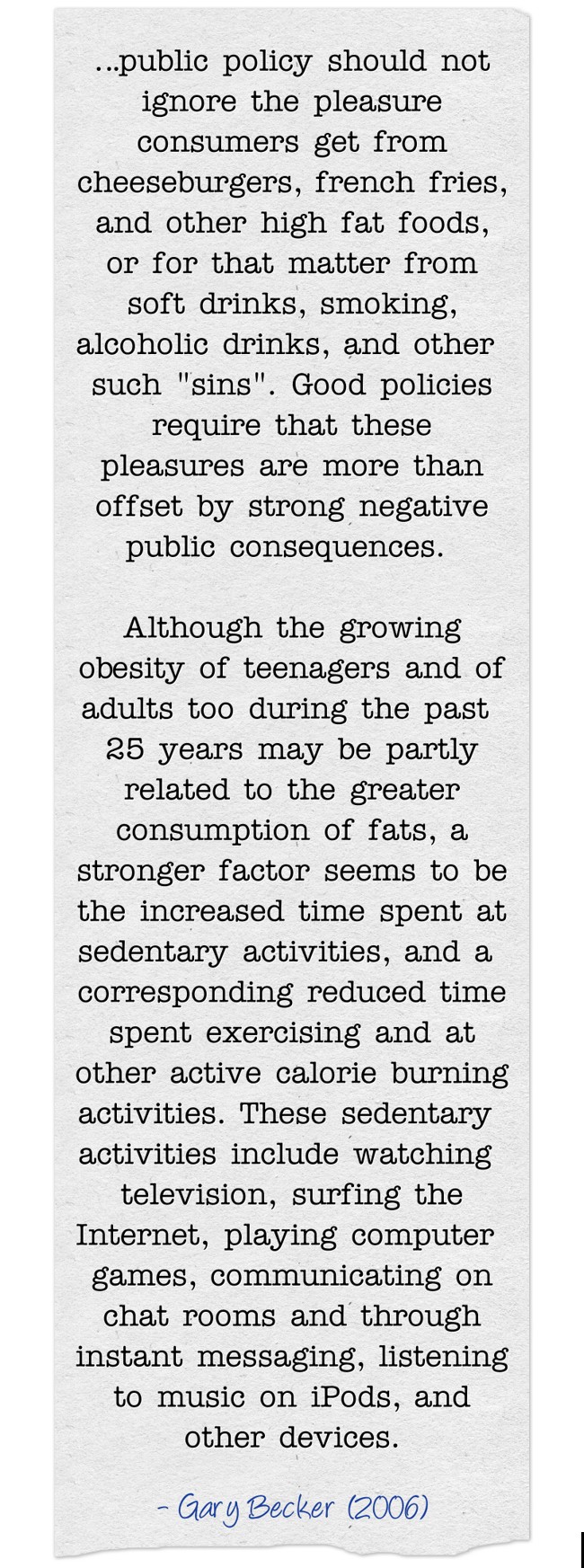
Gary Becker on the weak case for a fat tax
19 Feb 2016 Leave a comment
in applied welfare economics, economic history, Gary Becker, health economics, technological progress
Smoking – where are the externalities?
19 Feb 2016 2 Comments
in applied welfare economics, economics of regulation, health economics, politics - New Zealand, public economics
It will be a slow train coming before the Morgan Foundation calls for a cut in the tobacco tax because the optimal Pigovian tax on it is already too high from the perspective of externalities or the burden on the public health budget.
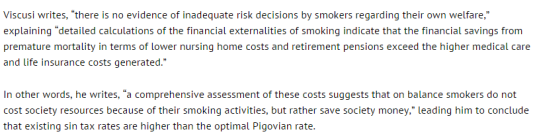
Source: Cigarette Taxation and the Social Consequences of Smoking | Heartland Institute.
I think smoking is disgusting and unhealthy but that does not give me the right to regulate the disgusting habits of others. Where would I start in regulating risk-taking? I would have to start with swimming, tramping and biking. They are all high-risk activities of the self-righteous? Not everything others do that I do not like causes an externality.
Few economists work on the economics of smoking other from the starting point that it should be reduced. Those that do not share that starting point such as Robert Tollison, Gary Anderson and William Shughart are subject to relentless personal abuse. They are immediately denounced as the paid whores of the tobacco industry.
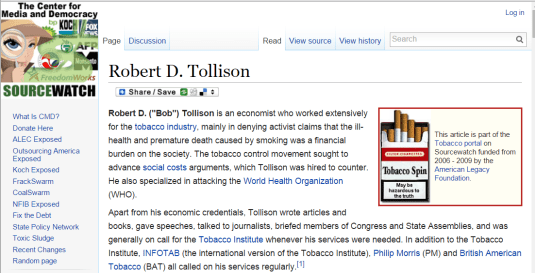
That was one of the reasons I got interested in the economics of smoking. There must be something in the case made by Robert Tollison and others questioning tobacco taxes if the first line of argument against them is you are saying that because someone paid, you low down dog.
How did Pinoy billionaires make their money?
18 Feb 2016 1 Comment
in applied welfare economics, economic history, entrepreneurship, financial economics, industrial organisation Tags: billionaires, entrepreneurial alertness, Philippines, superstars, top 1%
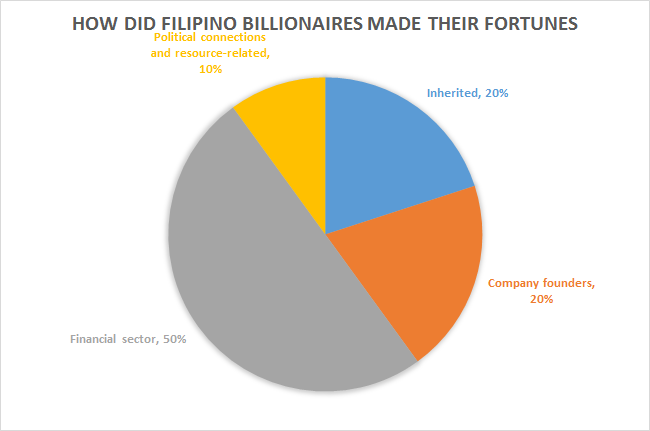
A surprisingly large number of Filipino billionaires are in the financial sector.
How did India’s billionaires make their fortunes
17 Feb 2016 Leave a comment
in applied welfare economics, development economics, economic history, economics of regulation, entrepreneurship, growth disasters, growth miracles, industrial organisation Tags: billionaires, entrepreneurial alertness, India, superstars, top 1%
A decent number of India’s billionaires founded a company.

Food Stamp Work Requirement Cuts Non-parent Caseload by 75% @GreenCatherine
16 Feb 2016 Leave a comment
in applied welfare economics, economics of bureaucracy, labour supply, politics - USA, welfare reform
In common with New Zealand, Maine found that a number could not complete work requirements because they could not get time off work from their off the books job.
Lindsay Mitchell found through Official Information Act requests that one in 10 beneficiaries are working full-time and one in 5 have no intention of looking for a job in the next year despite a requirement to actively look for work as a condition of receipt of their benefit.


Recent Comments