I’ve been participating in a conference in Argentina this week on “Understanding Argentina’s Transformations Under Milei.” Part I reviewed the horrible economic conditions that plagued Argentina when Javier Milei took office. Part II looked at Milei’s spending restraint and some of the subsequent improvements in fiscal outcomes. Part III examined Milei’s remarkable progress with regards to […]
Last year, as part of a series on the additional reforms Milei needs to enact in Argentina, I shared this video on reducing protectionism. Since the video was only one-minute long, there was no chance to provide details. But at the conference in Buenos Aires this week, Professor Jorge Streb shared some fascinating details on […]
Part I of this series reviewed the horrible economic conditions that plagued Argentina when Javier Milei took office. Part II looked at Milei’s spending restraint and some of the subsequent improvements in fiscal outcomes. For today’s column, let’s focus on what Milei has achieved in areas other than fiscal policy, and it will be based […]
Part I of this series focused on the horrible economic conditions that led to Javier Milei’s election in late 2023. For Part II, let’s start with this segment from an interview I did last week while in Slovenia. In less than two minutes, I tried to summarize Milei’s achievements. Let’s take a more detailed look, […]
Given my enthusiasm for Javier Milei and his libertarian reforms, I’m excited to be in Buenos Aires for a week-long program on “Understanding Argentina’s Transformations Under Milei.” This means a heavy does of Milei-ism this week. For today’s column, I’m going to share some slides from a presentation by Alejandro Rodriguez on the “Inheritance” Milei […]
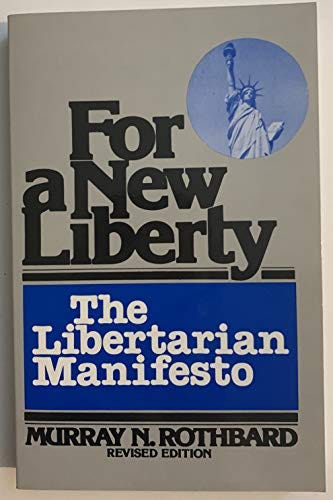
[Update: I’m on vacation next Friday, so the next installment of this book club will be in two weeks.]SummaryIn this chapter on “Personal Liberty,” Rothbard puts run-of-the-mill “civil libertarians” to shame. He’s more radical than most of the left on traditional civil liberties like freedom of speech, drugs, and wiretapping. He stands up for the…
Ask anyone in Australia’s competition law community what transformed the economy, and you will hear a familiar story. Australia was once a cartelised, complacent place where businesses divided up markets and consumers paid the price. Then came the Trade Practices Act in 1974, and competition law forced firms to compete. This is not a fringe […]
Update: I’m doing a Substack Live today on You Have No Right to Your Culture with the Boyd Institute’s Peter Banks. 4 PM ET.SummaryThis is the shortest chapter of the book, just six pages long. Rothbard makes a laundry list of what he calls “the major problem areas of our society” and argues that government…
As explained in my four-part series (here, here, here, and here) and in this clip from a recent interview, Javier Milei’s first two years have been amazingly successful. There are two points in the interview that deserve emphasis. First, Javier Milei’s libertarian policies already have been extremely beneficial for the Argentine economy. Inflation has dramatically […]
Cass was in top form, and so we went on for almost two hours. In his Substack he described it as “The most fun interview I have ever done.” Here is the audio, video, and transcript. Here is part of the episode summary: Tyler and Cass discuss whether liberalism is self-undermining or simply vulnerable to…
Back in the early 1990s, I wrote a paper called “The Creative-Destroyers: Are Entrepreneurs Mythological Heroes?” A reviewer at a journal said “The conclusion that entrepreneurs are heroes seems to be very dangerous!” That was in 1993.There is a picture of this review below. After that is a link to where I posted this paper here…
I was delighted to share a stage with Prof Mario Rizzo, co-author of Escaping Paternalism and other fine works, at the IEA earlier this year. I never got around to posting the video, but here it is. Mario is an articulate critique of behavioural economics and “nudge” policies. I also mentioned his work on the slippery slope…
Javier Milei has generated amazingly good results in just 20 months. But more reform is needed to undo the damage of 80 years of Peronism, which is why I explain that Argentina’s mid-term elections will be very important. Milei wants to turn Argentina into the world’s freest economy. That won’t be possible so long as […]
Why Evolution is True is a blog written by Jerry Coyne, centered on evolution and biology but also dealing with diverse topics like politics, culture, and cats.
“We do not believe any group of men adequate enough or wise enough to operate without scrutiny or without criticism. We know that the only way to avoid error is to detect it, that the only way to detect it is to be free to inquire. We know that in secrecy error undetected will flourish and subvert”. - J Robert Oppenheimer.




 Utopia, you are standing in it!
Recent Comments