‘Taxpayer Talk’ | Simon Court joins Jordan Williams to talk RMA reform
14 Oct 2024 Leave a comment
in applied price theory, comparative institutional analysis, constitutional political economy, economics of bureaucracy, economics of regulation, environmental economics, income redistribution, law and economics, politics - New Zealand, property rights, Public Choice, public economics, rentseeking, resource economics, transport economics, urban economics Tags: zoning
The Economic Way of Thinking in a Pandemic
12 Oct 2024 Leave a comment
in applied price theory, applied welfare economics, comparative institutional analysis, economics of regulation, health economics Tags: economics of pandemics
During the pandemic, economists often found themselves at odds with politicians, physicians, epidemiologists and others. Some politicians, for example, were worried that the pharma companies might engage in profiteering while economists worried that the pharma companies were not nearly profitable enough. Physicians focused on maximizing the health of patients while economists focused on maximizing the […]
The Economic Way of Thinking in a Pandemic
DON BRASH: WAS SOVEREIGNTY CEDED IN 1840?
11 Oct 2024 Leave a comment
in comparative institutional analysis, constitutional political economy, economic history, law and economics, politics - New Zealand, property rights, Public Choice Tags: constitutional law
I watched Tuesday night’s debate between David Seymour, Leader of the ACT Party, and Helmut Modlik, an iwi leader, with dismay. On the one hand, David Seymour argued with compelling logic the need to resolve once and for all whether New Zealanders enjoy equal political rights or whether, as Helmut Modlik argued, those with…
DON BRASH: WAS SOVEREIGNTY CEDED IN 1840?
Socialism in the 21st Century: A Regressive Ideology in Modern Times
10 Oct 2024 1 Comment
in applied price theory, comparative institutional analysis, constitutional political economy, economics of bureaucracy, economics of regulation, income redistribution, law and economics, Marxist economics, property rights, Public Choice, public economics, rentseeking
Socialism, once hailed as a visionary and revolutionary alternative to capitalism, has deep roots in the progressive movements of the 19th and early 20th centuries. Advocating for state control of the means of production and a more equitable distribution of wealth, socialism aimed to correct the injustices of industrial capitalism. However, as we navigate the […]
Socialism in the 21st Century: A Regressive Ideology in Modern Times
Enhancing democracy – the case for a second chamber in New Zealand’s Parliament
04 Oct 2024 Leave a comment
in comparative institutional analysis, constitutional political economy, politics - New Zealand, Public Choice, public economics
New Zealand did once have an upper house known as the Legislative Council. Is there are argument that it should be re-introduced? Philip Crump writes – New Zealand’s parliamentary system has long been admired for its democratic principles and progressive governance although it has increasingly come under strain and criticism over recent years. In […]
Enhancing democracy – the case for a second chamber in New Zealand’s Parliament
The collapse of Maori nationalism
03 Oct 2024 Leave a comment
in comparative institutional analysis, constitutional political economy, economic history, economics of bureaucracy, income redistribution, law and economics, politics - New Zealand, property rights, Public Choice, rentseeking
As with unionism, overreach will end iwi power push Graham Adams writes – One of former Labour Prime Minister Jacinda Ardern’s most singular achievements during her tenure as premier was to push a majority of voters to the point of revulsion regarding race-based policy. Now the coalition government is orchestrating a swift counter-revolution, with […]
The collapse of Maori nationalism
Canada Is Part of the Anti-Convergence Club
01 Oct 2024 Leave a comment
in applied price theory, budget deficits, comparative institutional analysis, economic growth, economic history, economics of regulation, environmental economics, fiscal policy, labour economics, labour supply, law and economics, macroeconomics, property rights Tags: Canada
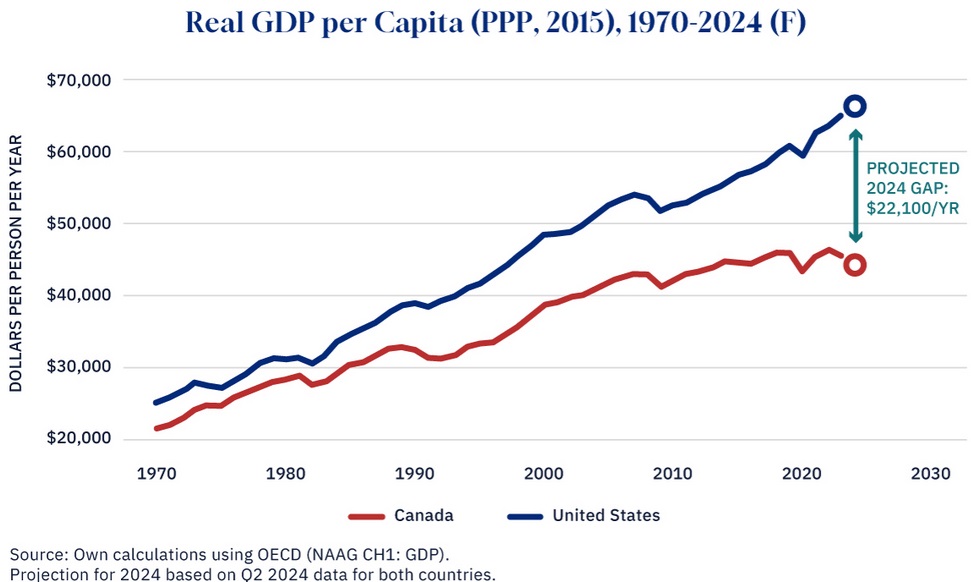
Economists widely agree with the theory of “convergence,” which is the (mostly true) idea that poor nations should grow faster than rich nations as they catch up (converge). But there are exceptions. Sometimes a richer country will grow faster than a poorer country over a significant period of time, and we can learn from these examples. This is […]
Canada Is Part of the Anti-Convergence Club
Treaty of Waitangi legal “experts” have misunderstood its economic rationale – and endangered national prosperity
20 Sep 2024 Leave a comment
in comparative institutional analysis, constitutional political economy, development economics, economic history, history of economic thought, liberalism, politics - New Zealand, Public Choice Tags: constitutional law
Rob MacCulloch writes – The underlying aim of the Treaty of Waitangi, at least in economic terms, was to promote a higher standard of living for Māori and non-Māori alike. This article’s purpose is to argue how its words were unambiguously designed to achieve that purpose, but have since been hijacked by political operatives and NZ’s legal […]
Treaty of Waitangi legal “experts” have misunderstood its economic rationale – and endangered national prosperity
“A Symbol of Imperial Violence and Colonialism”: Activists at UPenn Deface Statue of Benjamin Franklin
19 Sep 2024 Leave a comment
in comparative institutional analysis, constitutional political economy, economic history, law and economics, liberalism, Marxist economics, politics - USA, Public Choice Tags: age of empires, economics of colonialism, free speech, political correctness, regressive left
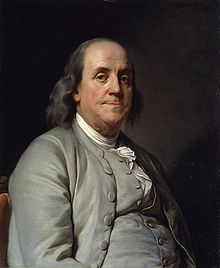
Benjamin Franklin once wrote “Love your Enemies, for they tell you your Faults.” Yet, Franklin might be a bit confused by his critics at the University of Pennsylvania. Anti-Israel activists vandalized his statue as a symbol of colonialism. The man who was instrumental in the Declaration of Independence against the British Empire is being denounced […]
“A Symbol of Imperial Violence and Colonialism”: Activists at UPenn Deface Statue of Benjamin Franklin
Equality Act 2010
18 Sep 2024 Leave a comment
in applied price theory, comparative institutional analysis, economic history, history of economic thought, human capital, job search and matching, labour economics, labour supply, law and economics, occupational choice, poverty and inequality Tags: British politics, compensating differences, pay equity

The UK’s Orwellian sounding Equality Act 2010 is strikingly Marxist. It demands equal pay for work of equal value where these are defined as follows: A’s work is equal to that of B if it is like B’s work, rated as equivalent to B’s work, or of equal value to B’s work. A’s work is […]
Equality Act 2010
Monkeypox and Medsafe
15 Sep 2024 Leave a comment
in applied price theory, applied welfare economics, comparative institutional analysis, economics of bureaucracy, economics of information, economics of regulation, health economics, politics - New Zealand, Public Choice Tags: drug lags, economics of pandemics
In a sane world, medicines and vaccines already approved by trustworthy overseas regulators would automatically be able to be used in New Zealand as well.New Zealand is not sane. But neither is anywhere else really on that standard. Other places are just faster than NZ in getting things approved, with more practicable pathways for expedited…
Monkeypox and Medsafe
The Santa Claus Election
15 Sep 2024 Leave a comment
in applied price theory, comparative institutional analysis, economic growth, economics of education, entrepreneurship, fiscal policy, health and safety, income redistribution, industrial organisation, labour economics, labour supply, macroeconomics, politics - USA, Public Choice, public economics, unions Tags: 2024 presidential election, taxation and entrepreneurship, taxation and investment, taxation and labour supply

For libertarians, this is a very depressing election (a feeling we tend to have every four years, so a familiar experience). What basically happens is that two politicians try to bribe us with our own money. This year, we have Kamala Harris, who was even worse than Bernie Sanders in the big-spender contest. And we […]
The Santa Claus Election
SHOWDOWN: Willie Jackson vs David Seymour on the Treaty Principles Bill
11 Sep 2024 Leave a comment
in comparative institutional analysis, economic history, law and economics, liberalism, politics - New Zealand, property rights, Public Choice Tags: constitutional law, political correctness, racial discrimination, regressive left
Uber messy
11 Sep 2024 Leave a comment
in applied price theory, comparative institutional analysis, economics of regulation, entrepreneurship, industrial organisation, labour economics, labour supply, law and economics, occupational choice, politics - New Zealand, property rights, Public Choice, transport economics, urban economics Tags: employment law, Uber
Caught a fun phone call from an accountant after this week’s column over at the Dom Post (and Christchurch Press, etc) on the court’s decision in the Uber case.If Uber drivers are employees, rather than contractors, as the Court sees things, how will depreciation on their cars be handled? Contractors can count all those expenses…
Uber messy
Friedman vs Stiglitz: Estonia and Poland vs. Argentina and Venezuela
06 Sep 2024 Leave a comment
in applied price theory, comparative institutional analysis, development economics, economic history, economics of bureaucracy, entrepreneurship, growth disasters, growth miracles, history of economic thought, income redistribution, industrial organisation, international economics, labour economics, law and economics, liberalism, Marxist economics, poverty and inequality, property rights, Public Choice, rentseeking, survivor principle Tags: Argentina, Chile, Poland, regressive left, Venezuela
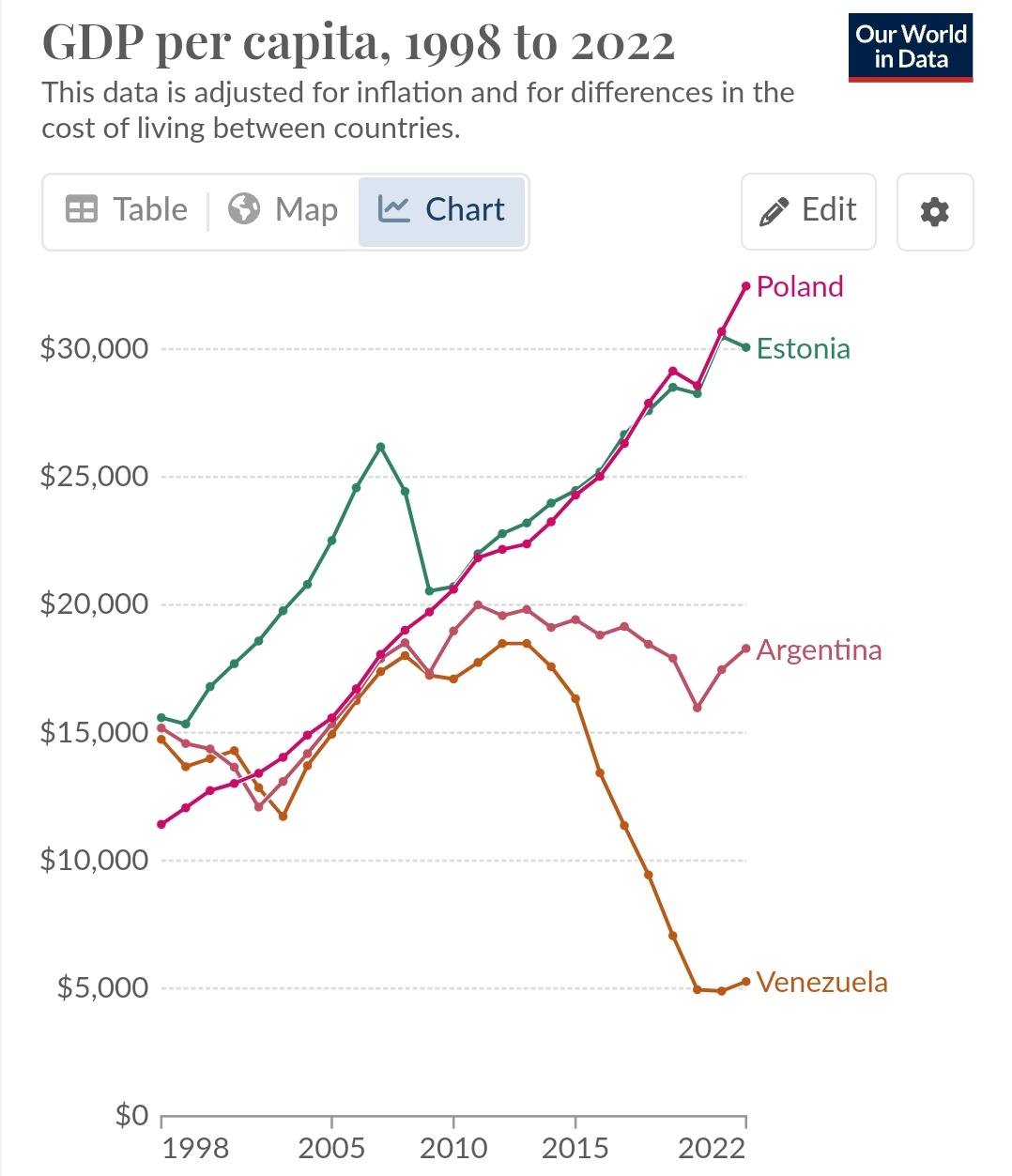
About 10 days ago, i showed that Milton Friedman was a much better economist than Joseph Stiglitz by comparing Chile (which followed Friedman’s ideas) and Venezuela (which followed Stiglitz’s ideas). It was a slam-dunk win for Friedman. Chile started poor and has become relatively prosperous. The opposite happened in Venezuela, which started relatively prosperous and […]
Friedman vs Stiglitz: Estonia and Poland vs. Argentina and Venezuela


Recent Comments