That is the theme of a new Substack by Pieter Garicano, here is one excerpt: These answers, according to a recent paper by Olivier Coste and Yann Coatanlem, two French investors, miss the point: the reason more capital doesn’t flow towards high-leverage ideas in Europe is because the price of failure is too high. Coste estimates that, […]
Why are no trillion dollar companies being created in Europe?
Why are no trillion dollar companies being created in Europe?
07 Dec 2024 1 Comment
in applied price theory, comparative institutional analysis, economics of regulation, entrepreneurship, human capital, industrial organisation, labour economics, labour supply, law and economics, occupational choice, poverty and inequality Tags: employment law
Andrew Le Sueur: Finally, separation of powers in Jersey?
05 Dec 2024 Leave a comment
in comparative institutional analysis, constitutional political economy, economic history, economics of bureaucracy, economics of crime, law and economics, property rights, Public Choice, public economics Tags: British politics, constitutional law

The question of separating constitutional powers in Jersey is more complex than it appears. Here’s why. Jersey and Guernsey are unique globally in having constitutions that in the ancient office of Bailiff fuse together the roles of chief justice and presiding officer of their respective courts and parliaments. As I argue, this is further complicated […]
Andrew Le Sueur: Finally, separation of powers in Jersey?
The Missing Myths
04 Dec 2024 Leave a comment
in applied price theory, comparative institutional analysis, constitutional political economy, discrimination, economic history, economics of climate change, economics of information, economics of media and culture, economics of regulation, energy economics, entrepreneurship, environmental economics, environmentalism, financial economics, gender, global warming, health economics, human capital, income redistribution, labour economics, labour supply, law and economics, liberalism, libertarianism, Marxist economics, occupational choice, politics - USA, poverty and inequality, property rights, Public Choice, rentseeking Tags: Age of Enlightenment, crime and punishment, criminal deterrence, free speech, gender wage gap, law and order, political correctness, racial discrimination, regressive left, sex discrimination
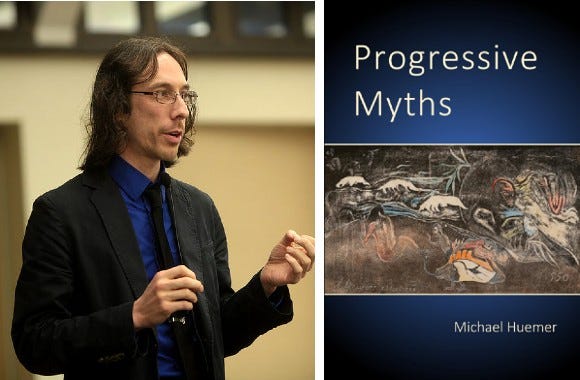
Michael Huemer’s Progressive Myths is the best book on wokeness. One of its many strengths is its focus on basic facts. As the author explains:I have selected beliefs that can be debunked fairly quickly and forcefully. Many other progressive beliefs require long argumentation and subjective judgment calls to assess. About these more difficult issues, I…
The Missing Myths
The no-confidence vote in France
04 Dec 2024 Leave a comment
in comparative institutional analysis, constitutional political economy, fiscal policy, law and economics, macroeconomics Tags: France
The French National Assembly is scheduled to vote tomorrow (4 Dec.) on a vote of no confidence against the government of Premier Michel Barnier. The premier has been in office only three months, having been appointed following (with some lag) the snap election President Emmanuel Macron had called in July, and which–predictably, given the timing–did […]
The no-confidence vote in France
Paul Krugman Is Right…albeit Selectively and Hypocritically
04 Dec 2024 Leave a comment
in applied price theory, comparative institutional analysis, economic history, economics of bureaucracy, economics of regulation, entrepreneurship, income redistribution, industrial organisation, international economics, law and economics, politics - USA, property rights, Public Choice, public economics, rentseeking Tags: tarrifs
I like profits. But let me qualify that statement. I like profits that are the result of businesses providing goods and services that consumers value. Those profits are earned. By contrast, I don’t like it when businesses get in bed with government and get money via cronyism, bailouts, subsidies, protectionism, or industrial policy. Those profits […]
Paul Krugman Is Right…albeit Selectively and Hypocritically
Another corporate welfare failure
02 Dec 2024 Leave a comment
in applied price theory, comparative institutional analysis, energy economics, entrepreneurship, environmental economics, financial economics, global warming, income redistribution, industrial organisation, politics - New Zealand, Public Choice, rentseeking, survivor principle Tags: climate alarmism
The Herald reported: The Government has $115 million at risk from the collapse of SolarZero. Finance Minister Nicola Willis said she was seeking urgent advice on the SolarZero situation. She had no further comment. NZ Green Investment Finance – a “green investment bank” created by the previous Government to fund environmentally-friendly businesses – made a $145m…
Another corporate welfare failure
Maximum Progress on Progressivism
27 Nov 2024 Leave a comment
in applied price theory, comparative institutional analysis, constitutional political economy, discrimination, economics of crime, law and economics, liberalism, Marxist economics, politics - USA Tags: conjecture and refutation
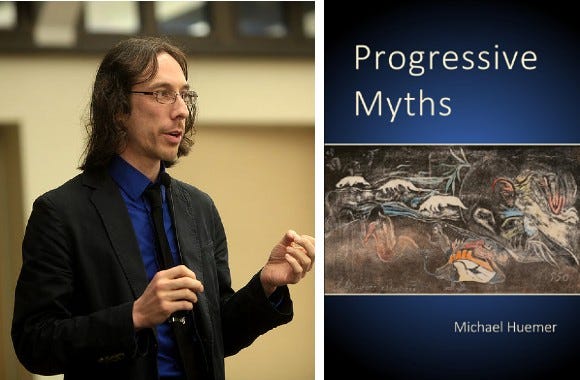
If you are not yet a fan of Michael Huemer, you should be. Hyperbole is the worst thing in the universe, but I still affirm the following: Huemer’s The Problem of Political Authority is the best book on political philosophy. Huemer’s Ethical Intuitionism is the best book on meta-ethics. Huemer’s Knowledge, Reality, and Value is…
Maximum Progress on Progressivism
Milei and populism
23 Nov 2024 1 Comment
in applied price theory, budget deficits, comparative institutional analysis, constitutional political economy, development economics, economic growth, economics of bureaucracy, economics of regulation, fiscal policy, growth disasters, income redistribution, macroeconomics, monetarism, monetary economics, Public Choice, rentseeking, unemployment Tags: Argentina
Bryan Caplan and Daniel Klein both opine on Milei and populism, Dan being very enthusiastic, while Bryan praising Milei but more reserved in his praise of populism. I too am a big fan of Milei, and I think he is still on a good track. If his reforms do not succeed, likely it will not […]
Milei and populism
Attorney-General and Chief Justice reveal contrasting visions of judicial power
23 Nov 2024 Leave a comment
in comparative institutional analysis, constitutional political economy, economics of crime, law and economics, politics - New Zealand, property rights Tags: constitutional law
Roger Partridge writes – Should judges stick to applying the law, or should they reshape it to reflect society’s values? This fundamental tension over judicial power was laid bare at a New Zealand Law Society webinar this month about what it takes to become a High Court judge. Comments from the country’s two senior legal […]
Attorney-General and Chief Justice reveal contrasting visions of judicial power
Bob Ekelund Remembered
23 Nov 2024 Leave a comment
in applied price theory, comparative institutional analysis, economics of bureaucracy, economics of information, economics of regulation, entrepreneurship, health economics, history of economic thought, industrial organisation, law and economics, market efficiency, Milton Friedman, property rights, Public Choice, public economics, regulation, theory of the firm Tags: competition law, Product safety
TweetHere’s my just-published remembrance, in Public Choice, of my late teacher, dissertation advisor, co-author, and friend, Bob Ekelund. Three slices: The only textbook assigned for the course was Milton Friedman’s Price Theory. From some younger members of Auburn’s economics faculty, I heard a few cocktail-lubricated complaints that core theory courses in a modern economics Ph.D.…
Bob Ekelund Remembered
Reflections on United Arab Emirates
23 Oct 2024 Leave a comment
in applied price theory, comparative institutional analysis, constitutional political economy, development economics, economic history, economics of bureaucracy, economics of crime, energy economics, growth miracles, income redistribution, labour economics, labour supply, law and economics, liberalism, libertarianism, property rights, Public Choice Tags: Dubai, economics of immigration

On my way to India, I connected through Abu Dhabi, capital city of the United Arab Emirates (UAE). During my one-day layover, I toured not only Abu Dhabi, but its more famous sister-city, Dubai. Here are my main thoughts.In Dubai, these are not empty words.Per-capita, UAE is the most amazing country I’ve ever seen. With…
Reflections on United Arab Emirates
GARY JUDD KC: A student should not be forced to learn about tikanga to be a lawyer
19 Oct 2024 Leave a comment
in comparative institutional analysis, constitutional political economy, economics of bureaucracy, economics of crime, law and economics, liberalism, Marxist economics, politics - New Zealand, property rights, Public Choice Tags: constitutional law
My oral submission to the Regulation Review Committee. Yesterday [Oct 16], Parliament’s Regulation Review Committee heard oral submissions concerning my complaint to the Committee asking that a member of the committee move a resolution asking the House of Representatives to disallow the regulations promulgated by the New Zealand Council of Legal Education. If the regulations…
GARY JUDD KC: A student should not be forced to learn about tikanga to be a lawyer
Reflections on India
16 Oct 2024 1 Comment
in applied price theory, comparative institutional analysis, constitutional political economy, development economics, economic growth, economic history, economics of bureaucracy, growth disasters, growth miracles, history of economic thought, income redistribution, law and economics, macroeconomics, Marxist economics, property rights, Public Choice, public economics, regulation, rentseeking Tags: economics of colonialism, India

I’m back from my first trip to India, where I visited Mumbai, Delhi, Agra, and Amritsar. I enjoyed fine company in all four cities. In Mumbai, my new friend Sachin Aggarwal, head of the local EconTalk Club, rolled out the red carpet — and ACX Mumbai joined the festivities. (Thank you, Scott Alexander, for creating…
Reflections on India
Acemoglu, Johnson and Robinson Win Nobel Prize for Institutions and Prosperity
15 Oct 2024 Leave a comment
in applied price theory, comparative institutional analysis, constitutional political economy, development economics, economic growth, economic history, economics of bureaucracy, economics of regulation, growth disasters, growth miracles, history of economic thought, income redistribution, macroeconomics, Public Choice, public economics, rentseeking
The Nobel prize goes to Daron Acemoglu, Simon Johnson and James Robinson for their work on institutions, prosperity, and economic growth. Here is a key piece summarizing their work: Institutions as a Fundamental Cause of Long-Run Growth. This paper develops the empirical and theoretical case that differences in economic institutions are the fundamental cause of […]
Acemoglu, Johnson and Robinson Win Nobel Prize for Institutions and Prosperity
A Nobel for Acemoglu, Johnson, and Robinson: Institutions and Prosperity
15 Oct 2024 Leave a comment
in applied price theory, comparative institutional analysis, constitutional political economy, development economics, economic history, growth disasters, growth miracles, history of economic thought
The Sveriges Riksbank Prize in Economic Sciences in Memory of Alfred Nobel 2024 has been awarded to Daron Acemoglu, Simon Johnson and James Robinson “for studies of how institutions are formed and affect prosperity.” Each year, the Nobel Committee helpfully publishes both a “Popular information” overview of of the award and a “Scientific Background” essay that goes into greater depth.…
A Nobel for Acemoglu, Johnson, and Robinson: Institutions and Prosperity


Recent Comments