But who would be elected president of Australia?

The principal argument against the republic is it results in a president as the head of state.

In the last Republican debate in 1999, the Republican movement split between those who wanted an appointed president and an elected president.

An elected president would quickly get ideas above his station because of the popular mandate. Imagine Dick Smith as president.

It would be a good pub quiz game to list the people would be wholly unsuited as president but would be likely to be elected. Boring people such as those who currently occupy the position such as judges and retired military would not have much of a chance of being elected.

The Irish president, for example, is elected but is completely circumscribed in powers. The only power they have to exercise independently is whether to dissolve parliament after a motion of no confidence.

The @LordAshcroft focus group research on @UKLabour

The focus group work of Lord Ashcroft after the 2015 British general election reinforces what was learnt about the New Zealand Labour Party’s drift away from the values of the working class.
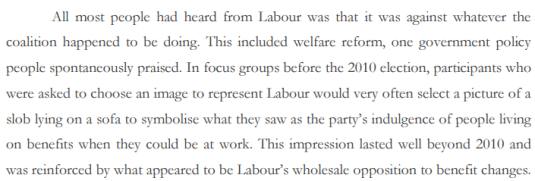
Source: The Unexpected Mandate: my review of the 2015 election and the unusual parliament that preceded it – Lord Ashcroft Polls.

In the 2014 election in New Zealand, the Labour Party promised to extend the in work tax credit for families to welfare beneficiaries. This was worth about $60 a week.

The following week was the worst week that Labour Party MPs and party workers experienced in their door-knocking. In their own Heartland electorates, the Labour Party door knockers received a hostile response to that proposal.

Working class Labour voters believe they had earned that family tax credit by working and it should not be paid to people who do not earn it by working.

There is a re-occurring theme among those who stopped voting labour everywhere is that Labour Party is are now too concerned about scroungers and are not interested enough in rewarding strivers, and in particular those who strive to improve themselves in the working class.

Ashcroft’s research after the 2010 British general election found that British voters who had stopped voting Labour after previously supporting it believed that the Labour Party did not have the right answers to important questions. 7 out of 10 of these voters believe that the expenditure cuts of the Conservative party when necessary.

Importantly for labour parties everywhere, two thirds of voters would take a lot of persuading before they voted for the British Labour Party again. Labour would need to change quite fundamentally before they did so again.

Many said they would wait until Labour had been re-elected and served a full term before they themselves considered voting Labour again. That means two thirds of the vote lost by Labour were unwilling to vote Labour again until the 2025 general election. They had really given up on Labour despite their support for it in the past. Issues such as a perception that Labour elected the wrong brother as its leader in 2010 were minor in comparison to this.

Fortunately for the Conservative Party, research among Labour Party members and Labour supporters in the trade unions tells a very different message as to why Labour lost the 2010 British general election.

These Labour Party members and supporters thought the voters were wrong to not vote for them according to the Ashcroft research after the 2010 election:

They thought they had lost because people did not appreciate what Labour had achieved; that voters had been influenced by the right-wing media; and that while Labour’s policies had been right, they had not been well communicated.

More than three quarters thought their party had not deserved to lose, and most rejected the idea that the Labour government had been largely to blame for the economic situation.

They thought the swing voters they had lost (and needed to win back) were ignorant, credulous and selfish. More than half thought the coalition would prove so unpopular that Labour would probably win the 2015 election without having to change very much.

The strength of British Labour in the eyes of many voters is it is seen as compassionate and concerned about fairness. Unfortunately for British Labour, many of the people who do not currently vote for Labour but are receptive to these messages of compassion and fairness re fiscal conservatives according to the Ashcroft research:

I found in my focus groups that this message was best received by those already most inclined to vote for the party.

It was less effective for those who had harder questions, particularly about how all this compassion and decency would be paid for. As one of our participants put it, ‘it’s all well and good to say we’re nicer people and we care about you more, but I want someone who can sort out the country’.

Defending the Market Economy – A Lecture by Friedrich A. Hayek

@oxfamnz attacks sovereignty of Cook Islands #StandWithThePacific #TPPA

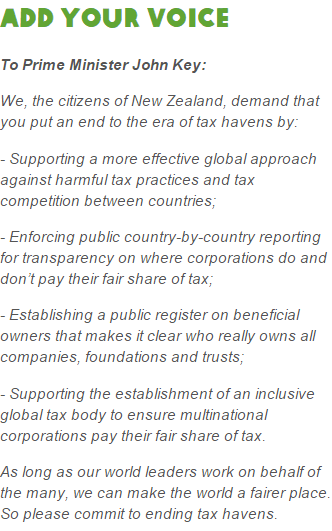
Oxfam New Zealand and fellow travellers at home and abroad are attacking the sovereignty of the Cook Islands and other tax havens by demanding that the developed countries gang up on them because they offer low company tax rates.

All that plucky rhetoric of TPPA no way and how international economic agreements violate the sovereignty of countries and developing countries in particular is forgotten in a flash.

Apparently, the same governments that were at the beck and call of the corporate elites when negotiating international trade agreements, can be trusted to negotiate international tax treaties that take into the account the interests of developing countries, the Pacific Islands and small states.

Oxfam manages to have the blinding hypocrisy of opposing the Transpacific Partnership on national sovereignty grounds and at the same time call for international treaties to bully small countries about their tax policies, which overrides their economic sovereignty.

The sovereign rights of developing countries to find their own way does not extend to undermining the tax bases of the rich countries struggling to finance their welfare states.

The Pacific Islands, the once were heroes of the recent Paris climate talks, turn into pariahs once they start looking out for themselves and setting up offshore financial centres and tax havens.

Developing countries are free to impoverish themselves by embracing socialism, but if they decide to attract investment and jobs through low tax rates and offshore financial centres, a new form of colonialism is embraced by the Twitter Left.

Source: Oxfam.

The Cook Islands is one such tax haven. The Cook Islands is self-governing in free association with New Zealand. New Zealand is responsible for its defence and foreign affairs but it has full internal sovereignty.

David Friedman explains incentive incompatibility and comparative institutional analysis

Source: Hidden Order: Chapter 20.

The Miracle of New Zealand

Arnold Kling describes “Masonomics”

Source: CARPE DIEM: Masonomics: “Markets Fail. Use Markets.”.

What the @SDG2030 should be @oxfamnz @HelenClarkUNDP

The pros and cons of America’s primary electoral system

@LordAshcroft on @UKIP and the 2015 election

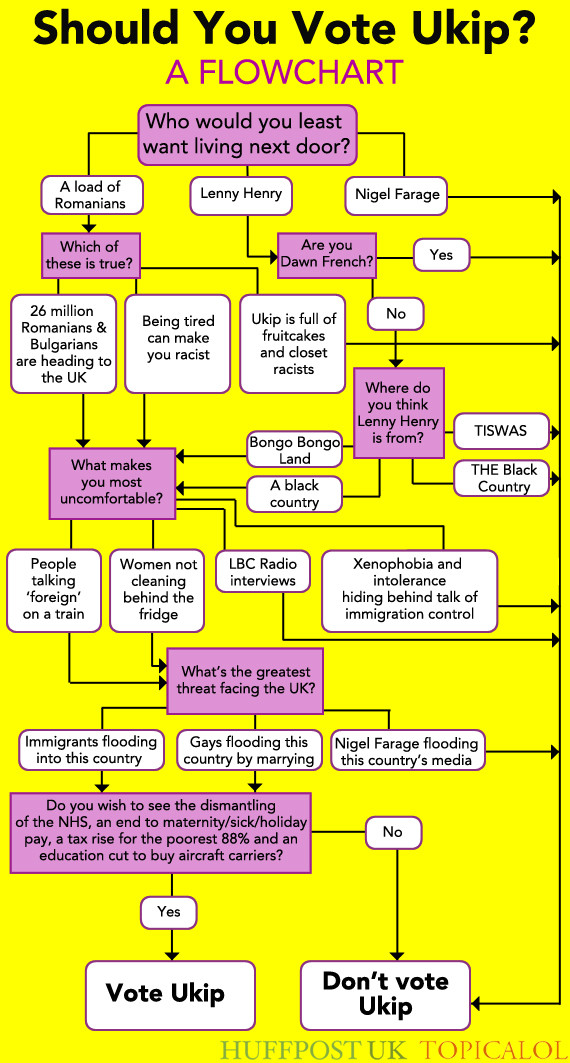
Lord Ashcroft has written a fascinating review of the unexpected 2015 general election result in the UK based on his polling and focus group work. I will start my summary of it with UKIP because that party is the most interesting way to illustrate his analytical approach.

UKIP increased its vote from 3% in 2010 British general election to 12% in 2015. UKIP won 1 seat and came second in 120.

UKIP was initially seen as a threat to the Tory party. What will make the Tory party rather conflicted in winning those votes back is as many Tory voters vote UKIP as Tory voters vote for the Liberal Democrats. The Tories cannot win both blocs back.

UKIP voters have more of an attitude rather than a series of policies despite their preoccupation with immigration as Ashcroft explains:

It was true that those who were drawn to the party were more preoccupied than most with immigration, and would complain about issues such as Britain’s contribution to the EU or the international aid budget.

But their overarching view was that Britain was changing for the worse. They were pessimistic, even fearful, and did not think mainstream politicians were willing or able to keep their promises or change things for the better.

Surprisingly, European Union membership is not a top three priority for most UKIP voters. They are grumpy about the country they grew up in fading into their past to be replaced by political correctness and identity politics.

Not surprisingly UKIP voters are attracted to it because the party would ‘say things that need to be said but others are scared to say’. Nigel Farage was regarded by UKIP voters as entertaining and straight talking but a little too interested in the limelight.

Ashcroft has as fascinating way of cutting past social acceptability bias in responses of focus groups by asking them to think about a political party or leader as a car or house. In the case of UKIP, this is what they thought:

If UKIP were a house, it would have ‘a wrought-iron fence all round to keep everyone out’. The ageing residents would spend their time ‘talking about how things were in their day’ and would not get on with their neighbours ‘because they are a different colour’. The timer on the stereo would be set to play the national anthem every day at noon.

Surprisingly few UKIP voters have illusions about the competence or good sense of UKIP. They were voting for UKIP as a protest. They are voting UKIP because they wanted to give it a voice which they can build on and become more competent and sensible.

Source: FLOWCHART: Should You Vote Ukip?

Whose voting base has succumbed to unthinking populists?

https://www.facebook.com/WeAreCapitalists/photos/a.157549024416648.1073741826.157541337750750/474168992754648/?type=3&theater

Singapore Spring

Places in the world where governments have lost control

Diogenes on what should governments do

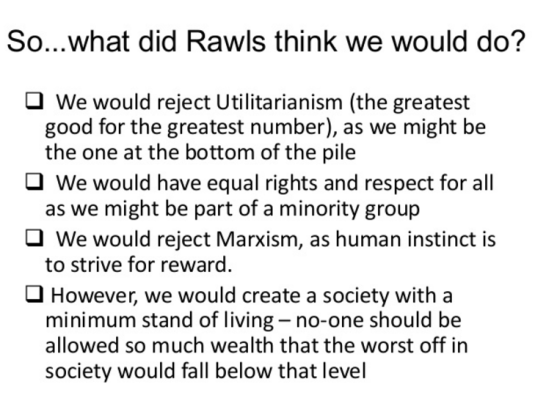
Why John Rawls rejected utilitarianism behind the veil of ignorance

Source: John Rawls (1921 – 2002) – a brief.

Previous Older Entries Next Newer Entries

Bassett, Brash & Hide

Celebrating humanity's flourishing through the spread of capitalism and the rule of law

Truth on the Market

Scholarly commentary on law, economics, and more

The Undercover Historian

Beatrice Cherrier's blog

Matua Kahurangi

Celebrating humanity's flourishing through the spread of capitalism and the rule of law

Temple of Sociology

Celebrating humanity's flourishing through the spread of capitalism and the rule of law

Velvet Glove, Iron Fist

Celebrating humanity's flourishing through the spread of capitalism and the rule of law

Why Evolution Is True

Why Evolution is True is a blog written by Jerry Coyne, centered on evolution and biology but also dealing with diverse topics like politics, culture, and cats.

Down to Earth Kiwi

Celebrating humanity's flourishing through the spread of capitalism and the rule of law

NoTricksZone

Celebrating humanity's flourishing through the spread of capitalism and the rule of law

Homepaddock

A rural perspective with a blue tint by Ele Ludemann

Kiwiblog

DPF's Kiwiblog - Fomenting Happy Mischief since 2003

The Dangerous Economist

Celebrating humanity's flourishing through the spread of capitalism and the rule of law

Watts Up With That?

The world's most viewed site on global warming and climate change

The Logical Place

Tim Harding's writings on rationality, informal logic and skepticism

Doc's Books

A window into Doc Freiberger's library

The Risk-Monger

Let's examine hard decisions!

Uneasy Money

Commentary on monetary policy in the spirit of R. G. Hawtrey

Barrie Saunders

Thoughts on public policy and the media

Liberty Scott

Celebrating humanity's flourishing through the spread of capitalism and the rule of law

Point of Order

Politics and the economy

James Bowden's Blog

A blog (primarily) on Canadian and Commonwealth political history and institutions

Science Matters

Reading between the lines, and underneath the hype.

Peter Winsley

Economics, and such stuff as dreams are made on

A Venerable Puzzle

"The British constitution has always been puzzling, and always will be." --Queen Elizabeth II

The Antiplanner

Celebrating humanity's flourishing through the spread of capitalism and the rule of law

Bet On It

Celebrating humanity's flourishing through the spread of capitalism and the rule of law

History of Sorts

WORLD WAR II, MUSIC, HISTORY, HOLOCAUST

Roger Pielke Jr.

Undisciplined scholar, recovering academic

Offsetting Behaviour

Celebrating humanity's flourishing through the spread of capitalism and the rule of law

JONATHAN TURLEY

Res ipsa loquitur - The thing itself speaks

Conversable Economist

In Hume’s spirit, I will attempt to serve as an ambassador from my world of economics, and help in “finding topics of conversation fit for the entertainment of rational creatures.”

The Victorian Commons

Researching the House of Commons, 1832-1868

The History of Parliament

Articles and research from the History of Parliament Trust

Books & Boots

Reflections on books and art

Legal History Miscellany

Posts on the History of Law, Crime, and Justice

Sex, Drugs and Economics

Celebrating humanity's flourishing through the spread of capitalism and the rule of law

European Royal History

Exploring the Monarchs of Europe

Tallbloke's Talkshop

Cutting edge science you can dice with

Marginal REVOLUTION

Small Steps Toward A Much Better World

NOT A LOT OF PEOPLE KNOW THAT

“We do not believe any group of men adequate enough or wise enough to operate without scrutiny or without criticism. We know that the only way to avoid error is to detect it, that the only way to detect it is to be free to inquire. We know that in secrecy error undetected will flourish and subvert”. - J Robert Oppenheimer.

STOP THESE THINGS

The truth about the great wind power fraud - we're not here to debate the wind industry, we're here to destroy it.

Lindsay Mitchell

Celebrating humanity's flourishing through the spread of capitalism and the rule of law

Alt-M

Celebrating humanity's flourishing through the spread of capitalism and the rule of law

croaking cassandra

Economics, public policy, monetary policy, financial regulation, with a New Zealand perspective

The Grumpy Economist

Celebrating humanity's flourishing through the spread of capitalism and the rule of law

International Liberty

Restraining Government in America and Around the World