More evidence of mass kidnappings of @Oxfamnz activists – the #FinalCountdown
29 Mar 2016 Leave a comment
in development economics, growth miracles
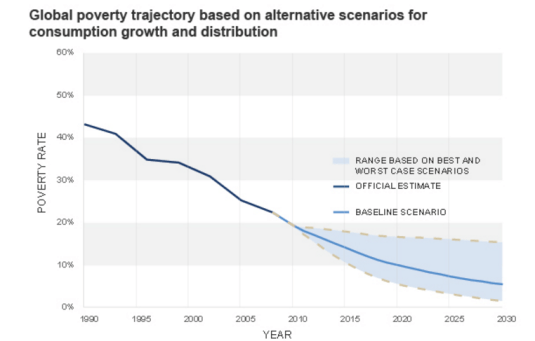
They can be no other explanation than mass kidnappings are stopping principled ODA activists such as in Oxfam from dancing in the streets celebrating the success of capitalism in starting the final countdown to the abolition of extreme poverty.
More reasons to loathe anti-GMO activists
25 Mar 2016 Leave a comment
in development economics, growth disasters, growth miracles, health economics Tags: agricultural economics, antiscience left, GMOs
Poverty reduction in Africa is even greater than previously thought
24 Mar 2016 Leave a comment
in applied welfare economics, econometerics, economic history, growth disasters, growth miracles Tags: Africa, extreme poverty, global poverty, The Great campus game
The 1st @PaulKrugman on globalisation & development @harleyhs #TPPANoWay
22 Mar 2016 Leave a comment
in development economics, economic history, growth disasters, growth miracles, international economics Tags: anti-market bias, antiforeign bias, GATT, gender analysis, gender wage gap, makework bias, NAFTA, pessimism bias, preferential trading agreements, rational irrationality, TPPA, WTO
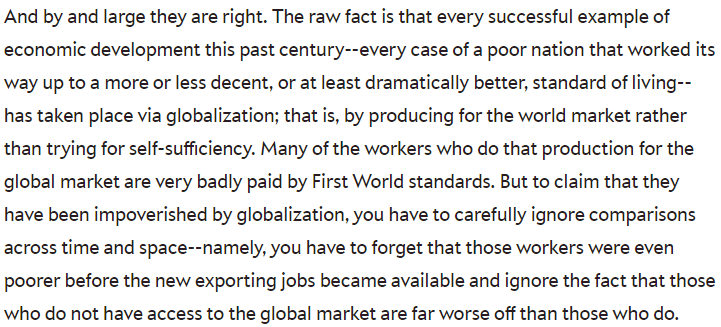
Source: Paul Krugman (1997) Enemies of the WTO.
This visiting American education professor who specialises in globalisation, claimed in the linked radio interview that real wages had fallen in the USA and Mexico. Even for the bottom 20% of the USA, their after-tax household incomes increased by 40% since 1979, with most of that after the signing of NAFTA.
Everything that is bad in crony capitalist Mexico is the fault of NAFTA if our visiting academic is to be believed despite trade tripling and investment increasing 600% because of NAFTA.
Women’s earnings growth has been perfectly fine over the last 40 years despite the horrors of NAFTA and the attack on unions and workers rights by a top 1% emboldened by NAFTA and globalisation, if our visiting academic is to be believed.
Gender analysis, gender analysis, where is his gender analysis of NAFTA? Few labour market statistics make sense without being broken down by sex because of the immense economic progress of women in the last 50 years. Can NAFTA claim credit for that?

The Ultimate Resource
09 Mar 2016 Leave a comment
in development economics, economic history, entrepreneurship, growth miracles Tags: The Great Escape
The Great Escape comes to Latin America
07 Mar 2016 Leave a comment
in development economics, economic history, growth disasters, growth miracles Tags: Latin America
Japanese, Korean and US tax revenues as a % of GDP since 1965
02 Mar 2016 Leave a comment
in development economics, economic history, growth miracles, public economics Tags: growth of government, Japan, size of government, South Korea
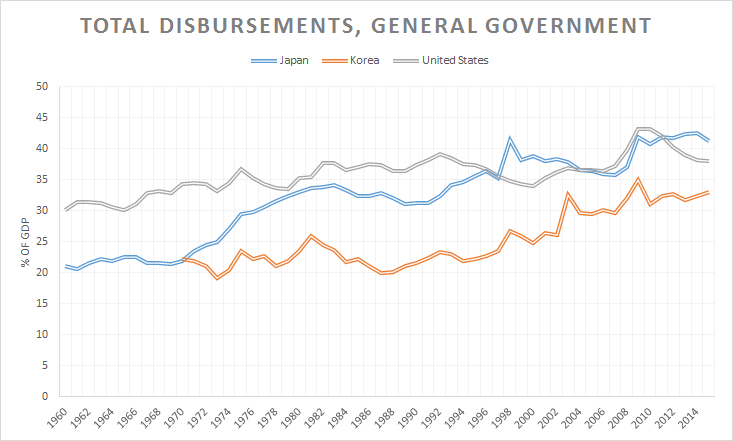
Japanese and Korean growth in the size of government seems to validate Directors’ Law. Government get bigger after countries become rich.
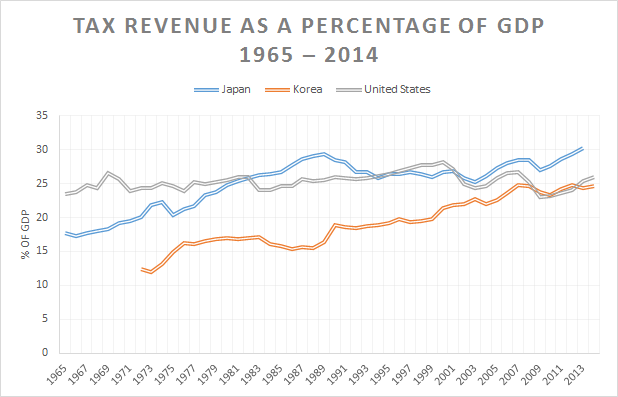
Data extracted on 23 Feb 2016 07:08 UTC (GMT) from OECD.Stat.
Extreme poverty was halved between 1990 and 2010
02 Mar 2016 Leave a comment
in development economics, economic history, growth disasters, growth miracles Tags: extreme poverty, global poverty, The Great Escape
Japanese, Korean and US general government expenditure as a % of GDP since 1960
02 Mar 2016 Leave a comment
in development economics, economic history, growth miracles, Public Choice, public economics Tags: growth of government, Japan, size of government, South Korea
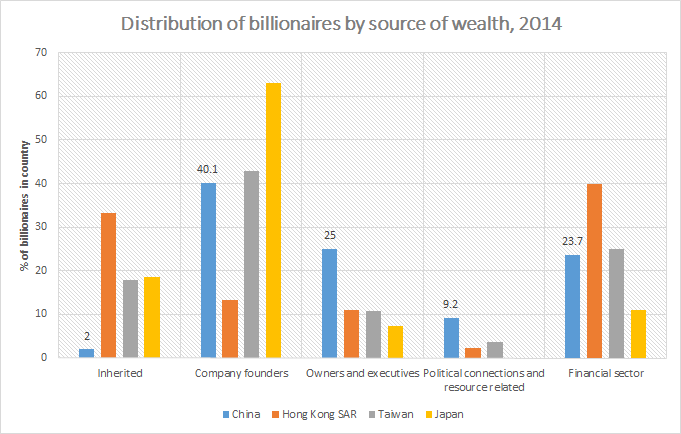
Chinese, Hong Kong, Taiwanese and Japanese billionaires by source of wealth
24 Feb 2016 Leave a comment
in development economics, economic history, entrepreneurship, financial economics, growth miracles, industrial organisation, rentseeking, survivor principle Tags: billionaires, China, entrepreneurial alertness, Hong Kong, Japan, superstar wages, superstars, Taiwan
Surprisingly few billionaires in any of the 4 countries obtained their wealth through political connections. Founding a company seems to be still the path of great wealth even in Japan these days. Hong Kong is a financial centre so the large number of billionaires in its financial sector is no surprise.
@RusselNorman Why 1.3 billion people without access to electricity can’t afford to divest from fossil fuels
20 Feb 2016 Leave a comment
in applied welfare economics, economics, energy economics, environmental economics, global warming, growth disasters, growth miracles Tags: fossil fuel disinvestment, Fossil Fuels, rational irrationality
How did India’s billionaires make their fortunes
17 Feb 2016 Leave a comment
in applied welfare economics, development economics, economic history, economics of regulation, entrepreneurship, growth disasters, growth miracles, industrial organisation Tags: billionaires, entrepreneurial alertness, India, superstars, top 1%
A decent number of India’s billionaires founded a company.

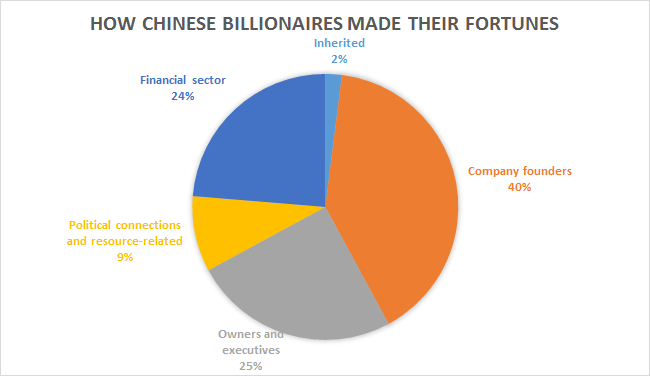
How did the Chinese billionaires make their money?
15 Feb 2016 Leave a comment
in applied price theory, development economics, economic history, entrepreneurship, growth miracles, human capital, industrial organisation, labour economics Tags: billionaires, China, entrepreneurial alertness, superstars, top 1%


Recent Comments