TweetIn today’s National Post I celebrate the 250th anniversary – which is this coming Monday, March 9th – of the publication of Adam Smith’s An Inquiry Into the Nature and Causes of the Wealth of Nations. A slice: Smith then inquired into wealth’s causes. He didn’t inquire into the causes of poverty. Smith understood that…
The Wealth of Nations: Happy 250th Birthday!
The Wealth of Nations: Happy 250th Birthday!
09 Mar 2026 Leave a comment
in development economics, applied price theory, economic history, Adam Smith, comparative institutional analysis
The actual helicopter drop?
07 Mar 2026 Leave a comment
in applied price theory, development economics, financial economics, growth disasters, history of economic thought, macroeconomics, Milton Friedman, monetarism, monetary economics, property rights
When Milton Friedman pondered what would happen if a helicopter dropped $1,000 from the sky, he likely never imagined that one day a military cargo plane would scatter millions of dollars into one of Bolivia’s largest cities. But while the Nobel Prize-winning economist worried about the inflation that an influx of cash could generate, the impact in…
The actual helicopter drop?
Pinker and Tupy tout worldwide progress, espouse an objective morality
15 Feb 2026 Leave a comment
in development economics, economic history, economics of religion, liberalism, Marxist economics Tags: Age of Enlightenment, free speech

In this Free Press article, Steve Pinker and Marian Tupy (the latter identified as “the founder and editor of HumanProgress.org, a senior fellow at the Cato Institute, and co-author of Superabundance”) once again recount the undoubtable progress that humanity has made over the past six or seven centuries. The progress described here will be familiar…
Pinker and Tupy tout worldwide progress, espouse an objective morality
Colonialism, Slavery, and Foreign Aid (with William Easterly) 12/8/25
01 Feb 2026 1 Comment
in applied price theory, comparative institutional analysis, constitutional political economy, development economics, economic history, growth disasters, growth miracles, history of economic thought, labour economics, labour supply, law and economics, property rights Tags: age of empires, economics of colonialism, economics of slavery
Real Environmental Crisis Is Not Climate Change
01 Feb 2026 1 Comment
in development economics, economics of climate change, energy economics, environmental economics, environmentalism, global warming, growth disasters, health economics Tags: climate activists, climate alarmism, public health, water pollution
The real environmental emergency isn’t the modest warming that has helped humans thrive. It’s land degradation, poisoned water and other forms of pollution that are burying the Global South alive. Yes, we’ve been fighting the wrong environmental war.
Real Environmental Crisis Is Not Climate Change
Violent Saviors: The West’s Conquest of the Rest
29 Jan 2026 Leave a comment
in applied price theory, comparative institutional analysis, constitutional political economy, development economics, economic history, economics of bureaucracy, growth disasters, growth miracles, history of economic thought, income redistribution, law and economics, liberalism, libertarianism, Marxist economics, property rights, Public Choice, rentseeking Tags: age of empires, economics of colonialism
Climate Change Economics, Skip the Hysteria (Lomborg)
25 Jan 2026 Leave a comment
in development economics, economic history, economics of climate change, economics of regulation, energy economics, environmental economics, environmentalism, global warming, resource economics Tags: climate activists, climate alarmism, pessimism bias

For those who prefer reading, below is an excerpted transcript lightly edited from the interview, including my bolds and added images. Hey everyone, it’s Andrew Klavan with this week’s interview with Bjorn Lomborg. I met Bjorn, he probably doesn’t remember this, but I met him many, many years ago at Andrew Breitbart’s house. Andrew brought […]
Climate Change Economics, Skip the Hysteria (Lomborg)
Part II: Oxfam Is a Leftist Joke, not a Real Charity
20 Jan 2026 1 Comment
in applied price theory, development economics, economic growth, economic history, growth miracles, income redistribution, labour economics, liberalism, macroeconomics, Marxist economics, poverty and inequality, Public Choice, technological progress Tags: regressive left, The Great Enrichment

As I wrote nine years ago, Oxfam is a pathetic organization. Originally created to help the poor, it has been captured by activists who peddle class warfare. But they play that role in an incredibly sloppy fashion. In all the debates I’ve been part of over the years, no left-leaning academic has been willing to […]
Part II: Oxfam Is a Leftist Joke, not a Real Charity
Mamdani and Other Socialists Tout South Africa and Cuba as Models for Good Government
09 Jan 2026 Leave a comment
in development economics, growth disasters, history of economic thought, law and economics, liberalism, Marxist economics, politics - USA, property rights, Public Choice

Below is my column in the New York Post on the bizarre effort of Democratic Socialist leaders to herald South…
Mamdani and Other Socialists Tout South Africa and Cuba as Models for Good Government
U.S. Withdraws from the IPCC—and Dismantles a Global Climate Bureaucracy
08 Jan 2026 1 Comment
in development economics, economics of bureaucracy, economics of climate change, energy economics, environmental economics, environmentalism, global warming, International law, politics - USA, Public Choice Tags: climate alarmism
…the exit from IPCC-adjacent institutions is not an isolated gesture, but a blunt, in your face, message that the era of unquestioned deference to transnational climate bureaucracy is over.
U.S. Withdraws from the IPCC—and Dismantles a Global Climate Bureaucracy
Why Some US Indian Reservations Prosper While Others Struggle
06 Jan 2026 Leave a comment
in applied price theory, development economics, economics of bureaucracy, economics of regulation, entrepreneurship, growth disasters, growth miracles, industrial organisation, labour economics, law and economics, politics - USA, property rights, Public Choice

Our colleague Thomas Stratmann writes about the political economy of Indian reservations in his excellent Substack Rules and Results. Across 123 tribal nations in the lower 48 states, median household income for Native American residents ranges from roughly $20,000 to over $130,000—a sixfold difference. Some reservations have household incomes comparable to middle-class America. Others face persistent…
Why Some US Indian Reservations Prosper While Others Struggle
So much for overpopulation
02 Jan 2026 Leave a comment
in development economics, economic history, labour economics, labour supply, population economics Tags: ageing society, population bust
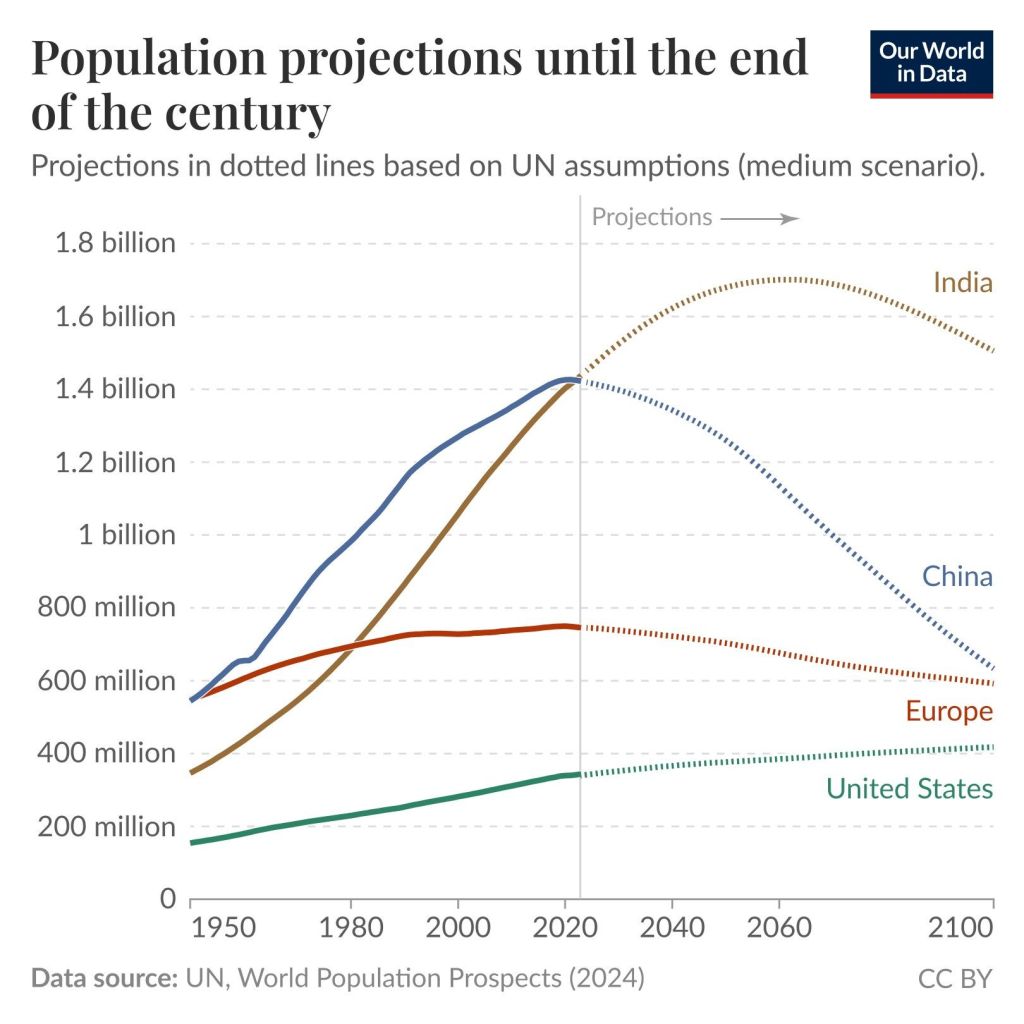
Canada fact of the day
29 Dec 2025 Leave a comment
in applied price theory, development economics, labour economics, labour supply, poverty and inequality, welfare reform Tags: Canada
Since 2015, Canada has tripled its Indigenous spending – paying more than on national defense. Over those same years, Indigenous people have suffered a catastrophic collapse in health and well-being: on average almost a full decade of lost life expectancy. That is from David Frum. The post Canada fact of the day appeared first on…
Canada fact of the day
Kids nowadays have it so difficult-Putting things in perspective.
28 Dec 2025 Leave a comment
in defence economics, development economics, economic history, growth disasters, war and peace

I think 2021 will be remembered where people lost the sense of perspective. So many people are saying how kids nowadays have it more difficult then ever before. The picture above A starving child in Sudan, 1993. Terezka, a girl who grew up in a concentration camp, draws a picture of her Poland “home”, December […]
Kids nowadays have it so difficult-Putting things in perspective.
Book review: Economics of the New Zealand Maori
27 Dec 2025 Leave a comment
in development economics, economic history, labour economics, law and economics, politics - New Zealand, property rights Tags: economic anthropology, Maori economic development
In amongst my collection of books, I have assembled a number of classics, including some reasonably rare editions. One of those is Economics of the New Zealand Maori [*] by Raymond Firth. This book was originally published from Firth’s PhD thesis in 1929 (the thesis was approved in 1927 at the University of London). The edition…
Book review: Economics of the New Zealand Maori
 Utopia, you are standing in it!
Recent Comments