TweetIn today’s National Post I celebrate the 250th anniversary – which is this coming Monday, March 9th – of the publication of Adam Smith’s An Inquiry Into the Nature and Causes of the Wealth of Nations. A slice: Smith then inquired into wealth’s causes. He didn’t inquire into the causes of poverty. Smith understood that…
The Wealth of Nations: Happy 250th Birthday!
The Wealth of Nations: Happy 250th Birthday!
09 Mar 2026 Leave a comment
in Adam Smith, applied price theory, comparative institutional analysis, development economics, economic history
The Nightmare Scenario Leading to a Wealth Tax
07 Mar 2026 Leave a comment
in applied price theory, economic growth, economic history, entrepreneurship, fiscal policy, income redistribution, liberalism, macroeconomics, Marxist economics, politics - USA, Public Choice, public economics Tags: taxation and entrepreneurship, taxation and investment, taxation and labour supply

Is it time to pack our belongings and head to Argentina, where Javier Milei is dramatically improving economic policy and cultural attitudes? I’m joking, but also not joking. The reason I’m not joking is that there’s a very depressing scenario for America’s near-term economic outlook. It involves these six potential developments. Thanks in part to […]
The Nightmare Scenario Leading to a Wealth Tax
Dismantling the competition myth
06 Mar 2026 Leave a comment
in Austrian economics, comparative institutional analysis, economic history, economics of regulation, entrepreneurship, history of economic thought, industrial organisation, law and economics, organisational economics, politics - Australia, technological progress, theory of the firm Tags: competition law, creative destruction
Ask anyone in Australia’s competition law community what transformed the economy, and you will hear a familiar story. Australia was once a cartelised, complacent place where businesses divided up markets and consumers paid the price. Then came the Trade Practices Act in 1974, and competition law forced firms to compete. This is not a fringe […]
Dismantling the competition myth
When Rubber Was the Critical Imported Good
05 Mar 2026 Leave a comment
in defence economics, economic history, transport economics, war and peace Tags: World War II
At the start of World War II, the US economy relied almost exclusively on imported rubber as the key material for making, among other things, tires for cars and airplanes. The dependency was well-known, but in April 1942, when Japan cut off the foreign supply, the US was unprepared. Synthetic rubber ended up being part…
When Rubber Was the Critical Imported Good
Iranian women: 1970 vs. 2020
03 Mar 2026 Leave a comment
in defence economics, discrimination, economic history, gender, labour economics, liberalism, Marxist economics Tags: Age of Enlightenment, Iran, sex discrimination

I put something like this up years ago, but it’s a good way to see, with just a few clicks, what happened to Iran after the “Revolution”. Let’s taken women’s dress, a touchstone of misogyny and theocratic oppression. Before the Islamic Revolution of 1979, it was a pretty free country in that respect, and everyone…
Iranian women: 1970 vs. 2020
The Macroeconomic Effects of Tariffs
02 Mar 2026 Leave a comment
in applied price theory, econometerics, economic history, history of economic thought, international economics Tags: free trade, tariffs
We study the macroeconomic effects of tariff policy using U.S. historical data from 1840–2024. We construct a narrative series of plausibly exogenous tariff changes – based on major legislative actions, multilateral negotiations, and temporary surcharges – and use it as an instrument to identify a structural tariff shock. Tariff increases are contractionary: imports fall sharply,…
The Macroeconomic Effects of Tariffs
The Treaty – Drowning in a sea of misinformation in 2026
01 Mar 2026 Leave a comment
in constitutional political economy, economic history, law and economics, politics - New Zealand, property rights Tags: constitutional law, political correctness, racial discrimination, regressive left
I write this as a descendant of Henry Williams, who arrived here in 1823 as an ex Royal Navy officer and Head of the Church Missionary Society of New Zealand. He translated the Treaty of Waitangi into te reo Maori in 1840. The document he prepared with his eldest son Edward, on the evening of […]
The Treaty – Drowning in a sea of misinformation in 2026
The history of anti-semitism
27 Feb 2026 Leave a comment
in defence economics, economic history, economics of crime, law and economics, liberalism, politics, war and peace Tags: Nazi Germany, The Holocaust racial discrimination, World War II
Ashley Church writes: The Holocaust did not begin with the gas chambers of Auschwitz or Treblinka. It began much earlier, with ideas, laws, exclusions, and the slow normalisation of cruelty. The part that history often forgets. When Hitler became Chancellor of Germany in 1933, there was no plan to exterminate the Jews. What did exist…
The history of anti-semitism
The bizarre world of Advertising
26 Feb 2026 Leave a comment
in economic history, economics of information, economics of media and culture, history of economic thought, industrial organisation

It is not often I am speechless but that is exactly what I was when I saw some of these advertisements and products from days of yore. You would not get away with it by today’s standards. Vintage newspaper ad for heroin Who doesn’t like a bit of cocaine on their candy. Stay fit and […]
The bizarre world of Advertising
Is There a Political Downside to Tax Migration?
24 Feb 2026 Leave a comment
in applied price theory, economic growth, economic history, fiscal policy, labour economics, labour supply, macroeconomics, politics - USA, Public Choice, public economics Tags: taxation and entrepreneurship, taxation and investment, taxation and labour supply

I’m a big fan of tax migration. I cheer when productive people escape high-tax states or high-tax nations. And when the geese with the golden eggs fly away, it thwarts the plans of greedy politicians. The latest example of this is the exodus of billionaires – worried about a wealth tax – from California (the […]
Is There a Political Downside to Tax Migration?
The Economic Burden of Protectionism, Part III
23 Feb 2026 Leave a comment
in applied price theory, econometerics, economic history, history of economic thought, industrial organisation, international economics, politics - USA, survivor principle

In Part I and Part II of this series, we looked at research showing that Americans are bearing the burden of Trump’s trade taxes. Those findings are a useful antidote to Trump’s silly and illiterate claim that foreign companies are swallowing the added cost. In both of those columns, however, I pointed out that I’m […]
The Economic Burden of Protectionism, Part III
A course of indoctrination at the University of Chicago
19 Feb 2026 Leave a comment
in defence economics, discrimination, economic history, economics of crime, International law, law and economics, laws of war, liberalism, Marxist economics, politics - USA, war and peace Tags: economics of colonialism, Gaza Strip, Israel, Middle-East politics, regressive left, war against terror, West Bank

There are many courses in universities that seem not to be exercises in objective teaching and learning, but rather courses designed to foist certain political ideologies or points of view on students. One of them at this university was called to my attention by several in our community; it seems to be a course on…
A course of indoctrination at the University of Chicago
Any Hope for a European Economic Renaissance?
18 Feb 2026 Leave a comment
in applied price theory, budget deficits, economic growth, economic history, economics of education, economics of regulation, fiscal policy, industrial organisation, labour economics, labour supply, macroeconomics Tags: European Union
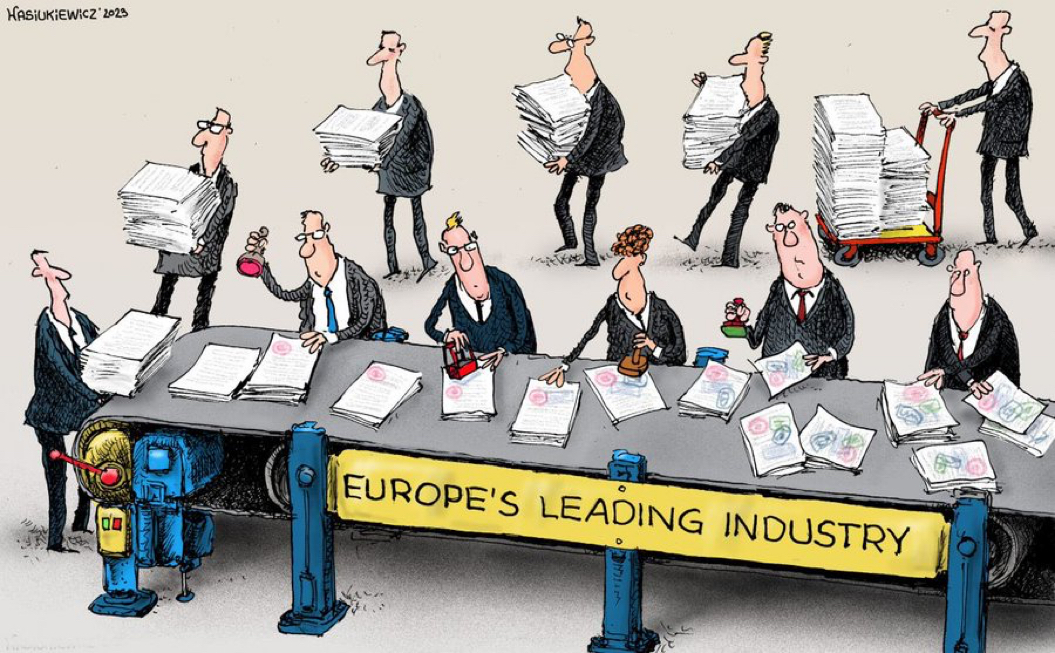
The good news is that Europe has a lot of economic freedom by world standards. Especially Western Europe. The bad news is that economic freedom has been declining in Western Europe. To make matters worse, Europe has a big demographic problem, with a growing number of older people over time who have been promised benefits […]
Any Hope for a European Economic Renaissance?
The rise and fall of British gambling
18 Feb 2026 Leave a comment
in economic history, economics of regulation, health economics
Most people know that the number of drinkers and smokers is in decline in the UK, but you might be surprised to hear that the same is true of gamblers. For the first time since the early 1990s, gamblers are in the minority with only 48% of English adults engaging in any gambling activity in…
The rise and fall of British gambling
Pinker and Tupy tout worldwide progress, espouse an objective morality
15 Feb 2026 Leave a comment
in development economics, economic history, economics of religion, liberalism, Marxist economics Tags: Age of Enlightenment, free speech

In this Free Press article, Steve Pinker and Marian Tupy (the latter identified as “the founder and editor of HumanProgress.org, a senior fellow at the Cato Institute, and co-author of Superabundance”) once again recount the undoubtable progress that humanity has made over the past six or seven centuries. The progress described here will be familiar…
Pinker and Tupy tout worldwide progress, espouse an objective morality
 Utopia, you are standing in it!
Recent Comments