
In case you missed my *Build, Baby, Build* because of the 2024 election.
The Timing of Abundance
Celebrating humanity's flourishing through the spread of capitalism and the rule of law
18 Jul 2025 Leave a comment
in applied price theory, economic history, economics of bureaucracy, economics of regulation, environmental economics, income redistribution, law and economics, politics - USA, property rights, Public Choice, rentseeking, urban economics Tags: housing affordability, land supply, zoning
In case you missed my *Build, Baby, Build* because of the 2024 election.
The Timing of Abundance
15 Jul 2025 Leave a comment
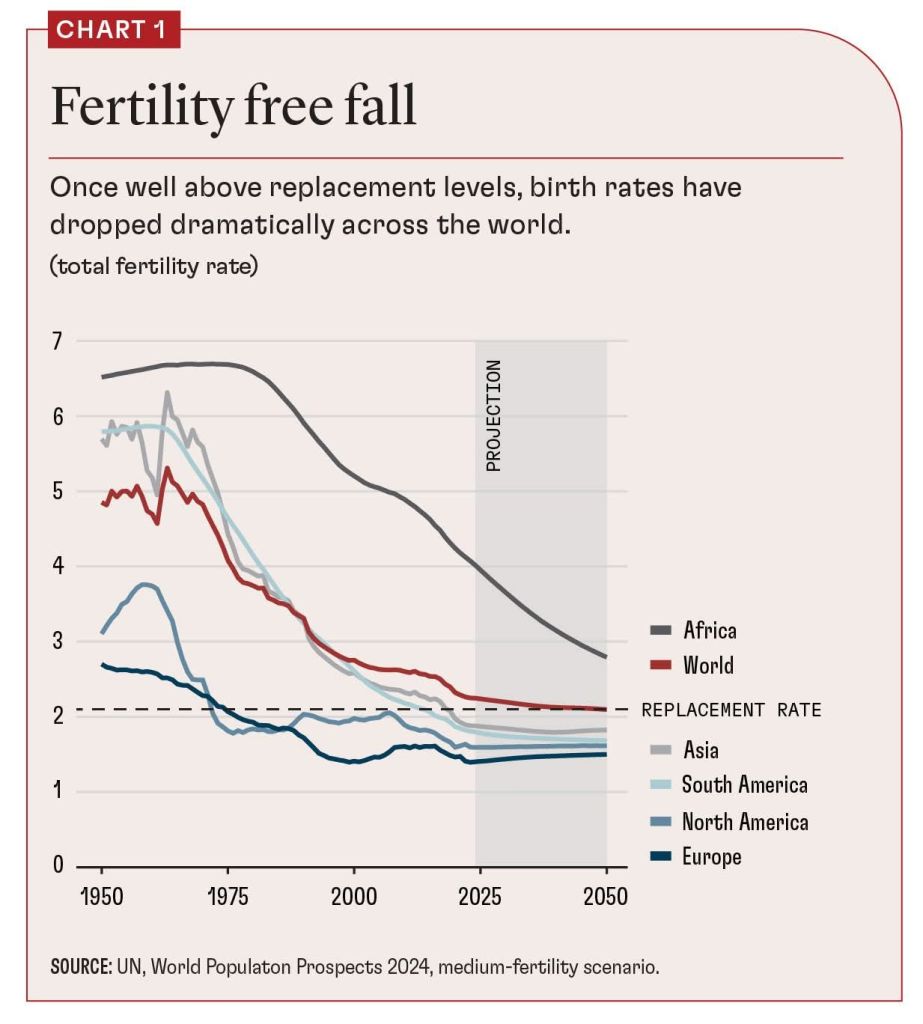
in development economics, economic history, labour economics, labour supply, population economics Tags: ageing society, economics of fertility, population bust
14 Jul 2025 Leave a comment
in economic history, economics of education, economics of regulation, liberalism, Marxist economics, politics - New Zealand Tags: pessimism bias, The Great Enrichment
We should not assume that all adopted innovations are progressive. Jonathon Haidt’s ‘The Anxious Generation’ illustrates that sometimes they require social measures to enhance well being. Brian Easton writes – The Anxious Generation is a book which probably everyone engaging with adolescents should read. Haidt’s thesis is that smartphones replacing flip phones led to a marked […]
Is Progress Progressive?
13 Jul 2025 Leave a comment
in defence economics, development economics, economic history Tags: industrial revolution

My ECONS101 class discussed the Industrial Revolution in class last week, focusing on why it happened first in England, rather than France or China or elsewhere. By coincidence, I was just finishing up reading the book Empire of Guns by Priya Satia. A conventional view of factors underlying the Industrial Revolution in England, such as the…
Book review: Empire of Guns
11 Jul 2025 Leave a comment
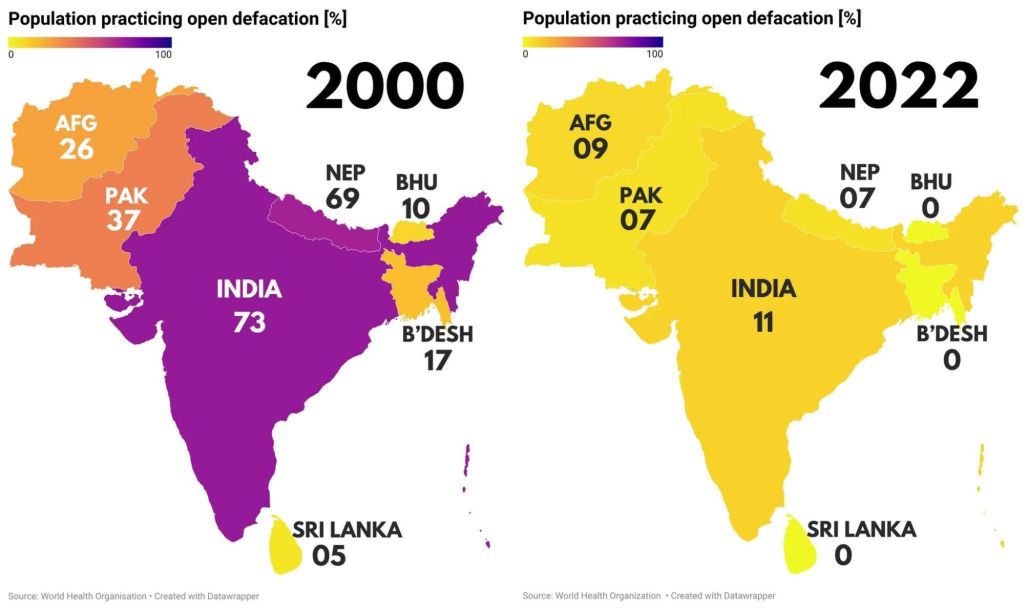
in development economics, economic history, growth disasters, growth miracles, health economics Tags: India, Pakistan
04 Jul 2025 Leave a comment
in applied price theory, econometerics, economic growth, economic history, industrial organisation, labour economics, labour supply, macroeconomics, politics - USA

In the long run, a rising standard of living is always and everywhere based on productivity growth. Thus, Austan Goolsbee notedin a keynote address at the “Summit” conference held at the Stanford Institute of Economic Policy Research (SIEPR) in February (“Remarks on Productivity Growth and Monetary Policy,” February 28, 2025): As Goolsbee notes, annual productivity…
The Weird and Lovely Surge of US Productivity Growth
03 Jul 2025 Leave a comment
in applied price theory, discrimination, econometerics, economic history, gender, health and safety, human capital, labour economics, labour supply, occupational choice, poverty and inequality Tags: gender wage gap, sex discrimination
02 Jul 2025 1 Comment
in economic history, economics of education, environmentalism, liberalism, Marxist economics, politics - New Zealand, Rawls and Nozick Tags: Age of Enlightenment, conjecture and refutation, cranks, philosophy of science, political correctness, regressive left
I’ve written a lot about the controversy in New Zealand involving whether the indigenous “way of knowing,” Mātauranga Māori (MM), is equivalent to modern science (often called “Western science”) and, as many maintain, should be taught alongside modern in science classes (see all my posts here). As I’ve noted, because MM does have elements of […]
A interview with a “heterodox” New Zealand scientist: “Why Mātauranga Māori Isn’t Science:”
29 Jun 2025 Leave a comment
in economic history, health economics Tags: anti-vaccination movement, cranks, vaccines
28 Jun 2025 1 Comment
in applied price theory, Austrian economics, comparative institutional analysis, development economics, economic history, history of economic thought, income redistribution, industrial organisation, international economics, liberalism, politics - USA, Public Choice
TweetAt CapX, I explain what motivated Phil Gramm and me to write our book, The Triumph of Economic Freedom: Debunking the Seven Great Myths of American Capitalism. A slice: Likewise with America’s own industrial revolution, the ‘Gilded Age’. American schoolchildren are taught that the final third of the 19th century witnessed John D. Rockefeller and…
Bad Economic History Fuels Bad Present-Day Economic Policies
25 Jun 2025 Leave a comment
in applied price theory, economic history, history of economic thought, human capital, labour economics, labour supply, politics - USA, poverty and inequality Tags: economics of immigration, employment law, monopsony
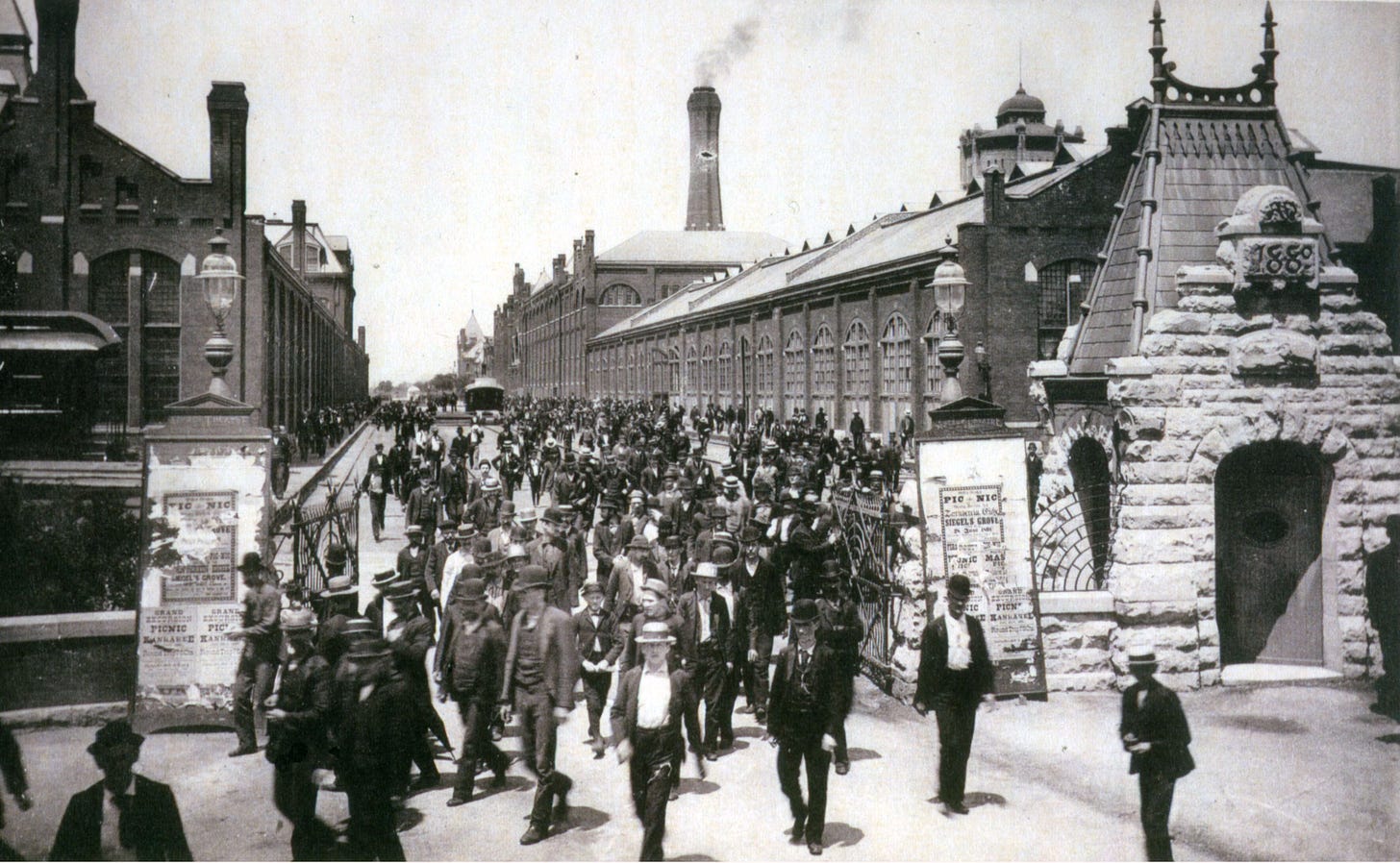
A quarter century ago, economist Price Fishback published “Operations of ‘Unfettered’ Labor Markets: Exit and Voice in American Labor Markets at the Turn of the Century” 1,762 more words
Unfettered: Fishback 25 Years Later
25 Jun 2025 Leave a comment
in economic history, health economics Tags: cancer survival rates, The Great Escape
24 Jun 2025 Leave a comment
in defence economics, economic history, International law, laws of war, war and peace Tags: bombing of Germany, Gaza Strip, Iran, Israel, Middle-East politics, World War I, World War II
If the best course of action is to avoid war, then the second-best course, with war already raging, is to end it. Chris Trotter writes – THE LOGIC OF WAR is pitiless and relentless. Once embarked upon, warfare creates needs and imposes priorities that cannot be ignored without imposing unsustainable costs on one’s own military […]
The Grim Logic of Israel’s War
24 Jun 2025 Leave a comment
in economic history, health economics Tags: anti-vaccination movement, vaccines
24 Jun 2025 Leave a comment
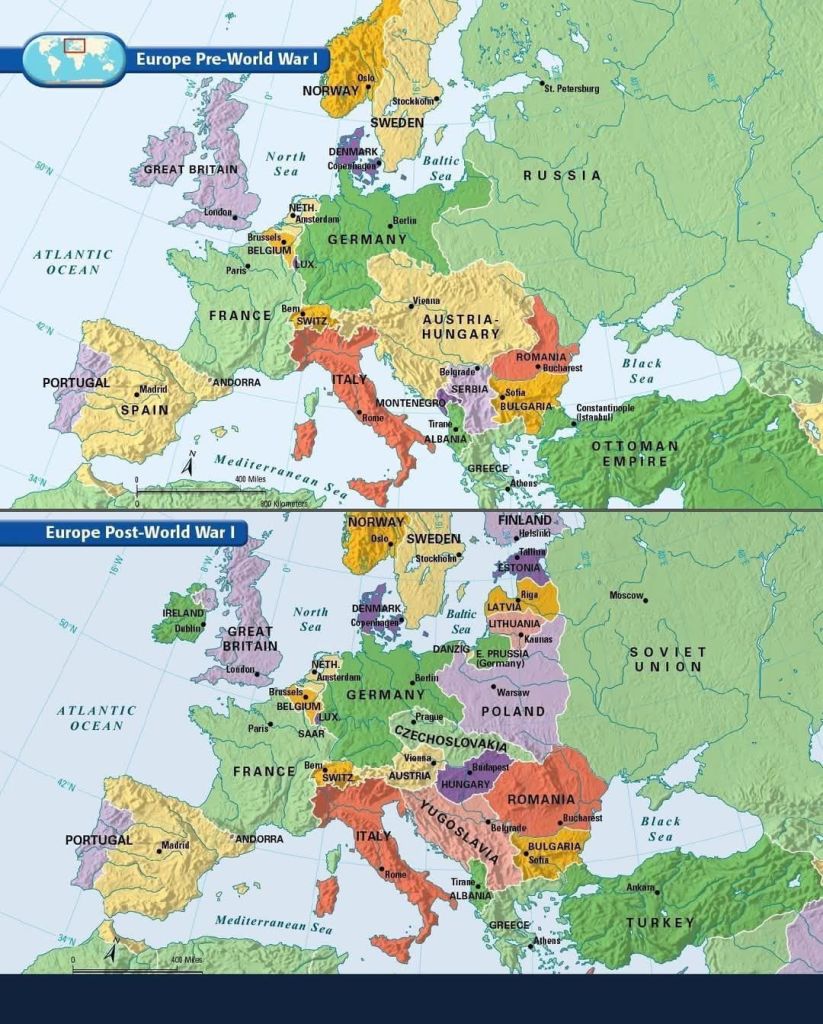
in defence economics, economic history, war and peace Tags: economics of borders, maps, World War I
Celebrating humanity's flourishing through the spread of capitalism and the rule of law
Scholarly commentary on law, economics, and more
Beatrice Cherrier's blog
Celebrating humanity's flourishing through the spread of capitalism and the rule of law
Celebrating humanity's flourishing through the spread of capitalism and the rule of law
Celebrating humanity's flourishing through the spread of capitalism and the rule of law
Why Evolution is True is a blog written by Jerry Coyne, centered on evolution and biology but also dealing with diverse topics like politics, culture, and cats.
Celebrating humanity's flourishing through the spread of capitalism and the rule of law
Celebrating humanity's flourishing through the spread of capitalism and the rule of law
A rural perspective with a blue tint by Ele Ludemann
DPF's Kiwiblog - Fomenting Happy Mischief since 2003
Celebrating humanity's flourishing through the spread of capitalism and the rule of law
The world's most viewed site on global warming and climate change
Tim Harding's writings on rationality, informal logic and skepticism
A window into Doc Freiberger's library
Let's examine hard decisions!
Commentary on monetary policy in the spirit of R. G. Hawtrey
Thoughts on public policy and the media
Celebrating humanity's flourishing through the spread of capitalism and the rule of law
Politics and the economy
A blog (primarily) on Canadian and Commonwealth political history and institutions
Reading between the lines, and underneath the hype.
Economics, and such stuff as dreams are made on
"The British constitution has always been puzzling, and always will be." --Queen Elizabeth II
Celebrating humanity's flourishing through the spread of capitalism and the rule of law
Celebrating humanity's flourishing through the spread of capitalism and the rule of law
WORLD WAR II, MUSIC, HISTORY, HOLOCAUST
Undisciplined scholar, recovering academic
Celebrating humanity's flourishing through the spread of capitalism and the rule of law
Res ipsa loquitur - The thing itself speaks
Celebrating humanity's flourishing through the spread of capitalism and the rule of law
Researching the House of Commons, 1832-1868
Articles and research from the History of Parliament Trust
Reflections on books and art
Posts on the History of Law, Crime, and Justice
Celebrating humanity's flourishing through the spread of capitalism and the rule of law
Exploring the Monarchs of Europe
Cutting edge science you can dice with
Small Steps Toward A Much Better World
“We do not believe any group of men adequate enough or wise enough to operate without scrutiny or without criticism. We know that the only way to avoid error is to detect it, that the only way to detect it is to be free to inquire. We know that in secrecy error undetected will flourish and subvert”. - J Robert Oppenheimer.
The truth about the great wind power fraud - we're not here to debate the wind industry, we're here to destroy it.
Celebrating humanity's flourishing through the spread of capitalism and the rule of law
Celebrating humanity's flourishing through the spread of capitalism and the rule of law
Economics, public policy, monetary policy, financial regulation, with a New Zealand perspective
Celebrating humanity's flourishing through the spread of capitalism and the rule of law
Restraining Government in America and Around the World


 Utopia, you are standing in it!
Recent Comments