And in just twenty years too. The following graph is terrifying – unless you love the idea of a de-facto One Party State, which the Left does.
Changes in Political Ideology by Occupation
Changes in Political Ideology by Occupation
13 Feb 2024 Leave a comment
in economic history, liberalism, Marxist economics, politics - USA Tags: regressive left
T. C. Koopmans Demolishes the Phillips Curve as a Guide to Policy
12 Feb 2024 Leave a comment
in business cycles, econometerics, economic history, history of economic thought, macroeconomics, monetary economics
Nobel Laureate T. C. Koopmans wrote one of the most famous economics articles of the twentieth century, “Measurement Without Theory,” a devastating review of an important, and in many ways useful and meritorious, study of business cycles by two of the fathers of empirical business-cycles research, Arthur F. Burns and Wesley C. Mitchell, Measuring Business […]
T. C. Koopmans Demolishes the Phillips Curve as a Guide to Policy
Another gender gap gone
11 Feb 2024 Leave a comment
in discrimination, economic history, economics of education, gender, human capital, labour economics, labour supply, occupational choice

Is El Salvador special?
10 Feb 2024 Leave a comment
in development economics, economic history, economics of crime, growth disasters, law and economics
But Bukele copycats and those who believe his model can be replicated far and wide overlook a key point: The conditions that allowed him to wipe out El Salvador’s gangs are unlikely to jointly appear elsewhere in Latin America. El Salvador’s gangs were unique, and far from the most formidable criminal organizations in the entire […]
Is El Salvador special?
The highly inconvenient Sir Apirana Ngata
10 Feb 2024 Leave a comment
in comparative institutional analysis, constitutional political economy, economic history, income redistribution, law and economics, liberalism, Marxist economics, politics - New Zealand, property rights, Public Choice, rentseeking Tags: constitutional law
Graham Adams writes — Sir Apirana Ngata has a pre-eminent place in the pantheon of Māori luminaries. He is widely regarded as a visionary leader who, in an illustrious political career, championed biculturalism when assimilationist policies were the norm. He energetically promoted Māori language and culture, and land reform. He was an MP for nearly […]
The highly inconvenient Sir Apirana Ngata
The Great Fact
10 Feb 2024 Leave a comment
in development economics, economic growth, economic history, gender, growth miracles, macroeconomics, poverty and inequality Tags: The Great Enrichment, The Great Fact

Worry Not About So-Called “Trade Deficits”
10 Feb 2024 Leave a comment
in applied price theory, applied welfare economics, economic history, international economics, politics - USA Tags: current account
TweetThis piece by Rapoza also features a discussion of the U.S. trade deficit in “goods” – any mention of which is a sure sign that the writer is a poor economist. A trade deficit in tangible things is no more economically meaningful than is a trade deficit in yellow things or things that start with…
Worry Not About So-Called “Trade Deficits”
“The Spirit of Aloha”: The Hawaii Supreme Court Challenges the U.S. Supreme Court Over Gun Rights
10 Feb 2024 Leave a comment
in comparative institutional analysis, constitutional political economy, economic history, economics of crime, law and economics, liberalism, politics - USA, property rights Tags: constitutional law, gun control

It has been 65 years since Hawaii became a state, but the Hawaiian Supreme Court appears to be having second thoughts. In an extraordinary ruling, the unanimous Supreme Court rejected the holdings of the United States Supreme Court on the Second Amendment as inapplicable to the 50th states. Hawaii apparently is controlled not by the…
“The Spirit of Aloha”: The Hawaii Supreme Court Challenges the U.S. Supreme Court Over Gun Rights
The Conway speech
08 Feb 2024 Leave a comment
in budget deficits, business cycles, econometerics, economic growth, economic history, economics of bureaucracy, fiscal policy, inflation targeting, labour economics, macroeconomics, monetary economics, politics - New Zealand, Public Choice, unemployment Tags: monetary policy
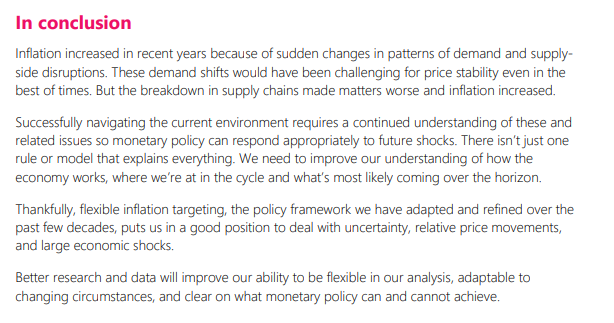
I’ve been rather tied up with other stuff for the last few weeks (including here) which is why I’ve not previously gotten round to writing about the first piece of monetary policy communications from our Reserve Bank this year. That was the “speech” by the Bank’s chief economist (and MPC) member Paul Conway given to […]
The Conway speech
February 6, Death of King George VI of the United Kingdom of Great Britain and Ireland. Part II.
08 Feb 2024 Leave a comment
in comparative institutional analysis, constitutional political economy, economic history Tags: British constitutional law, British history
Prince Albert spent his early life in the shadow of his elder brother, Prince Edward, the heir apparent. Albert attended naval college as a teenager and served in the Royal Navy and Royal Air Force during the First World War. In 1920, he was made Duke of York. He married Lady Elizabeth Bowes-Lyon in 1923. […]
February 6, Death of King George VI of the United Kingdom of Great Britain and Ireland. Part II.
February 6, 1952: Death of King George VI of the United Kingdom, Emperor of India.
08 Feb 2024 Leave a comment
in economic history Tags: British history

George VI (Albert Frederick Arthur George; December 14, 1895 – February 6, 1952) was King of the United Kingdom of Great Britain and Northern Ireland and the Dominions of the British Commonwealth from December 11, 1936 until his death in 1952. He was also the last Emperor of India from 1936 until the British Raj […]
February 6, 1952: Death of King George VI of the United Kingdom, Emperor of India.
Once were a trading nation
07 Feb 2024 Leave a comment
in economic history, international economics, macroeconomics, politics - New Zealand
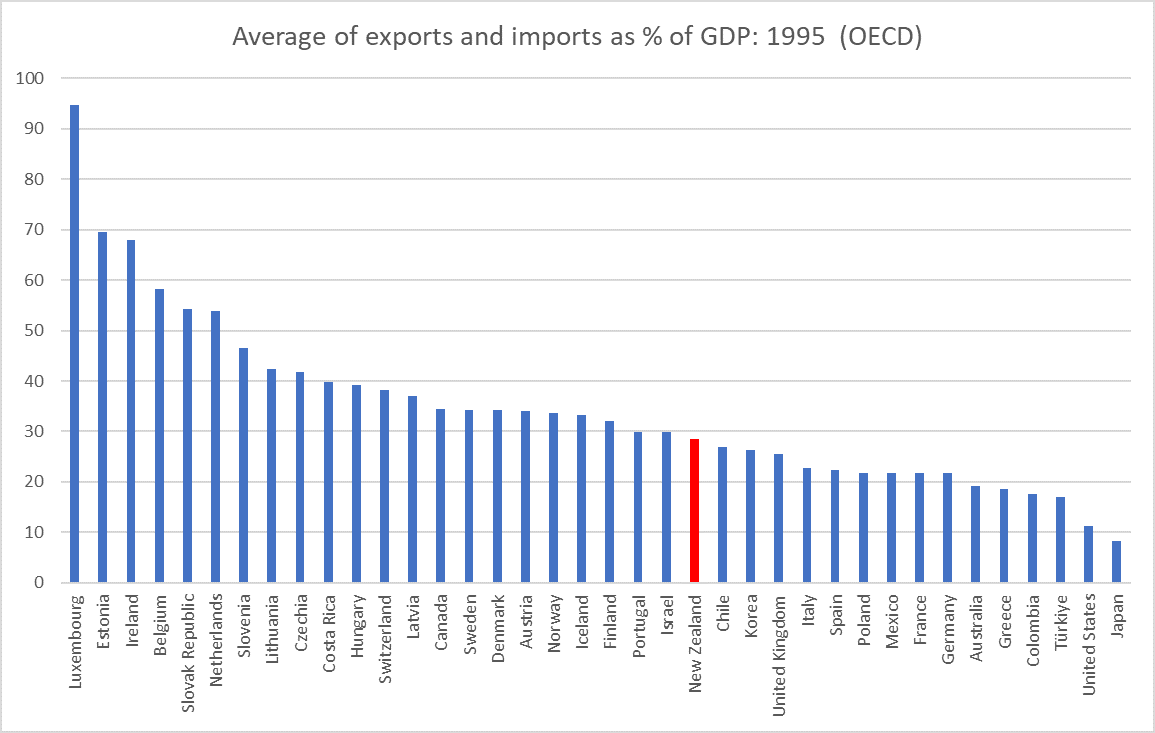
I’ve used here before the snippet from older books that in the decades before the Second World War it was generally accepted that New Zealand had the highest value of foreign trade per capita of any country. Estimates of historical GDP per capita suggest we also had among the very highest levels of real GDP […]
Once were a trading nation
#OTD
06 Feb 2024 Leave a comment
in comparative institutional analysis, discrimination, economic history, law and economics, politics - New Zealand, property rights Tags: constitutional law

📸 Look at this post on Facebook
https://www.facebook.com/share/4VjbNNeEwSJ6ntfW/?mibextid=RXn8sy
BRIAN EASTON: Our understanding of Te Tiriti has evolved organically.
06 Feb 2024 Leave a comment
in comparative institutional analysis, constitutional political economy, economic history, economics of bureaucracy, law and economics, politics - New Zealand, property rights, Public Choice, rentseeking Tags: Age of Enlightenment, constitutional law, Internet, political correctness, racial discrimination, regressive left
Why try to stop that evolution? Brian Easton writes – In 1956, historian Ruth Ross presented her investigations of the treaty signed at Waitangi on 6 February 1840 to a seminar concluding, ‘The [Māori and Pakeha] signatories of 1840 were uncertain and divided in their understanding of [Te Tiriti’s] meaning; who can say now what […]
BRIAN EASTON: Our understanding of Te Tiriti has evolved organically.
Open Borders and Closed Courts: How the Supreme Court Laid the Seeds for the Immigration Crisis
06 Feb 2024 Leave a comment
in economic history, labour economics, labour supply, politics - USA Tags: constitutional law, economics of immigration

Below is my column in The Hill on the worsening situation at the Southern border and how the Supreme Court laid the seeds for this crisis over a decade ago. The courts have left few options for either the states or Congress in compelling the enforcement of federal law. Here is the column:
Open Borders and Closed Courts: How the Supreme Court Laid the Seeds for the Immigration Crisis
 Utopia, you are standing in it!
Recent Comments