02 Jul 2015
by Jim Rose
in discrimination, economics of education, gender, human capital, labour economics
Tags: Australia, British economy, Canada, Japan, lost boys, reversing gender gap
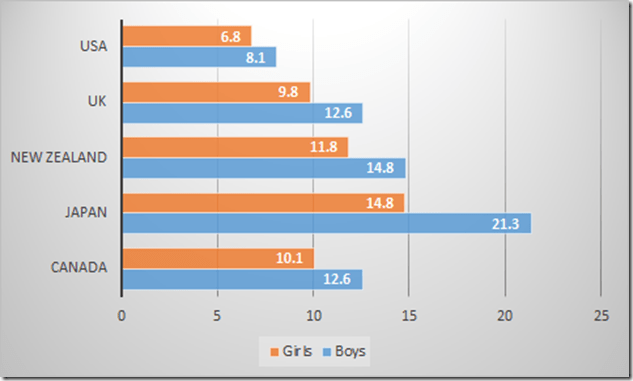
Why are Japanese 15-year-old girls as good at science as teenagers anywhere else in the world?
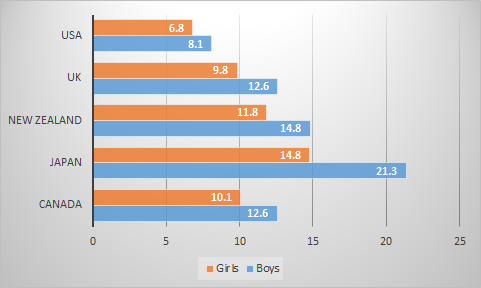
Figure 1: Percentage achieving the proficiency level 5 or higher in sciences by gender, USA, UK, Japan, Canada, Australia, New Zealand, 2012
Source: OECD StatExtract.
01 Jul 2015
by Jim Rose
in economics of education, gender, human capital, labour economics
Tags: Australia, British economy, Canada, Japan, lost boys, reversing gender gap
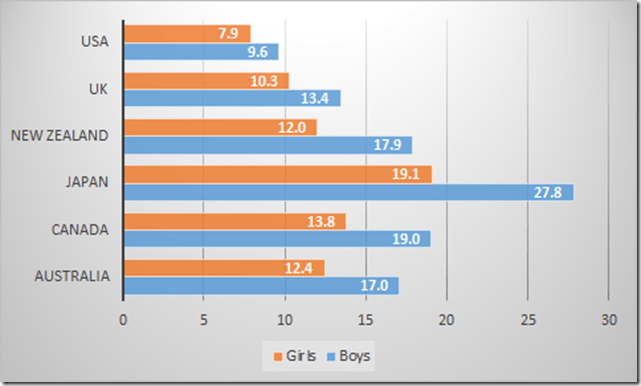
Figure 1: Percentage achieving the proficiency level 5 or higher in mathematics by gender, USA, UK, Japan, Canada, Australia, New Zealand, 2012
Source: OECD StatExtract.
30 Jun 2015
by Jim Rose
in economics of crime, economics of education, economics of regulation, entrepreneurship, health economics, industrial organisation, law and economics, survivor principle
Tags: black markets, economics of prohibition, entrepreneurial alertness, food, nanny state, police, The fatal conceit, unintended consequences
30 Jun 2015
by Jim Rose
in discrimination, economics of education, gender, human capital, labour economics
Tags: Australia, British economy, Canada, Japan, lost boys, reversing gender gap
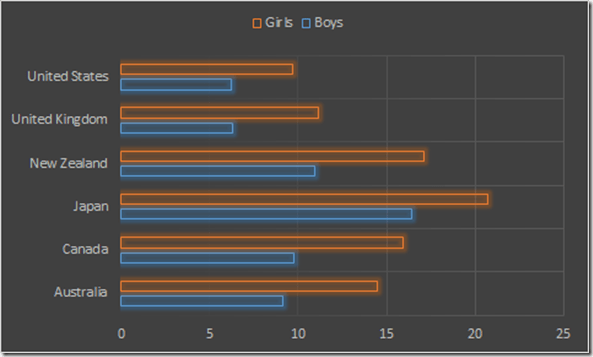
Figure 1: percentage achieving the proficiency level 5 or higher in reading by gender, USA, UK, Japan, Canada, Australia, New Zealand, 2012
Source: OECD StatExtract.
30 Jun 2015
by Jim Rose
in discrimination, economics of education, gender, human capital, labour economics, occupational choice
Tags: economics of personality traits, gender wage gap, reversing gender gap
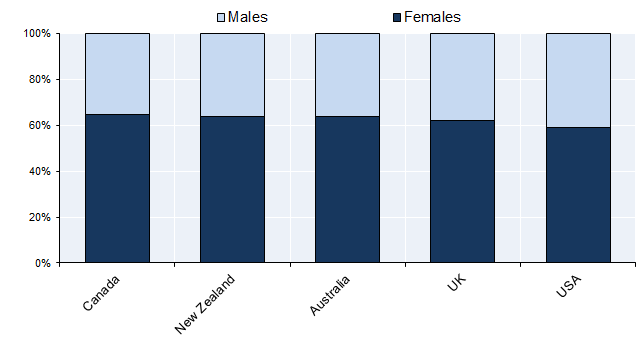
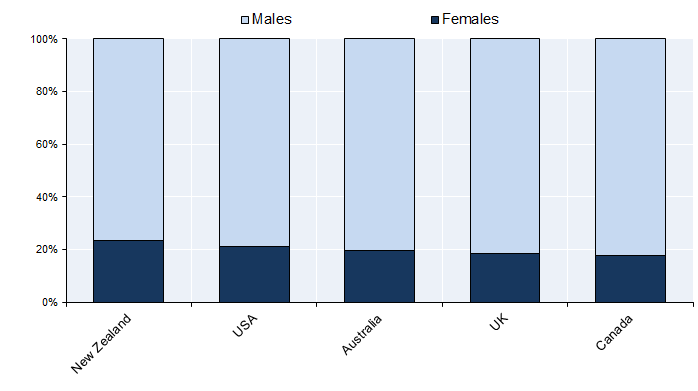
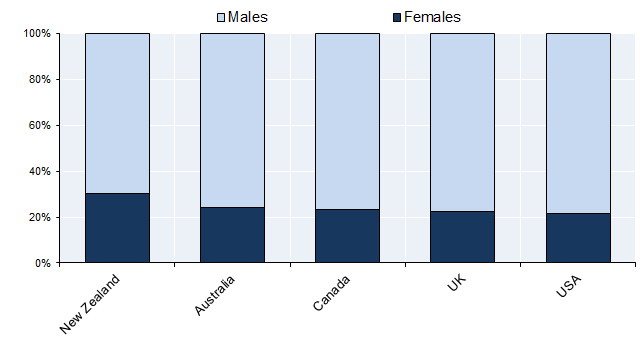
Figure 1: Percentage of tertiary degrees awarded in humanities and arts qualifications by gender, 2012

Source: OECD Education Database.
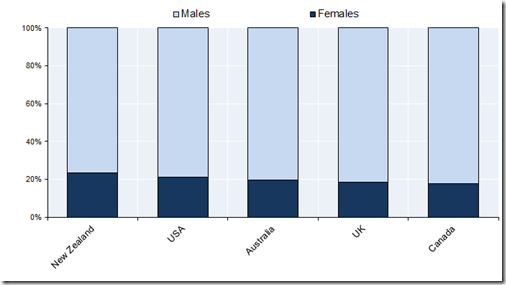
Figure 2: percentage of tertiary degrees awarded in computing qualifications by gender, 2012
Source: OECD Education Database.
Figure 3: Percentage of tertiary degrees awarded in engineering, manufacturing and construction qualifications by gender, 2012

Source: OECD Education Database.
24 Jun 2015
by Jim Rose
in economics of education, human capital, labour economics, labour supply, occupational choice, politics - Australia, politics - New Zealand, politics - USA
Tags: Australia, British economy, Canada, College premium, educational attainment, graduate premium
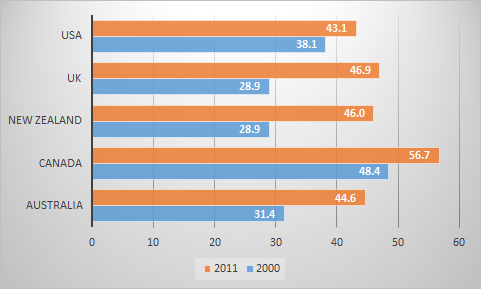
Figure 1: tertiary educational attainment of adults aged 25 to 34 in Australia, New Zealand, USA, UK and Canada, 2000 and 2011
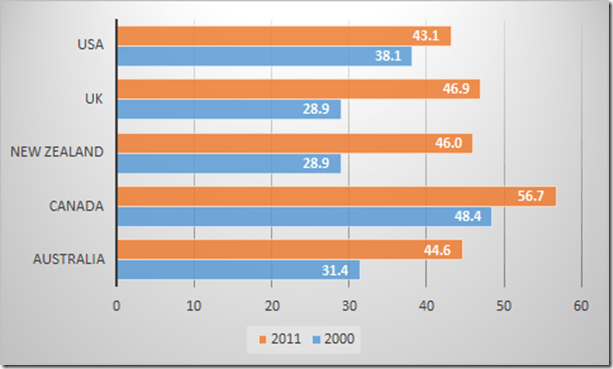
Source: OECD Factbook.
17 Jun 2015
by Jim Rose
in economics of education, entrepreneurship, human capital, industrial organisation, labour economics, labour supply, occupational choice, Public Choice, rentseeking, survivor principle
Tags: antimarket bias, creative distraction, expressive voting, make-work bias, rational ignorance, rational irrationality, technological unemployment
16 Jun 2015
by Jim Rose
in economics of education, human capital, labour economics, occupational choice, politics - Australia, politics - New Zealand, politics - USA
Tags: economics of personality traits, gender gap, PISA, reversing gender gap
Boys’ dominance just about endures in maths: at age 15 they are, on average, the equivalent of three months’ schooling ahead of girls. In science the results are fairly even.
But in reading, where girls have been ahead for some time, a gulf has appeared. In all 64 countries and economies in the study, girls outperform boys. The average gap is equivalent to an extra year of schooling.
Figure 1: : Gender differences (boys – girls) in student performance in reading, mathematics and science in PISA 2012

Source: OECD family database.
HT: The weaker sex | The Economist.
Previous Older Entries Next Newer Entries



 Utopia, you are standing in it!
Recent Comments