Last week my 13-year-old at Wakatipu High studied in English “An introduction to culture and identity in literature”. The class guide was as follows: Below are some links to helpful clips that may be useful for understanding ‘The Why’ when it comes to teaching and learning about all things culture and identity through a Te…
RODNEY HIDE: Schooling Through a Te Ao Maori Lens
RODNEY HIDE: Schooling Through a Te Ao Maori Lens
16 Feb 2025 Leave a comment
in discrimination, economics of education, liberalism, Marxist economics, politics - New Zealand Tags: age of empires, Age of Enlightenment, conjecture and refutation, economics of colonialism, free speech, political correctness, racial discrimination, regressive left
Apparent independent and multiple evolution of binary sex
15 Feb 2025 Leave a comment
in discrimination, economics of education, gender, liberalism, Marxist economics, politics - USA Tags: free speech, gender gap, political correctness, regressive left, sex discrimination

My friend Phil Ward at UC Davis found this reference and called it to my attention. It’s from the Philosophical Transactions of the Royal Society (B), and access is free (click on title below). The pdf with the numbered references is here. The paper is about how the evolution of two different types of gametes […]
Apparent independent and multiple evolution of binary sex
A group letter to the presidents of three evolution/ecology societies objecting to their characterization of sex as a spectrum in humans and all other species
14 Feb 2025 1 Comment
in discrimination, economics of education, gender, liberalism, Marxist economics, politics - USA Tags: Age of Enlightenment, conjecture and refutation, free speech, gender gap, philosophy of science, political correctness, regressive left, sex discrimination
As I reported recently, the Presidents of three organismal-biology societies, the Society for the Study of Evolution (SSE), the American Society of Naturalists (ASN) and the Society of Systematic Biologists (SSB) sent a declaration addressed to President Trump and all the members of Congress. Implicitly claiming that its sentiments were endorsed by the 3500 members […]
A group letter to the presidents of three evolution/ecology societies objecting to their characterization of sex as a spectrum in humans and all other species
Future unemployment will be (mostly) voluntary unemployment
14 Feb 2025 Leave a comment
in economics of education, human capital, labour economics, labour supply, occupational choice, politics - Australia, unemployment
A shortage of electricians means that those willing to endure long shifts and live on remote sites can potentially earn up to A$200,000 (US$124,000) a year — double the national average salary and not far off the average MP salary. “It’s a cup half full/half empty life. You do 12-hour shifts, there’s the heat, the […]
Future unemployment will be (mostly) voluntary unemployment
More on the “three-societies letter” about sex
11 Feb 2025 Leave a comment
in discrimination, economics of education, gender, liberalism, Marxist economics, politics - USA Tags: free speech, political correctness, regressive left, sex discrimination

Here’s a quick update on my critique of a letter issued by three organismal-biology-society Presidents claiming that sex isn’t binary—not in humans and, indeed, not in any species. The signers were the Presidents of the Society for the Study of Evolution (SSE), the American Society of Naturalists (ASN), and the Society of Systematic Biologists (SSB), […]
More on the “three-societies letter” about sex
Does the Gender Wage Gap Actually Reflect Taste Discrimination Against Women?
11 Feb 2025 Leave a comment
in applied price theory, discrimination, econometerics, economics of education, economics of information, economics of media and culture, gender, human capital, labour economics, labour supply Tags: gender wage gap
One explanation of the gender wage gap is taste discrimination, as in Becker (1957). We test for taste discrimination by constructing a novel measure of misogyny using Google Trends data on searches that include derogatory terms for women. We find—surprisingly, in our view—that misogyny is an economically meaningful and statistically significant predictor of the wage […]
Does the Gender Wage Gap Actually Reflect Taste Discrimination Against Women?
Free Sociology
11 Feb 2025 Leave a comment
in economics of education, liberalism, libertarianism, Marxist economics, politics - USA
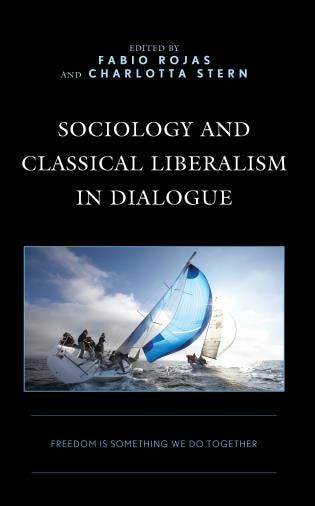
I met Fabio Rojas in January of 1990 when we were both freshmen at UC Berkeley. In 1994, he was the best man at my wedding. Now he’s the chairman of Indiana University’s Sociology Department. Last year, he and Charlotta Stern published Sociology and Classical Liberalism in Dialogue: Freedom is Something We Do Together. Here,…
Free Sociology
Alex and I consider how to reform the NSF in economics
10 Feb 2025 Leave a comment
in applied price theory, economics of education, entrepreneurship Tags: creative destruction, R&D
Here is a redux of our 2016 Journal of Economic Perspectives piece. Here is the abstract: We can imagine a plausible case for government support of science based on traditional economic reasons of externalities and public goods. Yet when it comes to government support of grants from the National Science Foundation (NSF) for economic research, […]
Alex and I consider how to reform the NSF in economics
Science is science
07 Feb 2025 Leave a comment
in economics of education, liberalism, Marxist economics Tags: conjecture and refutation, philosophy of science
Science, fundamentally, is a universal methodology grounded in observation, experimentation, and evidence. The term “Western science” can be misleading as it suggests a geographical or cultural monopoly over scientific inquiry, which is not the case. Science transcends regional and cultural boundaries; its principles are based on empirical evidence that is objective and replicable, regardless of […]
Science is science
“Crucial Conversations”: Federal Court Rules Against Ohio State in Free Speech Case
07 Feb 2025 Leave a comment
in economics of education, liberalism, Marxist economics, politics - USA Tags: Age of Enlightenment, free speech, political correctness, regressive left

We have previously discussed cases (here, here, here, here, and here) of professors being fired or suspended for using offensive terms such as the n-word in discussions or tests. I have generally argued that such usage is protected on free speech and academic freedom grounds. Now, a federal judge has ruled against Ohio State University […]
“Crucial Conversations”: Federal Court Rules Against Ohio State in Free Speech Case
Identity-based hiring goes wild in New Zealand
05 Feb 2025 Leave a comment
in discrimination, economic history, economics of education, human capital, labour economics, labour supply, law and economics, liberalism, Marxist economics, occupational choice, politics - New Zealand, property rights, Public Choice, public economics, rentseeking Tags: affirmative action, Age of Enlightenment, constitutional law, free speech, political correctness, racial discrimination, regressive left

Just to show you how, in the hiring process, New Zealand gives much more weight to identity than to merit, I enclose part of the job description for the position of Chief Operating Officer of Wellington Water, the water utility for the Greater Wellington region (Wellington, a lovely city, is the capital of New Zealand). […]
Identity-based hiring goes wild in New Zealand
The Child Penalty: An International View
03 Feb 2025 Leave a comment
in applied price theory, discrimination, econometerics, economics of education, gender, human capital, labour economics, labour supply, occupational choice Tags: economics of fertility, gender wage gap, marriage and divorce

It’s well-known that when a couple has a child, the average woman experiences a “child penalty” in labor market outcomes, while outcomes for the man are largely unchanged. For a discussion of this pattern using US data, here’s an article by Jane Waldfogel from back in 1998 in the Journal of Economic Perspectives. As that…
The Child Penalty: An International View
‘Free’ school lunches: Why?
02 Feb 2025 Leave a comment
in economics of education, health economics, politics - New Zealand Tags: child poverty, family poverty

This week, headline after headline bitched about the new ‘free’ school lunch programme. Principals apparently compared the meals to ‘dog food’. There were numerous teething problems with delivery. KidsCan jumped on the bandwagon to promote child poverty and useless government yet again.It beggars belief really. Parents are already paid cash every week to help them…
‘Free’ school lunches: Why?
Trying to reconcile indigenous ways of knowing with “white” ways of being in New Zealand
29 Jan 2025 Leave a comment
in economics of education, liberalism, Marxist economics, politics - USA Tags: Age of Enlightenment, conjecture and refutation, free speech, philosophy of science, political correctness, racial discrimination, regressive left

This article actually appeared on the Museum of New Zealand’s website, and is about as explicit an argument for the country adopting indigenous “ways of knowing” (Mātauranga Māori, or MM) as I have found. You may remember that MM is a mixture of practical knowledge, religion, superstition, morals, teleology and guidelines for living. Despite this […]
Trying to reconcile indigenous ways of knowing with “white” ways of being in New Zealand
Here Lies the Systematic Racism
28 Jan 2025 Leave a comment
in discrimination, economic history, economics of education, labour economics, law and economics, liberalism, Marxist economics, politics - USA, urban economics Tags: political correctness. regressive left, racial discrimination. free speech
I pretty much hate the term “systematic racism,” which is a clever rebranding by the DEI folks of the Christian concept of “original sin.” Try to tell the Church that you have behaved ethically? Doesn’t matter, you still need us to remove the stain of your original sin. Try to tell the DEI trainer you…
Here Lies the Systematic Racism


Recent Comments