Who thinks the world is getting better?
41% of Chinese
23% of Indonesians
16% of SaudisThat's about it. pic.twitter.com/2dYbYuIORZ
— ian bremmer (@ianbremmer) April 15, 2016
Celebrating humanity's flourishing through the spread of capitalism and the rule of law
28 May 2016 Leave a comment
in development economics, economic history, economics, economics of information, economics of media and culture, growth miracles Tags: pessimism bias, The Great Escape, The Great Fact
20 May 2016 Leave a comment
in economics of information, economics of media and culture, politics - USA Tags: 2016 presidential election
18 May 2016 Leave a comment
in economics of information, industrial organisation Tags: moral hazard
07 May 2016 Leave a comment
in applied price theory, comparative institutional analysis, constitutional political economy, economics of information, Public Choice Tags: behavioural public choice, growth of government, rational irrationality, size of government

Source: Gary Lucas and Slavisa Tasic‘s "Behavioral Public Choice and the Law" (West Virginia Law Review, 2015) via Bryan Caplan
05 May 2016 Leave a comment
in economics of information, industrial organisation Tags: asymmetric information
22 Apr 2016 3 Comments
in economics of information, economics of regulation, health economics, law and economics, politics - New Zealand Tags: Aaron Director, alcohol regulation, economics of obesity, economics of prohibition, economics of smoking, meddlesome preferences, Morgan Foundation, nanny state
The Greens have joined that Morgan Foundation in playing the man rather than the ball on the recently published report of the New Zealand Initiative on sin taxes. Green Party health spokesperson Kevin Hague said:
The New Zealand Initiative cares more about junk-food barons’ bottom lines than it cares about Kiwis who are getting sick and dying because of obesity-related illnesses
The Morgan Foundation was just as keen to argue that their opponents on sin taxes are both ignorant and steeped in moral turpitude as a way of avoiding substantive argument:
The New Zealand Initiative are not interested in reducing obesity, or preventing the looming diabetes crisis where 1 in 3 Kiwis will have the disease. They make no attempt to understand the causes, and don’t propose any way to deal with these issues…
Is there no room for honest disagreement and different views on the ability of further government intervention to be a net benefit? As Aaron Director said:
Laissez-faire is no more than a slogan in defence of the proposition that every extension of state activity should be examined under the presumption of error.
One of the specific claims by the Morgan Foundation that seems to be in error is:
In fact, the report seems devoid of any research outside a narrow economic focus. The food industry has funded an enormous amount of psychological research on how to influence people to eat more junk food through packaging, advertising, product placement etc, much of which is publicly available, but which the New Zealand Institute has roundly ignored. Ironic, given that they funded by the same organisations that funded this psychological research.
The Food industry’s own research shows our choices are hugely influenced by the environment that surrounds us, but the New Zealand Institute conveniently prefers to cling to the oversimplification that we are all rational economic units – known as homo economicus.
The report of the New Zealand Initiative has a nice discussion of the limitations of rationality which did not weigh as heavily as it should in the critique by the Morgan Foundation part of which is in the snapshot below:

Source: Jenesa Jeram, The Health of the State, The New Zealand Initiative ( April 2016, p.10).
21 Apr 2016 Leave a comment
in applied price theory, comparative institutional analysis, constitutional political economy, economics of bureaucracy, economics of information, Public Choice Tags: behavioural public choice, growth of government, rational irrationality, size of government
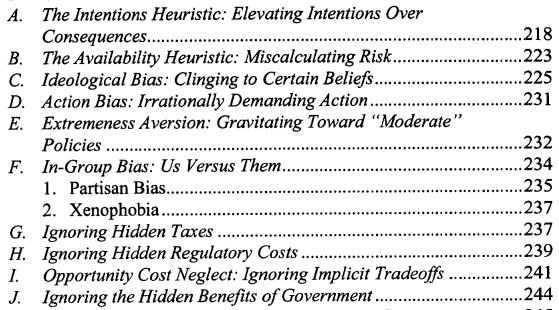
Source: Gary Lucas and Slavisa Tasic‘s "Behavioral Public Choice and the Law" (West Virginia Law Review, 2015) via Bryan Caplan
19 Apr 2016 Leave a comment
in economics of climate change, economics of crime, economics of information, environmental economics, global warming, industrial organisation, international economic law, international economics, International law, law and economics, politics - New Zealand, survivor principle Tags: adverse selection, asymmetric information, carbon trading, climate alarmism, climate alarmists, credence goods, experience goods, inspection goods
Morgan Foundation yesterday put out a report pointing out that many of the carbon credits purchased from the Ukraine under the carbon trading scheme are fraudulent.
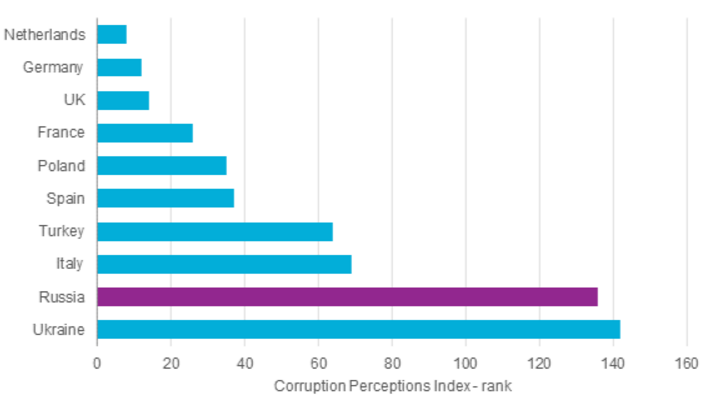
That comes with no surprise to anyone vaguely familiar with business conditions and the level of official corruption in the former Soviet Union. Russia is a more honest place to do business.
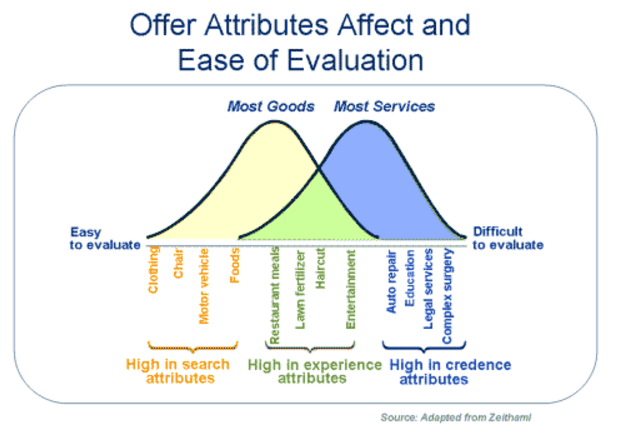
Carbon traders who buy from the Ukraine are not buying an inspection good. An inspection good is a good whose quality you can ascertain before purchase.

They are not buying an experience good. An experience good is a good whose quality is ascertained after purchase in the course of consumption.

Source: Russia, Ukraine dodgy carbon offsets cost the climate – study | Climate Home – climate change news.
What these carbon traders in New Zealand are doing is buying credence goods from the Ukraine. The credence goods are the carbon credits, which the Morgan Foundation and others have found often to be fraudulent.
A credence good is a good whose value is difficult or impossible for the consumer to ascertain. A classic example of a credence good is motor vehicle repairs.
You must trust the seller and their advice as to how much you need to buy of a credence good. Many forms of medical treatment also require you to trust the seller as to how much you need.
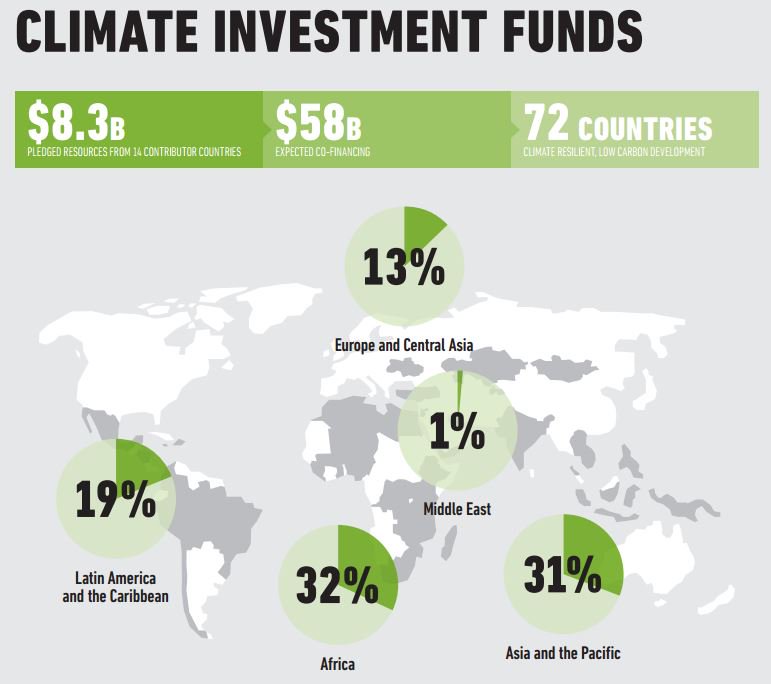
Carbon credits are such a credence good. You know there is corruption in the Ukraine and many other countries that supply them. You may never know at any reasonable cost whether the specific carbon credits you buy were legitimate.
The reason why carbon credits are purchased from such an unreliable source is expressive voting. As is common with expressive politics, what matters is whether the voters cheer or boo the policy. The fact whether it works or not does not matter too much.
The Greens are upset about this corruption in carbon trading. They did not mention the corruption in international carbon trading and climate aid when they welcomed the recent Paris treaty on global warming but that is for another day.
https://twitter.com/kadhimshubber/status/721831502372302849
Co-ordinated international action on global warming is rather pointless if some of the key countries with carbon emission caps are corrupt, which they are.
As Geoff Brennan has argued, CO2 reduction actions will be limited to modest unilateral reductions of a largely token character. There are many expressive voting concerns that politicians must balance to stay in office and the environment is but one of these.

Once climate change policies start to actually become costly to swinging voters, expressive voting support for these policies will fall away, and it has.
Networked Carbon Markets

Source: World Bank Networked Carbon Markets.
One way to stem that fading support is to buy carbon credits on the cheap and there is plenty of disreputable suppliers of cheap carbon credits. Buying dodgy carbon credits as a way of doing something on global warming without it costing more than expressive voters will pay.
One of the predictions of the adverse selection literature is that if consumers cannot differentiate good and bad goods from each other, such as with used cars, the market will contract sharply or even collapse because buyers cannot trust what is on offer. This risk of adverse selection undermining a market applies with clarity to carbon trading.

Source: How Can Your Vote Shape a Low Carbon Future? It Starts with Carbon Pricing.
07 Apr 2016 1 Comment
in economic history, economics of information, economics of media and culture, economics of regulation, technological progress Tags: doomsday prophets, good old days
25 Mar 2016 Leave a comment
in discrimination, economics of information, entrepreneurship, human capital, labour economics, personnel economics Tags: asymmetric information, counter-signalling, employer discrimination, racial discrimination, screening, signalling, statistical discrimination
Statistical discrimination is a harsh mistress. If reliable measures of the quality of job applicants are unavailable for short-listing, such as credit checks, coarser, less reliable screening devices will be employed. That was the case when credit checks were prohibited in employment recruitment:
Looking at 74 million job listings between 2007 and 2013, Clifford and Shoag found that employers started to become pickier, especially in cities where there were a lot of workers with low credit scores. If a credit-check ban went into effect, job postings were more likely to ask for a bachelor’s degree, and to require additional years of experience.
There are other ways that employers could have also become more discerning, Shoag says. They might have started to rely on referrals or recommendations to make sure that applicants were high-quality. In the absence of credit information to establish trustworthiness, they may even have fallen back on racial stereotypes to screen candidates. The researchers couldn’t measure these tactics, but they’re possibilities.
Drug testing allows employers to dispel less accurate stereotypes about drug use among different ethnic and social groups. They increased hiring of minorities because a reliable measure became available of their drug use:
…after a pro-testing law is passed in a state, African-American employment increases in sectors that have high testing rates (mining, manufacturing, transportation, utilities, and government).
These increases are substantial: African-American employment in these industries increases by 7-30%. Because these industries tend to pay wage premia and to have larger firms offering better benefits, African-American wages and benefits coverage also increase. Real wages increase by 1.4-13% relative to whites. The largest shifts in employment and wages occur for low skilled African-American men.
I also find suggestive evidence that employers substitute white women for African-Americans in the absence of testing. Gains in hiring African-Americans in these sectors may have come at the expense of women, particularly in states with large African-American populations.
Employers test for drug use both for health and safety reasons and as a way of screening out less reliable employees. People who break the rules are not reliable employees and that includes taking drugs. In low skill jobs, what employers seek is a recruit who is friendly and reliable.

Testing of the skills of workers also showed similar results. What happened is that the ratio of black to white hirings do not change. The administration of these skills tests allowed the more productive of both white and black job applicants to be identified and hired.
Employers already had an accurate stereotype of the average skills of different ethnic groups. Administration of tests allow them to identify which members of each group were the most productive.
It is a standard result that statistical discrimination improves the chances of below-average applicants subject to the stereotype but harms those of above average quality. For that reason, applicants look for what methods of counter-signalling to show that they are indeed a quality applicant – make themselves stand out from the crowd.
Employers profit from developing screening devices that go beyond stereotypes to identify above-average applicants. They want screening devices that find those who do not otherwise stand out from the crowd because of difficulties in transferring credible information about their quality. This is a special difficulty with low-skilled vacancies because hiring is made based much more than on character than experience.
16 Mar 2016 Leave a comment
in economic history, economics of information, economics of regulation, monetary economics, politics - USA Tags: antimarket bias, libertarian paternalism, monetary policy, mortgage interest rates, New Zealand Labour Party, Other people are stupid fallacy, rational irrationality, The fatal conceit, The pretence to knowledge
Despite the best efforts of the libertarian paternalists to sell the other people are stupid fallacy, ordinary New Zealanders are quite nimble at moving between fixed and floating rates depending upon their forecasts of the future of interest rates. Price controls on floating rate mortgages, as suggested by the New Zealand Labour Party, would make this more difficult, not easier.
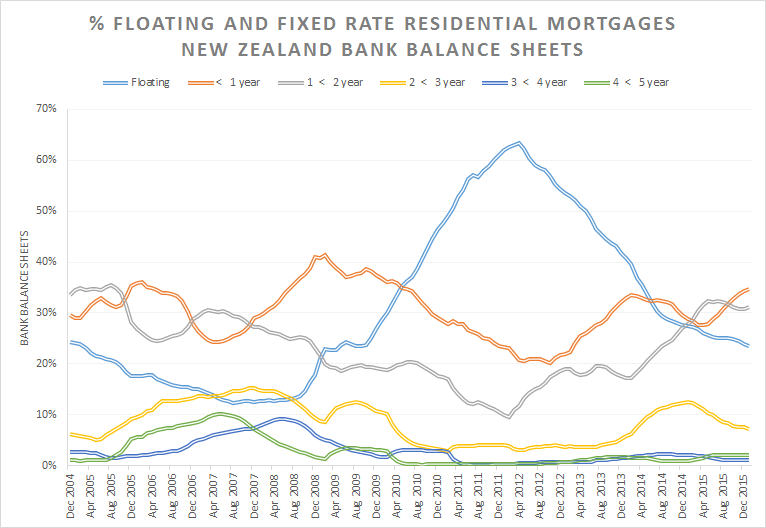
Source: S8 Banks: Mortgage lending ($m) – Reserve Bank of New Zealand.
12 Mar 2016 Leave a comment
in economic history, economics of information, economics of media and culture, economics of regulation, environmental economics, health economics Tags: agricultural economics, antiscience left, food snobs, GMOs, organic food
03 Mar 2016 Leave a comment
in economics of education, economics of information, economics of media and culture, energy economics, environmental economics, global warming, health economics Tags: antiscience left, climate alarmism, growth of knowledge, philosophy of science, quackery, Quacks
Most climate alarmists do not separate the policy issues, the economic issues, from the science of global warming as suggested in this flowchart. Specifically, they do not ask what is the economic and social cost of global warming.
23 Feb 2016 Leave a comment
in applied price theory, economic history, economics of information, politics - New Zealand, Public Choice Tags: anti-foreign bias, anti-market bias, Bryan Caplan, Deirdre McCloskey, make-work bias, New Zealand Greens, New Zealand Labour, pessimism bias, rational ignorance, rational irrationality, votor demographics
Fascinating. Yawning chasm between why Labour members think they lost and why voters think they did. From @thetimes http://t.co/MvhZYI2CTr—
Joe Watts (@JoeWatts_) July 23, 2015
Left-wingers do whinge about voters not understanding; about how if only the voters understood better their arguments than they do now. The Left thinks voters just keep getting it wrong.
They do not know how lucky they are. Rational ignorance and rational irrationality are a rich harvest for the policies of Labour and the Greens.
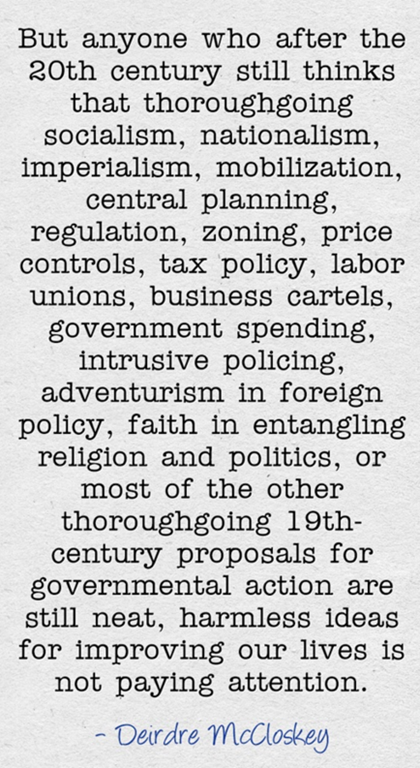
Most of the policies of Labour and the Greens are premised on cultivating the rational irrationalities of voters. These lead to Bryan Caplan’s pessimism bias, an anti-market bias, an anti-foreign bias and make-work bias:
The evidence—most notably, the results of the 1996 Survey of Americans and Economists on the Economy—shows that the general public’s views on economics not only are different from those of professional economists but are less accurate, and in predictable ways.
The public really does generally hold, for starters, that prices are not governed by supply and demand, that protectionism helps the economy, that saving labour is a bad idea, and that living standards are falling.
Politicians mindful of re-election must pander to these four biases.
Fortunately, for the New Zealand Labour Party and the Green Party of Aotearoa New Zealand, voters have no rational reason to correct these four biases. Voters are rationally irrational. As each individual counts so little, why spend any time correcting biased political beliefs?
Anti-market bias: The tendency to underestimate the benefits of the market mechanism. The typical voter equates market phenomena such as profitability and interest as examples of unbridled monetary confiscations by ‘greedy’ businesses. This biased against the market, despite all its successes, is a rich field to till for both Labour and the Greens
Anti-foreign bias: The tendency to underestimate the economic benefits of interaction with foreigners. This antagonism towards such trends as outsourcing employment overseas, or selling raw materials to faraway traders, is reminiscent of the mercantilism Adam Smith so brilliantly demolished but it still lives on today in the hearts of the voting citizenry. Labour and the Greens play to that bias shamelessly.
Make-work bias: The tendency to underestimate the economic benefits from conserving labour. Those who look to the visible face of job losses overlook the job gains (often by those who lost their jobs) to be made tomorrow in emerging industries. The Greens and Labour are sure-fire enemies of creative destruction.
Pessimistic bias: The tendency to overestimate the severity of economic problems, and to underestimate the recent past, present and future performance of the economy. In The Progress Paradox (2003), Gregg Easterbrook ridicules abundance denial:
Our forebears, who worked and sacrificed tirelessly in the hopes their descendants would someday be free, comfortable, healthy, and educated, might be dismayed to observe how acidly we deny we now are these things.
Many average voters seem to feel that Malthus was correct in diagnosing the allegedly poor prospects for the market economy.
Where would the voting base of the Greens be without a pessimism bias? They are professional pessimists and doomsday prophets from their earliest days. Labour assumes working class Tories are dupes of what is left of fading media barons such as Rupert Murdoch.

Celebrating humanity's flourishing through the spread of capitalism and the rule of law
Scholarly commentary on law, economics, and more
Beatrice Cherrier's blog
Celebrating humanity's flourishing through the spread of capitalism and the rule of law
Celebrating humanity's flourishing through the spread of capitalism and the rule of law
Celebrating humanity's flourishing through the spread of capitalism and the rule of law
Why Evolution is True is a blog written by Jerry Coyne, centered on evolution and biology but also dealing with diverse topics like politics, culture, and cats.
Celebrating humanity's flourishing through the spread of capitalism and the rule of law
Celebrating humanity's flourishing through the spread of capitalism and the rule of law
A rural perspective with a blue tint by Ele Ludemann
DPF's Kiwiblog - Fomenting Happy Mischief since 2003
Celebrating humanity's flourishing through the spread of capitalism and the rule of law
The world's most viewed site on global warming and climate change
Tim Harding's writings on rationality, informal logic and skepticism
A window into Doc Freiberger's library
Let's examine hard decisions!
Commentary on monetary policy in the spirit of R. G. Hawtrey
Thoughts on public policy and the media
Celebrating humanity's flourishing through the spread of capitalism and the rule of law
Politics and the economy
A blog (primarily) on Canadian and Commonwealth political history and institutions
Reading between the lines, and underneath the hype.
Economics, and such stuff as dreams are made on
"The British constitution has always been puzzling, and always will be." --Queen Elizabeth II
Celebrating humanity's flourishing through the spread of capitalism and the rule of law
Celebrating humanity's flourishing through the spread of capitalism and the rule of law
WORLD WAR II, MUSIC, HISTORY, HOLOCAUST
Undisciplined scholar, recovering academic
Celebrating humanity's flourishing through the spread of capitalism and the rule of law
Res ipsa loquitur - The thing itself speaks
Celebrating humanity's flourishing through the spread of capitalism and the rule of law
Researching the House of Commons, 1832-1868
Articles and research from the History of Parliament Trust
Reflections on books and art
Posts on the History of Law, Crime, and Justice
Celebrating humanity's flourishing through the spread of capitalism and the rule of law
Exploring the Monarchs of Europe
Cutting edge science you can dice with
Small Steps Toward A Much Better World
“We do not believe any group of men adequate enough or wise enough to operate without scrutiny or without criticism. We know that the only way to avoid error is to detect it, that the only way to detect it is to be free to inquire. We know that in secrecy error undetected will flourish and subvert”. - J Robert Oppenheimer.
The truth about the great wind power fraud - we're not here to debate the wind industry, we're here to destroy it.
Celebrating humanity's flourishing through the spread of capitalism and the rule of law
Celebrating humanity's flourishing through the spread of capitalism and the rule of law
Economics, public policy, monetary policy, financial regulation, with a New Zealand perspective
Celebrating humanity's flourishing through the spread of capitalism and the rule of law
Restraining Government in America and Around the World

 Utopia, you are standing in it!
Recent Comments