Yesterday, over 130 world leaders signed the #ParisAgreement to tackle #climatechange. It's time to hold them to it pic.twitter.com/mWUMCKAHIP
— Oxfam International (@Oxfam) April 23, 2016
Celebrating humanity's flourishing through the spread of capitalism and the rule of law
23 Apr 2016 Leave a comment
in economics of media and culture, energy economics, environmental economics, global warming Tags: Fossil Fuels
23 Apr 2016 Leave a comment
in economics of media and culture
In his annual letter to shareholders, published earlier this month, Amazon CEO Jeff Bezos said this about decision-making:
Some decisions are consequential and irreversible or nearly irreversible – one-way doors – and these decisions must be made methodically, carefully, slowly, with great deliberation and consultation. If you walk through and don’t like what you see on the other side, you can’t get back to where you were before. We can call these Type 1 decisions. But most decisions aren’t like that – they are changeable, reversible – they’re two-way doors. If you’ve made a suboptimal Type 2 decision, you don’t have to live with the consequences for that long. You can reopen the door and go back through. Type 2 decisions can and should be made quickly by high judgment individuals or small groups.
And the consequences of using the wrong type of decision-making process:
As organizations get larger…
View original post 843 more words
23 Apr 2016 Leave a comment
in economics of media and culture, economics of regulation, health economics, politics - New Zealand Tags: anti-market bias, do gooders, meddlesome preferences, Morgan Foundation, nanny state, political psychology, rational rationality
23 Apr 2016 Leave a comment
in economics of media and culture
23 Apr 2016 Leave a comment
in economics of media and culture

Rational people charged with making national energy policies need an antidote to the biased and alarmist IPCC “Summary for Policy Makers (SPM)” As most are aware, that document purports to be summarizing the science proving humanity is causing dangerous global warming by using fossil fuels. Those who understand the IPCC process are also aware that the SPM wording is negotiated among politicians and the scientific reports are adjusted accordingly.
A timely discussion of this issue is provided by someone with experience in briefing governmental officials on issues requiring choices. Michael Kelly writes in Standpoint Magazine:
“A well-briefed minister knows about the general area in which a decision is sought, and is given four scenarios before any recommendation. Those scenarios are the upsides and the downsides both of doing nothing and of doing something. Those who give only the upside of doing something and the downside of doing nothing are in fact lobbying.”
View original post 244 more words
23 Apr 2016 Leave a comment
in economics of media and culture

Definition Fussbudget: A person who fusses over trifles. Also called fusspot.
In the last week, Richard Lindzen has a new youtube video which explains briefly and clearly who is making a fuss about climate and why. (Hint: It is not primarily from climate physicists). The video deserves to go viral, since the presentation is brief, informative and accessible to anyone.
Why are so many people worried, indeed panic-stricken about this issue?
It’s due not so much to climate physicists, as to politicians, environmentalists and media. Global warming alarmism provides the things they most want:
Beyond the…
View original post 167 more words
23 Apr 2016 Leave a comment
in economics of media and culture
23 Apr 2016 Leave a comment
in economics of media and culture
My opinion on taxing corporate income varies with my mood.
When I’m in a fiery-libertarian phase, I want to abolish taxes on corporate income for the simple reason that all income taxes should be eliminated. Heck, I would also eliminate October 3 from the calendar because that’s the awful day in 1913 that the income tax was signed into low.
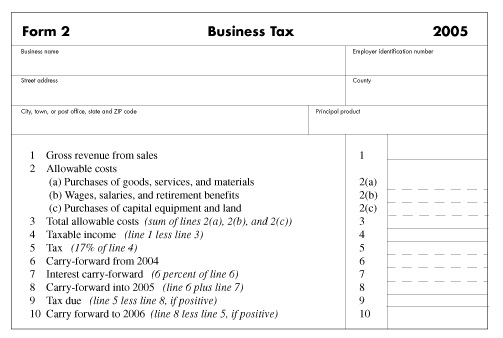 But when I’m going through a pragmatic-libertarian phase, I grudgingly accept that my fantasies won’t be realized and focus on incremental reform. And that means I want a simple and fair system like the flat tax, which is based on the principle that all income should be taxed, but only one time and at one low rate.
And that means corporate income should be taxed.
That being said, while it may be appropriate to tax corporate income, that does not mean the U.S. corporate income tax is ideal.
View original post 2,187 more words
23 Apr 2016 Leave a comment
in economics of media and culture, Music Tags: Richard Clapton
23 Apr 2016 Leave a comment
in economic history, economics of education, economics of media and culture, gender, human capital, labour economics, labour supply, occupational choice Tags: gender gap, gender wage gap, reversing gender gap
22 Apr 2016 Leave a comment
in economics of media and culture
 Ed Hoskins writes:
I am an ex-pat in France. In spite of the mess its likely to cause me directly I am 100% for Brexit.
The EU has far exceeded the mandate I and many others throughout the UK and Europe gave it from 1975 onwards.
The crazy thing is that the “Common Market” that was sold to the unwitting people of Europe in 1975 was all that needed to maintain peace in Europe. The European peoples were duped because the real unifying intent of the EU project was never disclosed.
It is overweening and vain political ambition of “ever closer union” that has destroyed that the laudable aim of a real “Common Market”.
View original post 401 more words
22 Apr 2016 Leave a comment
in economics of media and culture


I am sure there will be lots of squabbling over parameters and assumptions of any tax, spending or regulation proposal submitted to the independent costings unit proposed recently by the New Zealand Greens.
The bigger problem is static and dynamic scoring. There is some history of doing this for taxes but little for spending and that is before you consider externalities. Imagine the squabbling over roading proposals and their externalities. The practical hurdles to dynamic scoring are:
View original post 587 more words
22 Apr 2016 Leave a comment
in economics of media and culture
Sandeep Moudgal has a great piece on the topic. How certain castes/communities come to being associated with certain products and then how they keep looking at ways to revive and stay in competition. It just makes for a great reading.
Iyengars that run bakery shops in Bangalore are one such community. They migrated from Hassan and started bakeries across the city:
View original post 825 more words
Celebrating humanity's flourishing through the spread of capitalism and the rule of law
Celebrating humanity's flourishing through the spread of capitalism and the rule of law
Celebrating humanity's flourishing through the spread of capitalism and the rule of law
Celebrating humanity's flourishing through the spread of capitalism and the rule of law
Celebrating humanity's flourishing through the spread of capitalism and the rule of law
Celebrating humanity's flourishing through the spread of capitalism and the rule of law
Celebrating humanity's flourishing through the spread of capitalism and the rule of law
Celebrating humanity's flourishing through the spread of capitalism and the rule of law
Celebrating humanity's flourishing through the spread of capitalism and the rule of law
Celebrating humanity's flourishing through the spread of capitalism and the rule of law
Celebrating humanity's flourishing through the spread of capitalism and the rule of law
Celebrating humanity's flourishing through the spread of capitalism and the rule of law
A History of the Alt-Right
Econ Prof at George Mason University, Economic Historian, Québécois
Celebrating humanity's flourishing through the spread of capitalism and the rule of law
Scholarly commentary on law, economics, and more
Beatrice Cherrier's blog
Celebrating humanity's flourishing through the spread of capitalism and the rule of law
Celebrating humanity's flourishing through the spread of capitalism and the rule of law
Celebrating humanity's flourishing through the spread of capitalism and the rule of law
Why Evolution is True is a blog written by Jerry Coyne, centered on evolution and biology but also dealing with diverse topics like politics, culture, and cats.
Celebrating humanity's flourishing through the spread of capitalism and the rule of law
A rural perspective with a blue tint by Ele Ludemann
DPF's Kiwiblog - Fomenting Happy Mischief since 2003
Celebrating humanity's flourishing through the spread of capitalism and the rule of law
The world's most viewed site on global warming and climate change
Tim Harding's writings on rationality, informal logic and skepticism
A window into Doc Freiberger's library
Let's examine hard decisions!
Commentary on monetary policy in the spirit of R. G. Hawtrey
Thoughts on public policy and the media
Celebrating humanity's flourishing through the spread of capitalism and the rule of law
Politics and the economy
A blog (primarily) on Canadian and Commonwealth political history and institutions
Reading between the lines, and underneath the hype.
Economics, and such stuff as dreams are made on
"The British constitution has always been puzzling, and always will be." --Queen Elizabeth II
Celebrating humanity's flourishing through the spread of capitalism and the rule of law
Celebrating humanity's flourishing through the spread of capitalism and the rule of law
WORLD WAR II, MUSIC, HISTORY, HOLOCAUST
Undisciplined scholar, recovering academic
Celebrating humanity's flourishing through the spread of capitalism and the rule of law
Res ipsa loquitur - The thing itself speaks
In Hume’s spirit, I will attempt to serve as an ambassador from my world of economics, and help in “finding topics of conversation fit for the entertainment of rational creatures.”
Researching the House of Commons, 1832-1868
Reflections on books and art




Recent Comments