The final phase of the Covid inquiry is out, and almost nobody will be fully happy with what it says. The report says New Zealand got plenty right, but it also lays out a string of failures, blind spots and overreaches. It is neither the devastating indictment that opponents of the Labour government wanted, nor […]
The Covid inquiry’s verdict nobody quite wants
The Covid inquiry’s verdict nobody quite wants
13 Mar 2026 Leave a comment
in economics of regulation, health economics, politics - New Zealand Tags: economics of pandemics
Covid-19 Royal Commission report released
10 Mar 2026 Leave a comment
in Alfred Marshall, comparative institutional analysis, economics of bureaucracy, economics of natural disasters, economics of regulation, health economics, politics - New Zealand, Public Choice Tags: economics of pandemics
The Royal Commission has released their second and final report. Some key aspects: Simeon Brown points out: The post Covid-19 Royal Commission report released first appeared on Kiwiblog.
Covid-19 Royal Commission report released
New results on the economic costs of climate change
09 Mar 2026 Leave a comment
in econometerics, economics of climate change, economics of natural disasters, economics of regulation, energy economics, environmental economics, environmentalism, global warming Tags: climate alarmism
I promised you I would be tracking this issue, and so here is a major development. From the QJE by Adrien Bilal and Diego R Känzig:: This paper estimates that the macroeconomic damages from climate change are an order of magnitude larger than previously thought. Exploiting natural global temperature variability, we find that 1○C warming reduces world…
New results on the economic costs of climate change
The Hidden Cost of Hard-to-Fire Labor Laws: Why European Firms Don’t Take Risks
08 Mar 2026 Leave a comment
in applied price theory, economics of bureaucracy, economics of regulation, entrepreneurship, labour economics, law and economics, managerial economics, organisational economics, personnel economics, property rights, Public Choice, theory of the firm, unemployment Tags: creative destruction, employment law, European Union, Germany
In our textbook, Modern Principles, Tyler and I write: Imagine how difficult it would be to get a date if every date required marriage? In the same way, it’s more difficult to find a job when every job requires a long-term commitment from the employer. In two new excellent pieces, Brian Albrecht and Pieter Garicano…
The Hidden Cost of Hard-to-Fire Labor Laws: Why European Firms Don’t Take Risks
Dismantling the competition myth
06 Mar 2026 Leave a comment
in Austrian economics, comparative institutional analysis, economic history, economics of regulation, entrepreneurship, history of economic thought, industrial organisation, law and economics, organisational economics, politics - Australia, technological progress, theory of the firm Tags: competition law, creative destruction
Ask anyone in Australia’s competition law community what transformed the economy, and you will hear a familiar story. Australia was once a cartelised, complacent place where businesses divided up markets and consumers paid the price. Then came the Trade Practices Act in 1974, and competition law forced firms to compete. This is not a fringe […]
Dismantling the competition myth
Germany’s “Energy Transition” Hits the Ice: LNG Crisis Exposes the Costs of Shunning Nuclear and Baseload Power
05 Mar 2026 Leave a comment
in economics of climate change, economics of regulation, energy economics, environmental economics, environmentalism, global warming Tags: celebrity technologies, Germany, solar power, wind power
Baseload power sources — whether nuclear or coal — were dismissed prematurely with pie-in-the-sky magical-thinking that a renewables-centric system could replace them quickly. But the reality of an industrialized society is that demand does not pause when the wind stops blowing or when Baltic ice slows a tanker. In that context, abandoning dispatchable power before…
Germany’s “Energy Transition” Hits the Ice: LNG Crisis Exposes the Costs of Shunning Nuclear and Baseload Power
Travel advice for vapers
03 Mar 2026 Leave a comment
in economics of regulation, health economics, international economics Tags: nanny state
The Telegraph has written a guide for vapers travelling to parts of the world that are even more hostile to e-cigarettes. I am quoted in it. Christopher Snowdon, head of lifestyle economics at the Institute of Economic Affairs and editor of the Nanny State Index, which ranks countries by how much they interfere with people’s lifestyle…
Travel advice for vapers
The Cult | A Net Zero Watch Short Film
02 Mar 2026 Leave a comment
in economics of climate change, economics of education, economics of regulation, energy economics, environmental economics, environmentalism, global warming, movies
The brilliant Colin Brazier returns for our second short film on the cult of Net Zero and how it protects ‘green’ policies from being questioned by stifling debate and cracking down on free speech.
The Cult | A Net Zero Watch Short Film
Laying Off Workers: Cheap vs. Expensive
01 Mar 2026 Leave a comment
in applied price theory, economics of regulation, entrepreneurship, industrial organisation, labour economics, labour supply, survivor principle Tags: creative destruction

When thinking about what makes an economy flourish, many of us tend to focus on the success stories of innovation and growth. After all, success stories involve an element of risk, which means a chance of failure. When it’s more expensive to fail, then avoiding the risk of failure–by avoiding innovative but risky business choices–starts…
Laying Off Workers: Cheap vs. Expensive
The amazing NZ aerospace industry
01 Mar 2026 Leave a comment
in economics of regulation, entrepreneurship, environmental economics, industrial organisation
The Post reports: The Government has lifted a looming cap on rocket launches over New Zealand waters, in a move pitched as clearing the way for the country’s fast-growing space and advanced aviation industries. Space Minister Judith Collins and Environment Minister Penny Simmonds on Thursday confirmed the permitted number of launches that can drop rocket debris…
The amazing NZ aerospace industry
It Has Become Cheaper to Lose Weight
28 Feb 2026 Leave a comment
in economics of regulation, entrepreneurship, health economics, industrial organisation Tags: creative destruction
Finding out that GLP-1 drugs can help reduce weight has been life changing for many and could stem the social costs of being overweight. Recently, prices have fallen dramatically. I asked ChatGPT to for some summary data for Wegovy & Zepbound which I plot below. Competition matters. Initially, Wegovy was the effective monopolist selling at a list price…
It Has Become Cheaper to Lose Weight
‘Disaster’! Climate groups slam Germany for scrapping renewable heating law
27 Feb 2026 Leave a comment
in economics of bureaucracy, economics of climate change, economics of regulation, energy economics, environmental economics, environmentalism, global warming, Public Choice, urban economics Tags: Germany

“Habeck’s heating hammer” set to bite the dust. Maybe net zero zealotry is not the complete answer to modern energy supply after all, despite what its supporters keep claiming. – – – A revision of an existing law will now allow homeowners to use oil and gas as heating fuel instead, says Euronews. Germany’s government […]
‘Disaster’! Climate groups slam Germany for scrapping renewable heating law
Seven Lies We’re Told About Climate Change | Michael Shellenberger
26 Feb 2026 Leave a comment
in economics of climate change, economics of education, economics of regulation, energy economics, environmental economics, environmentalism, global warming Tags: climate alarmism
By Paul Homewood Michael Shellenberger is one of the best communicators I have come across. Here he unpicks a lot of the myths around climate change. It is a long video – what I often do is watch 10 or 15 minute chunks Alternatively, watch the first couple of minutes and then fast forward […]
Seven Lies We’re Told About Climate Change | Michael Shellenberger
From Discount to Discrimination: The Strange Economics of Anti-Competitive Antitrust
24 Feb 2026 Leave a comment
in applied price theory, economics of regulation, entrepreneurship, history of economic thought, industrial organisation, law and economics Tags: competition law, creative destruction
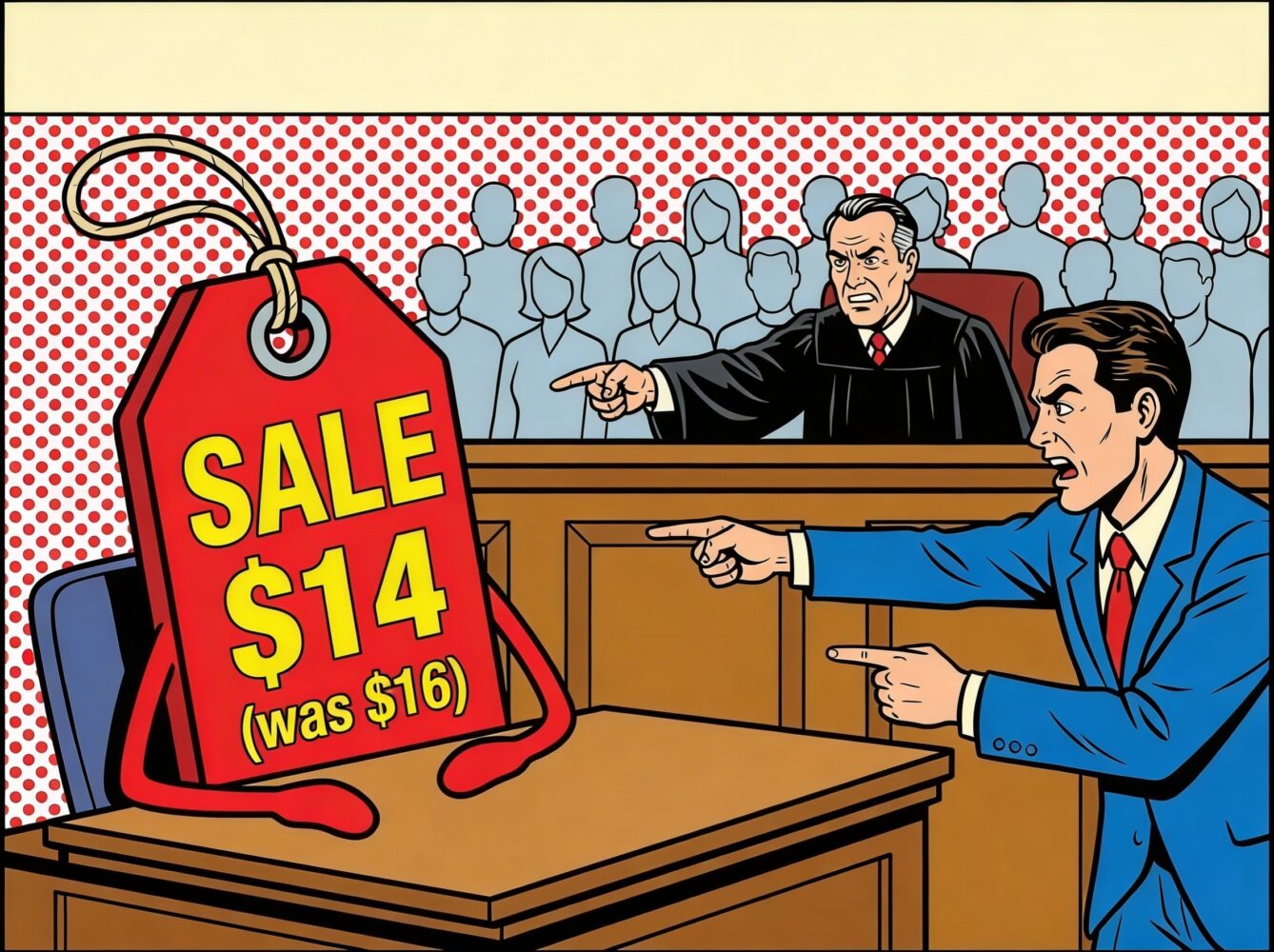
Antitrust has always been a strange regulatory enterprise. Businesses are largely free to engage in various commercial practices involving price, output, product design, distribution, research, and innovation—until they’re not. Outside the paradigmatic examples of explicit agreements among competitors to fix price and output, many business practices live in a gray zone. Whether a particular pricing…
From Discount to Discrimination: The Strange Economics of Anti-Competitive Antitrust
Lawfare Begins Against Repealing Endangerment Finding–Legalities Outlook
24 Feb 2026 Leave a comment
in economics of climate change, economics of regulation, energy economics, environmental economics, environmentalism, global warming, law and economics, politics - USA, Public Choice, transport economics, urban economics Tags: constitutional law

The expected blowback from invested climatists is underway, as reported by legacy media whose bias is with the alarmists. Examples: EPA faces lawsuit over scrapping the ‘endangerment finding,’ a pillar of climate regulation, Scientific American E.P.A. Faces First Lawsuit Over Its Killing of Major Climate Rule, NY Times Lawsuit: EPA revoking greenhouse gas finding risks […]
Lawfare Begins Against Repealing Endangerment Finding–Legalities Outlook


Recent Comments