The Nobel prize goes to Daron Acemoglu, Simon Johnson and James Robinson for their work on institutions, prosperity, and economic growth. Here is a key piece summarizing their work: Institutions as a Fundamental Cause of Long-Run Growth. This paper develops the empirical and theoretical case that differences in economic institutions are the fundamental cause of […]
Acemoglu, Johnson and Robinson Win Nobel Prize for Institutions and Prosperity
Acemoglu, Johnson and Robinson Win Nobel Prize for Institutions and Prosperity
15 Oct 2024 Leave a comment
in applied price theory, comparative institutional analysis, constitutional political economy, development economics, economic growth, economic history, economics of bureaucracy, economics of regulation, growth disasters, growth miracles, history of economic thought, income redistribution, macroeconomics, Public Choice, public economics, rentseeking
‘Taxpayer Talk’ | Simon Court joins Jordan Williams to talk RMA reform
14 Oct 2024 Leave a comment
in applied price theory, comparative institutional analysis, constitutional political economy, economics of bureaucracy, economics of regulation, environmental economics, income redistribution, law and economics, politics - New Zealand, property rights, Public Choice, public economics, rentseeking, resource economics, transport economics, urban economics Tags: zoning
The Economic Way of Thinking in a Pandemic
12 Oct 2024 Leave a comment
in applied price theory, applied welfare economics, comparative institutional analysis, economics of regulation, health economics Tags: economics of pandemics
During the pandemic, economists often found themselves at odds with politicians, physicians, epidemiologists and others. Some politicians, for example, were worried that the pharma companies might engage in profiteering while economists worried that the pharma companies were not nearly profitable enough. Physicians focused on maximizing the health of patients while economists focused on maximizing the […]
The Economic Way of Thinking in a Pandemic
Socialism in the 21st Century: A Regressive Ideology in Modern Times
10 Oct 2024 1 Comment
in applied price theory, comparative institutional analysis, constitutional political economy, economics of bureaucracy, economics of regulation, income redistribution, law and economics, Marxist economics, property rights, Public Choice, public economics, rentseeking
Socialism, once hailed as a visionary and revolutionary alternative to capitalism, has deep roots in the progressive movements of the 19th and early 20th centuries. Advocating for state control of the means of production and a more equitable distribution of wealth, socialism aimed to correct the injustices of industrial capitalism. However, as we navigate the […]
Socialism in the 21st Century: A Regressive Ideology in Modern Times
Addressing the Housing Crisis
10 Oct 2024 Leave a comment
in applied price theory, economics of bureaucracy, economics of regulation, income redistribution, law and economics, politics - New Zealand, politics - USA, property rights, Public Choice, rentseeking, urban economics Tags: affordable housing, land supply, regressive left
Japan’s population is roughly equal to the five most-populous states of the U.S. — California, Florida, New York, Pennsylvania, and Texas — concentrated in a nation that has approximately the land area of Montana, which is only about a fourth as large as those five most-populous states. Moreover, well over … Continue reading →
Addressing the Housing Crisis
The Foodstuffs merger is rejected, so the wholesale market remains an oligopsony
10 Oct 2024 1 Comment
in applied price theory, economics of regulation, industrial organisation, politics - New Zealand Tags: competition law
Yesterday we learned the Commerce Commission’s decision on the merger application by Foodstuffs North Island and Foodstuffs South Island (which I posted about last month). As NBR reported yesterday (paywalled, but you can read this briefer New Zealand Herald story instead, or the Commerce Commission’s decision here):Foodstuffs wanted to see the co-ops merged within and…
The Foodstuffs merger is rejected, so the wholesale market remains an oligopsony
What planet are they on?
09 Oct 2024 Leave a comment
in applied price theory, economics of media and culture, economics of regulation, entrepreneurship, industrial organisation, law and economics, politics - New Zealand, property rights, survivor principle Tags: creative destruction, legacy media
New Zealand’s newspaper chiefs’ views on how the Fair Digital News Bargaining Bill works is somewhat at odds with the text of the Bill. Google today, admirably, said they’ll stop linking to New Zealand news outlets in search if the Bill goes ahead. News Publishers’ Association’s Andrew Holden and Stuff’s Sinead Boucher aren’t happy about that. But…
What planet are they on?
On the price of Ozempic
07 Oct 2024 Leave a comment
in applied price theory, economics of regulation, health economics, industrial organisation
That is the topic of my latest Bloomberg column, here is one excerpt: As for consumer prices for the current obesity drugs, they are not as high as is often reported, once the various ways to get a discount are taken into account. Despite reports that the drugs cost $1,000 per month, the reality is more favorable. […]
On the price of Ozempic
Peer Approval to Address Drug Shortages
02 Oct 2024 Leave a comment
in applied price theory, economics of regulation, health economics, politics - USA Tags: drug lags
Reuters: Mark Cuban’s Cost Plus Drug Company said…that it is working with the U.S. Food and Drug Administration to import and distribute penicillin in the country temporarily….Cuban’s Cost Plus will import Lentocilin brand penicillin powder marketed by Portugal-based Laboratórios Atral S.A. There are two remarkable items in the above passage. First, there is a shortage…
Peer Approval to Address Drug Shortages
Inquiring into banking
02 Oct 2024 Leave a comment
in applied price theory, economics of bureaucracy, economics of regulation, financial economics, macroeconomics, monetary economics, politics - New Zealand, Public Choice Tags: monetary policy competition law

Hard on the heels of the Commerce Commission’s inquiry into some aspects of banking competition, Parliament’s Finance and Expenditure Committee is also holding an inquiry. Submissions weren’t open for very long and have now closed, but the full terms of reference are here. It is a select committee inquiry, so it is hard to be […]
Inquiring into banking
Canada Is Part of the Anti-Convergence Club
01 Oct 2024 Leave a comment
in applied price theory, budget deficits, comparative institutional analysis, economic growth, economic history, economics of regulation, environmental economics, fiscal policy, labour economics, labour supply, law and economics, macroeconomics, property rights Tags: Canada
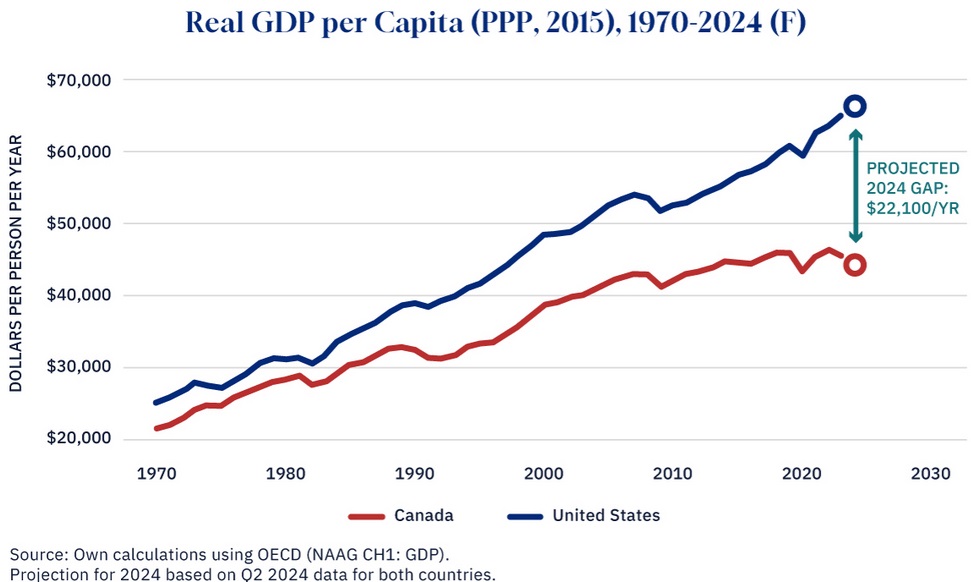
Economists widely agree with the theory of “convergence,” which is the (mostly true) idea that poor nations should grow faster than rich nations as they catch up (converge). But there are exceptions. Sometimes a richer country will grow faster than a poorer country over a significant period of time, and we can learn from these examples. This is […]
Canada Is Part of the Anti-Convergence Club
After 30 years, there is hope
27 Sep 2024 Leave a comment
in applied price theory, economics of bureaucracy, economics of regulation, environmental economics, environmentalism, income redistribution, law and economics, politics - New Zealand, property rights, Public Choice, rentseeking, transport economics, urban economics Tags: housing affordability, land supply, zoning
Chris Bishop and Simon Court announced: Two new laws will be developed to replace the Resource Management Act (RMA), with the enjoyment of property rights as their guiding principle, RMA Reform Minister Chris Bishop and Parliamentary Under-Secretary Simon Court say. “The RMA was passed with good intentions in 1991 but has proved a failure in […]
After 30 years, there is hope
Renault CEO says sector could face billions in fines as EV sales slow
27 Sep 2024 1 Comment
in economics of climate change, economics of regulation, energy economics, environmental economics, environmentalism, global warming, transport economics Tags: electric cars

By Paul Homewood h/t Hugh Sharman Europe might not have a ZEV Mandate, but car makers still can’t escape the clutches of the eco loons: PARIS, Sept 7 (Reuters) – Europe’s autos industry could face fines of 15 billion euros ($17.4 billion) for carbon emissions due to slowing demand for electric […]
Renault CEO says sector could face billions in fines as EV sales slow
Spot on
25 Sep 2024 Leave a comment
in economics of regulation, environmental economics, environmentalism Tags: plastic straws

The high cost of free insurance
24 Sep 2024 Leave a comment
in applied price theory, economics of bureaucracy, economics of information, economics of regulation, environmental economics, politics - New Zealand, Public Choice, public economics, urban economics Tags: unintended consequences
Eric Crampton writes – Government sometimes cannot stop itself from providing bailouts when risk-taking goes wrong. This kind of ‘free’ insurance policy leads to no end of bad outcomes.
The high cost of free insurance
 Utopia, you are standing in it!
Recent Comments