Imagine waking up and discovering that, overnight, you had been granted superpowers. With a touch of your finger, you could cause new housing to emerge in places with housing shortages. It would cost you next to nothing. You could just do it.
The superpower that could unlock billions for KiwiRail – or another railway company
The superpower that could unlock billions for KiwiRail – or another railway company
15 Apr 2026 Leave a comment
in economics of regulation, law and economics, politics - New Zealand, property rights, transport economics, urban economics Tags: land supply, zoning
“Evictions are an Act of Policy Violence”: Pressley and Democrats Introduce Eviction Reform Legislation
15 Apr 2026 Leave a comment
in economics of regulation, income redistribution, politics - USA, Public Choice, rentseeking, urban economics Tags: regressive left, rent control

Rep. Ayanna Pressley (D., Mass.) joined fellow Democrats last week in calling for the passage of the Housing Emergencies Lifeline Program…
“Evictions are an Act of Policy Violence”: Pressley and Democrats Introduce Eviction Reform Legislation
That time we gave Cocaine to our kids for a sore throat and toothaches.
12 Apr 2026 Leave a comment
in economic history, economics of regulation, health economics

How things have changed. Nowadays we wouldn’t dream of giving our children cocaine to treat sore throats or toothaches, Firstly because we know how devastating cocaine is and secondly we would be arrested, But in days of yore it was perfectly acceptable to give you offspring and indeed yourself a ‘healthy’ dose of cocaine.
That time we gave Cocaine to our kids for a sore throat and toothaches.
The Fatal Conceit of Cheap Drugs
07 Apr 2026 1 Comment
in applied price theory, Austrian economics, economics of information, economics of regulation, health economics, law and economics, politics - USA, property rights Tags: copyrights and patents, intellectual property

The U.S. Supreme Court agreed to hear Hikma v. Amarin to answer a narrow question. It may end up saying far more about how policymakers misunderstand pharmaceutical markets. On its face, the case is narrow. It asks whether a generic drug manufacturer can face liability for inducing patent infringement based on how it markets a…
The Fatal Conceit of Cheap Drugs
The CA Minimum Wage Increase: Summing Up
06 Apr 2026 1 Comment
in applied price theory, econometerics, economics of regulation, income redistribution, labour economics, labour supply, politics - USA, Public Choice, unemployment
Two recent joint-papers Did California’s Fast Food Minimum Wage Reduce Employment? by Clemens, Edwards and Meer and The Effects of California’s $20 Fast Food Minimum Wage on Prices by Clemens, Edwards, Meer and Nguyen give what I think is a plausible and consistent account of California’s $20 fast food minimum wage. California’s $20 fast food…
The CA Minimum Wage Increase: Summing Up
Quotation of the Day…
05 Apr 2026 Leave a comment
in applied price theory, economics of regulation, labour economics, labour supply, law and economics, Richard Epstein

Tweet… is from page 162 of Richard Epstein’s magnificent 1995 volume, Simple Rules for a Complex World: The entire regulatory process [of wrongful dismissal of workers] shows the constant preoccupation with the direct effects of decisions on named persons, without regard to the vastly greater indirect effects on other persons similarly situated. The effort to…
Quotation of the Day…
Abolish the BSA
04 Apr 2026 Leave a comment
in economics of media and culture, economics of regulation, industrial organisation, politics - New Zealand
The Broadcasting Standards Authority announced: The Broadcasting Standards Authority has confirmed it has jurisdiction to consider a complaint about content transmitted by an online broadcaster. In a decision published today, the Authority determined it can accept, and is required to consider under the Broadcasting Act, complaints about The Platform’s Live Talkback programme, because the programme meets…
Abolish the BSA
Not sweeping, but good
02 Apr 2026 Leave a comment
in economics of regulation, health economics, politics - New Zealand Tags: nanny state
Stuf reported: Government proposes sweeping changes to alcohol laws The changes are far from sweeping. They are good, and tidy up some stupid stuff, but it is not a major change. As I said, all pretty minor but useful changes. It is good that someone living in Auckland can’t object anymore to an application in…
Not sweeping, but good
New York retreating on its Climate Act
30 Mar 2026 Leave a comment
in economics of climate change, economics of regulation, energy economics, environmental economics, environmentalism, global warming, politics - USA Tags: climate alarmism
How this works out now remains to be seen. If the budget bill tactic works, it could happen pretty quickly. Hochul has taken the political high ground of “affordability,” and a lot of Democrat legislators are massing on that rhetorical hill as well. It just might work.
New York retreating on its Climate Act
BlackRock CEO Abandons Climate Delusion for Investor Needs
28 Mar 2026 Leave a comment
in economics of climate change, economics of regulation, energy economics, environmental economics, environmentalism, financial economics, global warming Tags: active investing
After years of climate-driven experimentation – forced by deluded or dishonest politicians and business titans – the failures became too many and too consequential to be ignored. Little wonder that Larry Fink has turned his ear away from the rhetoric of alarm and toward client demands for strategic guidance.
BlackRock CEO Abandons Climate Delusion for Investor Needs
Taking comfort from the 1970s
27 Mar 2026 Leave a comment
in defence economics, economics of regulation, energy economics, politics - New Zealand, war and peace Tags: Iran
When a story recently emerged about the government getting advice on carless days under the Petroleum Demand Restraint Act, older New Zealanders will have felt a warm flush of nostalgia. The 1979 restrictions brought coloured windscreen stickers announcing the weekday car owners had promised not to drive. Thursday proved the most popular choice. A thriving black market followed. Forty-three percent of vehicles secured exemptions.
Taking comfort from the 1970s
Defining Socialism
26 Mar 2026 1 Comment
in applied price theory, comparative institutional analysis, development economics, economic history, economics of regulation, history of economic thought, liberalism, Marxist economics
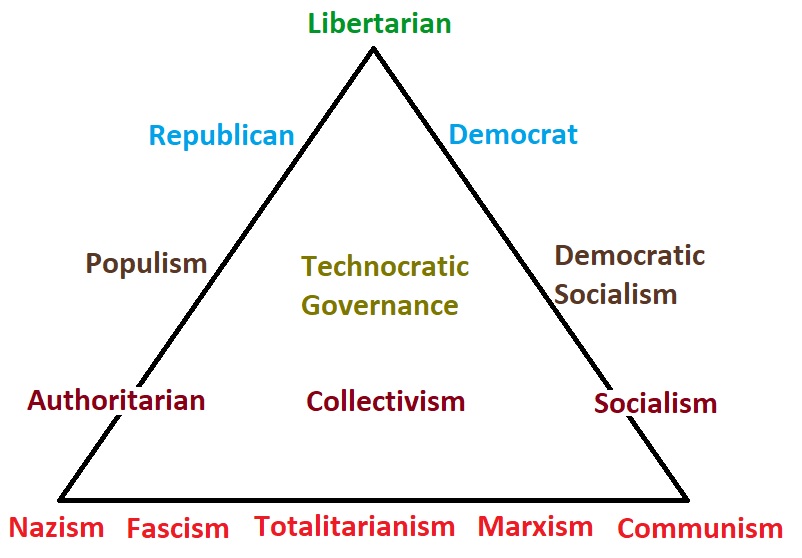
I’ve written a four-part series (here, here, here, and here) explaining why socialism is a bad idea, but let’s use today’s column to define this evil ideology. As I mentioned in the video, genuine socialism is based on three very specific concepts. Government ownership of the means of production Central planning to determine the allocation […]
Defining Socialism
A worthwhile trade off
25 Mar 2026 Leave a comment
in applied price theory, economics of regulation, human capital, labour economics, labour supply, law and economics, occupational choice, politics - New Zealand, property rights Tags: employment law, offsetting behavior, unintended consequences
Susan Hornsby-Geluk writes: Among the most controversial aspects of the recently enacted Employment Relations Amendment Act 2026 is the introduction of a high-income threshold for personal grievance claims. Under the new provisions, employees earning $200,000 or more in annual remuneration will lose the right to bring a personal grievance for unjustified dismissal, or an unjustified…
A worthwhile trade off
Javier Milei Week, Part III: Good Economic Policies, Good Economic Results
25 Mar 2026 Leave a comment
in applied price theory, Austrian economics, development economics, economic history, economics of bureaucracy, economics of regulation, growth disasters, Public Choice Tags: Argentina

Part I of this series reviewed the horrible economic conditions that plagued Argentina when Javier Milei took office. Part II looked at Milei’s spending restraint and some of the subsequent improvements in fiscal outcomes. For today’s column, let’s focus on what Milei has achieved in areas other than fiscal policy, and it will be based […]
Javier Milei Week, Part III: Good Economic Policies, Good Economic Results
Some simple spatial analytics of Cape Town
21 Mar 2026 Leave a comment
in applied price theory, development economics, economics of regulation, growth disasters, transport economics, urban economics Tags: South Africa
Rio de Janeiro let its hillsides be filled in with lower-cost dwellings. The result was a significant increase in the crime rate. On the more positive side of the ledger, upward mobility increased too. If you live in a decent favela, you can get to a downtown job with not too much difficulty, albeit with…
Some simple spatial analytics of Cape Town
 Utopia, you are standing in it!
Recent Comments