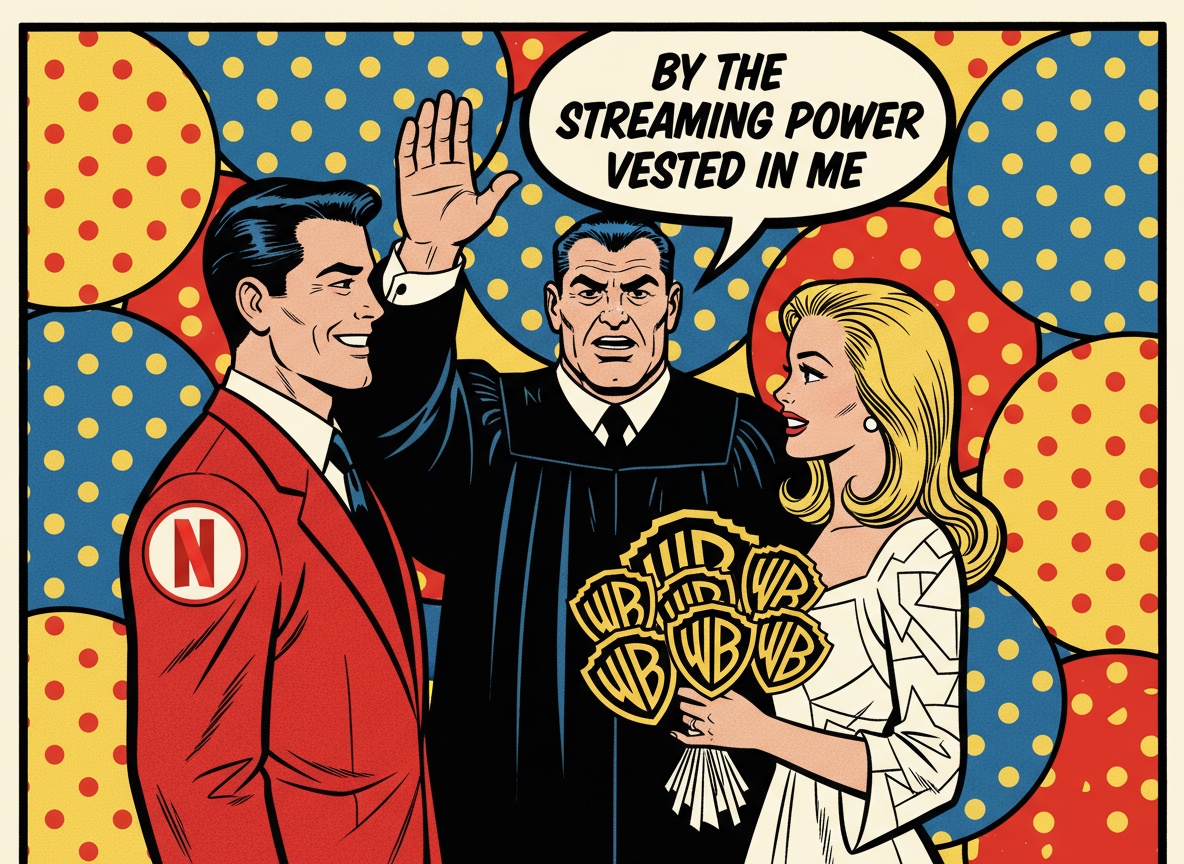
The proposed acquisition of Warner Bros. Discovery (WBD) assets by Netflix is already being cast as a landmark antitrust “test case.” If past deals are any guide, the critiques will follow a familiar script: narrow market definitions, selective data points, and headline-friendly market-share claims designed to trigger alarm. Yet in a video ecosystem defined by…
HBR: SUMMARY:THE CHALLENGE: Major companies competing in many industries struggle to stay abreast of rapidly changing technologies. ONE MAJOR CAUSE: They are typically organized into business units, each with its own set of functions. Thus the key decision makers—the unit leaders—lack a deep understanding of all the domains that answer to them.THE APPLE MODEL: The company is organized…
Tweet… is from page 11 of Menzie Chinn’s and Douglas Irwin’s superb 2025 textbook, International Economics: There is a parable about an entrepreneur who invents an amazing machine. Wheat, soybeans, lumber, and oil are fed into one end of the contraption. As if by magic, smartphones, coffee, and tea, and all manner of clothing and…
Our colleague Thomas Stratmann writes about the political economy of Indian reservations in his excellent Substack Rules and Results. Across 123 tribal nations in the lower 48 states, median household income for Native American residents ranges from roughly $20,000 to over $130,000—a sixfold difference. Some reservations have household incomes comparable to middle-class America. Others face persistent…
These people are saying it is there too. Though I am not quite sure what they (or anyone, for that matter) mean by AI: First, we argue that AI can already be seen in productivity statistics for the United States. The production and use effects of software and software R&D (alone) contributed (a) 50 percent…
Policymakers would do well to heed energy experts like Schernikau and Stein. Chasing luxury beliefs do not cost well-heeled climate bureaucrats and renewables ideologues much, but the burdens of irrational energy policies will be borne by the world’s poorest. The real path forward lies in pragmatic, technology-neutral approaches that prioritise energy abundance over austerity.
Tweet… is from page 223 of Art Carden’s and GMU Econ alum Caleb Fuller’s superb book, Mere Economics [original emphasis; footnotes deleted; link added]: The “finite resources” argument also begs the question because it assumes we know which materials are “resources” and which are not. Something is only a resource insofar as we can use…
This morning’s announced merger between Netflix and Warner Bros. Discovery (WBD) would create a global media company of unprecedented scale. The transaction will also almost certainly attract scrutiny from antitrust regulators—most likely the U.S. Justice Department (DOJ) Antitrust Division, rather than the Federal Trade Commission (FTC). The deal would offer a direct test of the…
Nations around the world are reassessing antitrust policy (generally called “competition policy” overseas). Governments, regulators, and industry leaders are increasingly asking whether traditional antitrust enforcement is holding back the “competitiveness” of domestic firms. The term now shows up in speeches by European commissioners, in UK government directives, in U.S. merger battles, and in Canadian legislative…
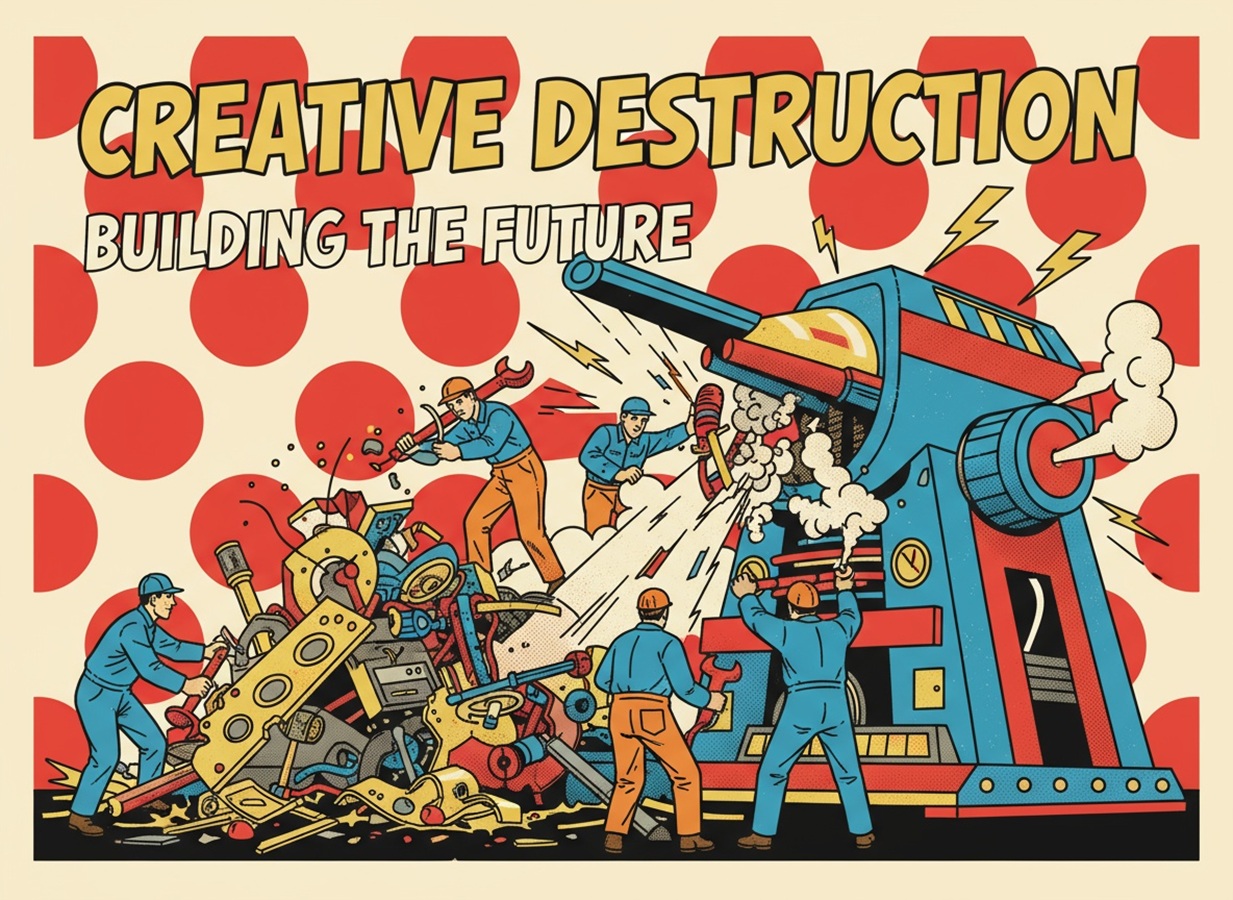
Antitrust should center on dynamic market forces that drive major technological change, rather than on static “big is bad” market analysis, based on the work of the 2025 economics Nobel Prize winners. Antitrust enforcers in the United States and around the world could benefit by incorporating these insights into their policy development. Focus on Dynamic […]
The growth of industry disrupted old economic patterns but produced undreamed-of wealthBy Phil Gramm and Michael Solon. Excerpts:”From the colossal changes wrought by the Industrial Revolution to the Digital Revolution of the last quarter-century, improvements in technology have created an array of jobs that far exceeded—in quantity and quality—the ones eliminated, elevating standards of living.””the…
ANALYSIS from the Economist: When lots of people smoked, there were many “price-elastic” consumers. In plain English, they were sensitive to increases in the cost of a cigarette. As more people have quit, however, only the most committed smokers are still puffing. Companies have responded by raising prices at an ever-quicker pace. MY COMMENT: In…
There is a new AEJ Macro paper by Brynjolfsson, et.al. on how to value free goods. Here is one of the concrete measures: Using this approach, we estimate the reservation price [for giving up Facebook] to be $2,152 in 2003 US dollars. That is for the 2017 version of Facebook. Note this does not measure […]
Why Evolution is True is a blog written by Jerry Coyne, centered on evolution and biology but also dealing with diverse topics like politics, culture, and cats.
In Hume’s spirit, I will attempt to serve as an ambassador from my world of economics, and help in “finding topics of conversation fit for the entertainment of rational creatures.”





Recent Comments