On The Marginal Revolution Podcast this week we continue discussing some of our favorite models with a whole episode on the Baumol effect (with a sideline into the Linder effect). I say our favorite models, but the Baumol Effect is not one of Tyler’s favorite models! I thought this was a funny section: TABARROK: When you […]
The MR Podcast: Our Favorite Models, Session 2: The Baumol Effect
The MR Podcast: Our Favorite Models, Session 2: The Baumol Effect
29 Oct 2025 Leave a comment
in applied price theory, entrepreneurship, history of economic thought, industrial organisation
Some simple economics of AI and macro cycles
20 Oct 2025 Leave a comment
in applied price theory, business cycles, economic growth, entrepreneurship, history of economic thought, macroeconomics
Has AI been propping up the American economy? For instance “the Bureau of Economic Analysis’s category for investment in information processing equipment and software accounts for over 90 percent of economic growth in the first half of 2025.” The key question is what would have been done with those resources otherwise. Regardless of their specific […]
Some simple economics of AI and macro cycles
Is it dangerous to say that entrepreneurs are heroes?
30 Sep 2025 Leave a comment
in applied price theory, Austrian economics, entrepreneurship, history of economic thought, industrial organisation
Back in the early 1990s, I wrote a paper called “The Creative-Destroyers: Are Entrepreneurs Mythological Heroes?” A reviewer at a journal said “The conclusion that entrepreneurs are heroes seems to be very dangerous!” That was in 1993.There is a picture of this review below. After that is a link to where I posted this paper here…
Is it dangerous to say that entrepreneurs are heroes?
Part I: Yes, Taxes Change Behavior
26 Sep 2025 Leave a comment
in applied price theory, economic growth, entrepreneurship, fiscal policy, human capital, labour economics, labour supply, macroeconomics, Public Choice, public economics Tags: taxation and entrepreneurship, taxation and investment, taxation and labour supply
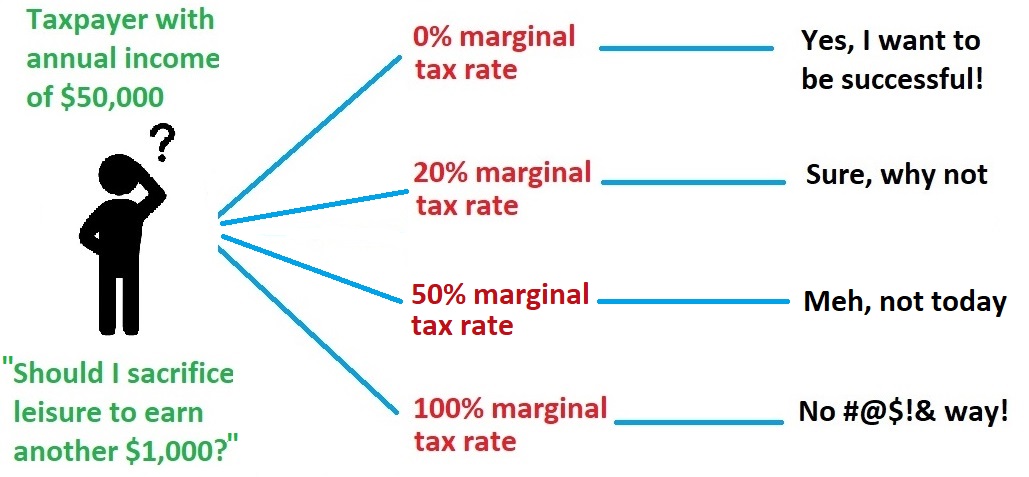
From a big-picture economic perspective, I worry most about the damage of high tax burdens on innovation, entrepreneurship, and investment. Those are things that generate enormous benefits for society, yet also things that are very sensitive to bad tax policy (specifically high marginal tax rates and the tax code’s bias against saving and investment). Sadly, […]
Part I: Yes, Taxes Change Behavior
Michael Clemens on H1-B visas
24 Sep 2025 1 Comment
in applied price theory, econometerics, economic growth, economic history, entrepreneurship, human capital, international economics, labour economics, labour supply, macroeconomics, politics - USA Tags: economics of immigration
From 1990 to 2010, rising numbers of H-1B holders caused 30–50 percent of all productivity growth in the US economy. This means that the jobs and wages of most Americans depend in some measure on these workers. The specialized workers who enter on this visa fuel high-tech, high-growth sectors of the 21st century economy with skills like computer […]
Michael Clemens on H1-B visas
Porsche delays new electric car after demand slump
21 Sep 2025 Leave a comment
in economics of climate change, energy economics, entrepreneurship, environmental economics, environmentalism, global warming, industrial organisation, survivor principle Tags: electric cars, Germany

By Paul Homewood h/t Ian Magness From the Telegraph: Porsche has delayed the launch of its new electric vehicle (EV) as weak demand forces the German car manufacturer to focus on petrol and diesel engines.
Porsche delays new electric car after demand slump
More corporate welfare for airlines
18 Sep 2025 Leave a comment
in applied price theory, entrepreneurship, industrial organisation, politics - New Zealand, survivor principle, transport economics
The Government announced: The Coalition Government will support at risk regional air routes with up to $30 million in loans from the Regional Infrastructure Fund for small passenger airlines, Regional Development Minister Shane Jones and Associate Transport Minister James Meager say. “Reliable air services are critical for the economic and social wellbeing of regional New […]
More corporate welfare for airlines
Some Links
07 Sep 2025 Leave a comment
in applied price theory, economic history, entrepreneurship, financial economics, macroeconomics Tags: China, Japan

TweetThe folks at Unleash Prosperity share a chart that shows that Japanese industrial policy – which we Americans a few decades ago were warned by oh so very many pundits, professors, and politicians left, right, and center would propel Japan’s economy to great heights and leave America’s in the dust – was a curse to…
Some Links
David Splinter on how much tax billionaires pay
30 Aug 2025 Leave a comment
in applied price theory, econometerics, entrepreneurship, human capital, income redistribution, labour economics, labour supply, politics - USA, poverty and inequality, Public Choice, public economics Tags: taxation and entrepreneurship, taxation and investment
Here is his comment on the paper presented here: Summary: The U.S. tax system is highly progressive. Effective tax rates increase from 2% for the bottom quintile of income to 45% for the top hundredth of one percent. But rates may be lower among those with the highest wealth. This comment starts with the “top 400” […]
David Splinter on how much tax billionaires pay
World War II Liberty Ships and the Law of Increasing Opportunity Cost
27 Aug 2025 1 Comment
in applied price theory, defence economics, economic history, entrepreneurship, industrial organisation, labour economics, labour supply, occupational choice, war and peace Tags: World War II
See ‘Launching Liberty’ Review: Shipyard Victory The U.S. quickly constructed a fleet of vessels to carry vital war supplies across the oceans. Did the rush to build so fast affect quality? by Marc Levinson. He reviewed the book Launching Liberty: The Epic Race to Build the Ships That Took America to War by Doug Most.The Liberty…
World War II Liberty Ships and the Law of Increasing Opportunity Cost
More On Alleged Chinese Dumping
24 Aug 2025 Leave a comment
in applied price theory, development economics, economic history, entrepreneurship, growth miracles, history of economic thought, industrial organisation, international economics, politics - USA, Public Choice, rentseeking Tags: free trade, tariffs
TweetHere’s a second note to a commenter at my Facebook page. Mr. Schlomach: Commenting on my Facebook page, you allege that China ‘dumps’ goods in the U.S. and, in doing so, “has used our love of cheap stuff to suck our country of strategically critical technology/industry.” By suggesting that your fellow Americans buy stuff simply…
More On Alleged Chinese Dumping
The Greens’ weekend gift to the government
19 Aug 2025 Leave a comment
in economic growth, entrepreneurship, fiscal policy, income redistribution, labour economics, labour supply, macroeconomics, Marxist economics, politics - New Zealand, poverty and inequality, Public Choice, public economics Tags: taxation and entrepreneurship, wealth tax
Roger Partridge writes – The Greens’ coronation of Chlöe Swarbrick at last weekend’s AGM delivered a manifesto for economic transformation that would make Soviet economists nostalgic for their glory days.
The Greens’ weekend gift to the government
Is anyone worth a billion dollars?
12 Aug 2025 1 Comment
in applied price theory, entrepreneurship, industrial organisation Tags: superstar wages
That is the topic of my latest Free Press column. Excerpt: …in recent years they [Meta] have moved into AI in a big way. Over that same time period, the valuation of the company has risen from about $236 billion in November 2022 to almost $2 trillion at the end of this July. The reasons for […]
Is anyone worth a billion dollars?

The economics of the U.S. auto industry, a brief history
03 Aug 2025 Leave a comment
in economic history, entrepreneurship, industrial organisation, survivor principle

From Adam Ozimek: The economic value of the cars being made has climbed substantially through the years. As a result, real value added and industrial production — two different ways of measuring actual output — are now at all-time highs. And this: What about jobs? The auto industry today employs 1 million workers. Between 1950 and […]
The economics of the U.S. auto industry, a brief history


Recent Comments