This paper examines China’s transition from pharmaceutical “free rider” to global innovator over the last decade. In 2010, China accounted for less than 8% of global clinical trials; by 2020, it had surpassed the US in annual registered clinical trial volume. To study this transformation, we compile a comprehensive, synchronized database spanning the pharmaceutical drug…
The rise of China as a global innovator in pharma (incentives matter)
The rise of China as a global innovator in pharma (incentives matter)
26 Mar 2026 Leave a comment
in development economics, entrepreneurship, growth miracles, health economics Tags: drug lags
Quotation of the Day…
17 Mar 2026 Leave a comment
in applied price theory, development economics, economic history, entrepreneurship, growth disasters, growth miracles, industrial organisation, labour economics, labour supply Tags: creative destruction, The Great Enrichment
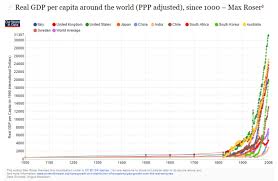
Tweet… is from page 103 of Historical Impromptus, a 2020 collection of some of Deirdre McCloskey’s work on economic history; this quotation, specifically, is from McCloskey’s 2000 review, in the Minnesota Journal of Global Trade, of Thomas Friedman’s The Lexus and the Olive Tree and John Gray’s False Dawn [original emphasis]: Globalization encourages the capitalist…
Quotation of the Day…
Cost Overruns Are Bad for Taxpayers, Good for Insiders
14 Mar 2026 Leave a comment
in applied price theory, comparative institutional analysis, economics of bureaucracy, entrepreneurship, industrial organisation, managerial economics, market efficiency, organisational economics, Public Choice

My First Theorem of Government is the simple observation that insiders are the biggest beneficiaries of government. I was motivated to release that theorem because bad news for taxpayers is good news for bureaucrats, consultants, contractors, lobbyists, and politicians. A classic example is the Department of Education in Washington, which has squandered more than $2.6 […]
Cost Overruns Are Bad for Taxpayers, Good for Insiders
Fleecing Rich Taxpayers: Europe vs. the United States
13 Mar 2026 Leave a comment
in applied price theory, entrepreneurship, human capital, income redistribution, labour economics, labour supply, politics - USA, Public Choice, public economics Tags: taxation and entrepreneurship, taxation and investment, taxation and labour supply

I frequently make the point that America’s tax system is more progressive than European tax systems. But not because the United States imposes higher tax rates on upper-income households. Instead, the big difference is that lower-income and middle-class households in the United States face much lower tax burdens than their European counterparts. In those columns, […]
Fleecing Rich Taxpayers: Europe vs. the United States
Eat the Rich: Sanders and Khanna Introduce Federal Billionaires Tax
12 Mar 2026 Leave a comment
in applied price theory, economic growth, entrepreneurship, financial economics, fiscal policy, human capital, income redistribution, labour economics, labour supply, liberalism, macroeconomics, Marxist economics, politics - USA, Public Choice, rentseeking Tags: taxation and entrepreneurship, taxation and investment, taxation and labour supply

Below is my column on Fox.com on the new push by Democrats to impose a wealth tax nationally. While the…
Eat the Rich: Sanders and Khanna Introduce Federal Billionaires Tax
Tech Has Never Caused a Job Apocalypse. Don’t Bet on It Now.
12 Mar 2026 1 Comment
in applied price theory, entrepreneurship, history of economic thought, industrial organisation, labour economics, labour supply, survivor principle Tags: creative destruction
Neither theory, history nor the latest data suggests a recession driven by AI job dislocation is likely By Greg Ip. Excerpts:”Technological advancements always cost some people their jobs—those whose skills can be easily substituted by tech. But their loss is more than offset through three other channels. The new technology enhances the skills of some survivors,…
Tech Has Never Caused a Job Apocalypse. Don’t Bet on It Now.
The Hidden Cost of Hard-to-Fire Labor Laws: Why European Firms Don’t Take Risks
08 Mar 2026 Leave a comment
in applied price theory, economics of bureaucracy, economics of regulation, entrepreneurship, labour economics, law and economics, managerial economics, organisational economics, personnel economics, property rights, Public Choice, theory of the firm, unemployment Tags: creative destruction, employment law, European Union, Germany
In our textbook, Modern Principles, Tyler and I write: Imagine how difficult it would be to get a date if every date required marriage? In the same way, it’s more difficult to find a job when every job requires a long-term commitment from the employer. In two new excellent pieces, Brian Albrecht and Pieter Garicano…
The Hidden Cost of Hard-to-Fire Labor Laws: Why European Firms Don’t Take Risks
The Nightmare Scenario Leading to a Wealth Tax
07 Mar 2026 Leave a comment
in applied price theory, economic growth, economic history, entrepreneurship, fiscal policy, income redistribution, liberalism, macroeconomics, Marxist economics, politics - USA, Public Choice, public economics Tags: taxation and entrepreneurship, taxation and investment, taxation and labour supply

Is it time to pack our belongings and head to Argentina, where Javier Milei is dramatically improving economic policy and cultural attitudes? I’m joking, but also not joking. The reason I’m not joking is that there’s a very depressing scenario for America’s near-term economic outlook. It involves these six potential developments. Thanks in part to […]
The Nightmare Scenario Leading to a Wealth Tax
Dismantling the competition myth
06 Mar 2026 Leave a comment
in Austrian economics, comparative institutional analysis, economic history, economics of regulation, entrepreneurship, history of economic thought, industrial organisation, law and economics, organisational economics, politics - Australia, technological progress, theory of the firm Tags: competition law, creative destruction
Ask anyone in Australia’s competition law community what transformed the economy, and you will hear a familiar story. Australia was once a cartelised, complacent place where businesses divided up markets and consumers paid the price. Then came the Trade Practices Act in 1974, and competition law forced firms to compete. This is not a fringe […]
Dismantling the competition myth
Laying Off Workers: Cheap vs. Expensive
01 Mar 2026 Leave a comment
in applied price theory, economics of regulation, entrepreneurship, industrial organisation, labour economics, labour supply, survivor principle Tags: creative destruction

When thinking about what makes an economy flourish, many of us tend to focus on the success stories of innovation and growth. After all, success stories involve an element of risk, which means a chance of failure. When it’s more expensive to fail, then avoiding the risk of failure–by avoiding innovative but risky business choices–starts…
Laying Off Workers: Cheap vs. Expensive
The amazing NZ aerospace industry
01 Mar 2026 Leave a comment
in economics of regulation, entrepreneurship, environmental economics, industrial organisation
The Post reports: The Government has lifted a looming cap on rocket launches over New Zealand waters, in a move pitched as clearing the way for the country’s fast-growing space and advanced aviation industries. Space Minister Judith Collins and Environment Minister Penny Simmonds on Thursday confirmed the permitted number of launches that can drop rocket debris…
The amazing NZ aerospace industry
It Has Become Cheaper to Lose Weight
28 Feb 2026 Leave a comment
in economics of regulation, entrepreneurship, health economics, industrial organisation Tags: creative destruction
Finding out that GLP-1 drugs can help reduce weight has been life changing for many and could stem the social costs of being overweight. Recently, prices have fallen dramatically. I asked ChatGPT to for some summary data for Wegovy & Zepbound which I plot below. Competition matters. Initially, Wegovy was the effective monopolist selling at a list price…
It Has Become Cheaper to Lose Weight
From Discount to Discrimination: The Strange Economics of Anti-Competitive Antitrust
24 Feb 2026 Leave a comment
in applied price theory, economics of regulation, entrepreneurship, history of economic thought, industrial organisation, law and economics Tags: competition law, creative destruction
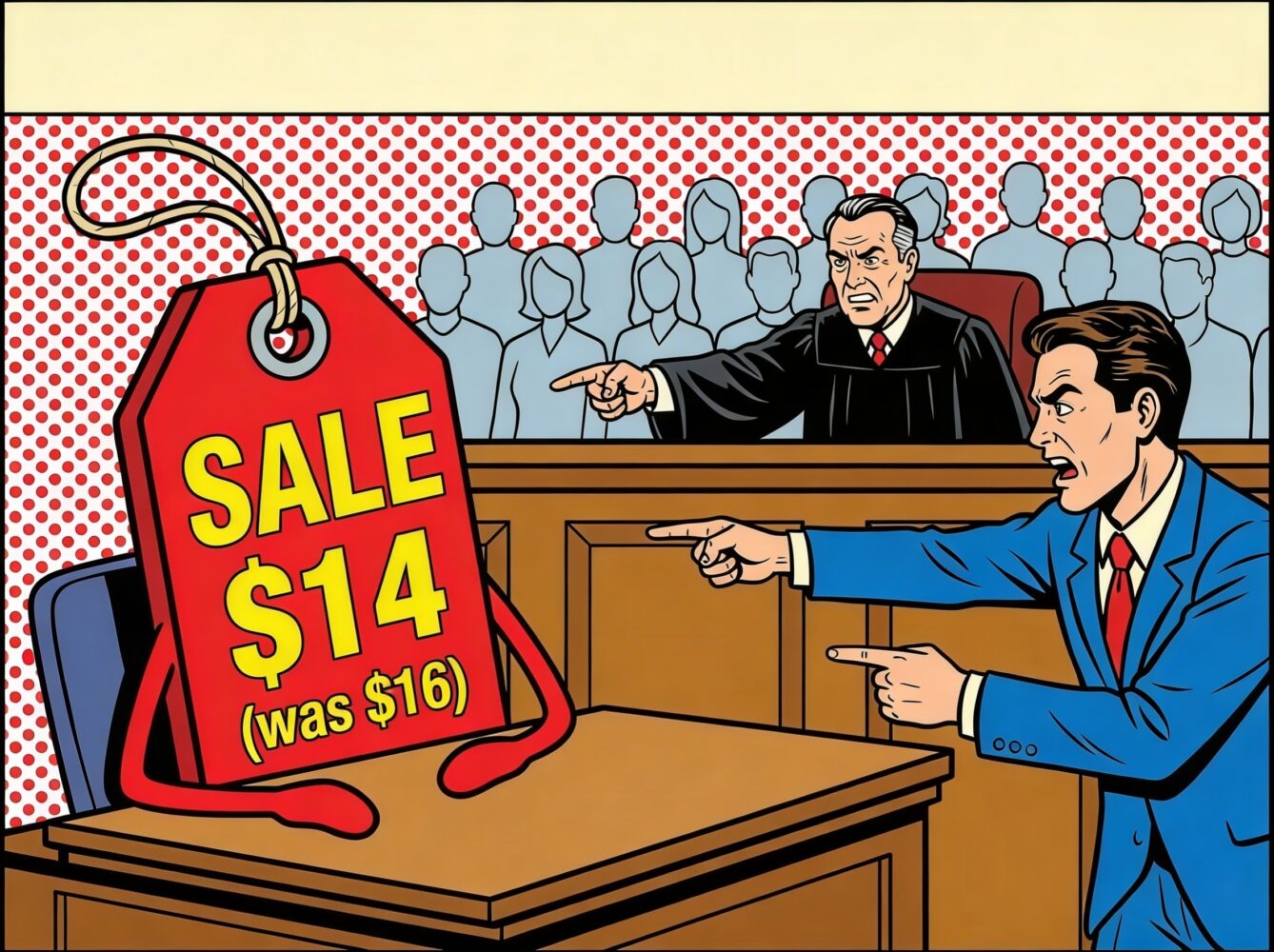
Antitrust has always been a strange regulatory enterprise. Businesses are largely free to engage in various commercial practices involving price, output, product design, distribution, research, and innovation—until they’re not. Outside the paradigmatic examples of explicit agreements among competitors to fix price and output, many business practices live in a gray zone. Whether a particular pricing…
From Discount to Discrimination: The Strange Economics of Anti-Competitive Antitrust
Eat the Rich: California Democrats Trigger a Reverse Gold Rush with a Wealth Tax
16 Feb 2026 Leave a comment
in entrepreneurship, fiscal policy, human capital, income redistribution, labour economics, labour supply, macroeconomics, Marxist economics, politics - USA, Public Choice, public economics Tags: California, regressive left, rule of law, taxation and entrepreneurship, taxation and investment, wealth tax

Below is my column in the California Post and New York Post on the exodus of wealthy taxpayers from the state as Democrats seek to trap them with a retroactive wealth tax. They are engineering a type of reverse Gold Rush as up to a trillion dollars leave the state with a line of U-Hauls […]
Eat the Rich: California Democrats Trigger a Reverse Gold Rush with a Wealth Tax
The Washington Post Hit With Massive Layoffs As Guild Suggests the Need for New Owner
08 Feb 2026 Leave a comment
in economics of media and culture, entrepreneurship, financial economics, industrial organisation, politics - USA, survivor principle Tags: creative destruction
The Washington Post has announced layoffs affecting one-third of its workforce, including most of the sports and foreign news desks.…
The Washington Post Hit With Massive Layoffs As Guild Suggests the Need for New Owner


Recent Comments