The media needs a new formula for paying for news gathering, says @bradwarthen: brook.gs/1JlfWUT http://t.co/QDGti24x1f—
Brookings (@BrookingsInst) May 15, 2015
Creative destruction in legacy media revenues
16 Jun 2015 Leave a comment
in economics of media and culture, entrepreneurship, industrial organisation, survivor principle Tags: creative destruction, economics of advertising, entrepreneurial alertness, legacy media, market selection
The Value of Steve Jobs
15 Jun 2015 Leave a comment
in entrepreneurship, industrial organisation, managerial economics Tags: CEO pay, superstar wages, superstars, top 1%

| Peter Klein |
As you have likely heard, Steve Jobs is taking an indeterminate leave of absence from Apple to deal with his continuing health problems. How will this affect Apple? How important is one person — albeit the founder and CEO — to a diversified multinational company with tens of thousands of employees? Apple’s stock slipped slightly on the news of Jobs’ leave (down 2.3 percent today, the first trading day after the announcement), but Jobs’s health problems are well known and Apple’s stock price presumably already included a discount reflecting the possibility he’d step down. To estimate the value of a particular employee to the firm in this way, we need an unanticipated departure, one that isn’t a response to poor performance and isn’t expected in advance.
Sure, enough, there’s an app for that — I mean, there’s a literature on that. An influential 1985 paper by Bruce Johnson, Robert Magee, Nandu…
View original post 429 more words
Is Uber taking British customers for a ride?
14 Jun 2015 Leave a comment
in economics of regulation, entrepreneurship, industrial organisation, survivor principle Tags: creative destruction, taxi regulation, Uber
Is Uber taking British customers for a ride? i100.io/40kqOqH http://t.co/ok7UJmmgNQ—
i100 (@thei100) June 11, 2015

TIL America Online is still in business
12 Jun 2015 Leave a comment
in economic history, entrepreneurship, industrial organisation, survivor principle Tags: creative destruction, entrepreneurial alertness, market selection
After 18 years of acquisitions, sales, and spinoffs, AOL is still holding its own bloom.bg/1IwBaQp http://t.co/Qjwd94THPB—
Bloomberg VisualData (@BBGVisualData) May 17, 2015
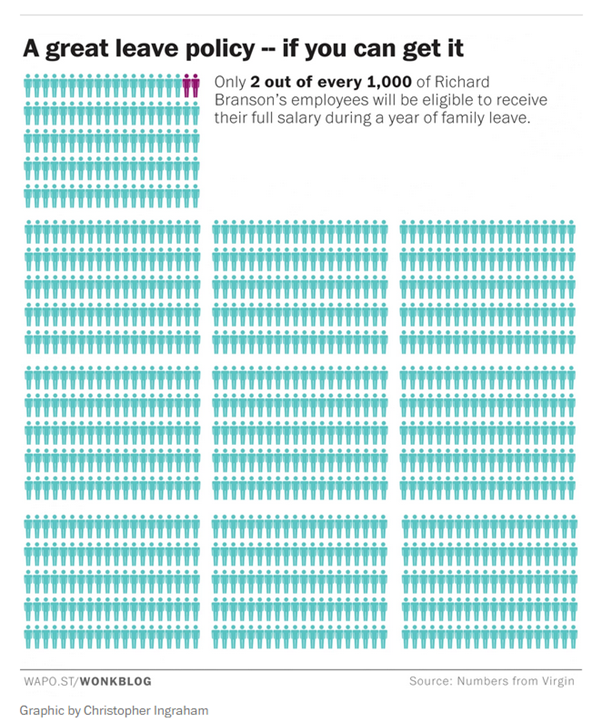
Richard Branson has announced a great paid leave policy for .2 percent of his workers
11 Jun 2015 Leave a comment
in discrimination, entrepreneurship, gender, labour economics, labour supply, occupational choice, politics - Australia, politics - New Zealand, politics - USA Tags: entrepreneurial alertness, maternity leave, paternity leave, Richard Branson
The US share market since 1900
10 Jun 2015 Leave a comment
in business cycles, economic growth, economic history, entrepreneurship, financial economics, macroeconomics Tags: active investing, efficient market hypothesis, entrepreneurial alertness, passive investing
Here’s how Warren Buffett sees the stock market read.bi/1HsUe1p http://t.co/Zm6fDTYpf9—
BI Chart of the Day (@chartoftheday) April 23, 2015
Vintage McDonald’s Advertisement
10 Jun 2015 Leave a comment
in economic history, entrepreneurship Tags: economics of advertising, entrepreneurial alertness, McDonald's
Vintage McDonald’s Advertisements in the 1960s http://t.co/XnKaW8Burn—
History Pics (@HistoryPixs) February 24, 2014
The rising gales of creative destruction in brewing
09 Jun 2015 Leave a comment
in economic history, economics of regulation, entrepreneurship, health economics, industrial organisation, survivor principle Tags: alcohol regulation, beer brewing, creative destruction, entrepreneurial alertness, innovation
Breweries in the US http://t.co/rcYlpmJspa—
Charts and Maps (@ChartsandMaps) April 11, 2015
Should the New Zealand superannuation fund try to beat the market?
09 Jun 2015 Leave a comment
in entrepreneurship, financial economics, politics - New Zealand Tags: active investing, ageing society, demographic crisis, efficient markets hypothesis, entrepreneurial alertness, New Zealand superannuation fund, old age pensions, passive investing, retirement savings
Most mutual funds still can't beat their benchmark read.bi/1GkTig1 http://t.co/r7ezoDGJbV—
BI Chart of the Day (@chartoftheday) June 03, 2015
Supply-side economics and the migration of inventors
07 Jun 2015 Leave a comment
in applied price theory, entrepreneurship, fiscal policy, human capital, labour economics, labour supply, occupational choice, politics - Australia, politics - New Zealand, politics - USA Tags: economics of migration, taxation and the labour supply
#Braindrain is real, even quantifiable — as per NBER paper 21024. Geniuses don't tolerate extra taxes easily. http://t.co/HVP8uEFAfz—
Amity Shlaes (@AmityShlaes) June 07, 2015
Rise of private R&D and the fall of public R&D
06 Jun 2015 Leave a comment
in applied price theory, economic history, entrepreneurship, industrial organisation, politics - USA, rentseeking, survivor principle, technological progress Tags: creative destruction, entrepreneurial alertness, private R&D, public R&D, R&D

Who among the top 1% and top 0.1% increased their share of income most between 1979 and 2005?
03 Jun 2015 Leave a comment
in economic history, entrepreneurship, financial economics, human capital, industrial organisation, labour economics, labour supply, occupational choice, survivor principle Tags: CEO pay, entrepreneurial alertness, Occupy Wall Street, separation of ownership and control, superstar wages, superstars, top 0.1%, top 1%, Twitter left
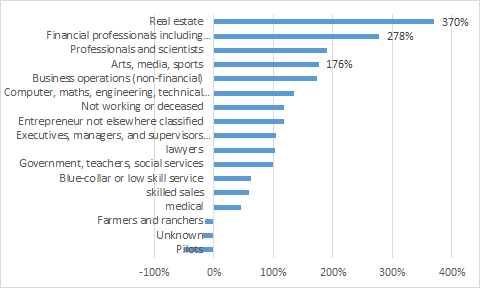
The members of the top 1% whose income increased the most between 1979 and 2005 were real estate professionals followed by financial professionals – see figure 1.
Figure 1: increase in share of national income (including capital gains) received by top 1% for each primary taxpayer occupation in top 1% between 1979 and 2005
Source: Jon Bakija, Adam Cole and Bradley T. Heim “Jobs and Income Growth of Top Earners and the Causes of Changing Income Inequality: Evidence from U.S. Tax Return Data”.
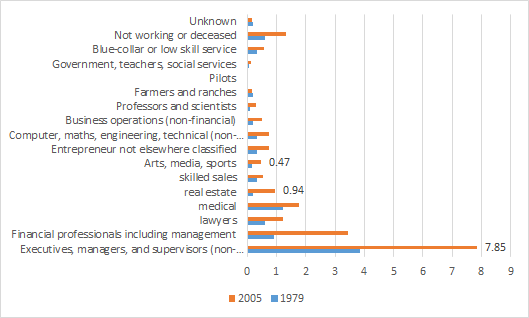
Figure 2 shows that the fastest-growing shares among the top 1% as in figure 1 are not necessarily the largest occupational group are those income earners. Moreover, their fortunes seem largely unrelated to each other.
Figure 2: Percentage of national income (including capital gains) received by top 1%, and each primary taxpayer occupation in top 1%
Source: Jon Bakija, Adam Cole and Bradley T. Heim “Jobs and Income Growth of Top Earners and the Causes of Changing Income Inequality: Evidence from U.S. Tax Return Data”.
The next members of the top 1% in terms of income growth were rather respectable group:professionals and scientists and arts, media and sports. The latter,arts, media and sports get a complete pass on their membership of the top 1% despite their great success in increasing their incomes since 1979 at the expense apparently on the bottom 99% if the Twitter Left is to be believed.
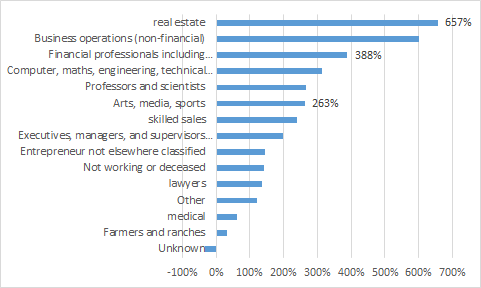
Figure 3: increase in share of national income (including capital gains) received by top 0.1% for each primary taxpayer occupation in top 0.1%between 1979 and 2005
Source: Jon Bakija, Adam Cole and Bradley T. Heim “Jobs and Income Growth of Top Earners and the Causes of Changing Income Inequality: Evidence from U.S. Tax Return Data”.
Arts, media and sports superstars are one of the fastest-growing members of the top 0.1% – see figure 3. Again, the arts, media and sports superstars get a complete pass on their membership of the top 0.1% from the Twitter Left. Most of the other occupations in the top 0.1% don’t strike me as anything other than working rich – see figure 3 and figure 4.
As with the top 1%, the top 0.1% of income earners are a mixed bag of occupations – see figure 4. Their fortunes are unrelated to each other terms of the forces driving there are increased incomes.
Figure 4: Percentage of national income (including capital gains) received by top 0.1%, and each primary taxpayer occupation in top 0.1%
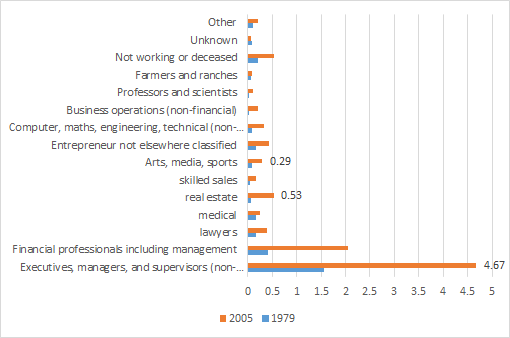
Source: Jon Bakija, Adam Cole and Bradley T. Heim “Jobs and Income Growth of Top Earners and the Causes of Changing Income Inequality: Evidence from U.S. Tax Return Data”.
The market erodes discrimination
01 Jun 2015 Leave a comment
in applied price theory, discrimination, economic history, entrepreneurship, international economics Tags: entrepreneurial alertness, racial discrimination, sex discrimination
Great excerpt on #immigration as #development from @bill_easterly's Tyranny of Experts @AlexNowrasteh @m_clem http://t.co/5eruOdEcGm—
David Bier (@myfreesociety) May 09, 2014
 Utopia, you are standing in it!
Recent Comments