HT: Cool It
Paul Ehrlich in 1970 predicted a USA decimated by hunger in the year 2000: just 23 million inhabitants living on less calories than the average African gets today
10 Jun 2014 Leave a comment
in environmental economics, environmentalism Tags: Bjørn Lomborg, Paul Ehrlich, The Great Escape, The Great Fact
HT: Cool It
I found the best writer on global warming to be Thomas Schelling
09 Jun 2014 2 Comments
in applied welfare economics, environmental economics, global warming, international economics, Thomas Schelling Tags: game theory, global warming
Tom Schelling has been involved with the global warming debate since chairing a commission on the subject for President Carter in 1980.
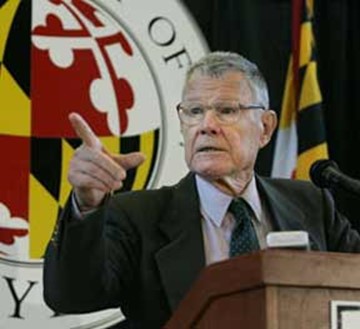
Schelling is an economist who specialises in strategy so he focuses on climate change as a bargaining problem. Schelling drew in his experiences with the negotiation of the Marshall Plan and NATO.
International agreements rarely work if they talk in terms of results. They work better if signatories promise to supply specific inputs – to perform specific actions now.
Individual NATO members did not, for example, promise to slow the Soviet invasion by 90 minutes if it happened after 1962.
NATO members promised to raise and train troops, procure equipment and supplies, and deploy these assets geographically.
All of these actions can be observed, estimated and compared quickly. The NATO treaty was a few pages long.
The Kyoto Protocol commitments were made not about actions but to results that were to be measured after more than a decade and several elections.
Climate treaties should promise to do certain actions now such as invest in R&D and develop carbon taxes that return the revenue as tax cuts. If the carbon tax revenue is fully refunded as tax cuts, less reliable countries, in particular, have an additional incentive to collect the carbon tax properly to keep their budget deficits under control.
Schelling is a genius at problem definition when he asked this
Suppose the kind of climate change expected between now and, say, 2080 had already taken place, since 1900.
Ask a seventy-five-year-old farm couple living on the same farm where they were born: would the change in the climate be among the most dramatic changes in either their farming or their lifestyle?
The answer most likely would be no. Changes from horses to tractors and from kerosene to electricity would be much more important.
Climate change would have made a vastly greater difference to the way people lived and earned their living in 1900 than today.
Today, little of our gross domestic product is produced outdoors, and therefore, little is susceptible to climate. Agriculture and forestry are less than 3 per cent of total output, and little else is much affected.
Even if agricultural productivity declined by a third over the next half-century, the per capita GNP we might have achieved by 2050 we would still achieve in 2051.
Considering that agricultural productivity in most parts of the world continues to improve (and that many crops may benefit directly from enhanced photosynthesis due to increased carbon dioxide), it is not at all certain that the net impact on agriculture will be negative or much noticed in the developed world.
As for the chances of a global treaty, Schelling has said:
The Chinese, Indonesians, or Bangladeshis are not going to divert resources from their own development to reduce the greenhouse effect, which is caused by the presence of carbon-based gases in the earth’s atmosphere.
This is a prediction, but it is also sound advice.
Their best defence against climate change and vulnerability to weather in general is their own development, reducing their reliance on agriculture and other such outdoor livelihoods.
Furthermore, they have immediate environmental problems — air and water pollution, poor sanitation, disease — that demand earlier attention.
The costs of global warming activism
08 Jun 2014 Leave a comment
in energy economics, environmental economics, environmentalism, global warming Tags: energy prices, global warming

HT: Cool It
Technology, not carbon caps, will reduce emissions – Roger Pielke, Jr.
06 Jun 2014 Leave a comment
in applied price theory, development economics, environmental economics, global warming Tags: Carbon cap, emissions trading, global warming

a “carbon cap” necessarily means that a government is committing to either a cessation of economic growth or to the systematic advancement of technological innovation in energy systems on a predictable schedule, such that economic growth is not constrained.
Because halting economic growth is not an option, in China or anywhere else, and because technological innovation does not occur via fiat, there is in practice no such thing as a carbon cap.
Where carbon caps have been attempted, such as in the European Trading Scheme, clever legislators have used gimmicks, such as carbon offsets, or set caps unrealistically high so that negative effects on GDP do not result and the unpredictability of energy innovation does not become an issue.
via Technology, not carbon caps, will reduce emissions – FT.com.
Richard Tol on the political pre-requisites to a carbon neutral economy
05 Jun 2014 Leave a comment
in environmental economics, global warming Tags: global warming, Richard Tol

David Friedman “Global Warming, Population, and the Problem with Externality Arguments”
01 Jun 2014 Leave a comment
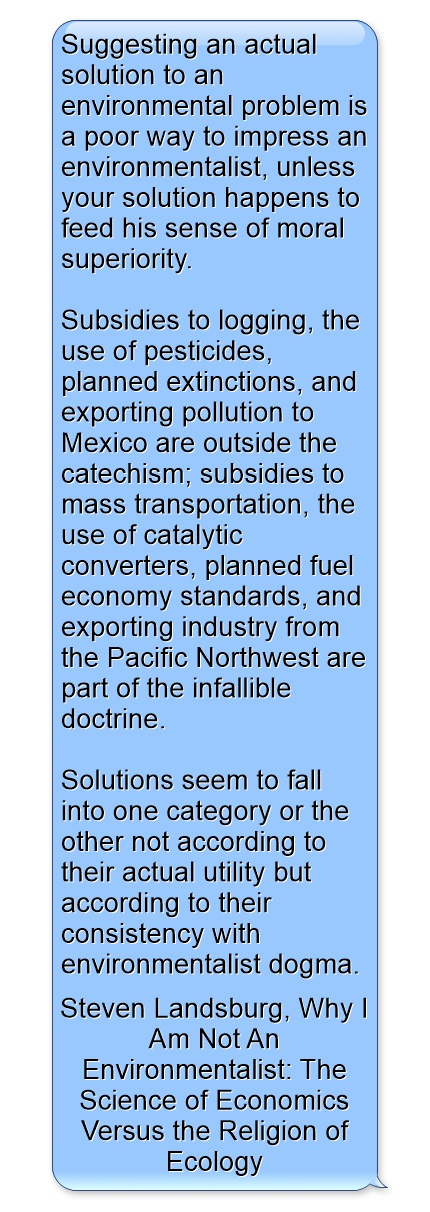
Why I am not an Environmentalist
29 May 2014 Leave a comment
in environmental economics, environmentalism Tags: expressive voting, Steven Landsburg
Picketing puppies
26 May 2014 Leave a comment
in environmental economics, environmentalism, health economics Tags: animal rights
Stirling University in the UK cancelled plans for a petting zoo after protests from PETA.

A petting zoo is set up outside the university library where stress-out students can have time out with puppies, kittens and other cute animals.
Warren Buffett: I Build Wind Turbines To Lower My Taxes
22 May 2014 Leave a comment
in entrepreneurship, environmental economics, taxation Tags: bootleggers and baptists, rentseeking, wind power
“I will do anything that is basically covered by the law to reduce Berkshire’s tax rate,” Buffett told an audience in Omaha, Nebraska this weekend. “For example, on wind energy, we get a tax credit if we build a lot of wind farms. That’s the only reason to build them. They don’t make sense without the tax credit.”

Buffett has invested billions into wind power to get federal subsidies.
via Warren Buffett: I Build Wind Turbines To Lower My Taxes | The Daily Caller.
Basing policy on a scientific consensus is a new development for environmentalists
06 May 2014 Leave a comment
in economics of regulation, environmental economics, environmentalism, health economics, law and economics Tags: Cass Sunstein, GMOs, killer green technologies, Paul Nurse, precautionary principle
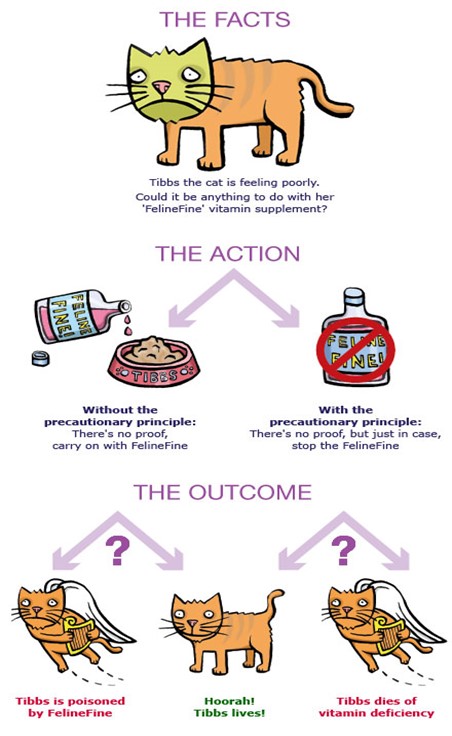
Previously the precautionary principle was used to introduce doubt when there was no doubt. But when climate science turned in their favour, environmentalists wanted public policy to be based on the latest science.
The precautionary principle is deeply incoherent. We should take precautions but there are always risks on both sides of a decision; inaction can bring danger, but so can action. Precautions themselves create risks so the precautionary principle bans what it simultaneously requires.

There is never perfect certainty about the nature and causes of health and environmental threats, so environmental and health regulations are almost always adopted despite some residual uncertainty.
We live in a Schumpeterian world where new risks replace old risks.
The obvious question is it safer or more precautionary to focus on the potential harms of new activities or technologies without reference to the activities or technologies they might displace? Jonathan Alder explains
In any policy decision, policy makers can make two potential errors regarding risk.
On the one hand, policy makers may err by failing to adopt measures to address a health or environmental risk that exists.
On the other hand, policy makers may adopt regulatory measures to control a health or environmental risk that does not exist.
Both types of error can increase risks to public health.
Consider the overwhelming consensus among researchers that biotech crops are safe for humans and the environment
This is a conclusion that is rejected by the very environmentalist organisations that loudly insist on the policy relevance of the scientific consensus on global warming.
In his 2012 Dimbleby lecture, Sir Paul Nurse calls for a re-opening the debate about GM crops based on scientific facts and analysis:
We need to consider what the science has to say about risks and benefits, uncoloured by commercial interests and ideological opinion. It is not acceptable if we deny the world’s poorest access to ways that could help their food security, if that denial is based on fashion and ill-informed opinion rather than good science.
Cass Sunstein wrote that in its strongest and most distinctive forms, the precautionary principle imposes a burden of proof on those who create potential risks, and requires regulation of activities even if it cannot be shown that those activities are likely to produce significant harms:
…apparently sensible questions have culminated in an influential doctrine, known as the precautionary principle.
The central idea is simple: Avoid steps that will create a risk of harm.
Until safety is established, be cautious; do not require unambiguous evidence.
Yet the precautionary principle, for all its rhetorical appeal, is deeply incoherent.
It is of course true that we should take precautions against some speculative dangers.
But there are always risks on both sides of a decision; inaction can bring danger, but so can action.
Precautions, in other words, themselves create risks – and hence the principle bans what it simultaneously requires.
Sunstein is a Democrat whose White House appointment to the head the White House Office of Information and Regulatory Affairs under Obama was opposed by the Left of the Democrat Party because of his views on the precautionary principle and his support of cost-benefit analysis as a primary tool for assessing regulations. Sunstein again:
The simplest problem with the precautionary principle is that regulation might well deprive society of significant benefits, and even produce a large number of deaths that would otherwise not occur.
Genetic modification holds out the promise of producing food that is both cheaper and healthier – resulting, for example, in products that might have large benefits in developing countries.
The point is not that genetic modification will definitely have those benefits, or that the benefits of genetic modification outweigh the risks.
The point is that the precautionary principle provides no guidance
The epitome of anti-science is support for the precautionary principle and opposition to cost-benefit analysis in assessing regulations. Which side of politics is guilty of this?
Environmentalists accept the views of scientists when its suits their anti-progress agenda. In other cases, the precautionary principle is used to delay judgment, reject science such as on GMOs and demand ever more evidence.
Environmentalists are all for the precautionary principle except when applied to natural medicines, organic food and marijuana.
Richard Tol: IPCC again
27 Apr 2014 Leave a comment
in economics, environmental economics, global warming, politics Tags: global warming, IPCC, Richard Tol
Richard Tol reports that landlocked countries vigorously protested at IPCC meetings that they too would suffer from sea level rise!

This was because the international climate negotiations of 2013 in Warsaw concluded that poor countries might be entitled to compensation for the impacts of climate change.
The assessment of the size of those impacts and hence any compensation led to an undignified bidding war among delegations – my country is more vulnerable than yours. Landlocked countries had no intention of missing out.
The IPCC is a typical multilateral meeting process from Tol’s description:
- Many countries send a single person delegation.
- Some countries can afford to send many delegates.
- They work in shifts, exhausting the other delegations with endless discussions about trivia, so that all important decisions are made in the final night with only a few delegations left standing.
Naturally, all inconvenient truths are vetoed, as Tol explains, listing the following omissions and redrafts of the Summary for Policy Makers:
- it omits to say that better cultivars and improved irrigation increase crop yields;
- it shows the impact of sea level rise on the most vulnerable country, but does not mention the average;
- it emphasizes the impacts of increased heat stress but downplays reduced cold stress; and
- it warns about poverty traps, violent conflict and mass migration without much support in the literature.
Tol then aptly states his position on it all:
Alarmism feeds polarization.
Climate zealots want to burn heretics of global warming on a stick.
Others only see incompetence and conspiracy in climate research, and nepotism in climate policy.
A polarized debate is not conducive to enlightened policy in an area as complex as climate change – although we only need a carbon tax, and a carbon tax only, that applies to all emissions and gradually and predictably rises over time.
HT: Catallaxyfiles
Is the IPCC Government Approval Process Broken? | Robert Stavins
27 Apr 2014 Leave a comment
in environmental economics, global warming, politics, Public Choice Tags: global warming, IPCC
Robert Stavins, the Co-Coordinating Lead Author of Chapter 13, “International Cooperation: Agreements and Instruments,” of Working Group III (Mitigation) of the Fifth Assessment Report of the Intergovernmental Panel on Climate Change (IPCC) has written a letter arguing the following:
- If the IPCC is to continue to survey scholarship on international cooperation in future assessment reports, it should not put country representatives in the uncomfortable and fundamentally untenable position of reviewing text in order to give it their unanimous approval.
- In my view, with the current structure and norms, it will be exceptionally difficult, if not impossible, to produce a scientifically sound and complete version of text for the SPM on international cooperation that can survive the country approval process.
- The general motivations for government revisions – from most (but not all) participating delegations – appeared to be quite clear in the plenary sessions.
- These motivations were made explicit in the “contact groups,” which met behind closed doors in small groups with the lead authors on particularly challenging sections of the SPM.
- In these contact groups, government representatives worked to suppress text that might jeopardize their negotiating stances in international negotiations under the United Nations Framework Convention on Climate Change (UNFCCC).
- Nearly all delegates in the meeting demonstrated the same perspective and approach, namely that any text that was considered inconsistent with their interests and positions in multilateral negotiations was treated as unacceptable.
HT: Catallaxyfiles
@NZGreens @GreenpeaceNZ The scrapping of the trolley buses is great news – killer green technology alert
27 Apr 2014 1 Comment
in environmental economics, politics - New Zealand, transport economics Tags: expressive voting, killer green technologies, Wellington buses
The extra costs associated with the wire network and the difficulty of changing the buses’ routes were the main factors in this great decision.
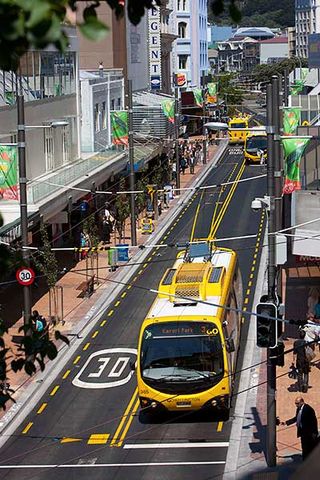
Trolley buses cause backlogs when they brake down because they cannot overtake a broken-down bus. The trolley buses just stake-up behind the broken-down bus because they cannot overtake.
I have been trapped on a diesel express bus this way commuting to work many times. Central Wellington grinds to halt when one trolley bus breaks-down.
The 50-year-old power system would need upgrading soon costing “tens of millions of dollars,” and maintaining the 160 kilometres of wires and 15 substations costs $6m a year. The one-off cost of dismantling this network is cheaper than this!
Trolley bases are a killer green technology: drivers have been killed while standing on the road behind the bus reconnected the arms on the top of the bus to the overhead wires. These arms disconnect frequently, and have even hit people on the side of the road.
Wellington is earthquake prone. Having public transport run off a single electric power source connected to overhead wires is fool hardy.
I grew up in a small country town. I have none of the obsessions that big-city folk and the inner-city green voters, in particular, have with buses.
Climate policy targets revisited | Richard Tol
26 Apr 2014 Leave a comment
in applied welfare economics, economics of climate change, environmental economics, environmentalism, politics Tags: global warming, Richard Tol
The IPCC’s Fifth Assessment Report estimates lower costs of climate change and higher costs of abatement than the Stern Review. However, current UN negotiations focus on stabilising atmospheric concentrations of greenhouse gases at even lower levels than recommended by Stern.
This column argues that, given realistic estimates of the rate at which people discount the future, the UN’s target is probably too stringent.
Moreover, since real-world climate policy is far from the ideal of a uniform carbon price, the costs of emission reduction are likely to be much higher than the IPCC’s estimates.

PRTP is the preferred rate of time preference used in net present value calculations.


Recent Comments