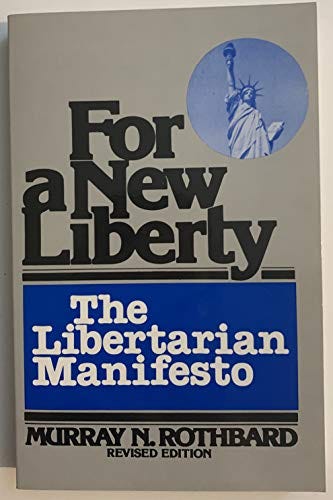
SummaryThis chapter, on “Welfare and the Welfare State,” argues that the welfare state gives the poor perverse incentives. A superficial reader might say, “However original this was in 1973 when it was first written, it’s now old hat. Clinton made the same arguments for welfare reform.” However, on closer examination, Rothbard’s analysis remains distinctive both…
I am offering a new piece of work — I do not quite call it a book — online and free. It has four chapters, is about 40,000 words, is fully written by me (not a word from the AIs), and it is attached to an AI with a dual page display, in this case…
TweetPrager University’s new short video on the Great Recession was inspired by Chapter 5 of Phil Gramm’s and my 2025 book, The Triumph of Economic Freedom. The post On the Great Recession appeared first on Cafe Hayek.
I’ve written a four-part series (here, here, here, and here) explaining why socialism is a bad idea, but let’s use today’s column to define this evil ideology. As I mentioned in the video, genuine socialism is based on three very specific concepts. Government ownership of the means of production Central planning to determine the allocation […]
The US semiquincentennial (that is, half of 500 years) will be July 4 of this year, but economists celebrated a 250th anniversary of their own on March 9, marking the original publication date of Adam Smith’s An Inquity into the Nature and Causes of the Wealth of Nations. It’s of course fundamentally impossible to sum up…
Neither theory, history nor the latest data suggests a recession driven by AI job dislocation is likely By Greg Ip. Excerpts:”Technological advancements always cost some people their jobs—those whose skills can be easily substituted by tech. But their loss is more than offset through three other channels. The new technology enhances the skills of some survivors,…
When Milton Friedman pondered what would happen if a helicopter dropped $1,000 from the sky, he likely never imagined that one day a military cargo plane would scatter millions of dollars into one of Bolivia’s largest cities. But while the Nobel Prize-winning economist worried about the inflation that an influx of cash could generate, the impact in…
Ask anyone in Australia’s competition law community what transformed the economy, and you will hear a familiar story. Australia was once a cartelised, complacent place where businesses divided up markets and consumers paid the price. Then came the Trade Practices Act in 1974, and competition law forced firms to compete. This is not a fringe […]
Law & economics traces its intellectual roots to the University of Chicago. That lineage still shapes how the field is understood. Chicago price theory—especially Gary Becker’s (1976) systematic application of maximization, equilibrium, and stable preferences across social life, and George Stigler’s (1992, p. 459) suggestion that “every durable social institution or practice is efficient, or…
We study the macroeconomic effects of tariff policy using U.S. historical data from 1840–2024. We construct a narrative series of plausibly exogenous tariff changes – based on major legislative actions, multilateral negotiations, and temporary surcharges – and use it as an instrument to identify a structural tariff shock. Tariff increases are contractionary: imports fall sharply,…
See Socialists, Knowledge of History and Agency. These are letters to the editor of The WSJ in response to an article about socialism by Joseph Epstein. The one below reminded me of a 1992 article by Robert Samuelson in Newsweek. “Joseph Epstein’s “Socialists Don’t Know History” (op-ed, May 30, 2019) on the abysmal historical knowledge…
It is not often I am speechless but that is exactly what I was when I saw some of these advertisements and products from days of yore. You would not get away with it by today’s standards. Vintage newspaper ad for heroin Who doesn’t like a bit of cocaine on their candy. Stay fit and […]
Antitrust has always been a strange regulatory enterprise. Businesses are largely free to engage in various commercial practices involving price, output, product design, distribution, research, and innovation—until they’re not. Outside the paradigmatic examples of explicit agreements among competitors to fix price and output, many business practices live in a gray zone. Whether a particular pricing…
In Part I and Part II of this series, we looked at research showing that Americans are bearing the burden of Trump’s trade taxes. Those findings are a useful antidote to Trump’s silly and illiterate claim that foreign companies are swallowing the added cost. In both of those columns, however, I pointed out that I’m […]
How many times have I heard versions of that claim? Erik Brynjolfsson picks up the telephone in the FT: While initial reports suggested a year of steady labour expansion in the US, the new figures reveal that total payroll growth was revised downward by approximately 403,000 jobs. Crucially, this downward revision occurred while real GDP…
Why Evolution is True is a blog written by Jerry Coyne, centered on evolution and biology but also dealing with diverse topics like politics, culture, and cats.
“We do not believe any group of men adequate enough or wise enough to operate without scrutiny or without criticism. We know that the only way to avoid error is to detect it, that the only way to detect it is to be free to inquire. We know that in secrecy error undetected will flourish and subvert”. - J Robert Oppenheimer.



 Utopia, you are standing in it!
Recent Comments