I am sad to hear about the passing of Manmohan Singh at age 92. Singh was perhaps the most influential Indian policymaker in the last five decades. An Oxbridge educated trade economist, he became India’s most important technocrat in the 1980s and 1990s – occupying every top position in economic policy – finance secretary; deputy […]
Manmohan Singh, RIP
Manmohan Singh, RIP
28 Dec 2024 Leave a comment
in development economics, growth disasters, growth miracles, history of economic thought Tags: India
The Changing US Labor Market
28 Dec 2024 Leave a comment
in applied price theory, economic history, history of economic thought, human capital, labour economics, labour supply, occupational choice, poverty and inequality, unemployment Tags: creative destruction

There is a widespread belief that the US labor market has been undergoing a period of unprecedented chance in the last decade or two. On one hand, David Deming, Christopher Ong, and Lawrence H. Summers case doubt on this historical claim in their essay, ” Technological Disruption in the US Labor Market”–that is, they argue…
The Changing US Labor Market
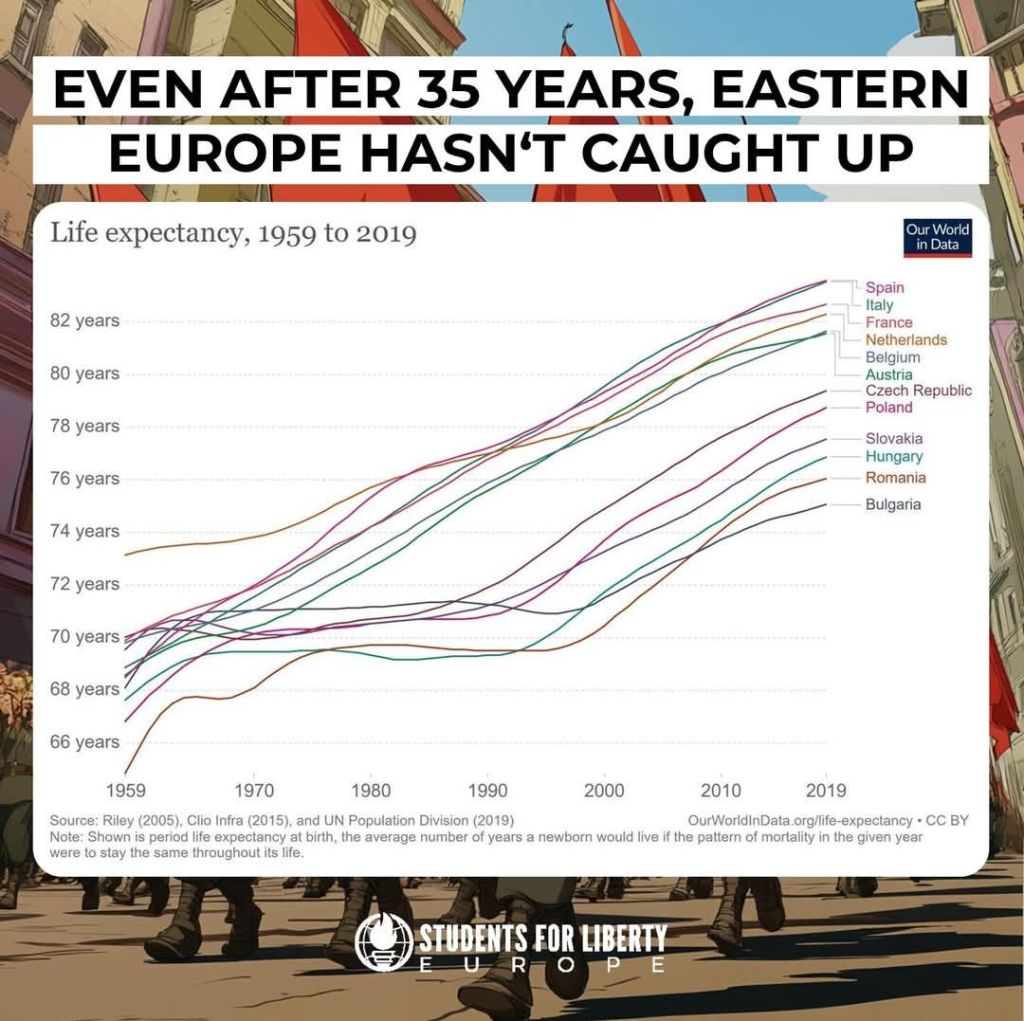
The curse of socialism
27 Dec 2024 Leave a comment
in development economics, economic history, economics of bureaucracy, economics of crime, growth disasters, health economics, history of economic thought, law and economics, liberalism, Marxist economics, property rights, Public Choice Tags: economics of socialism, The Great Escape
Slandering Friedman and Hayek
27 Dec 2024 Leave a comment
in discrimination, F.A. Hayek, history of economic thought, law and economics, liberalism, libertarianism, Milton Friedman Tags: regressive left, South Africa, apartheid
TweetOpponents of the liberal market order often play fast and loose with the facts in order to discredit two of history’s greatest champions of the liberal market order, Milton Friedman and F.A. Hayek. Editor, The New York Review of Books Editor: Trevor Jackson writes of “the enthusiasm that free-market fundamentalists like Friedrich Hayek and Milton…
Slandering Friedman and Hayek
Marginal Revolution Podcast–The New Monetary Economics!
25 Dec 2024 Leave a comment
in applied price theory, history of economic thought, macroeconomics, monetarism, monetary economics Tags: monetary policy
Today on the MR Podcast Tyler and I discuss the “New Monetary Economics”. Here’s the opening TABARROK: Today we’re going to be talking about the new monetary economics. Now, perhaps the first thing to say is that it’s not new anymore. The new monetary economics refers to a set of claims and ideas about monetary economics […]
Marginal Revolution Podcast–The New Monetary Economics!
The Nobel Prize lectures in economics
12 Dec 2024 Leave a comment
in applied price theory, comparative institutional analysis, constitutional political economy, development economics, economics of crime, economics of regulation, growth disasters, growth miracles, history of economic thought, law and economics, property rights, Public Choice
o1 explains why you should not dismiss Fischer Black on money and prices
08 Dec 2024 Leave a comment
in applied price theory, business cycles, economic growth, financial economics, fiscal policy, history of economic thought, macroeconomics, monetarism, monetary economics Tags: monetary policy
The prediction of inflation dynamics—how prices change over time—has increasingly confounded modern macroeconomists. Throughout much of the twentieth century, there seemed to be clear relationships linking the money supply, economic slack, and price levels. Monetarism, the school of thought that posits a stable connection between the growth rate of a money aggregate and the subsequent […]
o1 explains why you should not dismiss Fischer Black on money and prices
Bob Ekelund Remembered
23 Nov 2024 Leave a comment
in applied price theory, comparative institutional analysis, economics of bureaucracy, economics of information, economics of regulation, entrepreneurship, health economics, history of economic thought, industrial organisation, law and economics, market efficiency, Milton Friedman, property rights, Public Choice, public economics, regulation, theory of the firm Tags: competition law, Product safety
TweetHere’s my just-published remembrance, in Public Choice, of my late teacher, dissertation advisor, co-author, and friend, Bob Ekelund. Three slices: The only textbook assigned for the course was Milton Friedman’s Price Theory. From some younger members of Auburn’s economics faculty, I heard a few cocktail-lubricated complaints that core theory courses in a modern economics Ph.D.…
Bob Ekelund Remembered
Reflections on India
16 Oct 2024 1 Comment
in applied price theory, comparative institutional analysis, constitutional political economy, development economics, economic growth, economic history, economics of bureaucracy, growth disasters, growth miracles, history of economic thought, income redistribution, law and economics, macroeconomics, Marxist economics, property rights, Public Choice, public economics, regulation, rentseeking Tags: economics of colonialism, India

I’m back from my first trip to India, where I visited Mumbai, Delhi, Agra, and Amritsar. I enjoyed fine company in all four cities. In Mumbai, my new friend Sachin Aggarwal, head of the local EconTalk Club, rolled out the red carpet — and ACX Mumbai joined the festivities. (Thank you, Scott Alexander, for creating…
Reflections on India
Acemoglu, Johnson and Robinson Win Nobel Prize for Institutions and Prosperity
15 Oct 2024 Leave a comment
in applied price theory, comparative institutional analysis, constitutional political economy, development economics, economic growth, economic history, economics of bureaucracy, economics of regulation, growth disasters, growth miracles, history of economic thought, income redistribution, macroeconomics, Public Choice, public economics, rentseeking
The Nobel prize goes to Daron Acemoglu, Simon Johnson and James Robinson for their work on institutions, prosperity, and economic growth. Here is a key piece summarizing their work: Institutions as a Fundamental Cause of Long-Run Growth. This paper develops the empirical and theoretical case that differences in economic institutions are the fundamental cause of […]
Acemoglu, Johnson and Robinson Win Nobel Prize for Institutions and Prosperity
A Nobel for Acemoglu, Johnson, and Robinson: Institutions and Prosperity
15 Oct 2024 Leave a comment
in applied price theory, comparative institutional analysis, constitutional political economy, development economics, economic history, growth disasters, growth miracles, history of economic thought
The Sveriges Riksbank Prize in Economic Sciences in Memory of Alfred Nobel 2024 has been awarded to Daron Acemoglu, Simon Johnson and James Robinson “for studies of how institutions are formed and affect prosperity.” Each year, the Nobel Committee helpfully publishes both a “Popular information” overview of of the award and a “Scientific Background” essay that goes into greater depth.…
A Nobel for Acemoglu, Johnson, and Robinson: Institutions and Prosperity
US Productivity Growth: Downside, Upside
08 Oct 2024 Leave a comment
in applied price theory, econometerics, economic growth, economic history, entrepreneurship, history of economic thought, industrial organisation, labour economics, labour supply, macroeconomics Tags: The Great Enrichment
Over time, a rising US standard of living is driven by productivity growth. Michael Peters succinctly describes the problem in “America Must Rediscover Its Dynamism” (Finance & Development, September 2024). He writes: The US economy has a multitrillion-dollar problem. It’s the dramatic slowdown in productivity growth over the past couple of decades. Between 1947 and…
US Productivity Growth: Downside, Upside
Another zero lower bound prediction bites the dust
28 Sep 2024 Leave a comment
in applied price theory, budget deficits, business cycles, economic growth, fiscal policy, history of economic thought, labour economics, macroeconomics, monetary economics, public economics, unemployment Tags: New Keynesian macroeconomics
Popular New Keynesian macroeconomic models predict that cuts in various types of distortionary taxes are contractionary when monetary policy is constrained at the zero lower bound. We turn to a long span of history in the United Kingdom to test this hypothesis. Using a new long-run dataset of narrative-identified tax changes from 1918to 2020, we […]
Another zero lower bound prediction bites the dust
Should we keep the wealthy non-diversified? (from my email)
27 Sep 2024 Leave a comment
in applied price theory, economic history, entrepreneurship, history of economic thought, human capital, income redistribution, industrial organisation, labour economics, labour supply, liberalism, Marxist economics, occupational choice, poverty and inequality, Public Choice Tags: top 1%
Byrne Hobart writes to me: One of the purposes of inheritance taxes is to avoid compounding intergenerational wealth. But The Missing Billionaires points out that if all of America’s millionaires had put their money in broad market indices in 1900, their heirs would number 16,000 billionaires, even accounting for taxes, splitting estates among multiple children, etc. So […]
Should we keep the wealthy non-diversified? (from my email)
Historian Anthony Comegna reviews Marc-William Palen’s book Pax Economica: Left-Wing Visions of a Free Trade World
23 Sep 2024 Leave a comment
in applied price theory, development economics, history of economic thought, international economics Tags: economics of colonialism, free trade, tariffs
See When Leftists Were Free Traders: In Pax Economica, historian Marc-William Palen chronicles the left-wing history of free trade. From Reason magazine.Dr. Marc-William Palen is a historian at the University of Exeter. His Ph. D. is from The University of Texas.The review is very good. Here is the Amazon link for the book: Pax Economica:…
Historian Anthony Comegna reviews Marc-William Palen’s book Pax Economica: Left-Wing Visions of a Free Trade World
 Utopia, you are standing in it!
Recent Comments