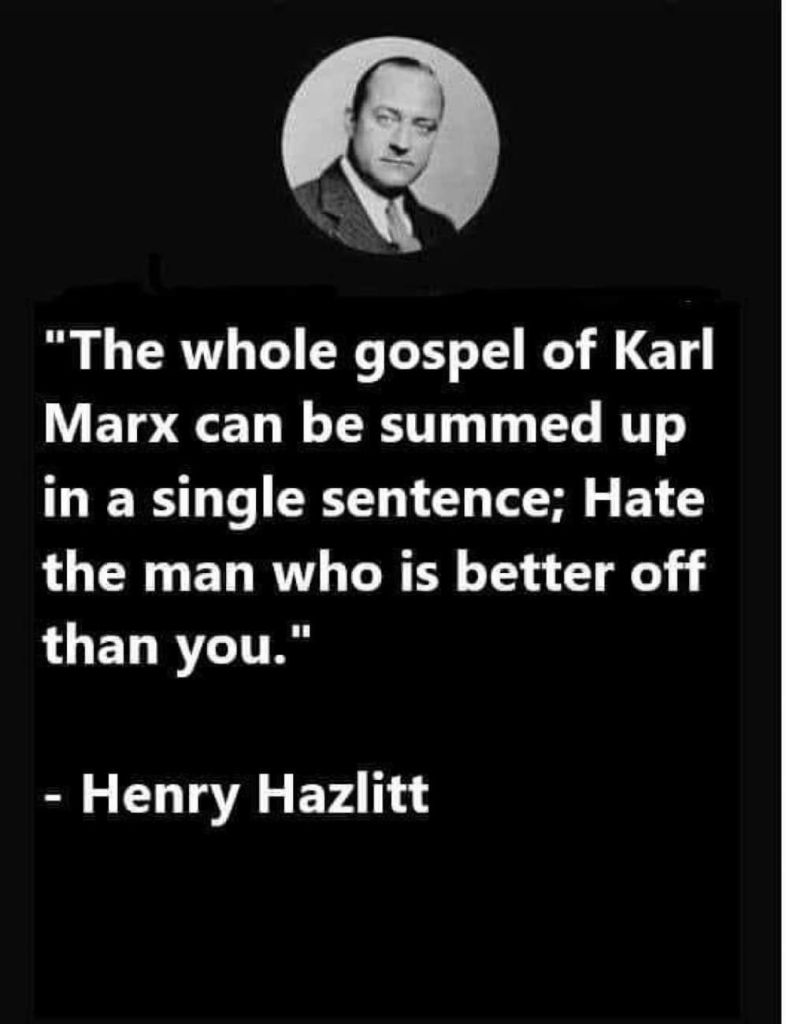
The whole gospel of Karl Marx can be summed up in a single sentence: Hate the man who is better off than you are. Never under any circumstances admit that his success may be due to his own efforts, to the productive contribution he has made to the whole community. Always… pic.twitter.com/SQ62cHdSUe
— Margaret Thatcher (@MrsMThatcher) May 20, 2024
The Rise and Decline and Rise Again of Mancur Olson
09 May 2024 Leave a comment
in applied price theory, comparative institutional analysis, constitutional political economy, development economics, economic history, growth disasters, growth miracles, history of economic thought, income redistribution, industrial organisation, law and economics, property rights, Public Choice, public economics, rentseeking

Mancur Olson’s The Rise and Decline of Nations is one of my favorite books and a classic of public choice. Olson may well have won the Nobel prize had he not died young. He summarized his book in nine implications of which I will present four: 2. Stable societies with unchanged boundaries tend to accumulate […]
The Rise and Decline and Rise Again of Mancur Olson
Quotation of the Day…
28 Apr 2024 Leave a comment
in applied price theory, Austrian economics, history of economic thought, industrial organisation, law and economics Tags: competition law
Tweet… is from page 422 of Robert Bork’s masterful 1978 book, The Antitrust Paradox: Competition in open markets reflects the ideal of equality of opportunity, while antitrust’s longstanding and growing concern for the small and less efficient reflects a preference for equality of outcome. Outcomes are not equal in open competition, hence the pressure for…
Quotation of the Day…
Why Socialism Won’t Die
26 Apr 2024 Leave a comment
in applied price theory, comparative institutional analysis, constitutional political economy, development economics, economic history, economics of bureaucracy, entrepreneurship, growth disasters, history of economic thought, income redistribution, industrial organisation, law and economics, liberalism, Marxist economics, property rights, Public Choice Tags: economics of socialism

“to employ a hundred people is… exploitation, but to command the same number [is] honorable.” That’s an actual book by the way, explaining that although communism has failed in the past across different nations, races and cultures, it might work in the future where machines can create anything we want. Think Star Trek’s replicator technology. […]
Why Socialism Won’t Die
Why the Global Free Market Will Save the World
23 Apr 2024 Leave a comment
in applied price theory, applied welfare economics, comparative institutional analysis, constitutional political economy, development economics, economic growth, economic history, energy economics, environmental economics, global warming, growth disasters, growth miracles, health economics, history of economic thought, income redistribution, labour economics, law and economics, liberalism, macroeconomics, Marxist economics, politics - Australia, politics - New Zealand, politics - USA, poverty and inequality, property rights, Public Choice, public economics, rentseeking Tags: anticapitalist mentality, capitalism and freedom
19 Apr 2024 Leave a comment
in budget deficits, business cycles, economic growth, economic history, fiscal policy, great depression, history of economic thought, labour economics, macroeconomics, monetarism, monetary economics, unemployment
A Socialist Explains Why Socialism Can’t Work
13 Apr 2024 Leave a comment
in applied price theory, comparative institutional analysis, development economics, economic history, economics of bureaucracy, economics of regulation, history of economic thought, human capital, income redistribution, industrial organisation, labour economics, labour supply, law and economics, liberalism, Marxist economics, poverty and inequality, property rights, Public Choice, public economics, survivor principle, theory of the firm Tags: economics of socialism, regressive left

Not that the socialist in question, Professor Richard D. Wolff, realises that’s what he’s doing in the Q&A video below – and he’s not talking about traditional Communist Command and Controlled Economies. What he’s actually describing is a very pure form of socialism, the sort only vaguely imagined by Marx, Engels and other communists when […]
A Socialist Explains Why Socialism Can’t Work
A Conversation with Gary Becker
10 Apr 2024 Leave a comment
in applied price theory, behavioural economics, comparative institutional analysis, discrimination, economic history, economics of education, economics of information, Gary Becker, gender, history of economic thought, human capital, labour economics, labour supply, occupational choice, poverty and inequality
Deirdre McCloskey: Innovation Begins in Our Minds
09 Apr 2024 Leave a comment
in applied price theory, applied welfare economics, comparative institutional analysis, constitutional political economy, development economics, economic history, entrepreneurship, growth miracles, history of economic thought
Cuba Libre
05 Apr 2024 Leave a comment
in applied price theory, comparative institutional analysis, constitutional political economy, development economics, economic history, economics of bureaucracy, economics of crime, growth disasters, history of economic thought, human capital, income redistribution, industrial organisation, labour economics, labour supply, law and economics, liberalism, Marxist economics, politics - USA, poverty and inequality, Public Choice, public economics, rentseeking Tags: Cuba
Martin Gurri has a very good, deep-dive on the current situation in Cuba. The wreckage of the Cuban economy really can’t be exaggerated. The perpetual blackouts are an apt symbol of a country that is headed for the dark ages. For the first time since the revolution, Cuba is begging the United Nations for food aid. Nearly […]
Cuba Libre
Productivity Syndrome and the Investment Prescription
30 Mar 2024 Leave a comment
in applied price theory, development economics, economic growth, economic history, growth miracles, history of economic thought, human capital, industrial organisation, labour economics, labour supply, macroeconomics

Economic productivity is about growing the size of the pie. I sometimes point out that no matter what your goal–spending increases, tax cuts, greater support for the poor, environmental protection–that goal is easier when the economic pie is growing. When the economic pie isn’t growing, after all, then all priorities have to pit potential winners…
Productivity Syndrome and the Investment Prescription
Book review: The Worldly Philosophers
21 Mar 2024 Leave a comment
in history of economic thought

I just finished reading Robert Heilbroner’s excellent book The Worldly Philosophers. I forget who recommended it to me, but perhaps it was a mention in this blog by Dianne Coyle. Anyway, the book was first published in 1953 and has been through seven editions, with the last edition (which was the one I read) published…
Book review: The Worldly Philosophers
Claude 3 Opus does Austrian economics
20 Mar 2024 Leave a comment
in applied price theory, Austrian economics, comparative institutional analysis, entrepreneurship, history of economic thought Tags: entrepreneurial alertness
TC: Let’s say you were Peter Boettke, and looking to pen a critique of Kirzner’s theory of entrepreneurship. You come from a slightly different branch of the Austrian school. How would you use that differential background to express your differences with the Kirznerian theory, which emphasizes alertness above all else as an entrepreneurial characteristic? “If […]
Claude 3 Opus does Austrian economics
 Utopia, you are standing in it!
Recent Comments