Oliver Hartwich writes – In his victory speech, Donald Trump promised Americans a new “golden age”. While he had the numbers to win the election, the economic realities he faces will make delivering on his promise challenging. Trump’s victory reflects many Americans’ frustrations with living standards and inflation during the Biden-Harris administration. Vice President Kamala […]
Trump’s victory: Golden age or fiscal reckoning?
Trump’s victory: Golden age or fiscal reckoning?
14 Nov 2024 Leave a comment
in business cycles, economic growth, fiscal policy, industrial organisation, international economics, labour economics, law and economics, macroeconomics, monetary economics, politics - USA, property rights, public economics Tags: 2024 presidential election
Electric Vehicles: A Tale of Woe in the Absence of the Market Process
09 Nov 2024 1 Comment
in economics of climate change, economics of regulation, energy economics, environmental economics, environmentalism, global warming, industrial organisation, politics - USA, survivor principle, transport economics, urban economics Tags: electric cars
There is a market for electric vehicles, but government mandates and subsidies—regulators predicting winners and losers—cause more harm than good. By forcing technology into widespread use before it is ready for primetime, governments are causing consumers to resist EVs. Instead, government regulators should allow consumer demand, competition, and the “market process” to guide EV adoption.
Electric Vehicles: A Tale of Woe in the Absence of the Market Process
Creative destruction
04 Nov 2024 Leave a comment
in economic growth, economic history, industrial organisation, macroeconomics, survivor principle Tags: creative destruction, The Great Enrichment
Bezos on endorsements
01 Nov 2024 Leave a comment
in industrial organisation, law and economics, liberalism, Marxist economics, politics - USA, property rights, survivor principle Tags: 2024 presidential election, free speech, Freedom of the press, political correctness, regressive left
Jeff Bezos writes: In the annual public surveys about trust and reputation, journalists and the media have regularly fallen near the very bottom, often just above Congress. But in this year’s Gallup poll, we have managed to fall below Congress. Our profession is now the least trusted of all. Something we are doing is clearly not […]
Bezos on endorsements
Biden-Harris policies and their consequences were no surprise to those paying attention
30 Oct 2024 Leave a comment
in applied price theory, applied welfare economics, budget deficits, business cycles, econometerics, economic growth, economic history, economics of bureaucracy, economics of regulation, energy economics, entrepreneurship, environmental economics, financial economics, fiscal policy, global warming, health economics, income redistribution, industrial organisation, law and economics, macroeconomics, monetary economics, politics - USA, property rights, Public Choice, public economics, rentseeking Tags: 2024 presidential election, drug lags, taxation and entrepreneurship, taxation and investment
Milton Friedman used to advise researchers to focus on large policy changes rather than attempting to separate a small change’s signal from the noise. In this sense, the “ambitious” policy agenda of the Biden-Harris administration was expected to be a gift to the research community. Accepting this gift, since 2020 I have been making forecasts…
Biden-Harris policies and their consequences were no surprise to those paying attention
The Shinkansen and Japan’s Lost Decades
30 Oct 2024 Leave a comment
in applied price theory, economic growth, economics of bureaucracy, industrial organisation, macroeconomics, Public Choice, public economics, survivor principle, transport economics, urban economics Tags: Japan
Japan is known for many things, but two of them are the Shinkansen high-speed trains and the nation’s three Lost Decades of slow economic growth. Unfortunately, most tourists who go to Japan see the former and don’t see the latter and especially don’t see the connection between the two. The … Continue reading →
The Shinkansen and Japan’s Lost Decades
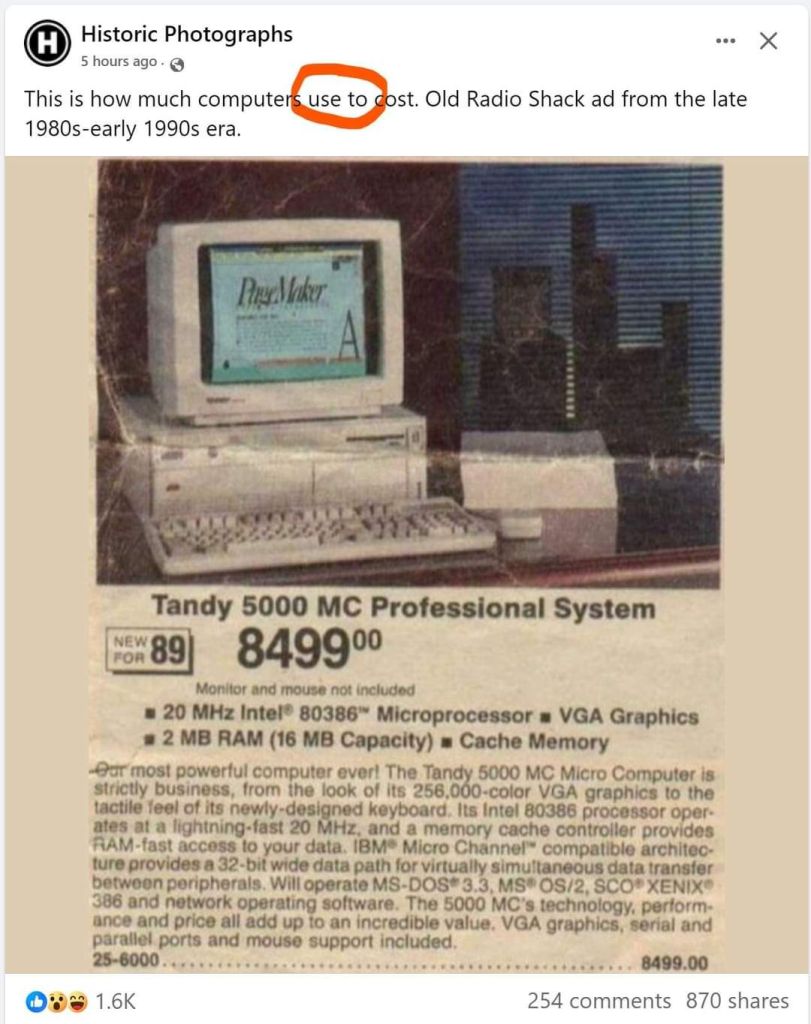
RCA TR-4 Television Video Recorder advertisement, 1966.
24 Oct 2024 Leave a comment
in economic history, industrial organisation Tags: creative destruction

WSJ Video on Trump-Biden-Trump Tariffs
22 Oct 2024 Leave a comment
in applied price theory, applied welfare economics, economic history, industrial organisation, international economics, politics - USA, survivor principle Tags: 2024 presidential election, tarrifs
TweetI can pick a few nits with this eight-minute-long video from the Wall Street Journal on tariffs – for example, for all of their many problems, tariffs do not (contrary to what’s reported in the video) cause any net, economy-wide loss of jobs. Nevertheless, this video is quite good, not least because it features the…
WSJ Video on Trump-Biden-Trump Tariffs
Industrial Policy: The Triumph of Hope over Experience
13 Oct 2024 Leave a comment
in applied price theory, income redistribution, industrial organisation, Public Choice, public economics, rentseeking, survivor principle

Industrial policy is when politicians and bureaucrats use various combinations of tax, spending, and regulatory policies to steer the economy. In other words, they are putting their thumbs on the scale to pick winners and losers. It means replacing the “invisible hand” of the market with the “grabbing hand” of politics. I’m motivated to write […]
Industrial Policy: The Triumph of Hope over Experience
America’s Ambitious Climate Plan Is Faltering
10 Oct 2024 Leave a comment
in energy economics, environmental economics, global warming, industrial organisation, politics - USA, survivor principle Tags: solar power, wind power
Global emissions are at records, while shift away from fossil fuels slows amid high costs, surging power demandSee By Ed Ballard and Amrith Ramkumar of The WSJ.Keeping the air clean is laudable goal, but the benefit of actions in this area need to outweigh the costs.Excerpts from the article:”Renewable energy is growing faster than expected.…
America’s Ambitious Climate Plan Is Faltering
The Foodstuffs merger is rejected, so the wholesale market remains an oligopsony
10 Oct 2024 1 Comment
in applied price theory, economics of regulation, industrial organisation, politics - New Zealand Tags: competition law
Yesterday we learned the Commerce Commission’s decision on the merger application by Foodstuffs North Island and Foodstuffs South Island (which I posted about last month). As NBR reported yesterday (paywalled, but you can read this briefer New Zealand Herald story instead, or the Commerce Commission’s decision here):Foodstuffs wanted to see the co-ops merged within and…
The Foodstuffs merger is rejected, so the wholesale market remains an oligopsony
What planet are they on?
09 Oct 2024 Leave a comment
in applied price theory, economics of media and culture, economics of regulation, entrepreneurship, industrial organisation, law and economics, politics - New Zealand, property rights, survivor principle Tags: creative destruction, legacy media
New Zealand’s newspaper chiefs’ views on how the Fair Digital News Bargaining Bill works is somewhat at odds with the text of the Bill. Google today, admirably, said they’ll stop linking to New Zealand news outlets in search if the Bill goes ahead. News Publishers’ Association’s Andrew Holden and Stuff’s Sinead Boucher aren’t happy about that. But…
What planet are they on?
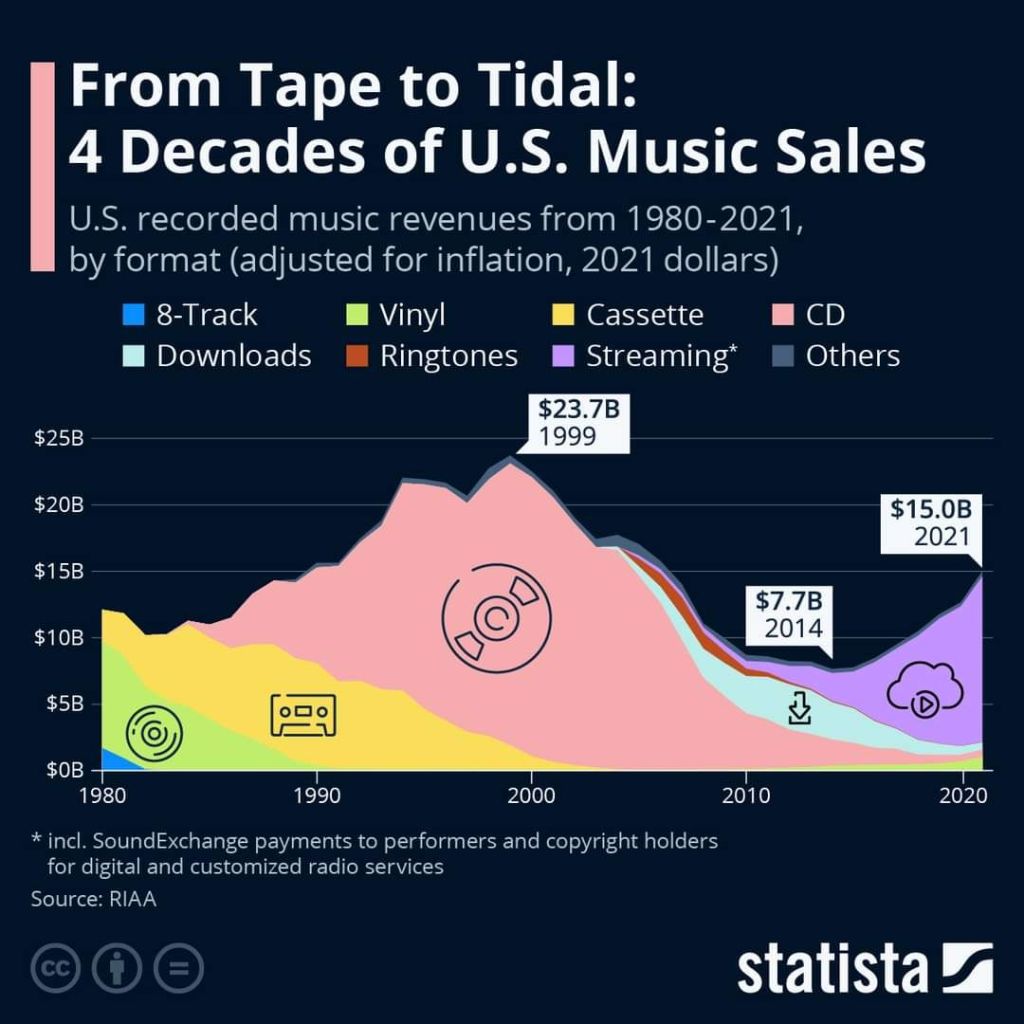
Paid music makes a comeback
09 Oct 2024 1 Comment
in economic history, industrial organisation, Music, survivor principle
US Productivity Growth: Downside, Upside
08 Oct 2024 Leave a comment
in applied price theory, econometerics, economic growth, economic history, entrepreneurship, history of economic thought, industrial organisation, labour economics, labour supply, macroeconomics Tags: The Great Enrichment
Over time, a rising US standard of living is driven by productivity growth. Michael Peters succinctly describes the problem in “America Must Rediscover Its Dynamism” (Finance & Development, September 2024). He writes: The US economy has a multitrillion-dollar problem. It’s the dramatic slowdown in productivity growth over the past couple of decades. Between 1947 and…
US Productivity Growth: Downside, Upside
On the price of Ozempic
07 Oct 2024 Leave a comment
in applied price theory, economics of regulation, health economics, industrial organisation
That is the topic of my latest Bloomberg column, here is one excerpt: As for consumer prices for the current obesity drugs, they are not as high as is often reported, once the various ways to get a discount are taken into account. Despite reports that the drugs cost $1,000 per month, the reality is more favorable. […]
On the price of Ozempic
 Utopia, you are standing in it!
Recent Comments