Bilateral, plurilateral, and multilateral are words that New Zealand’s civil service love. There is nothing that can’t be improved by doing it in concert with others. Sometimes there’s good reason for just doing stuff. New Zealand made the right decision when it unilaterally slashed all of its tariffs. It also progressed all the other trade agreements that helped…
The case for unilateral recognition
The case for unilateral recognition
11 Sep 2026 Leave a comment
in applied price theory, economics of information, economics of regulation, industrial organisation, international economic law, international economics, politics - Australia, politics - New Zealand, regulation
Economic Scenarios for Transformative AI
10 Sep 2026 Leave a comment
in applied price theory, economic growth, industrial organisation, macroeconomics Tags: creative destruction
By Anton Korinek, Charles I. Jones, Szymon Sacher, Tess Cotter, and Peter McCrory, a strong line-up from Anthropic. They are sober, reasoned, scientific, and (for the most part) dynamically consistent. Here is the paper, here is the abstract: This paper presents a framework for assessing the economic consequences of AI between 2026 and 2030. In…
Economic Scenarios for Transformative AI
Did the Sewing Machine Reduce the Workload for Women?
10 Sep 2026 1 Comment
in discrimination, economic growth, economic history, economics of education, gender, history of economic thought, human capital, industrial organisation, labour economics, labour supply, macroeconomics, occupational choice, poverty and inequality, technological progress Tags: creative destruction, The Great Enrichment
Is new technology that replaces a worker a good thing? We have a tendency, it seems to me, to believe that most previous inventions turned out to have overall net social benefits, but to be worried that all future inventions will instead have overall net social costs. Philipp Ager and Davide Coluccia tackle the question of…
Did the Sewing Machine Reduce the Workload for Women?
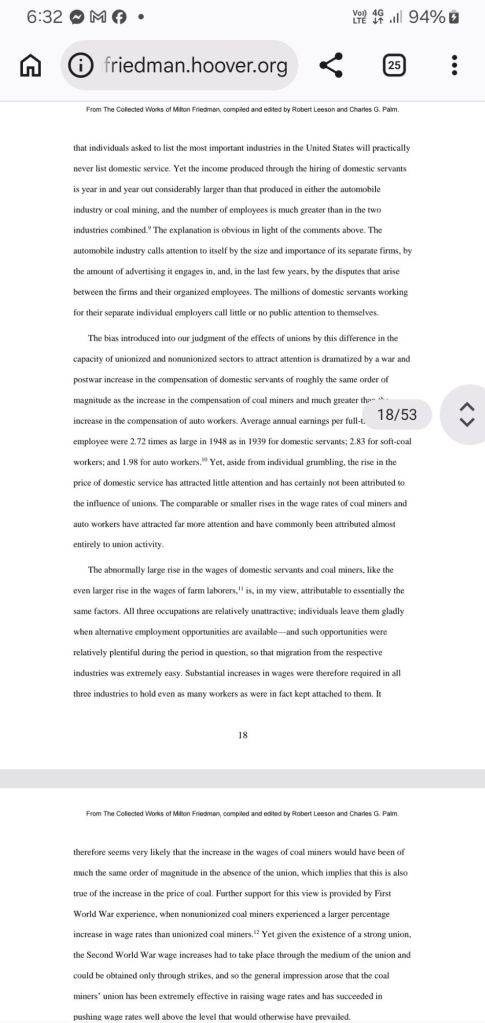
Some Comments on the Significance of Labor Unions for Economic Policy – Items – Collected Works of Milton Friedman
08 Sep 2026 Leave a comment
in applied price theory, economic history, history of economic thought, industrial organisation, labour supply, Milton Friedman, survivor principle, unions
America is still poised for a data center boom
07 Sep 2026 Leave a comment
in economics of education, economics of information, energy economics, entrepreneurship, industrial organisation
Eric Levitz, via Matt Yglesias. The post America is still poised for a data center boom appeared first on Marginal REVOLUTION.
America is still poised for a data center boom
How Much Redistribution Will AI Require?
07 Sep 2026 Leave a comment
in applied price theory, entrepreneurship, industrial organisation, labour economics, labour supply, poverty and inequality, unemployment Tags: creative destruction
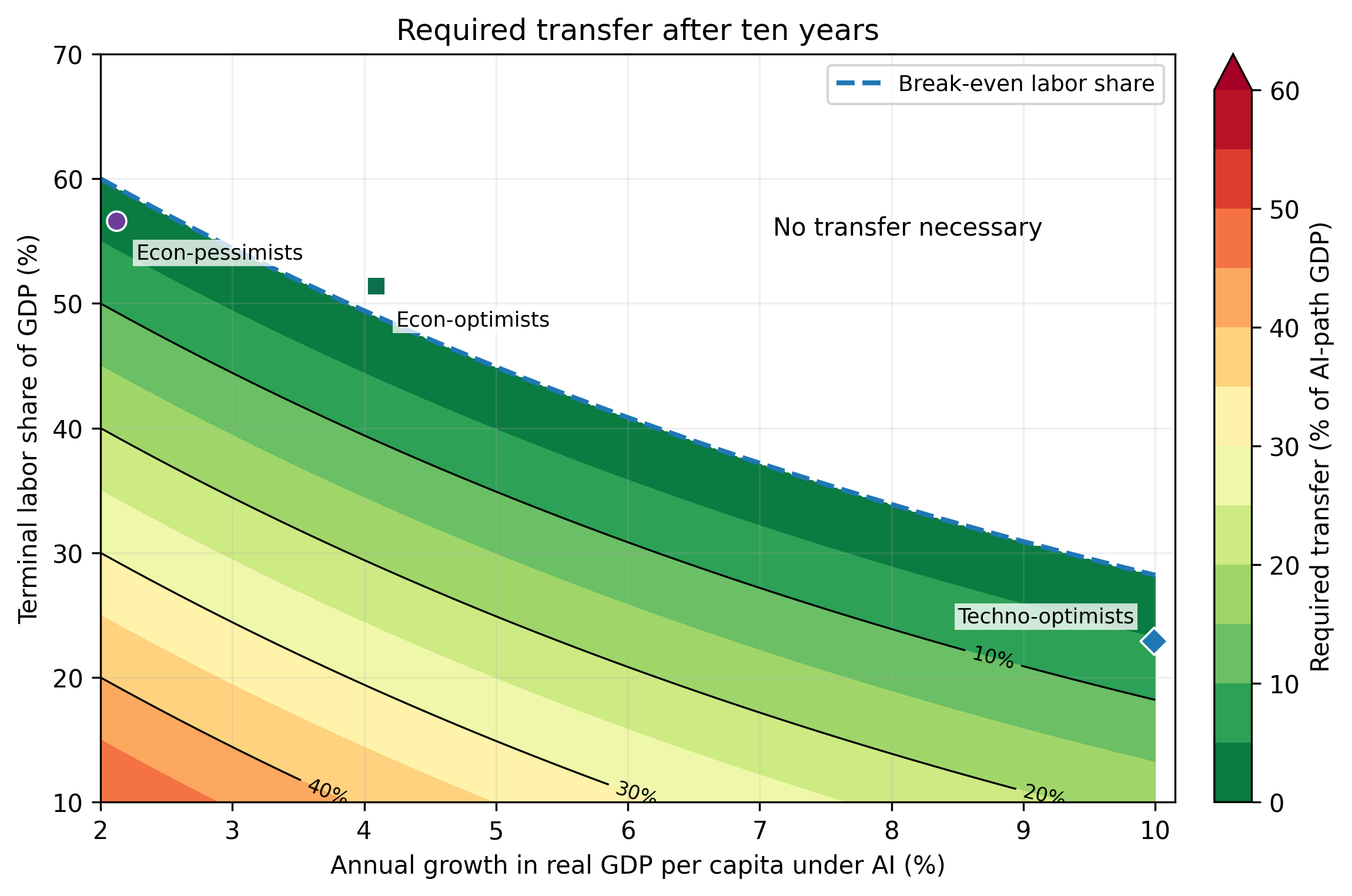
How much redistribution will AI require? A common scenario is that AI raises output enormously, but labor’s share of income collapses. GDP per capita goes up but workers get poorer, and making workers whole requires massive redistribution. In my latest paper, I run the numbers and conclude that this is probably incorrect. The idea is…
How Much Redistribution Will AI Require?
Quotation of the Day…
05 Sep 2026 Leave a comment
in applied price theory, industrial organisation, international economics
Tweet… is from page 213 of Menzie Chinn’s and Douglas Irwin’s superb 2025 textbook, International Economics: The past few decades have been an era of globalization. Most countries have moved to reduce trade barriers and take advantage of growing world trade. How have they done so? One way a country can reduce its tariff and…
Quotation of the Day…
After US Defeat: Vietnam and Afghanistan
04 Sep 2026 Leave a comment
in defence economics, development economics, economic history, growth disasters, growth miracles, industrial organisation, Marxist economics, war and peace Tags: Afghanistan, Vietnam
The American defeats in Vietnam and Afghanistan are often compared as military and foreign-policy failures. But there is another comparison that matters at least as much: what happened to the people left behind after the Americans departed? If we put aside the destruction caused during the wars themselves and concentrate on their aftermaths, an important difference […]
After US Defeat: Vietnam and Afghanistan
‘The Use of Knowledge in Society,’ by Friedrich A. Hayek
01 Sep 2026 Leave a comment
in applied price theory, Austrian economics, economics of information, entrepreneurship, F.A. Hayek, history of economic thought, industrial organisation, Ludwig von Mises, market efficiency, Ronald Coase, Ronald Coase, Ronald Coase, theory of the firm

The wealth and technological sophistication of modern society are readily apparent. Less visible, but no less remarkable, is its ability to coordinate the actions of billions of people who know almost nothing about one another’s circumstances. Every day we make decisions without possessing most of the information on which those decisions ultimately depend. We purchase…
‘The Use of Knowledge in Society,’ by Friedrich A. Hayek
Do labour markets behave like competitive markets?
01 Sep 2026 Leave a comment
in applied price theory, econometerics, history of economic thought, industrial organisation, labour economics, labour supply Tags: competition law, monopsony
The American evidence is that they frequently do not. For over a century there was a separate Department of Labour, which was amalgamated into that vast miscellaneous department, the Ministry of Business, Innovation and Employment. Today there is no Minister of Labour, while the portfolios of workplace relations and safety and of immigration are held […]
Do labour markets behave like competitive markets?
How Low Should Seasonal Discounts Be?
30 Aug 2026 Leave a comment
in applied price theory, industrial organisation
Retailers often mark down seasonal merchandise to clear inventory, but how big should the discount be? An Impact Analytics article describes a clothing retailer that initially discounts winter coats by 20%, observes the resulting sales, and then increases the discount to 35% when inventory remains too high. This is a simple pricing decision in which…
How Low Should Seasonal Discounts Be?
The Austrian Approach to Competition | Israel M. Kirzner
27 Aug 2026 Leave a comment
in applied price theory, Austrian economics, history of economic thought, industrial organisation Tags: competition law
FAA Moves to Exempt Commercial Rocket Launches From Key Environmental Reviews
27 Aug 2026 Leave a comment
in economics of regulation, entrepreneurship, environmental economics, environmentalism, industrial organisation, law and economics, politics - USA, property rights, transport economics Tags: space
FAA moves to ensure regulatory processes serve genuine environmental interests rather than becoming a legal mechanism for undermining American space competitiveness. The post FAA Moves to Exempt Commercial Rocket Launches From Key Environmental Reviews appeared first on Watts Up With That?.
FAA Moves to Exempt Commercial Rocket Launches From Key Environmental Reviews


Recent Comments