The Post reports: The Government has lifted a looming cap on rocket launches over New Zealand waters, in a move pitched as clearing the way for the country’s fast-growing space and advanced aviation industries. Space Minister Judith Collins and Environment Minister Penny Simmonds on Thursday confirmed the permitted number of launches that can drop rocket debris…
The amazing NZ aerospace industry
The amazing NZ aerospace industry
01 Mar 2026 Leave a comment
in economics of regulation, entrepreneurship, environmental economics, industrial organisation
It Has Become Cheaper to Lose Weight
28 Feb 2026 Leave a comment
in economics of regulation, entrepreneurship, health economics, industrial organisation Tags: creative destruction
Finding out that GLP-1 drugs can help reduce weight has been life changing for many and could stem the social costs of being overweight. Recently, prices have fallen dramatically. I asked ChatGPT to for some summary data for Wegovy & Zepbound which I plot below. Competition matters. Initially, Wegovy was the effective monopolist selling at a list price…
It Has Become Cheaper to Lose Weight
The Party Dominated Economy, Part 2
27 Feb 2026 Leave a comment
in applied price theory, comparative institutional analysis, constitutional political economy, industrial organisation, politics - USA

The NY Times realizes that Trump is not a free market capitalist
The Party Dominated Economy, Part 2
Competition, elasticity and weight-loss drugs
27 Feb 2026 Leave a comment
in applied price theory, health economics, industrial organisation
See The Weight-Loss Price Wars Are Breaking Big Pharma’s Business Model: Prices for GLP-1s are falling fast and forcing companies to adapt by David Wainer of The WSJ.”Two years ago, a GLP-1 prescription could cost an uninsured patient more than $1,000 a month. Today, Novo Nordisk’s Wegovy pill starts at just $149 through cash-pay programs.””Typically, drug…
Competition, elasticity and weight-loss drugs
The bizarre world of Advertising
26 Feb 2026 Leave a comment
in economic history, economics of information, economics of media and culture, history of economic thought, industrial organisation

It is not often I am speechless but that is exactly what I was when I saw some of these advertisements and products from days of yore. You would not get away with it by today’s standards. Vintage newspaper ad for heroin Who doesn’t like a bit of cocaine on their candy. Stay fit and […]
The bizarre world of Advertising
From Discount to Discrimination: The Strange Economics of Anti-Competitive Antitrust
24 Feb 2026 Leave a comment
in applied price theory, economics of regulation, entrepreneurship, history of economic thought, industrial organisation, law and economics Tags: competition law, creative destruction
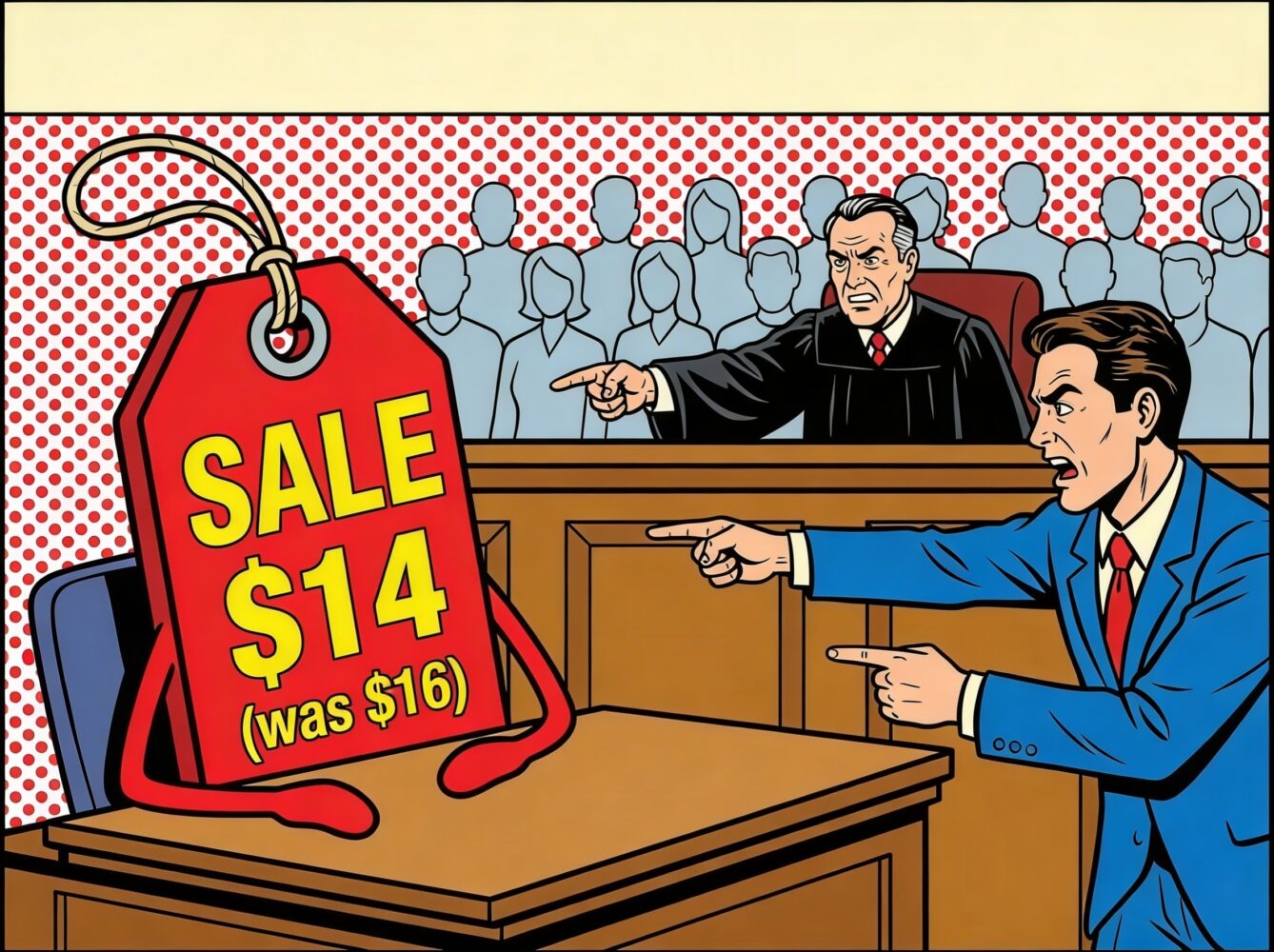
Antitrust has always been a strange regulatory enterprise. Businesses are largely free to engage in various commercial practices involving price, output, product design, distribution, research, and innovation—until they’re not. Outside the paradigmatic examples of explicit agreements among competitors to fix price and output, many business practices live in a gray zone. Whether a particular pricing…
From Discount to Discrimination: The Strange Economics of Anti-Competitive Antitrust
The Economic Burden of Protectionism, Part III
23 Feb 2026 Leave a comment
in applied price theory, econometerics, economic history, history of economic thought, industrial organisation, international economics, politics - USA, survivor principle

In Part I and Part II of this series, we looked at research showing that Americans are bearing the burden of Trump’s trade taxes. Those findings are a useful antidote to Trump’s silly and illiterate claim that foreign companies are swallowing the added cost. In both of those columns, however, I pointed out that I’m […]
The Economic Burden of Protectionism, Part III
The Economic Burden of Protectionism, Part II
18 Feb 2026 Leave a comment
in applied price theory, industrial organisation, international economics, politics - USA Tags: free trade, tarrifs

In Part I of this series, we reviewed some new research from the New York Federal Reserve. That study showed that Americans bear about 90 percent of the burden of Trump’s Liberation Day trade taxes. Though I added my own two cents because I don’t actually care that much about who bears the burden of […]
The Economic Burden of Protectionism, Part II
Any Hope for a European Economic Renaissance?
18 Feb 2026 Leave a comment
in applied price theory, budget deficits, economic growth, economic history, economics of education, economics of regulation, fiscal policy, industrial organisation, labour economics, labour supply, macroeconomics Tags: European Union
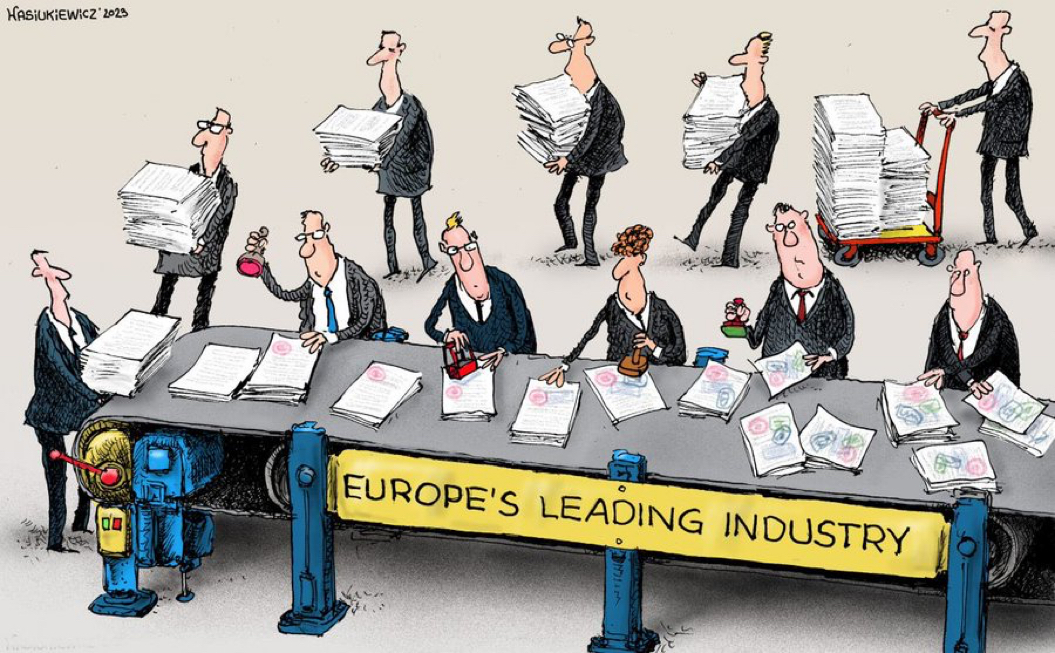
The good news is that Europe has a lot of economic freedom by world standards. Especially Western Europe. The bad news is that economic freedom has been declining in Western Europe. To make matters worse, Europe has a big demographic problem, with a growing number of older people over time who have been promised benefits […]
Any Hope for a European Economic Renaissance?
“You see tech and AI everywhere but in the productivity statistics”
17 Feb 2026 Leave a comment
in applied price theory, econometerics, history of economic thought, industrial organisation, labour economics, labour supply Tags: creative destruction
How many times have I heard versions of that claim? Erik Brynjolfsson picks up the telephone in the FT: While initial reports suggested a year of steady labour expansion in the US, the new figures reveal that total payroll growth was revised downward by approximately 403,000 jobs. Crucially, this downward revision occurred while real GDP…
“You see tech and AI everywhere but in the productivity statistics”
Climate Slump: Bezos boots global warming coverage! Wash Post Fires 14 of 19 ‘Climate’ reporters – Paper had ‘climate solutions’ reporters touting ‘human hair’ clothing to save the earth
11 Feb 2026 Leave a comment
in economics of climate change, energy economics, environmental economics, environmentalism, global warming, industrial organisation, politics - USA, survivor principle Tags: media bias
Does this mean we will have fewer stories from the Post about how human hair clothing can save the Earth?! What will happen to the team of Washington Post ‘climate solution’ reporters?! The world of journalism has dramatically improved today!
Climate Slump: Bezos boots global warming coverage! Wash Post Fires 14 of 19 ‘Climate’ reporters – Paper had ‘climate solutions’ reporters touting ‘human hair’ clothing to save the earth
The Rise and Fall (and Rise) of Sweden, Part III
10 Feb 2026 Leave a comment
in applied price theory, comparative institutional analysis, constitutional political economy, economic growth, economic history, economics of regulation, fiscal policy, income redistribution, industrial organisation, labour economics, labour supply, macroeconomics, Public Choice, public economics Tags: Sweden

Based on a video from the Center for Freedom and Prosperity back in 2010, as well a video from Johan Norberg I shared in 2016, there’s a lot to learn by looking at Swedish economic history. Here’s a more recent video that also looks at that nation’s economic track record. You’ll notice a similar message […]
The Rise and Fall (and Rise) of Sweden, Part III
The Washington Post Hit With Massive Layoffs As Guild Suggests the Need for New Owner
08 Feb 2026 Leave a comment
in economics of media and culture, entrepreneurship, financial economics, industrial organisation, politics - USA, survivor principle Tags: creative destruction
The Washington Post has announced layoffs affecting one-third of its workforce, including most of the sports and foreign news desks.…
The Washington Post Hit With Massive Layoffs As Guild Suggests the Need for New Owner
The economic impacts of the 2008 NZ-China Free Trade Agreement
06 Feb 2026 1 Comment
in applied price theory, econometerics, industrial organisation, international economics, politics - New Zealand Tags: China, free trade, free trade agreements, tariffs

New Zealand was the first Western developed country to sign a free trade agreement with China, and it came into force in 2008. At the time, the New Zealand government estimated an increase in exports to China of between NZ$225 million and NZ$350 million (between US$180 million and US$280 million), and Ministry of Foreign Affairs…
The economic impacts of the 2008 NZ-China Free Trade Agreement
Debunking Trump’s Error-Filled WSJ Column
04 Feb 2026 Leave a comment
in applied price theory, budget deficits, economic growth, economic history, fisheries economics, history of economic thought, income redistribution, industrial organisation, international economic law, international economics, macroeconomics, politics - USA, Public Choice, rentseeking Tags: free trade, tarrifs
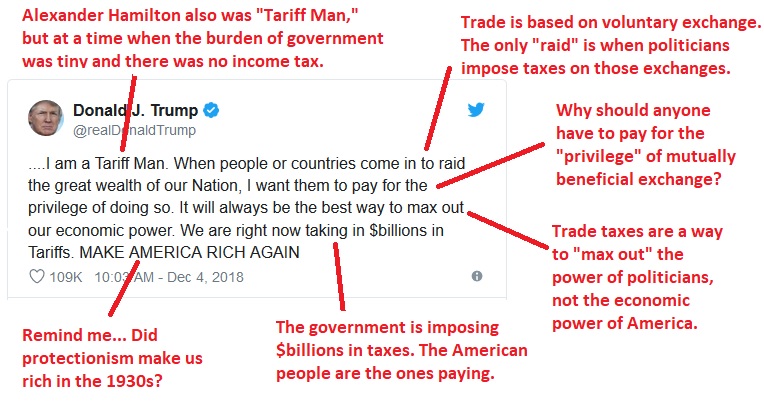
Donald Trump, who describes himself as “Tariff Man,” recently wrote a column in defense of his protectionist trade policy for the Wall Street Journal. After reading the column, my first thought was that Trump was trying to show he is more economically illiterate than Joe Biden (a big challenge, as seen here and here). And […]
Debunking Trump’s Error-Filled WSJ Column


Recent Comments