Economist: In America returns are especially large in computer science and in engineering. They are slightly smaller in other science subjects, in part because an undergraduate degree in these already bumps up salaries by quite a lot. Teachers who bag graduate degrees in education tend to earn more, even if wages for the profession as…
Is your master’s degree worthless?
Is your master’s degree worthless?
11 Mar 2025 Leave a comment
in applied price theory, econometerics, economics of education, human capital, labour economics, labour supply
My Former Economics MPhil and DPhil Class-Mate for many hard years, Mark Carney, becomes PM of Canada.
10 Mar 2025 Leave a comment
in business cycles, economic history, economics of bureaucracy, economics of education, history of economic thought, human capital, inflation targeting, labour economics, labour supply, macroeconomics, monetary economics, occupational choice, politics - New Zealand, Public Choice Tags: Canada, monetary policy
Congratulations Mark Carney. When I went to the UK to study economics, we started off doing a degree called Master of Philosophy in…
My Former Economics MPhil and DPhil Class-Mate for many hard years, Mark Carney, becomes PM of Canada.
Jane Austen was wrong: women don’t marry up for money and status
10 Mar 2025 1 Comment
in economics of love and marriage, economics of marriage, human capital, labour economics, law and economics, poverty and inequality Tags: dating markets, gender wage gap, marriage and divorce, sex discrimination
A new study debunks the myth of the gold-digging wife, finding that women are no more likely to marry above their social class than menBy Ben Spencer, Science Editor of The Sunday Times. Excerpts:”The young pretty women who seek to “marry up” for money and status, from the Bennet sisters in Pride and Prejudice to…
Jane Austen was wrong: women don’t marry up for money and status
The Licensing Racket
08 Mar 2025 Leave a comment
in applied price theory, economics of bureaucracy, entrepreneurship, human capital, income redistribution, industrial organisation, labour economics, labour supply, law and economics, occupational choice, occupational regulation, property rights, Public Choice, rentseeking
I review a very good new book on occupational licensing, The Licensing Racket by Rebecca Haw Allensworth in the WSJ. Most people will concede that licensing for hair braiders and interior decorators is excessive while licensing for doctors, nurses and lawyers is essential. Hair braiders pose little to no threat to public safety, but subpar […]
The Licensing Racket
More tacit recognition of two sexes in humans
26 Feb 2025 Leave a comment
in discrimination, economics of education, economics of media and culture, gender, health economics, human capital, labour economics, liberalism, Marxist economics, politics - USA Tags: free speech, gender gap, life expectancies, political correctness, regressive left

This article was mentioned in a comment by reader Ted Gold, but I thought I would highlight it just to show that when the rubber meets the road, people recognize that, yes, there are just two sexes. This is from the NYT on Feb. 25th. Click headline to read, or find the article archived here. […]
More tacit recognition of two sexes in humans
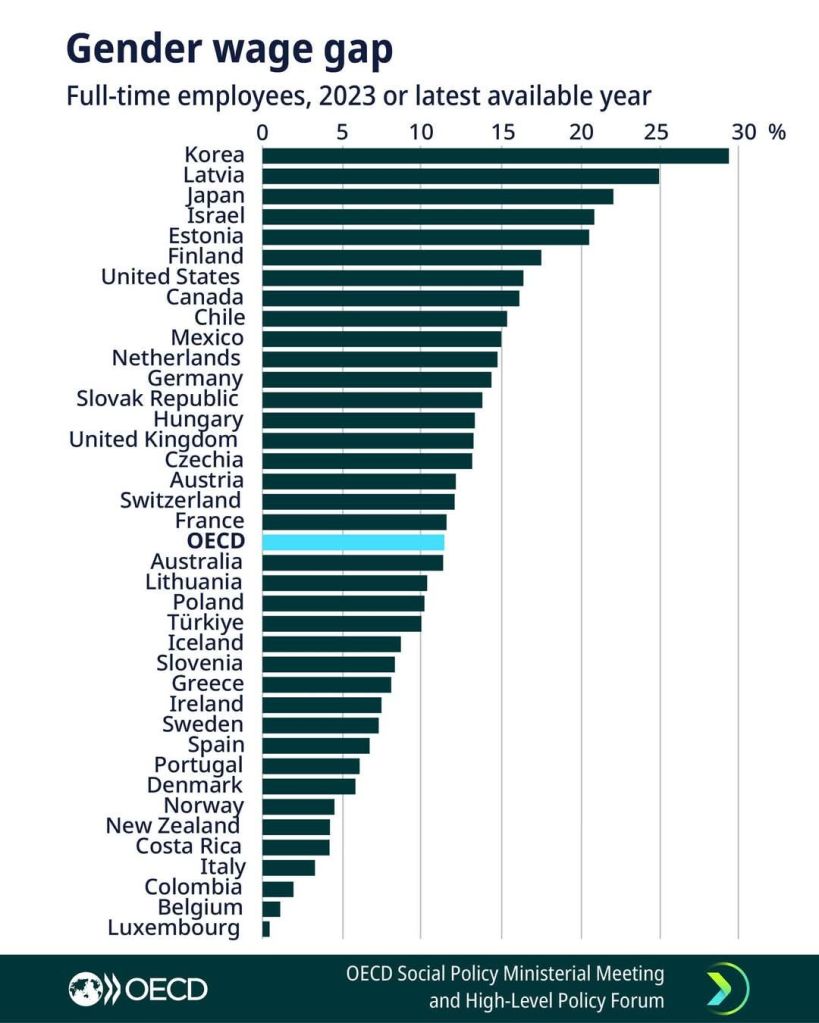
Gender gap
25 Feb 2025 Leave a comment
in applied price theory, discrimination, gender, health and safety, human capital, labour economics, labour supply, occupational choice, poverty and inequality Tags: gender wage gap
Selfishly Speaking, Who Should Skip College?
20 Feb 2025 Leave a comment
in applied price theory, economics of education, economics of information, human capital, James Buchanan, labour economics, labour supply, occupational choice Tags: adverse selection, asymmetric information, College premium, signaling

The central thesis of my The Case Against Education is that actually-existing education is a terrible waste of taxpayer money. Since signaling, not building human capital, is the main function of education, the main effect of government subsidies is credential inflation. In economic jargon, my claim is that education has a low (indeed, negative) social…
Selfishly Speaking, Who Should Skip College?
Future unemployment will be (mostly) voluntary unemployment
14 Feb 2025 Leave a comment
in economics of education, human capital, labour economics, labour supply, occupational choice, politics - Australia, unemployment
A shortage of electricians means that those willing to endure long shifts and live on remote sites can potentially earn up to A$200,000 (US$124,000) a year — double the national average salary and not far off the average MP salary. “It’s a cup half full/half empty life. You do 12-hour shifts, there’s the heat, the […]
Future unemployment will be (mostly) voluntary unemployment
Does the Gender Wage Gap Actually Reflect Taste Discrimination Against Women?
11 Feb 2025 Leave a comment
in applied price theory, discrimination, econometerics, economics of education, economics of information, economics of media and culture, gender, human capital, labour economics, labour supply Tags: gender wage gap
One explanation of the gender wage gap is taste discrimination, as in Becker (1957). We test for taste discrimination by constructing a novel measure of misogyny using Google Trends data on searches that include derogatory terms for women. We find—surprisingly, in our view—that misogyny is an economically meaningful and statistically significant predictor of the wage […]
Does the Gender Wage Gap Actually Reflect Taste Discrimination Against Women?
Gender gaps in education and declining marriage rates
06 Feb 2025 Leave a comment
in applied price theory, econometerics, economics of love and marriage, economics of marriage, human capital, labour economics, law and economics, poverty and inequality Tags: assortative mating, economics of fertility
Over the past half-century, the share of men enrolled in college has steadily declined relative to women. Today, 1.6 million more women than men attend four-year colleges in the U.S. This trend has not lowered marriage rates for college women, a substantial share of whom have historically married economically stable men without college degrees. Both […]
Gender gaps in education and declining marriage rates
Identity-based hiring goes wild in New Zealand
05 Feb 2025 Leave a comment
in discrimination, economic history, economics of education, human capital, labour economics, labour supply, law and economics, liberalism, Marxist economics, occupational choice, politics - New Zealand, property rights, Public Choice, public economics, rentseeking Tags: affirmative action, Age of Enlightenment, constitutional law, free speech, political correctness, racial discrimination, regressive left

Just to show you how, in the hiring process, New Zealand gives much more weight to identity than to merit, I enclose part of the job description for the position of Chief Operating Officer of Wellington Water, the water utility for the Greater Wellington region (Wellington, a lovely city, is the capital of New Zealand). […]
Identity-based hiring goes wild in New Zealand
By 2025 we were supposed to have closed the gap
05 Feb 2025 Leave a comment
in economic growth, economics of regulation, entrepreneurship, human capital, industrial organisation, labour economics, labour supply, macroeconomics, politics - New Zealand, poverty and inequality
Don Brash and Michael Reddell write – When Don was young and Michael’s parents were young, New Zealand had among the very highest material standards of living in the world. It really was, in the old line, one of the very best places to bring up children. But no longer. For 75 years now, with […]
By 2025 we were supposed to have closed the gap
The Child Penalty: An International View
03 Feb 2025 Leave a comment
in applied price theory, discrimination, econometerics, economics of education, gender, human capital, labour economics, labour supply, occupational choice Tags: economics of fertility, gender wage gap, marriage and divorce

It’s well-known that when a couple has a child, the average woman experiences a “child penalty” in labor market outcomes, while outcomes for the man are largely unchanged. For a discussion of this pattern using US data, here’s an article by Jane Waldfogel from back in 1998 in the Journal of Economic Perspectives. As that…
The Child Penalty: An International View
Babies and the Macroeconomy
02 Feb 2025 Leave a comment
in applied price theory, development economics, economic history, economics of love and marriage, economics of marriage, human capital, labour economics, labour supply Tags: ageing society, economics of fertility, marriage and divorce
By Claudia Goldin. From NPR’s Planet Money.”Countries around the world have seen a jaw-dropping decline in fertility rates. In this paper, Claudia Goldin, the 2023 winner of the Nobel Prize in economic sciences, offers a new theory to help explain why (listen to The Indicator’s conversation with her back in 2021). Goldin starts by providing…
Babies and the Macroeconomy
Technological Disruption in the Labor Market
02 Feb 2025 Leave a comment
in econometerics, economic history, human capital, industrial organisation, labour economics, labour supply, occupational choice, poverty and inequality, unemployment Tags: creative destruction
By David J. Deming, Christopher Ong, and Lawrence H. Summers. From NPR’s Planet Money. Summers was Secretary of the Treasury from 1999 to 2001, director of the National Economic Council from 2009 to 2010 and president of Harvard University from 2001 to 2006.”Obviously, there is a big fear right now that artificial intelligence will kill…
Technological Disruption in the Labor Market


Recent Comments