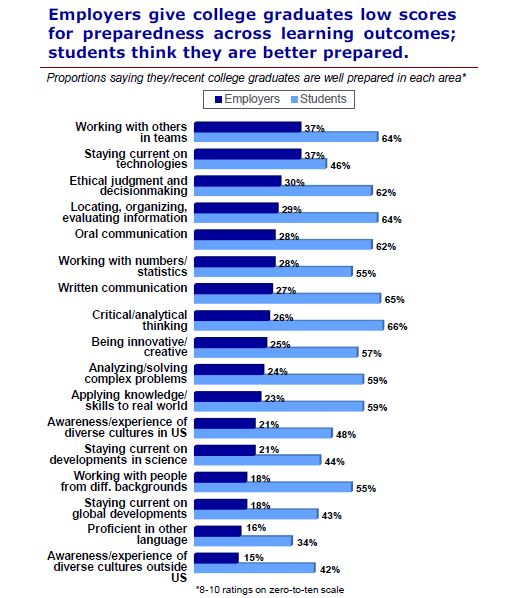
Most of the wealth of New Zealand is human capital – it’s the Age of Human Capital and the working rich

image

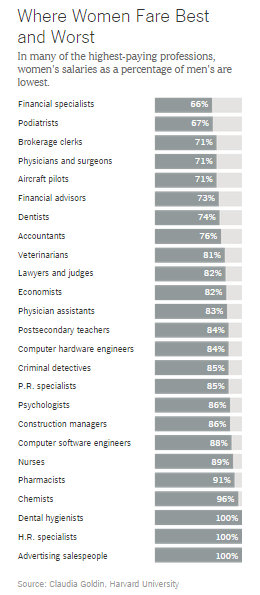
The link between parental leave and the gender pay gap | Pew Research Center

FT_gender1223

FT_13.12.17_WageGap

via http://www.pewresearch.org/fact-tank/2013/12/20/the-link-between-parental-leave-and-the-gender-pay-gap/

Small business ownership by immigrants to America

Image

What is the evidence on human capital spillovers? Evidence from the mobility of knowledge workers

While there is a vast literature documenting the large private returns from education and on-the-job human capital (Card 1999; Rubenstein and Weiss 2007; Almeida and Carneiro 2008), evidence of human capital spillovers is limited. Many studies find little evidence of spillovers from education (Lange and Topel (2005), Ciccone and Peri (2006)). Studies even struggle to find small spillovers from another year in high school (Acemoglu and Angrist 2001). Differences in human capital also explain only a small part of cross-national differences in incomes per capita (Hsieh and Klenow 2010; Parente and Prescott 2000, 2005).

The R&D industries offer a case study of the likely size of skills spillovers from worker mobility from large firms. The mobility of technical personnel and the human capital embodied in them across R&D firms is a substantial source of knowledge transfer (Møen 2005). For there to be a spillover, the new employer must pay recruits less than the value added by the job experience and skills they bring to the fold.

A key advantage of studying the mobility of R&D workers for skills spillovers is these industries are populated with many spin-offs founded by the ex-employees of larger firms. R&D spin-offs tend to be larger on average that other new firms and initially employ more advanced, more experienced workers and more technical specialists than do other new firms (Andersson and Klepper 2013).

Capturing the value of skills spillovers from job-hopping is a major business opportunity. The efforts of entrepreneurs to create and enforce property rights over information and other resources as their value increases are central to the organisation of both markets and firms.

A litmus test for the capture of the value of skills spillover is whether wages adjust in line with evolving career opportunities. Becker (2007, p. 134) explains this process of market adaptation and entrepreneurship as follows:

Firms introducing innovations are alleged to be forced to share their knowledge with competitors through the bidding away of employees who are privy to their secrets. This may well be a common practice, but if employees benefit from access to saleable information about secrets, they would be willing to work more cheaply than otherwise.

Møen (2005), Magnani (2006) and Maliranta, Mohnen and Rouvinen (2009) found that employers capture much of the skills spillovers to others by paying R&D workers less early in their careers; later employers pay higher wages to reflect the valued added by the human capital that these R&D recruits bring.

Andersson, Freedman, Haltiwanger, Lane and Shaw (2009) found that software firms in markets with large returns from product breakthroughs pay higher starting salaries to attract star employees. Accounting and legal firms and sports teams also pay more to recruit and retain top performers (Wezel, Cattini and Pennings 2006; Campbell, Ganco, Franco and Agarwal 2012; Rosen 2001).

Employers balance skills and knowledge acquisition through recruitment with in-house development of skills and knowledge. Mason and Nohara (2010) did not find ‘any evidence’ that the external experience of scientists and engineers is any more valuable to firms than is their internal experience.

Firms will pay a wage that equalises the returns on skills acquisition through recruitment with the returns on investing in in-house training. This equalisation of the returns between internal and external sources of skills and knowledge is consistent with competition penalising firms that pay too much or too little for inputs and rewarding entrepreneurs for superior alertness to new opportunities.

The option value of founding or working for a spin-off is also captured in the wages of R&D workers (Kitch 1980; Pakes and Nitzan 1983). Central to a spin-off is carrying on with new ideas and prototypes that the leaving employees judged to be under-valued by the parent firm and they want to build on at their own entrepreneurial risk (Klepper and Sleeper 2005; Klepper 2007).

Large firms are known for incremental innovations while small firms pioneer product break-troughs whose prospects were not as well valued inside large hierarchies (Baumol 2002, 2005; Audretsch and Thurik 2003). Many R&D spin-offs continue with emerging ideas and products that their parents were in the process of abandoning (Hellmann 2007; Chatetterjee and Rossi-Hansberg 2012; Klepper and Thompson 2010). One reason is the developing idea does not fit in with the risk profile and skills of the parent so many spin-offs are friendly (Fallick, Fleischman, and Rebitzer 2006; Chen and Thompson 2011).

Founding or working for a spin-off or start-up is a real prospect. In many innovative industries, upwards of 20 percent of new entrants are intra-industry spinoffs; these firms outperform other new entrants and disproportionately populate the ranks of industry leaders (Klepper and Thompson 2010).

The evidence of large firms spawning more entrepreneurs among scientists and engineers is mixed. Large parent firm size reduces both the probability of leaving, and more so, the probability of leaving to found a spin-off (Andersson and Klepper 2013; Sørensen 2007; Sørensen and Philipps 2011). Spin-offs are less likely from large parents because more of the skills and experience accumulated within large firms is firm-specific human capital and is therefore less mobile into a spin-off.

Scientists and engineers who worked in small firms are ‘far more likely’ to found a spin-off than are their large firm counterparts, and their spin-offs are more likely to be a success (Elfenbein, Hamilton and Zenger 2010; Sørensen and Phillips 2011). Working in smaller firms allows spin-off minded employees to gain the balance and wide array of technical knowledge and management skills that are prized in entrepreneurship (Elfenbein, Hamilton and Zenger 2010; Lazear 2004, 2005).

Working in managerial hierarchies works against founding a spin-off. Tåg, Åstebro and Thompson (2013) found that conditional on size, employees in firms with more layers of management are less likely to enter entrepreneurship, self-employing or quit to go to another firm. They attributed this to the employees in firms with fewer management layers developing a broader range of skills; multiple layers of management offering more promotion opportunities; and skill mismatch is less problematic in more hierarchical firms because there are more chances to move. The higher pay and better career opportunities in larger firms reduces job quits, and with it, skills spillovers and spin-offs.

The wage adjustments for current skills and knowledge transfer opportunities to future employers, start-ups and spin-offs are large. New science graduates accept 20 per cent less in starting pay to work where they can publish more in their own names (Stern 2004).

Scientists and engineers working in R&D accept 20 per cent less pay than other scientists and engineers who work in technical and managerial occupations to secure this more interesting work (Dupuy and Smits 2010). Gibbs (2006) suggested that the U.S. Department of Defense is able to recruit and retain engineers and scientists on low pay because they offer work on some of the most advanced technical research in the world.

Employers who pay full value in wages, share options, learning and R&D opportunities in exchange for the labour and human capital of employees are not benefiting from a skills spillover.

The evidence just reviewed identifies market processes that minimise skills spillovers from large R&D firms to spin-offs. Large firms train their employees in skills that are more often firm-specific and adjust wages to account for the career opportunities that might arise from on-the-job training that is more mobile. The employees of larger firms have longer job tenures in part because their human capital is less mobile.

The marvel of the market: the remarkable foresight of young adults in choosing what to study

Known but yet to be exploited opportunities for profit do not last long in competitive markets, including hitherto unnoticed opportunities for the greater utilisation and development of skills and experience (Hakes and Sauer 2006, 2007; Ryoo and Rosen 2004; and Kirzner 1992). Moneyball is the classic example of entrepreneurial alertness to hitherto unexploited job skills which were quickly adopted by competing firms (Hakes and Sauer 2006, 2007).

There is considerable evidence that the demand and supply of human capital responds to wage changes. For example, over- or under-supplied human capital moves either in or out in response to changes in wages until the returns from education and training even out with time (Ryoo and Rosen 2004; Arcidiacono, Hotz and Kang 2012; Ehrenberg 2004).

As evidence of this equalisation of returns on human capital investments across labour markets, the returns to post-school investments in human capital are similar – 9 to 10 percent – across alternative occupations, and in occupations requiring low and high levels of training, low and high aptitude and for workers with more and less education (Freeman and Hirsch 2001, 2008). There is evidence that workers with similar skills in similarly attractive jobs, occupation and locations earn similar pay (Hirsch 2008; Vermeulen and Ommeren 2009; Rupert and Wasmer 2012; Roback 1982, 1988).

Ryoo and Rosen (2004) found that the labour supply and university enrolment decisions of engineers is “remarkably sensitive” to career earnings prospects. Graduates are the main source of new engineers. Engineers who moved out into other occupations such as management did not often moved back to work again as professional engineers. Ryoo and Rosen (2004) observed when summarising their work that:

 Both the wage elasticity of demand for engineers and the elasticity of supply of engineering students to economic prospects are large. The concordance of entry into engineering schools with relative lifetime earnings in the profession is astonishing.

Ryoo and Rosen (2004) found several periods of surplus in the market for engineers. These periods of shortage or surplus corresponded to unexpected demand shocks in the market for engineers such as the end of the Cold War.

Figure 1: New entry flow of engineers: a, actual vs. imputed from changes in stock of engineers; b, time-varying coefficients.

Source: Ryoo and Rosen (2004)

Ryoo and Rosen (2004) noted that importance of permanent versus transitory changes in earnings. Transitory rises and falls in earnings prospects have much less influence on occupational choices and the educational investments of students.

In light of these findings that the supply of engineers rapidly adapted to changing market conditions, Ryoo and Rosen (2004) questioned whether public policy makers have better information on future labour market conditions than labour market participants do. When politicians get worked up about skill shortages, the markets for scientists and engineers often where they make extravagant claims about the ability of the market to adapt to changing conditions because of the long training pipeline involved in university study, including at the graduate level.

There can be unexpected shifts in the supply or demand for particular skills, training or qualifications. These imbalances even themselves out once people have time to learn, update their expectations and adapt to the new market conditions (Rosen 1992; Ryoo and Rosen 2004; Bettinger 2010; Zafar 2011; Arcidiacono, Hotz and Kang 2012; Webbink and Hartog 2004).

For example, Arcidiacono, Hotz and Kang (2012) found that both expected earnings and students’ abilities in the different majors are important determinants of student’s choice of a college major, and 7.5% of students would switch majors if they made no forecast errors.

The wage premium for a tertiary degree was low and stable in New Zealand in the 1990s (Hylsop and Maré 2009) and 2000s (OECD 2013). This stability in the returns to education suggests that supply has tended to kept up with the demand for skills at least over the longer term at the national level. There were no spikes and crafts that would be the evidence of a lack of foresight among teenagers in choosing what to study.

All in all, the remarkable sensitivity of engineers to a career earnings prospects, the frequent changes of college majors by university students in response to changing economic opportunities, and the stability of the returns on human capital over time suggest that the market for human capital is well functioning.

The argument that the market was not working well was assumed rather than proven. Likewise, the case for additional subsidies for science, technology, engineering and mathematics because of perceived skill shortages has not been made out. There is a large literature showing that the market for professional education works well.

The onus is on those who advocate intervention to come up with hard evidence, rather than innate pessimism about markets that are poorly understood because of a lack of attempts to understand it. Studies dating back to the 1950s by George Stigler and by Armen Alchian found that the market for scientists and engineers works well and the evidence of shortages were more presumed than real.

Men are turning into a bunch of losers, academically speaking.

women in education

women in education

women in education

women in education

women in education

Radical Islam is the defining oppositional identity of our generation

Each generation has its defining oppositional identity.

Radical Islam is the oppositional identity of choice for today’s angry young men and women. Mind you, they have to buy Islam for dummies to understand what they’re signing up for in the most crude way.

In previous generations, it was communism, the Red Brigade, weird religious sects, eco-terrorism, animal liberationist terrorism and a variety of domestic terrorists of the left and right with conspiratorial motivations. Look at the level of diversity of the angry young men and women on the domestic terrorists list of the FBI.

Plenty of young people were attracted to communism in previous generations as a way of sticking it to the man.

The appeal of radical Islam Islamic State rests on what psychologists call personal significance. The quest for personal significance by these angry young men and women is the desire to matter, to be respected, to be somebody in one’s own eyes and in the eyes of others.

A person’s sense of significance may be lost for many reasons, including economic conditions. The anger can grow out of a sense of disparagement and discrimination; it can come from a sense that one’s brethren in faith are being humiliated and disgraced around the world.

Extremist ideologies be they communism, fascism or extreme religions are effective in such circumstances because it offers a quick-fix remedy to a perceived loss of significance and an assured way to regain it. It accomplishes this by exploiting primordial instincts for aggression, sex and revenge.

The Islamic State is using a social-networking website to answer mundane questions from aspiring militants. They want answers on what to wear, how cold it gets, access to medical and dental services, if they have to buy their own weapons, whether there is wi-fi, and  how soon they can capture women to rape.  the answer to the last question is “Dawlah [ISIS] sorts that out”.

The two brothers responsible for the attacks in Paris were known to French intelligence but were not seen as not much of a threat because they were judged to be dope smoking, 30 something has been Jihadists. They were thought by the French intelligence services to have aged out of radical jihad.

The main difference between the two brothers in France and a common garden spree killer is their grievance was given a narrative of radical Islam rather than just the plain old hate that drives other spree killers.

Radical Islam is a magnet for wannabe spree killers who need a support network and a bit of rationalisation to pluck up the courage to kill unarmed people who can’t fight back.

Key facts about the gender pay gap–Pew Centre research

Time to be completely shallow: stars without make up


Dear Dr Sharples, please help us raise the game for ALL kids

The claim made in the letter to the Co-leader of the Maori party before the charter schools bill was passed by the New Zealand Parliament was that charter schools is “An unproven experiment is not the answer.”

Experiments are pointless if you already know the answer.

The answer is charter schools – An experiment that has proven to be immensely popular among minority parents in the USA.

Charter schools are growing fastest in New Orleans, Washington DC and Detroit – all predominately black cities with terrible public school systems.

The predominately black electorates want to experiment with something that might be better than the existing system that has failed them.

Save Our Schools NZ's avatarSave Our Schools NZ

Dear Dr  Sharples,

Increasing achievement for Maori and Pasifika students is of great importance.  The issue is at the forefront of many educators’ and parents’ minds, thanks to the charter schools debate, and for that and that alone I am grateful charters were set before us as an option.
But they are not the answer.  Charters have been shown even in the best of countries, such as Sweden, to increase inequality.  It is telling that even normally right-leaning bodies such as the Maxim Institute and SNS have spoken out against charters being the answer.  SNS are a business think tank and said charters “had increased segregation and may not have improved educational standards at all” in Sweden.  In England it is even worse, and worse still in the USA.
It is far more important that we as a country look to improving schools for all children and that we focus very…

View original post 55 more words

Thomas Sowell Dismantles Egalitarianism

Bizarro lefties alert: The Racist History of the Charter School Movement

The unthinking opposition to charter schools has reached new depths with SaveOurSchoolsNZ sharing The Racist History of the Charter School Movement.

This article relates the founding of charter schools and school choice to the opposition of the Democratic party to the desegregation of schools in the late 1950s in the southern States of America.

In Prince Edward County, Virginia, one of the five cases decided in Brown v. Board of Education (1954), the Democratic Party government threatened to close the public school system and transfer the assets to private hands to avoid school desegregation.

Naturally, the article, which was supposed to be recounting history was some accuracy and new insight, fails to mention that this racism was in the Democratic Party. That’s one dirty little secret to many. These Democratic party stalwarts were instead labelled segregationist whites.

The threat to close the public school system and transfer it to was never carried. From recollection, closure of the public school system to avoid desegregation may have been carried out in other southern states.

The current racism of the charter school movement is explained in this most bizarre way:

A 2010 report by the UCLA-based Civil Rights Project, “Choice without Equity: Charter School Segregation and the Need for Civil Rights Standards,” uncovers some troublesome facts in this regard. “While segregation for blacks among all public schools has been increasing for nearly two decades, black students in charter schools are far more likely than their traditional public school counterparts to be educated in intensely segregated settings. At the national level, 70 percent of black charter school students attend intensely segregated minority charter schools (which enrol 90-100 percent of students from under-represented minority backgrounds), or twice as many as the share of intensely segregated black students in traditional public schools.”

In the first decade of the 2000s, charter school enrolment nearly tripled; today around 2.5 percent of public school students are enrolled in charters.

Blacks are overrepresented in charter schools (32 percent vs. 16 percent in the entire public-school population), whites are underrepresented (39 percent versus 56 percent), and Latinos, Asians and American Indians are enrolled in roughly equal proportions in charters and traditional public schools. These snapshots mask considerable variation. In the West and some areas of the South, it appears that charter schools “serve as havens for white flight from public schools,” according to the Civil Rights Project.

Black Americans are fleeing the public school system in record numbers for charter schools because the public school system as failed them. The entire New Orleans school district is now chartered schools because the public school system was too slow to recover from Hurricane Katrina.

The three largest charter school movements are in New Orleans, Detroit and Washington DC. All three cities had public school systems that failed their predominantly black communities. The governments of New Orleans, Detroit and Washington DC are dominated by the black vote with black leadership in many  leadership positions.

Charter schools must attract their students from the existing Schools. They must compete and compete successfully to survive and avoid closure.

Not one of these black students in a charter school is required to attend them. They enter by choice, often having to compete in lotteries because so many wish to go to chartered school. It is highbrow condescension to suggest that they and their parents don’t know what they’re doing when they attempt  two enrol in a chartered school.

Graph showing Student Racial and Ethnic Composition in Charter Schools, 1998-99 to 2001-02; in 1998-99, 48% of students in charter schools were white, 24% were African American, 21% were Hispanic or Latino, 6% were Other Minority. In 1999-2000, 46% were white, 27% African American, 21% Hispanic, 4% Other. In 2000-01, 41% White, 28% African American, 22% Hispanic, 6% Other. In 2001-02, 37% White, 38% African American, 19% Latino, 5% Other.

Many charter schools tend to target students with educational disadvantages. Not surprisingly, some get into different difficulty while many others succeed.

Chartered schools in New Zealand, known as partnership schools, were initiated by the ACT party but the bill in Parliament required the support of the Maori party to pass.

The Maori Party supported chartered schools in New Zealand because they wanted a better deal from Maori in the education system. Maori Party co-leader Pita Sharples said

“We have to try new things – and if they don’t work, ditch them,” he told reporters yesterday.

“This is about giving charter schools a chance, we have to see how it can work here.”

New Zealand Charter schools will be state funded but run by community, church or business organisations. They will be able to set their own curriculum and term times, and don’t have to hire registered teachers.

Maori Party president Pem Bird appeared before Parliament’s Education and Science select committee when the chartered school bill was in its committee stage as the spokesman for Nga Kura-a-Iwi, a group of 23 Maori immersion-schools.

Mr Bird told MPs the  chartered schools  bill will free schools from rules and regulations that prevent them from doing a better job for Maori children.

Maori and Pasifika groups are desperate to improve their children’s educational performance and many will want to set up partnership schools, he said.

Maori organisations will come in in big numbers, as will Pasifika. And the reason is simple: they want to be architects of their own futures and destinies … We’ve got to get with the fact that this is desperation for us.

Mr Bird said several Maori-immersion schools wanted to become partnership schools.

Sadly,  I must say, the self appointed left-wing representatives of Maori and Pasifika want to keep them in a public school system that fails them for ideological reasons while they educate their own children in nice suburban schools.

The Labour Party in New Zealand  had its second worst Party vote ever in the most recent 2014 general election.

The Green Party vote did not increase its vote in the 2014 election, despite the failings of the Labour Party and a hard left campaign by the Greens emphasising education and child poverty.

The Green Party vote was abysmal in working-class electorates and among Maori and Pasifika. Most of the Green’s party vote is from the educated middle-class in rich electorates.

Paris terrorists armed with military weapons but little military training

…the shooters at one point cross each other’s paths as they advance up the street – a type of movement that professional military personnel are trained to avoid as it would limit the ability of the shooters to maximize firepower.

… the gunmen again are seen firing in the middle of the street…. there appears to be little use of cover and their shooting stance, or posture, is not what would be expected from highly trained fighters.

“From what I’ve seen their shooting stance and movement indicates they are not well trained,” Dan Rassachak, a Marine with training in close-combat skills, said in an e-mail.

HT: washingtonpost.com

How big is the sexism problem in economics? This article’s co-author is anonymous because of it

Why is it assumed that economics is the best available choice for women with mathematical skill?

Just as many men as women qualify for engineering and science but more of these same women also qualify for law and medicine.

Why enroll in engineering, science or economics if you have qualified for law or medicine?

Robert Lucas on the role of the family in economic development

Image

Previous Older Entries Next Newer Entries

Bassett, Brash & Hide

Celebrating humanity's flourishing through the spread of capitalism and the rule of law

Truth on the Market

Scholarly commentary on law, economics, and more

The Undercover Historian

Beatrice Cherrier's blog

Matua Kahurangi

Celebrating humanity's flourishing through the spread of capitalism and the rule of law

Temple of Sociology

Celebrating humanity's flourishing through the spread of capitalism and the rule of law

Velvet Glove, Iron Fist

Celebrating humanity's flourishing through the spread of capitalism and the rule of law

Why Evolution Is True

Why Evolution is True is a blog written by Jerry Coyne, centered on evolution and biology but also dealing with diverse topics like politics, culture, and cats.

Down to Earth Kiwi

Celebrating humanity's flourishing through the spread of capitalism and the rule of law

NoTricksZone

Celebrating humanity's flourishing through the spread of capitalism and the rule of law

Homepaddock

A rural perspective with a blue tint by Ele Ludemann

Kiwiblog

DPF's Kiwiblog - Fomenting Happy Mischief since 2003

The Dangerous Economist

Celebrating humanity's flourishing through the spread of capitalism and the rule of law

Watts Up With That?

The world's most viewed site on global warming and climate change

The Logical Place

Tim Harding's writings on rationality, informal logic and skepticism

Doc's Books

A window into Doc Freiberger's library

The Risk-Monger

Let's examine hard decisions!

Uneasy Money

Commentary on monetary policy in the spirit of R. G. Hawtrey

Barrie Saunders

Thoughts on public policy and the media

Liberty Scott

Celebrating humanity's flourishing through the spread of capitalism and the rule of law

Point of Order

Politics and the economy

James Bowden's Blog

A blog (primarily) on Canadian and Commonwealth political history and institutions

Science Matters

Reading between the lines, and underneath the hype.

Peter Winsley

Economics, and such stuff as dreams are made on

A Venerable Puzzle

"The British constitution has always been puzzling, and always will be." --Queen Elizabeth II

The Antiplanner

Celebrating humanity's flourishing through the spread of capitalism and the rule of law

Bet On It

Celebrating humanity's flourishing through the spread of capitalism and the rule of law

History of Sorts

WORLD WAR II, MUSIC, HISTORY, HOLOCAUST

Roger Pielke Jr.

Undisciplined scholar, recovering academic

Offsetting Behaviour

Celebrating humanity's flourishing through the spread of capitalism and the rule of law

JONATHAN TURLEY

Res ipsa loquitur - The thing itself speaks

Conversable Economist

In Hume’s spirit, I will attempt to serve as an ambassador from my world of economics, and help in “finding topics of conversation fit for the entertainment of rational creatures.”

The Victorian Commons

Researching the House of Commons, 1832-1868

The History of Parliament

Articles and research from the History of Parliament Trust

Books & Boots

Reflections on books and art

Legal History Miscellany

Posts on the History of Law, Crime, and Justice

Sex, Drugs and Economics

Celebrating humanity's flourishing through the spread of capitalism and the rule of law

European Royal History

Exploring the Monarchs of Europe

Tallbloke's Talkshop

Cutting edge science you can dice with

Marginal REVOLUTION

Small Steps Toward A Much Better World

NOT A LOT OF PEOPLE KNOW THAT

“We do not believe any group of men adequate enough or wise enough to operate without scrutiny or without criticism. We know that the only way to avoid error is to detect it, that the only way to detect it is to be free to inquire. We know that in secrecy error undetected will flourish and subvert”. - J Robert Oppenheimer.

STOP THESE THINGS

The truth about the great wind power fraud - we're not here to debate the wind industry, we're here to destroy it.

Lindsay Mitchell

Celebrating humanity's flourishing through the spread of capitalism and the rule of law

Alt-M

Celebrating humanity's flourishing through the spread of capitalism and the rule of law

croaking cassandra

Economics, public policy, monetary policy, financial regulation, with a New Zealand perspective

The Grumpy Economist

Celebrating humanity's flourishing through the spread of capitalism and the rule of law

International Liberty

Restraining Government in America and Around the World