Hans Rosling’s "Don’t Panic – The Truth About Population"
20 Sep 2015 Leave a comment
in development economics, economic growth, economic history, human capital, labour economics, labour supply, macroeconomics, population economics Tags: endogenous growth theory, population bomb, The Great Fact
@RichardvReeves Why did women get a pass on the great wage stagnation and exploitation by the top 1%?
19 Sep 2015 1 Comment
in discrimination, econometerics, economic history, gender, human capital, labour economics, labour supply, poverty and inequality Tags: female labour force participation, gender wage gap, male labour force participation, middle class stagnation, middle-class stand nation, wage stagnation
Few labour markets statistics make much sense unless broken down by gender.
Women working full-time, year-round jobs earned 78.6% of what similar men did in 2014 on.wsj.com/1KlsIC8 http://t.co/amouJSkPMr—
Real Time Economics (@WSJecon) September 19, 2015
Wages growth is no exception with female wages growth quite good for a long period of time after the 1970s – a period in which male earnings stagnated.
The beginning of male wage stagnation seemed to coincide with the closing of the gender wage gap.
U.S. wage growth doesn't look as weak when you account for benefit costs covered by employers on.wsj.com/1JJ2EmV http://t.co/s0tJutTjBy—
Nick Timiraos (@NickTimiraos) July 06, 2015
Presumably if men were previously profiting from patriarchy, that should have some implications for future wage growth and promotions for men as women catch up.
Presumably if men were previously profiting from patriarchy, that should have some implications for future wage growth for men as women catch up. Men lost the wage premium they previously earned from the sex discrimination directly in hiring, wage setting and promotions and investing in more education because they expected to be discriminated favourably at the expense of women.
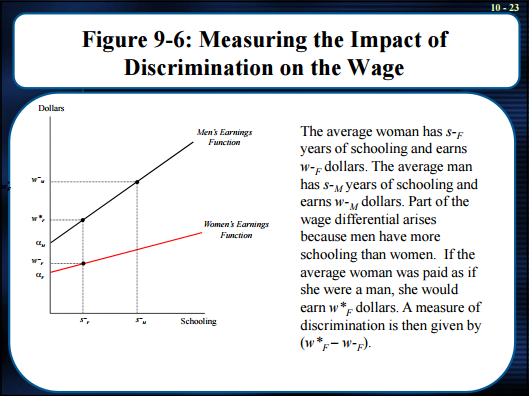
Not surprisingly the convergence in the male-female wage ratios started in the 1970s which was the decade that male wage stagnation started.

The gender wage gap started converging again also pretty much in lockstep with the top 1% starting to grab higher and higher proportions of income.
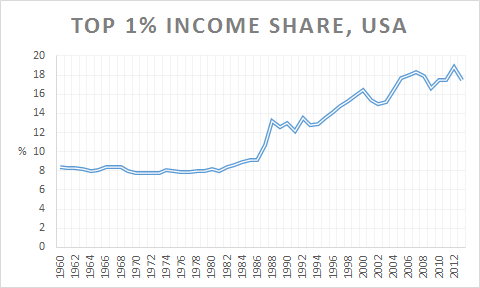
Source: Alvaredo, Facundo, Anthony B. Atkinson, Thomas Piketty and Emmanuel Saez, The World Top Incomes Database.
James Heckman on improving schools @greencatherine @dbseymour @ThomasHaig @PPTAWeb
17 Sep 2015 Leave a comment
in economics of crime, economics of education, human capital, labour supply, occupational choice, poverty and inequality Tags: behavioural genetics, crime and punishment, criminal deterrence, economics of early childhood education, economics of families, economics of fertility, economics of personality traits, marriage and divorce, single parents


The 1858 Map of World Migration
16 Sep 2015 Leave a comment
in economic history, labour economics, labour supply Tags: Australia, economics of migration
Migrants fleeing Europe..
The 1858 Map of World Migration bit.ly/1NjTMEb http://t.co/ZOK7UA6SdB—
Max Roser (@MaxCRoser) September 10, 2015
Girls on Film
15 Sep 2015 Leave a comment
in discrimination, gender, labour economics, labour supply, occupational choice Tags: gender gap, gender wage gap, Hollywood economics
https://twitter.com/paul1kirby/status/642813666249822208/photo/1

Hollywood movies write women out of the script & create a make-believe world where men do all jobs.Ace chart http://t.co/0eM17kRJKW—
paulkirby (@paul1kirby) September 10, 2015
Higher education is a dog of an investment in #NewZealand
14 Sep 2015 Leave a comment
in economics of education, human capital, labour economics, labour supply, occupational choice, politics - New Zealand Tags: College premium, education premium, graduate premium
How much more will you earn by going to university? It depends hugely on which country you're from http://t.co/7RMnUTM8nj—
paulkirby (@paul1kirby) September 11, 2015
Mises on feminism
12 Sep 2015 Leave a comment
in constitutional political economy, discrimination, economics of education, gender, labour economics, labour supply, liberalism, occupational choice, Public Choice, rentseeking Tags: economics of fertility, economics of the family, engines of liberation, female labour force participation, feminism, women's liberation
Trends in the British gender wage gap by age band
10 Sep 2015 Leave a comment
in discrimination, economic history, economics of education, gender, human capital, labour economics, labour supply Tags: British economy, gender wage gap
A Comparison of the Tax Burden on Labor in the OECD
10 Sep 2015 Leave a comment
How high is the US #tax burden on labor? Here's an OECD comparison tax.foundation/1LNpE4W by @samcjordan_ @kpomerleau http://t.co/unaxWM1BgH—
Tax Foundation (@taxfoundation) July 27, 2015
Payroll taxes make up a large portion of a worker's #tax bill: tax.foundation/1g1nd1w by @samcjordan_ @kpomerleau http://t.co/yHx4kQTmr6—
Tax Foundation (@taxfoundation) July 21, 2015
via A Comparison of the Tax Burden on Labor in the OECD | Tax Foundation.
Since 1975 average UK earnings for full-time employees have more than doubled after accounting for inflation
10 Sep 2015 Leave a comment
in applied welfare economics, economic history, labour economics, labour supply, poverty and inequality Tags: British economy, The Great Enrichment


 Utopia, you are standing in it!
Recent Comments