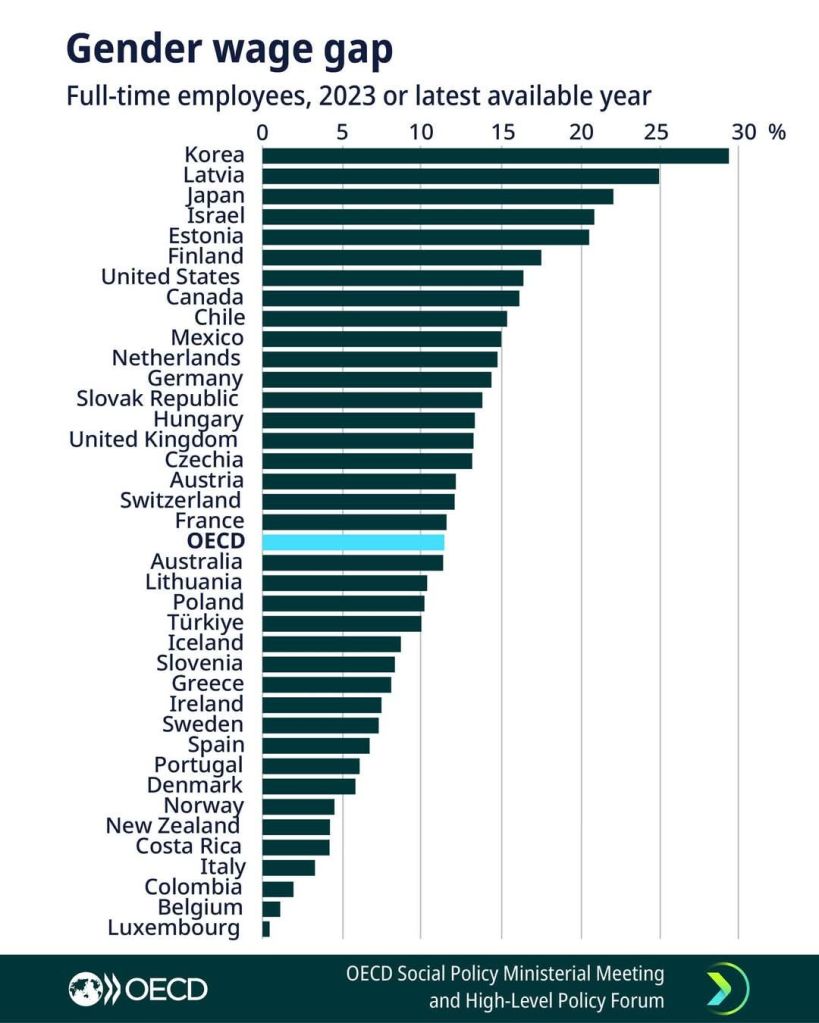
Gender gap
25 Feb 2025 Leave a comment
in applied price theory, discrimination, gender, health and safety, human capital, labour economics, labour supply, occupational choice, poverty and inequality Tags: gender wage gap
The solution is to deport quicker
21 Feb 2025 Leave a comment
in economics of crime, labour economics, labour supply, law and economics, politics - New Zealand Tags: economics of immigration
The Herald reports: Daman Kumar – the 18-year-old threatened with deportation to India despite living in New Zealand all his life – has been offered residency. Green Party immigration spokesman Ricardo Menéndez March told the Herald he was informed of the development by Associate Immigration Minister Chris Penk’s office this afternoon. Menéndez March wrote to the minister last week, […]
The solution is to deport quicker
The Accumulation of Regulation
21 Feb 2025 1 Comment
in applied price theory, economics of bureaucracy, economics of regulation, labour economics, labour supply, law and economics, politics - USA, property rights, Public Choice, regulation Tags: employment law
Like many who do business in California, I often complain about the regulatory burden (free at last!) People will ask, “So what one regulation would you get rid of?” The problem is that this is a really hard question to answer because in most cases it is not any one regulation in particular, but the…
The Accumulation of Regulation
The Spectacular Economic Ignorance of Peter Navarro
20 Feb 2025 1 Comment
in applied price theory, Austrian economics, history of economic thought, industrial organisation, international economics, labour economics, labour supply, survivor principle, unemployment Tags: 2024 presidential election, free trade, tarrifs
TweetHere’s a letter to the New York Times. Editor: Encountering, in David Leonhardt’s report, a summary of Peter Navarro’s attempted justifications of Trump’s tariffs makes the head spin (“A Disagreement on Tariffs,” February 18). Navarro’s arguments are so illogical, self-contradictory, and economically ignorant that they’d be merely laughable were he not an advisor to the…
The Spectacular Economic Ignorance of Peter Navarro
Selfishly Speaking, Who Should Skip College?
20 Feb 2025 Leave a comment
in applied price theory, economics of education, economics of information, human capital, James Buchanan, labour economics, labour supply, occupational choice Tags: adverse selection, asymmetric information, College premium, signaling

The central thesis of my The Case Against Education is that actually-existing education is a terrible waste of taxpayer money. Since signaling, not building human capital, is the main function of education, the main effect of government subsidies is credential inflation. In economic jargon, my claim is that education has a low (indeed, negative) social…
Selfishly Speaking, Who Should Skip College?
Effects of the minimum wage on the nonprofit sector
19 Feb 2025 Leave a comment
in applied price theory, econometerics, economic history, labour economics, labour supply, minimum wage
After a few days of ‘rest’ (by which I really mean some intensely long work days), I’m going to pick up again on my recent series of posts about the minimum wage (see here for the most recent post), but returning to more familiar ground – the disemployment effects of the minimum wage. The story…
Effects of the minimum wage on the nonprofit sector
Minimum Wages, Efficiency, and Welfare
17 Feb 2025 Leave a comment
in applied price theory, applied welfare economics, econometerics, labour economics, labour supply, minimum wage
Recently Alex raised some doubts, to say the least, about the Card-Krueger view of minimum wage hikes. Well, it turns out there is more, and a new consensus is on the verge of forming. Here are David Berger, Kyle Herkenhoff, and Simon Mongey, from a new Econometrica piece: Many argue that minimum wages can prevent efficiency […]
Minimum Wages, Efficiency, and Welfare
Guest Post: NEW ZEALAND’s RETIREMENT PENSION
17 Feb 2025 Leave a comment
in budget deficits, fiscal policy, income redistribution, labour economics, labour supply, macroeconomics, politics - New Zealand, Public Choice, public economics, welfare reform Tags: ageing society
A guest post by Sir Roger Douglas: Michael Littlewood’s ‘Guest Post’ for David Farrar on pensions, and his belief that our social welfare system is fit for purpose and doesn’t need change, reminded me of why New Zealand is currently well on the way to bankruptcy, and why our brightest young people are leaving the […]
Guest Post: NEW ZEALAND’s RETIREMENT PENSION
How employers respond to minimum wage increases
15 Feb 2025 Leave a comment
in applied price theory, labour economics, labour supply, minimum wage, unemployment Tags: offsetting behavior, unintended consequences
In yesterday’s post, I made reference to this 2021 article by Jeffrey Clemens (University of California at San Diego), published in the Journal of Economic Perspectives (open access). Clemens puts forward an interesting perspective on the debate about the observed employment impacts of the minimum wage (or lack thereof):…I contend that controversies over the economics of minimum wages…
How employers respond to minimum wage increases
Future unemployment will be (mostly) voluntary unemployment
14 Feb 2025 Leave a comment
in economics of education, human capital, labour economics, labour supply, occupational choice, politics - Australia, unemployment
A shortage of electricians means that those willing to endure long shifts and live on remote sites can potentially earn up to A$200,000 (US$124,000) a year — double the national average salary and not far off the average MP salary. “It’s a cup half full/half empty life. You do 12-hour shifts, there’s the heat, the […]
Future unemployment will be (mostly) voluntary unemployment
Ireland: Good Corporate Tax Policy vs. Bad Government Spending Policy
11 Feb 2025 Leave a comment
in budget deficits, business cycles, economic growth, economic history, Euro crisis, fiscal policy, global financial crisis (GFC), great recession, labour economics, labour supply, law and economics, macroeconomics, monetary economics, public economics Tags: Ireland, taxation and investment
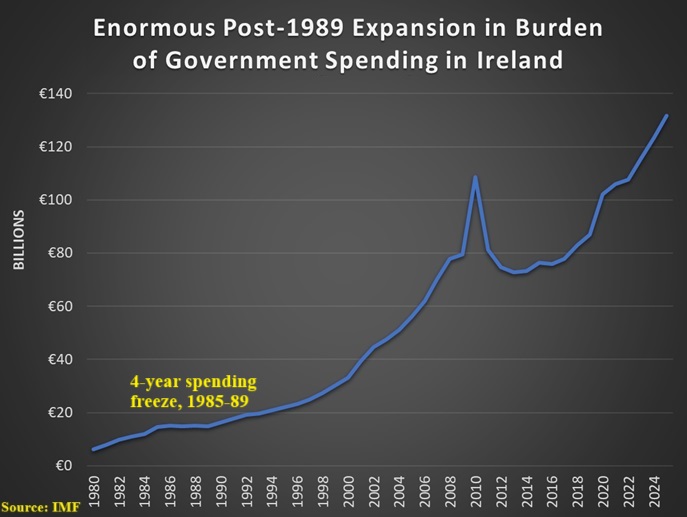
I’m a big fan of Ireland’s low corporate tax rate for three reasons. First, it shows that good tax policy generates positive economic outcomes as per-capita GDP in Ireland has grown by record amounts. Second, it shows that lower tax rates can in some cases lead to more revenue. Sort of a turbo-charged version of […]
Ireland: Good Corporate Tax Policy vs. Bad Government Spending Policy
Does the Gender Wage Gap Actually Reflect Taste Discrimination Against Women?
11 Feb 2025 Leave a comment
in applied price theory, discrimination, econometerics, economics of education, economics of information, economics of media and culture, gender, human capital, labour economics, labour supply Tags: gender wage gap
One explanation of the gender wage gap is taste discrimination, as in Becker (1957). We test for taste discrimination by constructing a novel measure of misogyny using Google Trends data on searches that include derogatory terms for women. We find—surprisingly, in our view—that misogyny is an economically meaningful and statistically significant predictor of the wage […]
Does the Gender Wage Gap Actually Reflect Taste Discrimination Against Women?
Goldilocks and the Laffer Curve
09 Feb 2025 Leave a comment
in applied price theory, budget deficits, economic growth, entrepreneurship, fiscal policy, labour economics, labour supply, macroeconomics, politics - USA, public economics Tags: taxation and entrepreneurship, taxation and investment, taxation and labour supply

Other than Art Laffer, I think of myself as the world’s biggest advocate of the Laffer Curve. I’ve literally written hundreds of columns explaining and promoting the concept. My goal is to help people understand that there is not a linear relationship between tax rates and tax revenue. Why is this the case? Because when […]
Goldilocks and the Laffer Curve
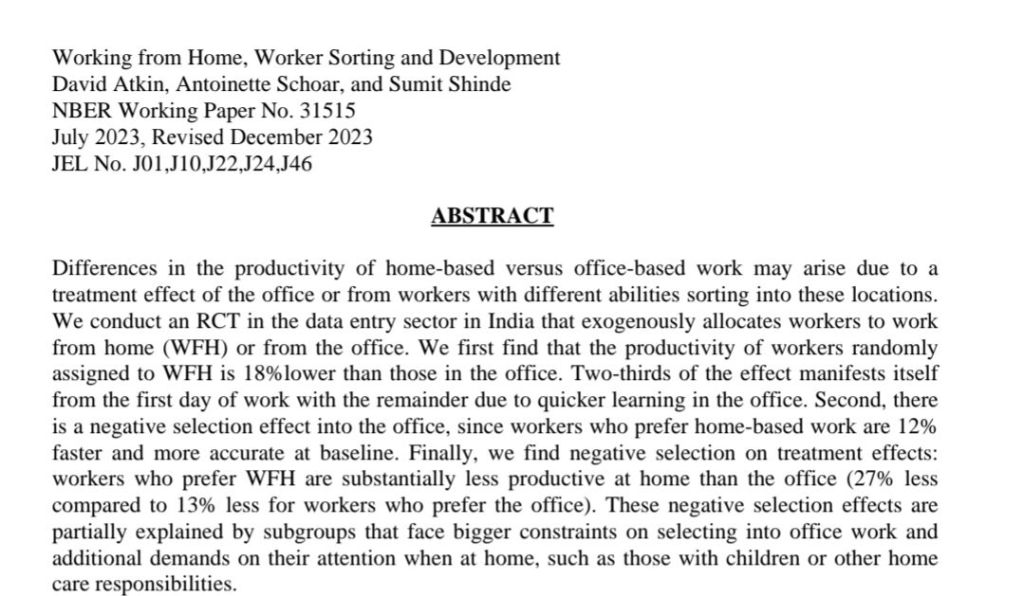
A negative productivity shock from working from home
08 Feb 2025 Leave a comment
in applied price theory, experimental economics, industrial organisation, labour economics, labour supply, managerial economics, occupational choice, organisational economics, personnel economics Tags: economics of pandemics
Identity-based hiring goes wild in New Zealand
05 Feb 2025 Leave a comment
in discrimination, economic history, economics of education, human capital, labour economics, labour supply, law and economics, liberalism, Marxist economics, occupational choice, politics - New Zealand, property rights, Public Choice, public economics, rentseeking Tags: affirmative action, Age of Enlightenment, constitutional law, free speech, political correctness, racial discrimination, regressive left

Just to show you how, in the hiring process, New Zealand gives much more weight to identity than to merit, I enclose part of the job description for the position of Chief Operating Officer of Wellington Water, the water utility for the Greater Wellington region (Wellington, a lovely city, is the capital of New Zealand). […]
Identity-based hiring goes wild in New Zealand


Recent Comments