Nicola Willis writes: Having the C-word directed at me by a journalist in a mainstream publication wasn’t on my bingo-list for Mother’s Day 2025. Nor was being accused of “girl-math”. But there you have it, that’s what was thrown at me and my female colleagues in a recent newspaper column as hopelessly devoid of facts as it […]
Willis responds to Vance celling her a c**t
Willis responds to Vance celling her a c**t
12 May 2025 Leave a comment
in discrimination, gender, health and safety, human capital, labour economics, labour supply, occupational choice, politics - New Zealand, poverty and inequality Tags: gender wage gap, sex discrimination
The Mainstream World Is Not Free-Market
10 May 2025 Leave a comment
in applied price theory, applied welfare economics, Austrian economics, comparative institutional analysis, constitutional political economy, economic history, economics of education, economics of regulation, history of economic thought, human capital, labour economics, occupational choice
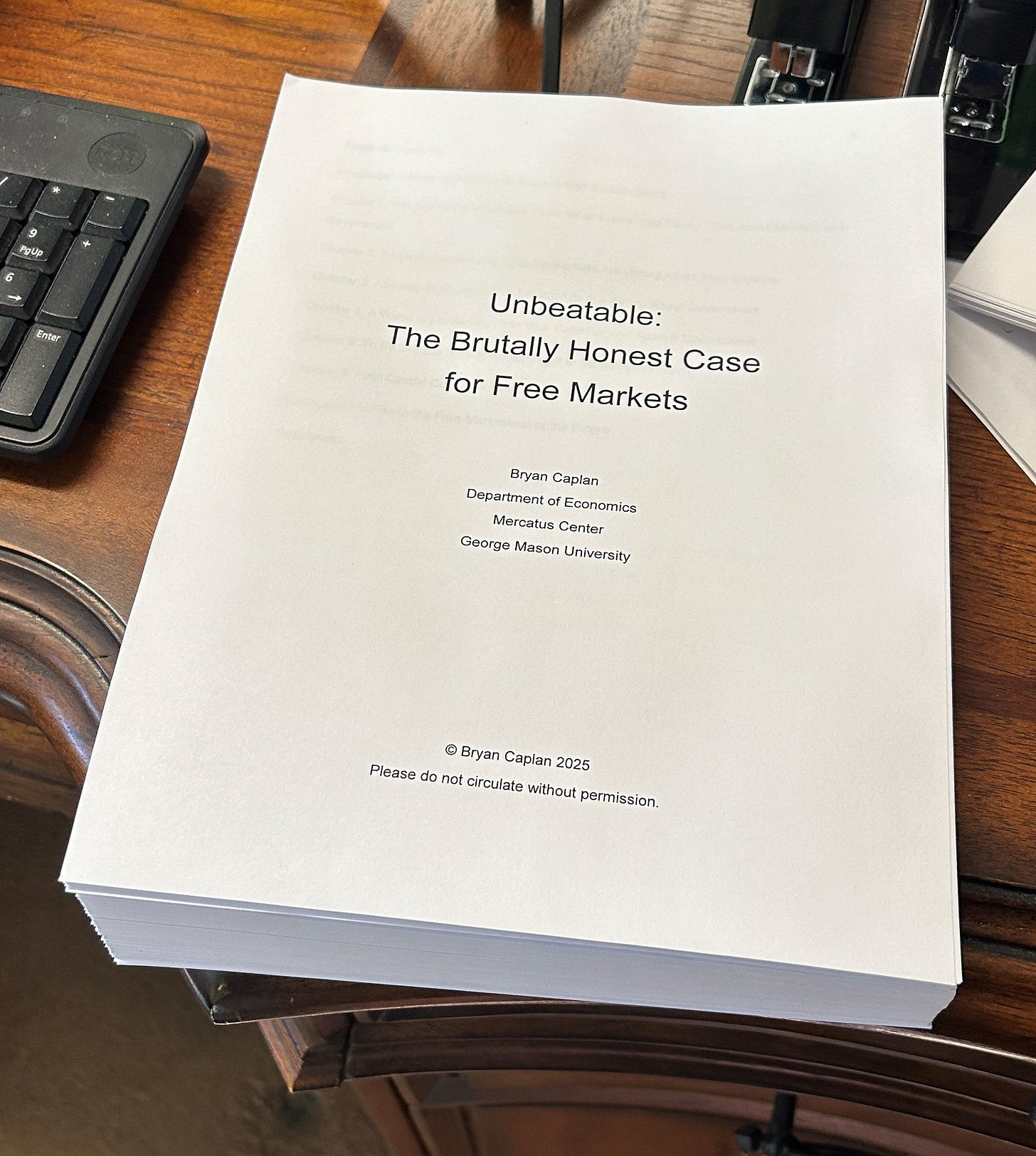
An excerpt from Chapter 1 of *Unbeatable*
The Mainstream World Is Not Free-Market
Does he know what a woman is now?
07 May 2025 Leave a comment
in applied price theory, discrimination, economics of education, gender, health and safety, human capital, labour economics, labour supply, occupational choice, politics - New Zealand, poverty and inequality, Public Choice, rentseeking Tags: gender wage gap, sex discrimination
Labour leader Chris Hipkins has joined the chorus of those opposing changes to pay equity legislation. Does this mean he knows what a woman is now? It is easy for opposition parties and their allies to criticise proposed changes but Heather du Plessis-Allan points out the problem with existing legislation: . . . Those pay […]
Does he know what a woman is now?
Some weak evidence in favour of an information intervention in economics to close the gender gap
05 May 2025 Leave a comment
in applied price theory, discrimination, econometerics, economics of education, experimental economics, gender, labour economics, labour supply, occupational choice Tags: gender gap, sex discrimination
I’ve written a couple of times about information interventions designed to attract more female students to study economics (see here and here). The results have generally been disappointing. That shouldn’t be too much of a surprise. If it was really simple to get people to change their behaviour with information, then advertising would be far…
Some weak evidence in favour of an information intervention in economics to close the gender gap
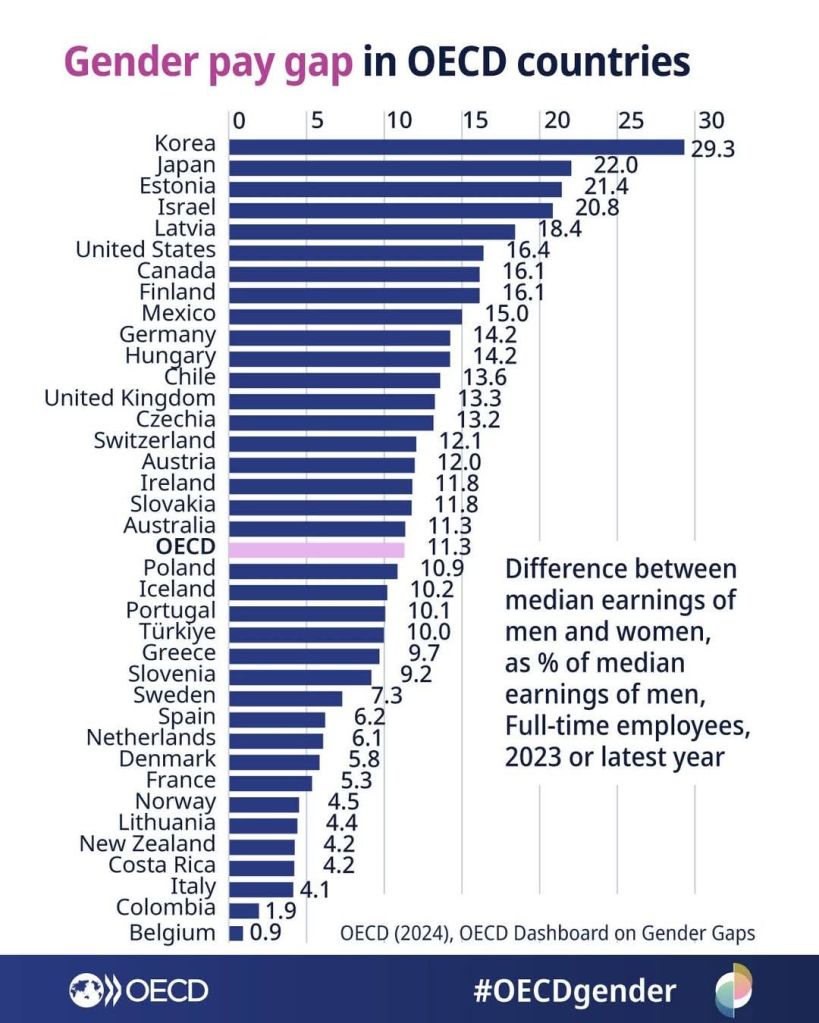
Minimal gender wage gap in NZ!
30 Mar 2025 Leave a comment
in discrimination, econometerics, economics of education, gender, human capital, labour economics, labour supply, occupational choice, politics - New Zealand, poverty and inequality Tags: gender wage gap, sex discrimination
Personality traits and gender gaps
30 Mar 2025 Leave a comment
in applied price theory, discrimination, econometerics, economics of education, gender, human capital, labour economics, labour supply, occupational choice Tags: gender wage gap
This paper examines the effects of the Big Five personality traits on labor market outcomes and gender wage gaps using a job search and bargaining model with parameters that vary at the individual level. The analysis, based on German panel data, reveals that both cognitive and noncognitive traits significantly influence wages and employment outcomes. Higher […]
Personality traits and gender gaps
There seems to be a pattern
27 Mar 2025 Leave a comment
in economics of crime, law and economics, occupational choice, politics - New Zealand Tags: crime and punishment, criminal deterrence, law and order, political correctness, regressive left
This is of course all the work of the Green Party Police and Corrections Spokesperson, Tamatha Paul. I think it is fair to conclude that there is a pattern.
There seems to be a pattern
Facial surgeons wanted in New Zealand, must be intimately familiar with all things Māori
26 Mar 2025 1 Comment
in discrimination, economics of education, health economics, human capital, labour economics, labour supply, occupational choice, politics - New Zealand Tags: political correctness. affirmative action, racial discrimination, regressive left

Here’s an archived link to an ad for a consultant oral maxillofacial surgeon at Dunedin Hospital. The curious thing—well, not so curious given that it’s New Zealand,—is the list of required qualifications. Click to read (a New Zealand dollar is worth about 57¢ in U.S. currency): Some of the details: About the role In this […]
Facial surgeons wanted in New Zealand, must be intimately familiar with all things Māori
What does India want – and what is New Zealand willing to give?
25 Mar 2025 Leave a comment
in applied price theory, comparative institutional analysis, development economics, economic history, economics of education, growth disasters, growth miracles, human capital, income redistribution, industrial organisation, international economic law, international economics, labour economics, labour supply, occupational choice, politics - New Zealand, poverty and inequality, Public Choice, rentseeking, survivor principle Tags: India, preferential trade agreements
Chris Trotter writes – What does India want from New Zealand? Not our dairy products, that’s for sure, it’s got plenty of those. Indeed 45 percent of the Indian population are small-scale farmers, most of them running a few head of cattle – not to eat, you understand – but to milk. If it once […]
What does India want – and what is New Zealand willing to give?
The curse of knowledge
25 Mar 2025 1 Comment
in economics of education, health and safety, human capital, occupational choice Tags: cognitive psychology, educational psychology
The curse of knowledge is a cognitive bias that occurs when someone, possessing knowledge or expertise on a particular topic, struggles to imagine or communicate with others who lack the same understanding or information. Essentially, once we know something, it’s very hard to imagine what it’s like not to know it. How it manifests: Why it happens: […]
The curse of knowledge
Book Nook Reading Notes on *Selfish Reasons to Have More Kids*
22 Mar 2025 Leave a comment
in economics of crime, economics of education, human capital, labour economics, labour supply, law and economics, occupational choice, poverty and inequality Tags: College premium, signaling
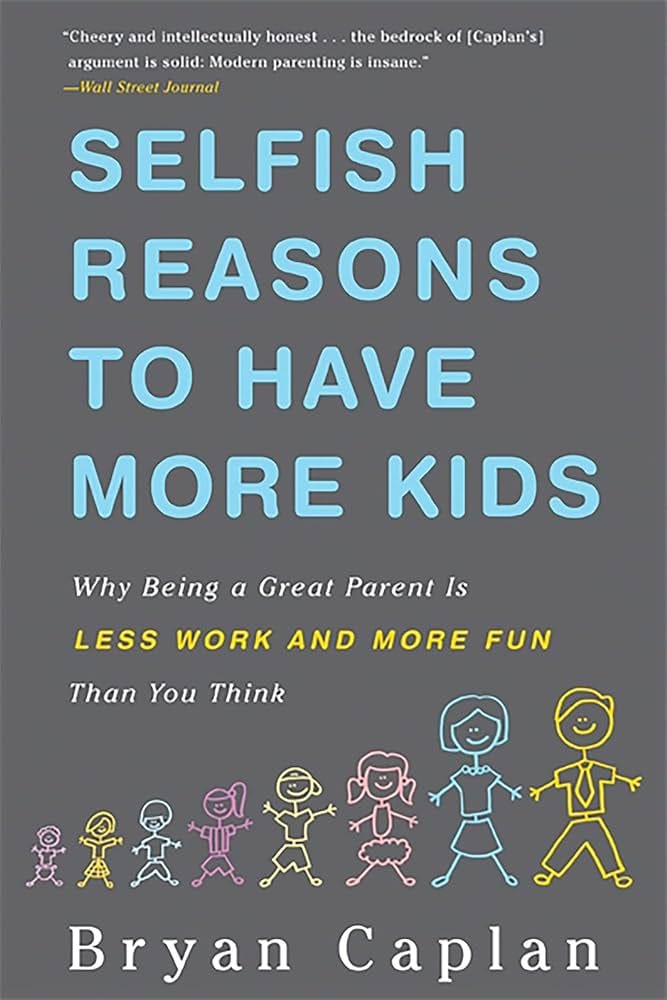
Bet On It reader Dan Barrett wrote these notes for his Book Nook book club on my Selfish Reasons to Have More Kids: Why Being a Great Parent Is Less Work and More Fun Than You Think. Dan’s idea:I’m organizing reading groups packaged as the Book Nook to help colleagues (1) guide their own learning…
Book Nook Reading Notes on *Selfish Reasons to Have More Kids*
University of Chicago updates equal-opportunity statement for job ads
20 Mar 2025 Leave a comment
in discrimination, economics of education, gender, human capital, labour economics, labour supply, occupational choice, politics - USA Tags: 2024 presidential election, affirmative action, free speech, political correctness, racial discrimination, regressive left, sex discrimination
This announcement came from our Provost’s office, but apparently hasn’t been sent to all parts of the University. Nevertheless, it surely applies to all job ads for the University of Chicago. What it shows is that the University has updated its Equal Employment Opportunity statement, a statement that must be included in all ads for […]
University of Chicago updates equal-opportunity statement for job ads
Greens think prisoners are the victims!
19 Mar 2025 Leave a comment
in economics of crime, labour economics, law and economics, occupational choice, politics - New Zealand Tags: crime and punishment, criminal deterrence, law and order, regressive left
David Farrar writes – The Herald reported: The Greens’ Tamatha Paul has expressed “regret” about a claim she made on social media that the “vast majority” of people in prison are there for non-violent offences that they’ve “had to do as a response to poverty”. Police and Corrections Minister Mark Mitchell has described comments in her video as “total nonsense” and an […]
Greens think prisoners are the victims!
My Former Economics MPhil and DPhil Class-Mate for many hard years, Mark Carney, becomes PM of Canada.
10 Mar 2025 Leave a comment
in business cycles, economic history, economics of bureaucracy, economics of education, history of economic thought, human capital, inflation targeting, labour economics, labour supply, macroeconomics, monetary economics, occupational choice, politics - New Zealand, Public Choice Tags: Canada, monetary policy
Congratulations Mark Carney. When I went to the UK to study economics, we started off doing a degree called Master of Philosophy in…
My Former Economics MPhil and DPhil Class-Mate for many hard years, Mark Carney, becomes PM of Canada.
The Licensing Racket
08 Mar 2025 Leave a comment
in applied price theory, economics of bureaucracy, entrepreneurship, human capital, income redistribution, industrial organisation, labour economics, labour supply, law and economics, occupational choice, occupational regulation, property rights, Public Choice, rentseeking
I review a very good new book on occupational licensing, The Licensing Racket by Rebecca Haw Allensworth in the WSJ. Most people will concede that licensing for hair braiders and interior decorators is excessive while licensing for doctors, nurses and lawyers is essential. Hair braiders pose little to no threat to public safety, but subpar […]
The Licensing Racket
 Utopia, you are standing in it!
Recent Comments