What do American soldiers get paid
24 Jul 2015 Leave a comment
in defence economics, labour economics, occupational choice, occupational regulation Tags: military pay
Salaries of Active Duty US Military Personnel bit.ly/195NbKb http://t.co/3fNenWtcF2—
Catherine Mulbrandon (@VisualEcon) December 24, 2013
Unwanted pregnancy rates and education
20 Jul 2015 Leave a comment
in applied price theory, applied welfare economics, labour economics, labour supply, occupational choice, politics - USA Tags: economics of fertility, economics of the family, single parents
What group has by far the lowest jobless rate?
17 Jul 2015 Leave a comment
in economics of education, human capital, job search and matching, labour economics, labour supply, occupational choice, unemployment Tags: College premium, compensating differentials, graduate premium, labour demographics
What group has by far the lowest jobless rate? College grads on.wsj.com/1Mtk8l9 http://t.co/27ft9qYjvz—
WSJ Central Banks (@WSJCentralBanks) June 05, 2015
Motherhood explains 80% of the gender wage gap, up from 30% 30 years ago
16 Jul 2015 Leave a comment
in discrimination, gender, human capital, labour economics, labour supply, occupational choice Tags: asymmetric marriage premium, economics of families, gender wage gap, motherhood penalty
#Women's earnings drop 20% after 1st child & gap remains the same even 20 years later @LSEEcon bit.ly/1M60KfJ http://t.co/UpoqLkhbl2—
STICERD (@STICERD_LSE) July 15, 2015
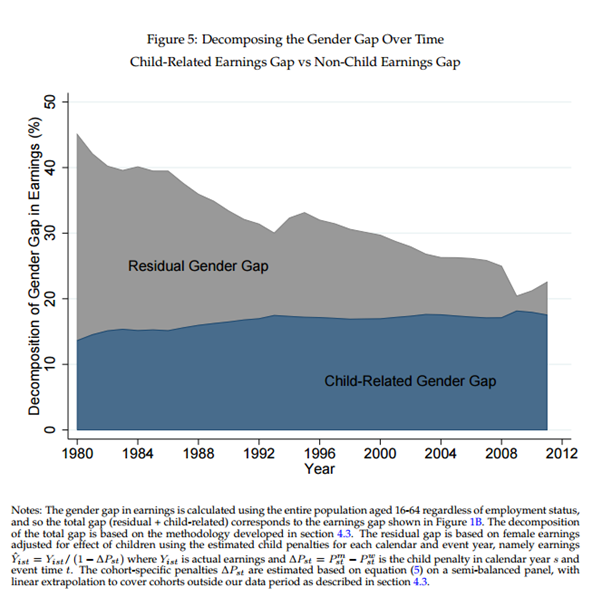
Source: Parenthood and the Gender Gap: Evidence from Denmark by Henrik Jacobsen Kleven, Camille Landais and Jakob Egholt Søgaard, University of Copenhagen January 2015 at http://eml.berkeley.edu/~webfac/auerbach/Landais2015.pdf
Share of university degrees conferred to U.S. women since 1970
16 Jul 2015 Leave a comment
in economic history, economics of education, human capital, labour economics, occupational choice, politics - USA Tags: lost boys, reversing gender gap
Share of university degrees conferred to U.S. women since 1970 (via @MaxCRoser) http://t.co/FUGrM7WbJd—
Claire Lehmann (@clairlemon) July 09, 2015
Does education pay in New Zealand?
14 Jul 2015 Leave a comment
in economics of education, human capital, labour economics, occupational choice, politics - Australia, politics - New Zealand, politics - USA Tags: College premium, graduate premium
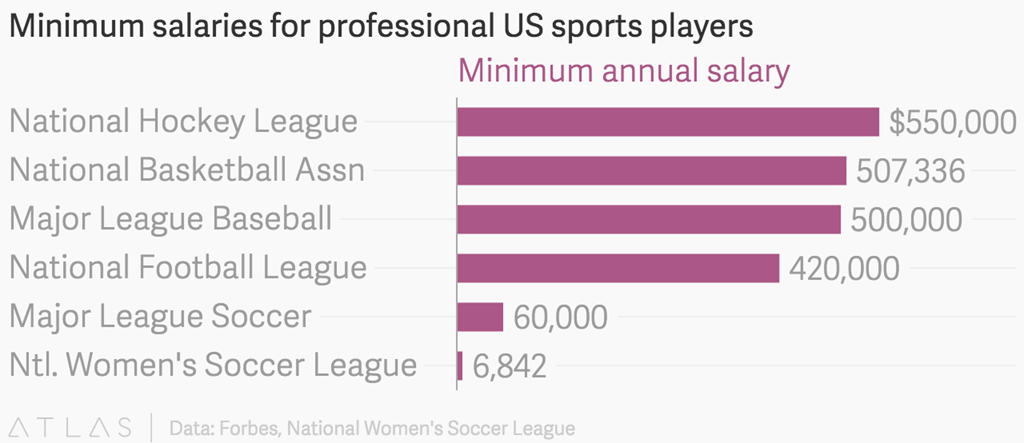
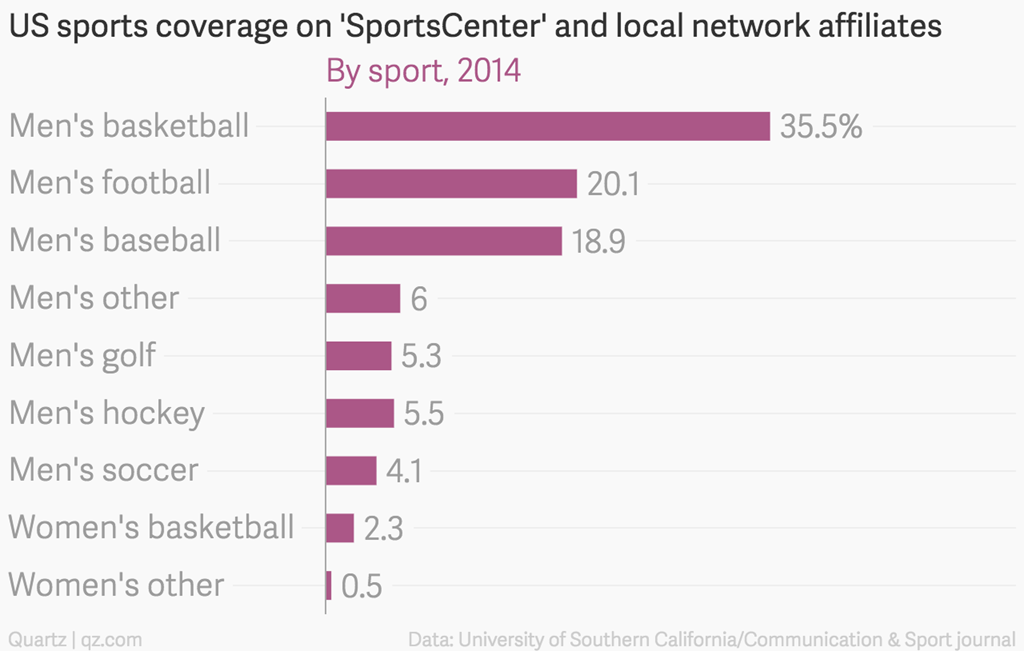
Minimum salaries of American professional sports players and media coverage
13 Jul 2015 Leave a comment
in applied price theory, discrimination, economics of media and culture, entrepreneurship, gender, industrial organisation, labour economics, occupational choice, sports economics, survivor principle Tags: gender wage gap, media bias, sex discrimination, superstar wages, superstars

Females/male earnings ratio by partner status and motherhood – USA, UK, Canada
12 Jul 2015 Leave a comment
in discrimination, economics of love and marriage, gender, labour economics, labour supply, law and economics, occupational choice, politics - USA, poverty and inequality Tags: asymmetric marriage premium, British economy, Canada, gender wage gap, marriage and divorce, motherhood penalty
Figure 1: Female/male earnings ratio by partner status and motherhood, 2004 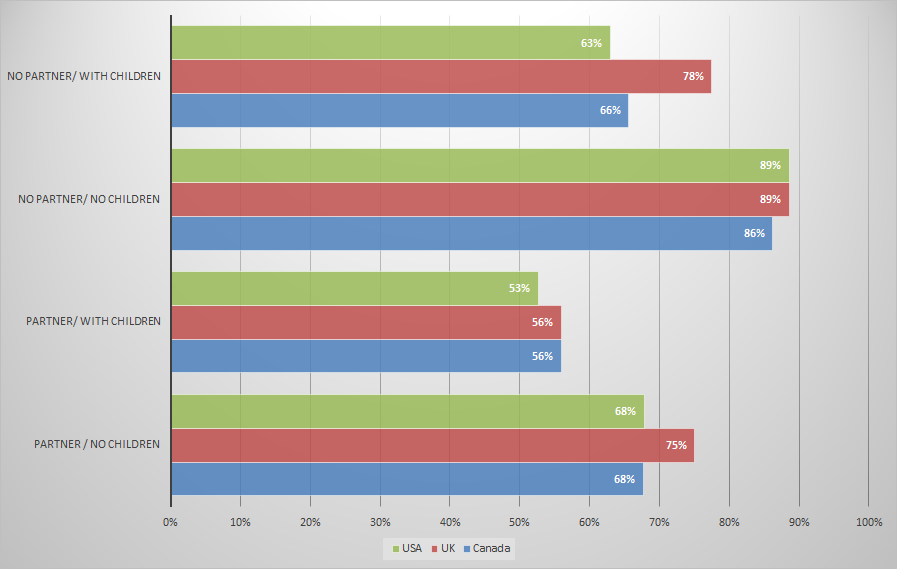 Source: LIS Cross-National Data Center in Luxembourg – Wave VI; individuals with positive earnings only. .
Which industries have the highest hourly earnings?
12 Jul 2015 Leave a comment
in human capital, labour economics, labour supply, occupational choice, politics - USA Tags: compensating differential, labour productivity, relative wages, superstar wages, superstars
Which industries have the highest hourly earnings h/t @WSJecon blogs.wsj.com/economics/2015… | http://t.co/xaYaRgOrku—
Charts and Maps (@ChartsandMaps) April 06, 2015
Scientific Misbehavior in Economics and Publish or Perish
11 Jul 2015 Leave a comment
in economics of crime, economics of education, managerial economics, occupational choice, organisational economics, personnel economics Tags: academic fraud, promotion tournaments, rate races


Employment patterns of couples differential with families differ greatly across the OECD
10 Jul 2015 Leave a comment
in economics of love and marriage, gender, labour economics, labour supply, occupational choice Tags: economics of family, female labour force participation, labour force participation, maternal labour force participation, my labour force participation, part-time work
American exceptionalism: U.S parents more likely to both be working full time than almost any other OECD country http://t.co/QYBEeUmws4—
Kay Hymowitz (@KayHymowitz) July 08, 2014
Why gender analysis is essential to empirical labour economics
07 Jul 2015 Leave a comment
U.S. wage growth doesn't look as weak when you account for benefit costs covered by employers on.wsj.com/1JJ2EmV http://t.co/s0tJutTjBy—
Nick Timiraos (@NickTimiraos) July 06, 2015
Haredi Jews and employment
05 Jul 2015 Leave a comment
in economics of religion, labour economics, labour supply, occupational choice Tags: economics of identity, female labour force participation, Israel, male labour force participation
Haredi Jews and employment: Eat, pray, don’t work econ.st/1QVeL48 http://t.co/gxTI56rrTv—
The Economist (@EconEconomics) June 27, 2015
 Utopia, you are standing in it!

Recent Comments