Do Personality Tests Mean Anything?
10 Apr 2018 1 Comment
in economics of education, labour economics, managerial economics, personnel economics Tags: personality psychology
Saving Kids From Government Schools
10 Apr 2018 Leave a comment
in comparative institutional analysis, economics of bureaucracy, economics of education, human capital, labour economics, politics - New Zealand, politics - USA, Public Choice Tags: charter schools, School choice
The graphic made it into the print edition @sst_nz
09 Apr 2018 Leave a comment
in applied price theory, economics of crime, law and economics, occupational choice Tags: crime and punishment, criminal deterrence, law and order


Men are 10% faster in athletics
09 Apr 2018 Leave a comment
in economics of crime, gender, health economics, sports economics
Across all sports, men are 10% faster or stronger than women. This is strong enough that a good boys high school athletics team can be stronger in the world’s best women athletes. The New Zealand women’s soccer team played an Australian high school soccer team and lost 7-2 as I recall.
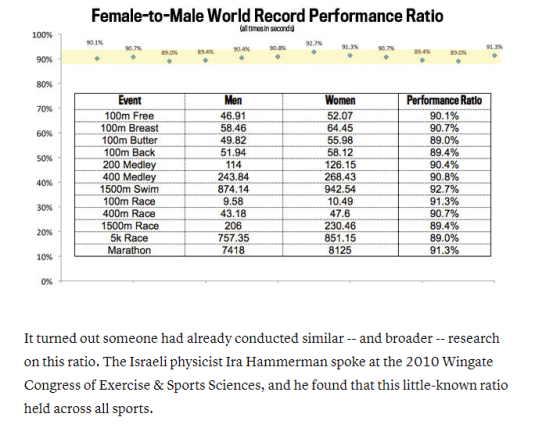
From https://www.theatlantic.com/technology/archive/2012/08/we-thought-female-athletes-were-catching-up-to-men-but-theyre-not/260927/ and https://www.theatlantic.com/technology/archive/2012/08/the-golden-ratio-the-one-number-that-describes-how-mens-world-records-compare-with-womens/260758/
One way to determine whether there is a lot of drugs in sport is to see whether women are catching up with men in world records. Prior to 1992, men were slowly losing their edge over women.
But when better drug testing technology became available, women’s world records of 1992 stood for years rather than sometimes hours or months.
More importantly, the best female performances were showing a bigger gap with the best male performances after 1992. The collapse of communism meant that bags of drugs were no longer given to East European female competitors.
The reason the gap was closing before 1992 was drugs that male women stronger show up predominately in power sports such as athletics and weightlifting. When it was possible to test for those drugs, athletes stopped taking them.
Everybody Hates Chris S03E08 – Everybody Hates #MinimumWage
09 Apr 2018 Leave a comment
in applied price theory, labour economics, minimum wage, television Tags: offsetting behaviour, The fatal conceit, unintended consequences
What do female muslims get out of paradise in the most feminist religion
09 Apr 2018 Leave a comment

How to Calculate the Gender Pay Gap: The case of Uber
09 Apr 2018 Leave a comment
in applied price theory, discrimination, gender, health and safety, human capital, labour economics, labour supply, occupational choice, poverty and inequality Tags: gender wage gap
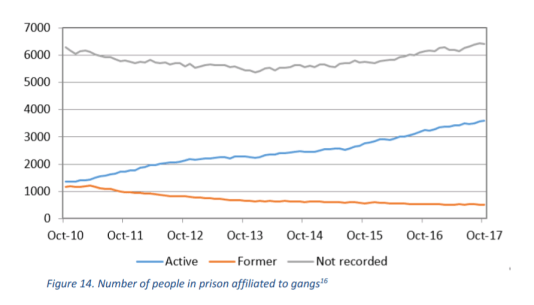
My prison numbers Herald op-ed is up.
09 Apr 2018 2 Comments
in applied price theory, economics of crime, labour economics, law and economics, occupational choice, politics - New Zealand Tags: crime and punishment, criminal deterrence, law and order
How Americans spend their days over the course of life
09 Apr 2018 Leave a comment
in labour supply, population economics
Glenn Loury & Amy Wax [The Glenn Show]
09 Apr 2018 Leave a comment
in discrimination, economics of education, politics - USA Tags: affirmative action, political correctness, racial discrimination, regressive left
#TPPANoWay unions complain to secretive ILO disputes panel over breach of convention NZ never ratified!
07 Apr 2018 Leave a comment
in International law, labour economics, law and economics, politics - New Zealand, unions Tags: ILO, regressive left

Favourite deleted #livingwage tweet
06 Apr 2018 Leave a comment
in applied price theory, minimum wage, politics - USA, poverty and inequality

.
The Japanese bosses have been losing the class war big-time if labour shares are the definitive evidence
06 Apr 2018 Leave a comment
in economic history, labour economics, poverty and inequality
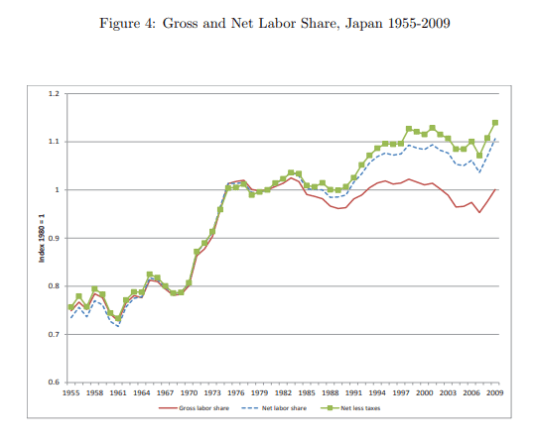
Source: Is Labor’s Loss Capital’s Gain? Gross versus Net Labor Shares Benjamin Bridgman∗ Bureau of Economic Analysis October 2014.



Recent Comments