A policy designed to protect workers from unemployment, over time, will increase the duration of unemployment spells through a chilling effect on job creation. Employment protection laws are a tax on job creation. With fewer vacancies posted, the unemployed will take longer to find jobs.
Auckland University of Technology Associate Professor Gail Pacheco is not quoted as often she should be in the politics of the minimum wage in New Zealand. Her research repeatedly finds that the increases in the minimum wage over the last 10 to 15 years in New Zealand reduced employment, increased unemployment, and reduced skill acquisition among teenagers:
Tim Maloney and Gail Pacheco (2012) found that the real minimum wages increased by nearly 33% for adults and 123% for teenagers in New Zealand between 1999 and 2008. Where fewer than 2% of workers were being paid a minimum wage in 1999, more than 8% of adult workers and 60% of teenage workers are receiving hourly earnings close to the minimum wage. They estimated that a 10% increase in minimum wages, even without any offsetting reduction in earnings due to a loss in employment or hours of work, would lower the relative poverty rate by less than one-tenth of a percentage point!
Gail Pacheco (2011) review the impact of rising minimum wages on employment in New Zealand over the time period 1986–2004. She found significant negative employment effects of a higher minimum wage.
Pacheco and Cruickshank (2007) found the youth minimum wage increases resulted in some age groups undergoing a 91% rise in their real minimum wage over the last 10 years. They found that for 16–19 year olds, minimum wage rises have a statistically significant negative effect on educational enrollment levels. But the introduction of the minimum wage appears to have had a significantly positive impact on teenagers’ enrollment levels. This is a possible indication of the ineffective level the minimum wage was set at, in terms of reservation wages of youth in New Zealand.
Gail Pacheco & Vic Naiker (2006) reviewed the consequences of where in March 2001, the eligibility for adult minimum wage rates was lowered from 20 to 18 years while the youth minimum wage for 16–17 year olds was also increased from 60 to 70% of the adult minimum wage. Most minimum wage workers in New Zealand work in the four sectors: (1) Retail, (2) Textile and apparel, (3) Accommodation, cafes and restaurants, and (4) Agriculture, forestry, and fishing. Using an event study methodology we examine the economic impact of the substantial increase in youth minimum wage rates on employers in industries with high concentrations of minimum wage workers. All conclusions point to there being an insignificant impact on profit expectations for low wage employers by investors.
In summary, increases in the youth minimum wage in New Zealand reduced employment, increased unemployment but did not reduce the profits of employers.
If the minimum wage is operating off the monopsony power of employers, investors should have anticipated that the profits of these employers will fall, but they did not. Investors anticipated that most of the consequences of the minimum wage increases would fall upon low paid workers themselves in terms of loss of employment, greater intensity of work effort and reduce training opportunities.
The minimum wage is an inefficient way of tackling poverty because many minimum-wage earners are actually teenagers or second earners in wealthy households in New Zealand and in all other countries that have a minimum wage. As soon as one person is unemployed as a result of the minimum wage increase or otherwise disadvantaged, applied welfare economics comes into play with concepts like Pareto improvement. How do you trade-off the losses for one with another’s gains.
Most are those who support the minimum wage shift gears their applied welfare economics in all other social context to emphasise how the losers should be given priority and greater weight when adding up the social gains and social losses of economic change.
The social cost of the minimum wage is not discussed in this way: how many jobs are lost and that these job losses are much more important than any gains to society. All that is done is the number of jobs lost is compared with some other social metrics such as how much the wages go up for those that still have a job and that is enough to conclude that there is a socially beneficial change from a minimum wage increase.
Any low paid workers affected by the minimum wage increase are just reduced to numbers and added and subtracted with great ease and few moral compunctions about interpersonal comparisons of utility
A minimum wage increase is not free if one worker loses their job. The Paretian Criterion states that welfare is said to increase or decrease if at least one person is made better off or worse off with no change in the positions of others.
As Rawls pointed out, a general problem that throws utilitarianism into question is some people’s interests, or even lives, can be sacrificed if doing so will maximize total satisfaction. As Rawls says:
[ utilitarianism] adopt[s] for society as a whole the principle of choice for one man… there is a sense in which classical utilitarianism fails to take seriously the distinction between persons.
Minimum wage advocates fail to take seriously that low paid workers who lose their jobs because of minimum wage increases are real living people who suffer when their interests are traded off for the greater good of their fellow low paid workers, some of whom come from much wealthier households.
If the Left want to improve the lot of the poor, they would be doing better by either promoting an institutional framework that promotes general wage growth and by simply increasing the earned income tax credit.
There are at least 98 regulated occupations in New Zealand covering about 20% of the workforce. In 2011, this amounts to 440,371 workers. The skills that are regulated range across all skill sets and many occupations:
49% of regulation is in the form of a licence;
18% of regulated work is in the form of licensing of tasks;
31% of regulated workers require a certificate; and
4% of regulated workers require registration.
There are 32 different governing Acts that regulated occupations in New Zealand with 55% of the workers subject to occupational regulation are employed in just five occupations:
98,000 teachers;
48,500 nurses;
42,730 bar managers;
32,733 chartered accountants; and
22,749 electricians.
The Health Practitioners Competency Assurance Act 2003 regulates 22 occupations and a total of 89,807 workers. The next best is the 10 occupations regulated by the Health and Safety in Employment Act 2002 which regulates an unknown number of occupations. The Civil Aviation Act 1990 regulates eight occupations and 19,095 workers, the Building Act 2004 regulates seven occupations and 21,101 workers and the Maritime Transport Act 1994 regulates six occupations and 20,500 workers. 12 of the regulated occupations are regulated under laws passed since 2007.
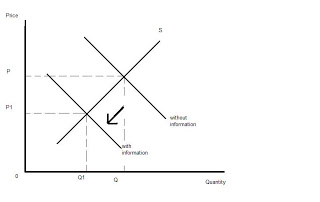
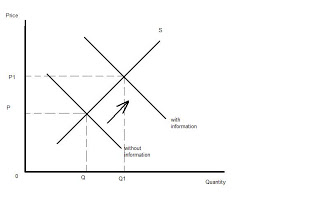
The purpose of occupational regulation is to protect buyers from quacks and lemons – to overcome asymmetric information about the quality of the provider of the service.
Adverse selection occurs when the seller knows more than the buyer about the true quality of the product or service on offer. This can make it difficult for the two people to do business together. Buyers cannot tell the good from the bad products on offer so many they do not buy to all and withdraw from the market.
Goods and services divide into inspection, experience and credence goods.
Inspection goods are goods or services was quality can be determined before purchase price inspecting them;
Experience goods are goods whose quality is determined after purchase in the course of consuming them; and
Credence goods are goods whose quality may never be known for sure as to whether the good or service actually worked – was that car repair or medical procedure really necessary?
The problem of adverse selection over experience and credence goods present many potentially profitable but as yet unconsummated wealth-creating transactions because of the uncertainty about quality and reliability.
Buyers are reluctant to buy if they are unsure of quality, but if such assurances can be given in a credible manner, a significant increase in demand is possible.
Any entrepreneur who finds ways of providing credible assurances of the quality of this service or work stands to profit handsomely. Brand names and warranties are examples of market generated institutions that overcome these information gaps through screening and signalling.
Screening is the less informed party’s effort, usually the buyer, to learn the information that the more informed party has. Successful screens have the characteristic that it is unprofitable for bad types of sellers to mimic the behaviour of good types.
Signalling is an informed party’s effort, usually the seller, to communicate information to the less informed party.
The main issue with quacks in the labour market is whether there are a large cost of less than average quality service, and is there a sub-market who will buy less than average quality products in the presence of competing sellers competing on the basis of quality assurance. This demand for assurance creates opportunities for entrepreneurs to profit by providing assurance.
David Friedman wrote a paper about contract enforcement in cyberspace where the buyer and seller is in different countries so conventional mechanisms such as the courts are futile in cases where the quality of the good is not as promised or there is a failure to deliver at all:
Public enforcement of contracts between parties in different countries is more costly and uncertain than public enforcement within a single jurisdiction.
Furthermore, in a world where geographical lines are invisible, parties to publicly enforced contracts will frequently not know what law those contracts are likely to fall under. Hence public enforcement, while still possible for future online contracts, will be less workable than for the realspace contracts of the past.
A second and perhaps more serious problem may arise in the future as a result of technological developments that already exist and are now going into common use. These technologies, of which the most fundamental is public key encryption, make possible an online world where many people do business anonymously, with reputations attached to their cyberspace, not their realspace, identities
Online auction and sales sites address adverse selection with authentication and escrow services, insurance, and on-line reputations through the rating of sellers by buyers.
E-commerce is flourishing despite been supposedly plagued by adverse selection and weak contract enforcement against overseas venders.
In the labour market, screening and signalling take the form of probationary periods, promotion ladders, promotion tournaments, incentive pay and the back loading of pay in the form of pension investing and other prizes and bonds for good performance over a long period.
In the case of the labour force, there are good arguments that a major reason for investments in education is as a to signal quality, reliability, diligence as well as investment in a credential that is of no value the case of misconduct or incompetence. Lower quality workers will find it very difficult if not impossible to fake quality and reliability in this way – through investing in higher education.
In the case of teacher registration, for example, does a teacher registration system screen out any more low quality candidates for recruitment than do proper reference checks and a police check for a criminal record.
Mostly disciplinary investigations and deregistrations under the auspices of occupational regulation is for gross misconduct and criminal convictions rather than just shading of quality.
Much of personnel and organisational economics is about the screening and sorting of applicants, recruits and workers by quality and the assurance of performance.
Alert entrepreneurs have every incentive to find more profitable ways to manage the quality of their workforce and sort their recruitment pools.
Baron and Kreps (1999) developed the recruitment taxonomy made up of stars, guardians and foot-soldiers.
Stars hold jobs with limited downside risk but high performance is very good for the firm – the costs of hiring errors for stars such as an R&D worker are small: mostly their salary. Foot-soldiers are employees with narrow ranges of good and bad possible outcomes.
Guardians have jobs where bad performance can be a calamity but good job performance is only slightly better than an average performance.
Airline pilots and safety, compliance, finance and controller jobs are all examples of guardian jobs where risk is all downside. Bad performance of these jobs can bring the company down. Dual control is common in guardian jobs.
The employer’s focus when recruiting and supervising guardians is low job performance and not associating rewards and promotions with risky behaviours. Employers will closely screen applicants for guardian jobs, impose long apprenticeships and may limit recruiting to port-of-entry jobs.
The private sector has ample experience in handling risk in recruitment for guardian jobs. Firms and entrepreneurs are subject to a hard budget constraints that apply immediately if they hire quacks and duds.
Blackboard economics says that governments may be able to improve on market performance but as Coase warned that actually implement regulatory changes in real life is another matter:
The policy under consideration is one which is implemented on the blackboard.
All the information needed is assumed to be available and the teacher plays all the parts. He fixes prices, imposes taxes, and distributes subsidies (on the blackboard) to promote the general welfare.
But there is no counterpart to the teacher within the real economic system
Occupational regulation comes with the real risk of the regulation turning into an anti-competitive barrier to entry as Milton Friedman (1962) warned:
The most obvious social cost is that any one of these measures, whether it be registration, certification, or licensure, almost inevitably becomes a tool in the hands of a special producer group to obtain a monopoly position at the expense of the rest of the public.
There is no way to avoid this result. One can devise one or another set of procedural controls designed to avert this outcome, but none is likely to overcome the problem that arises out of the greater concentration of producer than of consumer interest.
The people who are most concerned with any such arrangement, who will press most for its enforcement and be most concerned with its administration, will be the people in the particular occupation or trade involved.
They will inevitably press for the extension of registration to certification and of certification to licensure. Once licensure is attained, the people who might develop an interest in undermining the regulations are kept from exerting their influence. They don’t get a license, must therefore go into other occupations, and will lose interest.
The result is invariably control over entry by members of the occupation itself and hence the establishment of a monopoly position.
Friedman’s PhD was published in 1945 as Income from Independent Professional Practice. With co-author Simon Kuznets, he argued that licensing procedures limited entry into the medical profession allowing doctors to charge higher fees than if competition were more open.
Data Source: Martin Jenkins 2012, Review of Occupational Regulation, released by the Ministry of Business, Innovation and Employment under the Official Information Act.
In the past three decades, the number of people who are on disability benefit has skyrocketed.
There is no compelling evidence that the incidence of disabling health conditions among the working age population is rising. Autor (2006) found that disability rolls in the USA expanded because:
congressional reforms to disability screening in 1984 that enabled workers with low mortality disorders such as back pain, arthritis and mental illness to more readily qualify for benefits;
a rise in the after-tax income replacement rate, which strengthened the incentives for lower-skilled workers to seek benefits; (3) and
a rapid increase in female labour force participation that expanded the pool of insured workers.
Autor found that the aging of the baby boom generation has contributed little to the growth of disability benefit numbers to date.
David Autor and Mark Duggan (2003) found that low-skills and a poor education is predictor of disability: in the USA in 2004, nearly one in five male high school dropouts between ages 55 and 64 were in the disability program; that was more than double that of high school graduates of the same age and more than five times higher than the 3.7 % of college graduates of that age who collect disability. Unemployment is another driver of disability.
The proportion of working-age people receiving a Sickness Benefit, an Invalid’s Benefit or Accident Compensation weekly compensation in New Zealand rose from around 1% in the 1970s to 5% in June 2002.
Figure 1 The Number of People Receiving Benefit as a Primary Recipient, All Age Groups, 1975–2005
Source: DSW Annual Reports or Statistical Information Reports and MSD SWIFFT data from Dwyer and McLeod (2006).
Most other OECD countries also experienced a rise in the proportion of the working-age population claiming incapacity benefits over this period. By the late 1990s and early 2000s, it was common for around 4–6.5% of the working-age population to receive such benefits. Some European countries have up to 10% of their working age population on disability or sickness benefit!
When the UK undertook reassessments of those on its disability and sickness benefit, fewer than one in 10 people assessed for the new sickness benefit has been deemed too ill to carry out any work.
More than a third of the 1.3million people who applied for Employment and Support Allowance were found to be fully capable of working; a similar proportion abandoned their claims while they were still being processed. Moral hazard seems to be the main explanation of the rise in disability roles.
Before 15 July 1980, a victim of a workplace accident in the state of Kentucky received a payment proportional to his or her wage with an upper limit of $131 per week. On 15 July 1980, the limit was raised to $217 per week. This increase made a considerable difference to the best-paid workers: their periods of convalescence grew 20% longer (Cahuc and Zylberberg 2006).
A literature has developed on whether discrimination in the marketplace due to prejudice disappears in the long run. Whether employers who do not want to discriminate will eventually compete away all discriminating employers depends not only on the distribution of tastes for discrimination among potential employers, but critically also on the nature of firm production functions.
Of greater significance empirically is the long run discrimination by employees and customers, who are far more important sources of market discrimination than employers. There is no reason to expect discrimination by these groups to be competed away in the long run unless it is possible to have enough efficient segregated firms and effectively segregated markets for goods.
When the disfavoured group had few members, the wage difference between the favoured and disfavoured would be very small or non-existent because they could find employers who had little distaste for working with them. For example, African-Americans suffered more from discrimination than did Jews because blacks constituted a much larger population. Becker explains:
Employee discrimination against minority fellow workers-such as a male worker who does not want to work for a female boss- cannot be so easily competed away by non-discriminating employers. For they have to pay discriminating employees more, perhaps a lot more, to work with minority members. A similar argument applies to consumers who do not want to be served by particular minorities…
Segregation can serve as a way to bypass the prejudices of other workers, consumers, and employers. When Jews could not get work in the banking industry at the turn of 20th century, they began to open their own banks that hired mainly other Jews. African-American doctors and dentists in the old South catered to other blacks as their patients
Competition from more rational firms might gradually eliminate employer discrimination, market forces alone would rarely erode discrimination rooted in the tastes of workers or consumers.
The market will not compete away customer discrimination because the market is good at giving customers what they want. It is not necessarily possible for disfavoured groups simply to take jobs where there is no customer contact, particularly if they are large in number relative to the total population. It is also the case the customer discrimination is largely immune from antidiscrimination laws except in blatant cases.
Customer discrimination results in employment segregation, which adds further to the job search costs of minorities as they must find jobs with less customer contact. This lowers their asking wages to save on job search costs and time unemployed.
Customer discrimination can linger because their attitudes may change only slowly, and the preferences of a wide group of individuals may need to change.
An entrepreneurial opportunity arises to those entrepreneurs who are first to alert insert murders of the costs of the prejudice. This is a far more successful way of bringing racial segregation and discrimination to an end. Entrepreneurs put an explicit price on each and every form of discrimination wherever it might be.
In professional sport, for example, racial integration came from entrepreneurs risking the loss of some of their existing fans in return for the anticipated cost savings and greater commercial and sporting success from hiring talented minorities and foreigners. Consumer prejudices were eroded by entrepreneurship.
The art of business consists of identifying assets in low-valued uses and devising ways to profitably move them to higher-valued ones. Entrepreneurs profited from finding ways to eliminate discrimination as quickly as possible.
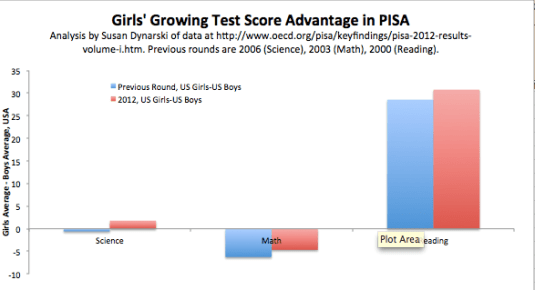
The difference in reading and verbal skills between girls and boys at the age of 15 is equal to 6-months extra schooling. Six months schooling explains a lot of the wage gaps with a long ethnic, racial and previously on gender lines.
Not surprisingly, fewer women do science and engineering degrees because their superior reading and verbal skills qualify them for medicine and other sciences that take advantage of these talents.
Why Evolution is True is a blog written by Jerry Coyne, centered on evolution and biology but also dealing with diverse topics like politics, culture, and cats.
In Hume’s spirit, I will attempt to serve as an ambassador from my world of economics, and help in “finding topics of conversation fit for the entertainment of rational creatures.”


 Auckland University of Technology Associate Professor Gail Pacheco is not quoted as often she should be in the politics of the minimum wage in New Zealand. Her research repeatedly finds that the increases in the minimum wage over the last 10 to 15 years in New Zealand reduced employment, increased unemployment, and reduced skill acquisition among teenagers:







Recent Comments