Whatever is, is efficient – part 1

Armen Alchian would ask “If something is so optimal, why don’t we see it then?”

The best way Alchian related this discipline on thinking was to point to something like the question of optimal taxes. If optimal taxes are so optimal, why don’t we see more of these optimal taxes in practice?

There must be other costs left out of your optimal tax analysis. There might be less obvious costs in the political system in organising support or other changes that are required that are overlooked, making optimal taxes such a ‘low-cost’ option. Most objectives look better than they are if you ignore some of the costs of achieving those objectives.

Alchian asserted that “whatever is, is efficient.”

  • If the status quo was not efficient, something else would eventuate;
  • Of course, if you try to change anything that is – that too is efficient because otherwise you would not try to do so.

The key point is why are we weighing only some costs and not others? Why are these costs (involved in minimizing particular dead-weight losses that would be involved in setting a particular optimal tax) less important than other types of costs (those involved in informing people of what the options are or of organizing them to go and try to adopt the alternative option)? Optimal taxes are also decidedly less optimal if they allow governments to raise more revenue, and the extra revenue is not spent wisely.

alchian.jpg (27212 bytes)

Alchian’s analysis of institutions and processes spent a lot of time showing that many often puzzling institutions and practices arose to lower various costs of decision making and transacting in the market and within organisations and groups. Many of these costs are far from obvious and must be teased out through difficult, time-consuming analysis.

Alchian was a great teacher. He taught in the Socratic Method. He posed countless questions to force his students to think harder and deeper.

Behavioural economics is an example of a whole field that expanded not by thinking harder and deeper using standard economic tools. It explains anomalous behaviour and seemingly irrational choices as the result of cognitive quirks or short-sightedness and a range of people’s other shortcomings. That is easier than spending a few more decades getting to the bottom of the matter.

George Stigler in the 1960s made a marvellous critique of what became behavioural economics back in the early 1960s by saying that in every decade for the last 150 years, economists dabbled in psychology.

Stigler said that they missed the point of economics as a method. He argued that the simple hypothesis of rational behaviour is so powerful because it can account for so much of human behaviour. Stigler adds this in his Tanner Lectures in 1981:

Members of  other  social sciences  often  remark, in fact I must say complain, at the peculiar fascination that the logic of rational decision-making exerts upon economists.

It is such an interesting logic: it has answers to so many and varied questions, often answers that are simultaneously reasonable to economists and absurd to others. The paradoxes are not diminished by the delight with which economists present them…

The power of self-interest, and its almost unbelievable delicacy and subtlety in complex decision areas, has led economists to seek a large role for explicit or implicit prices in the solution of many social problems.

Richard Posner went further and argued that behavioural economics may not be a science in Popper’s sense of falsifiability.

Posner referred to Cardinal Bellarmine’s famous description of what he saw in Galileo’s telescope which was pointing to the moons rotating around Saturn. Cardinal Bellarmine explained it as a trick of the devil.

Behavioural economics, in Richard Posner’s view, is close to Cardinal Bellarmine’s trick of the devil methodology because it explains anomalies away either as cognitive quirks or as rational behaviour. Nothing is an anomaly for behavioural economics so nothing can falsify it. Instead of the devil making me do it, a cognitive quirk made me do it.

Posner’s key point was:

Rational-choice economics makes the analyst think hard. Faced with anomalous behaviour, the rational-choice economist, unlike the behavioural economist, doesn’t respond, “Of course, what do you expect?” Troubled, puzzled, challenged; he wracks his brains for some theoretical extension or modification that will accommodate the seeming anomaly to the assumption of rationality.

Rather than attribute odd behaviour to cognitive quirks or short-sightedness, the better explanation is the behaviour is not fully understood.

Why only Nixon could go to China and Clinton finish the Reagan Revolution

The secret of winning the swing vote is having policies slightly different from your opponent. Recall Tyler Cowen and Daniel Sutter’s Why Only Nixon Could Go to China in Public Choice.


File:Nixon Mao 1972-02-29.png

Cowen and Sutter say that a policy could depend on information – on which policies or values everyone could potentially agree, or on which agreement is impossible.

Politicians, who value both re-election and policy outcomes, realise the nature of the issue better through inside and secret information and superior analytical skills (or access to those skills), whereas voters do not have access to such information base or skills.

Only a right-wing president can credibly signal the desirability of a left-wing course of action. A left-wing president’s rapprochement with China would be dismissed as a dovish sell-out. The Nixon paradox held because citizens could vote retrospectively on the issue.

Left-wing parties adopt right-wing policies because they are good ideas that will get them re-elected. Bob Hawke, Tony Blair, and Bill Clinton were firmly camped over the middle-ground.

Only centre-left economic reformers can credibly signal the desirability of their economic reforms because of the brand name capital they invested in distributional concerns and protecting the poor.

Because of their proven record and brand name, they do not jeopardise their support or credibility by seemingly departing from their core values. They must have done so because it was the right thing to do given events and the long-term interests of the lower-income groups they represent.

Bill Clinton balanced the budget and introduced sweeping welfare reforms in 1996 after vetoing two earlier bills because this finally fulfilled his 1992 campaign promise to “end welfare as we have come to know it”. As he signed the bill on August 22, 1996, Clinton stated that the act:

gives us a chance we haven’t had before to break the cycle of dependency that has existed for millions and millions of our fellow citizens, exiling them from the world of work. It gives structure, meaning and dignity to most of our lives.

Jimmy Carter was a bigger deregulator than Reagan. Obama uses drones far more often than Bush did.

Major labour law reforms were passed in Germany under a left-wing government after decades of 10% unemployment rates and average German unemployment spells for about a year. The key part of these reforms came into play just before the global financial crisis hit and was a major reason for the unemployment rate in Germany falling despite the onset of GFC.

Why Only Nixon Could Go to China also explains why hawks such as Reagan and Begin and other right wing party leaders were able to negotiate peace treaties that eluded more dovish politicians who ran on ‘peace now’ slogans.

Reagan signed the Intermediate-Range Nuclear Forces treaty, walked with Gorbachev in Red Square and seriously offered complete mutual nuclear disarmament in Reykjavik in 1986. Any other American President who offered complete mutual nuclear disarmament would have been impeached.

https://i0.wp.com/www.reagan.utexas.edu/archives/photographs/large/c47345-10.jpg

Hawks also have the right negotiating stance. Robert Aumann argues that:

If you are ready for war, you will not need to fight. If you cry ‘peace, peace,’ you will end up fighting… What brings war is that you signal weakness and concessions.

Only then will both sides negotiate because they know that the other side is willing to walk away and perhaps not come back for a long time. Unless it gets reasonable offers that will be binding on both sides for a long time because both win more for honouring their promises rather than threatening war again soon.

Left-wing politicians can deliver economic reforms because they can deliver new voting blocs to the realignment of political coalitions. This new bloc of centre-left voters and some members of existing political and special interest groupings benefit from regrouping and joining new political coalitions that push through the reforms. An ageing society, budget deficits, technological innovations and shifts in production cost structures and in consumer demand can all make the existing political coalitions less rewarding than in the past.

Academics and their bias against the market

The expansion of jobs for graduates from the 1960s onwards increased the choices for well-educated people more disposed to the market of working outside the teaching profession. Those left behind in academia were even more of the Leftist persuasion than earlier in the 20th century.

Dan Klein showed that in the hard sciences, there were 159 Democrats and 16 Republicans at UC-Berkley. Similar at Stanford. No registered Republicans in the sociology department and one each in the history and music departments. For UC-Berkeley, an overall Democrat:Republican ratio of 9.9:1. For Stanford, an overall D:R ratio of 7.6:1. Registered Democrats easily outnumber registered Republicans in most economics departments in the USA. The registered Democrat to Republican ratio in sociology departments is 44:1! For the humanities overall, only 10 to 1.

The left-wing bias of universities is no surprise, given Hayek’s 1948 analysis of intellectuals in light of opportunities available to people of varying talents:

  • exceptionally intelligent people who favour the market tend to find opportunities for professional and financial success outside the universities in the business or professional world; and
  • those who are highly intelligent but more ill-disposed toward the market are more likely to choose an academic career.

People are guided into different occupations based on their net agreeableness and disagreeableness including any personal distaste that they might have for different jobs and careers. There is growing evidence of the role of personality traits in occupational choice and career success.

The theories of occupational choice, compensating differentials and the division of labour suggest plenty of market opportunities both for caring people and for the more selfish rest of us:

  • Personalities with a high degree of openness are strongly over-represented in creative, theoretical fields such as writing, the arts, and pure science, and under-represented in practical, detail-oriented fields such as business, police work and manual labour.
  • High extraversion is over-represented in people-oriented fields like sales and business and under-represented in fields such as accounting and library work.
  • High agreeableness is over-represented in caring fields like teaching, nursing, religion and counselling, and under-represented in pure science, engineering and law.

Schumpeter explained in Capitalism, Socialism, and Democracy that it is “the absence of direct responsibility for practical affairs” that distinguishes the academic intellectual from others “who wield the power of the spoken and the written word.”

Schumpeter and Robert Nozick argued that intellectuals were bitter that the skills so well-rewarded at school and at university with top grades were less well-rewarded in the market.

  • For Nozick, the intellectual wants the whole society to be a school writ large, to be like the environment where he or she did so well and was so well appreciated.
  • For Schumpeter, the intellectual’s main chance of asserting himself lies in his actual or potential nuisance value.

Richard Posner also had little time for academics who say they speak truth to power:

  • The individuals who do so do it with the quality of a risk-free lark.
  • Academics, far from being marginalized outsiders, are insiders with the security of well-paid jobs from which they can be fired with difficulty.
  • Academics flatter themselves that they are lonely, independent seekers of truth, living at the edge.
  • Most academics take no risks in expressing conventional left-leaning (or politically correct) views to the public, which is part of the reason they are not regarded with much seriousness by the general public.

Why are there so few workers’ co-ops?

If workers’ cooperatives are so efficient, why are there so few cooperatives? Workers’ cooperatives should be able to slowly undercut other firms on price because they do not have to pay a profit to the capitalists.

Building societies, credit unions and some life insurance companies were mutually owned by their customers for a long time, but recently fell out of favour because of a growing lack of competitiveness and under-capitalisation.

Cooperatives are not economically viable because of intrinsic difficulties of entrepreneurship and management. And most workers prefer to work in firms for a wage rather than wait for the co-op to start up and hopefully break even before they get their first pay cheque. That could be a slow train coming.

The kibbutzim are Israeli agricultural communities initially organized on socialist lines, mostly between the 1910s and 1950s. The kibbutz is an example of voluntary socialism. The founders of kibbutzim were socialist idealists wanting to create a new human being.

Robert Nozick pointed out that few people actually join a kibbutz. Six per cent is the maximum proportion of any population who would voluntarily choose to live in these socialist communities. More recently, 2.6% of the Israeli population live on a kibbutz.

Originally, most kibbutzim followed strict socialist policies forbidding private property; they also required near-total equality of income regardless of differences in productivity, and in some cases, even abandoned the specialisation of labour. Kibbutzim are communities whose aim is equal sharing.

Kibbutzim were expected to fail because of moral hazard and adverse selection. Other organisations subject to adverse selection and moral hazard are professional partnerships, co-operatives, and labour-managed firms because they are all based on revenue sharing.

Kibbutzim have persisted for most of the twentieth century and are one of the largest communal movements in history. About 40% are still run on communist principles. Why is this so?

The kibbutz movement was founded by individuals who can be regarded as ex-ante homogeneous in their ability and potential income, and who came to a new land full of uncertainties. They were young unattached individuals who share a comparatively long period of social, ideological, and vocational training.

An even more durable example of voluntary collectivist living is Catholic monasteries and convents, but notice that these too were founded on a realization that close family ties are inimical to communal order.

Kibbutz founders wanted insurance, but their founders realised that members who would turn out to have high abilities might leave the Kibbutz.

  • The founders of the kibbutzim decided to abolish all private property and to own all wealth commonly, which served as a lock-in device.
  • Like monasteries and convents, kibbutzim deter members from fleeing through this communal ownership of property. You leave with the shirt on your back!

Kibbutzim also put prospective members through lengthy trial periods to make sure they are made of the right stuff. Those raised on a kibbutz tend to have learned kibbutz-specific skills, such as agronomy, which also makes exit to the outside world even more difficult.

Kibbutzim are similar to law firms, medical and business partnerships that pool income for risk sharing purposes.

Mutual monitoring and peer pressure replace direct monetary incentives in mitigating moral hazard in a kibbutz (and in monasteries and convents) in the same way as in professional partnerships, cooperatives, and labour-managed firms with pooled assets and the option of exit.

The trade-off between insurance and adverse selection determines the level of equality within a kibbutz and its size, as with any other professional partnership:

  • Kibbutz vary in size from less than a hundred to over a thousand, but most have between 400 and 600 members, with an average of 441 members.
  • Kibbutz size is limited by the savings on income insurance no longer offsetting the costs of moral hazard and other transaction costs as the Coasian firm grows in size.

Ran Abramitzky writes with great insight on the economics of the kibbutzim. He is writing a book The Mystery of the Kibbutz: How Socialism Succeeded. He found that high-ability individuals are more likely to leave a kibbutz. The brain drain would be worse if kibbutzim didn’t make it so costly to exit. Is this a familiar theme of socialism?

Many hybrid organisations exist in the market, ranging from joint ventures and agricultural seller and supermarket buyer co-ops to labour-owned firms such as in most of the professions.

But rarely do we find real life existing cooperatives with all workers and only workers having equal ownership rights. As Jon Elster noted, there are often non-working owners, non-owning workers and unequal distribution of shares in real life workers’ co-ops. All other types of co-ops and professional partnership share this feature.

The economics of Dennis Lillee and Steve Jobs

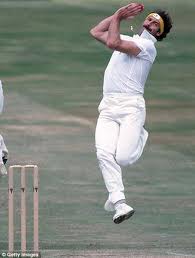
Dennis Lillee was paid £1,200 to tour England in 1972 for five months. He was paid the same to tour for three months in 1975. Now a world-class fast bowling coach, he would probably not get out for bed for £1,200

dkl

When Kerry Packer bid for the Australian cricket rights in the 1970s, he offered $500,000 per year. That was about ten times what the ABC was paying at the time

The Australian cricket TV rights sold for over $500 million in 2013 for a 5-year deal.

Today’s international cricketers are millionaires – widely respected and beloved members of the top 1% of income earners. Most think it is great that top sports people make millions over their career. No plans for the Occupy Wall Street crowd to occupy the MCG, Wimbledon or the Olympics to complain about superstar sports salaries and prizes.

Lillee and other top athletes, celebrities, actors, musicians and entertainers are all paid much more for much the same reason that CEOs, money market managers, top lawyers and tech entrepreneurs are paid much more than in the past.

They are superstars who are able to leverage their talent through communications technology advances on a national and global level. They can apply ‘their talent to greater pools of resources and reach[ing] larger numbers of people thus becoming more productive and higher paid’.

  • Why is there envy over the pay of businessmen but not for superstar entertainers and athletes?
  • Did people boo World Series Cricket in 1977 because those cricketers could now make a decent living?
  • Do people complain when musicians and actors make it big?

Why is Steve Jobs strangely immune from top 1% envy despite his cheapness and meanness to others while Bill Gates is reviled as some sort of monopolist despite his giving most of his wealth away?

Was Jobs worth his pay? Apple shares went up and down in billions on news of Steve Jobs’s health.

When Hewlett Packard’s CEO Mark Hurd resigned unexpectedly, the value of HP shares dropped by about $10 billion! This makes his $30 million in annual compensation a bargain for his shareholders. Oracle’s shares rose 6% on word of Mr. Hurd’s hiring as co-president on an annual base salary of $950,000 and being eligible for up to a $10 million annual bonus. Perhaps he is under-paid?

See Kaplan, Steven N., and Joshua Rauh. 2013. It’s the Market: The Broad-Based Rise in the Return to Top Talent, Journal of Economic Perspectives 2013 for more.

If you are so smart, why aren’t you rich? MITI version

If you are so smart, why aren’t you rich? This is the American question – asked of MIT’s Paul Cootner by a money market manager in the 1960s.

Why do investment advisors sell and often give away their sage advice? If their insights were any good, they could trade on the share market before others caught on and make a killing!

Deirdre McCloskey wrote a book about the limits of economic expertise. For a summary, see http://www.deirdremccloskey.com/docs/pdf/Article_168.pdf.

I will give a personal example based on the skills of bureaucracies in picking winners. The test of my hypothesis is based on the transferability of human capital across jobs.

My graduate school professors in Japan included many retired bureaucrats from the Ministry of Finance and MITI. These agencies were heralded by Joe Stiglitz and others for picking winners and guiding Japanese companies to choose the right technologies and what to export.

The skills that my graduate school professors learned at picking winners over their careers with the Ministry of Finance and MITI in the high-growth years in the 1970s would now be available to them in their retirements to trade on their own account.

My graduate school professors should quickly become very rich after retiring because of the skills they learned in picking winners while at the Ministry of Finance and MITI, which should cross over into their private share portfolios. The rich lists world-wide should be full of retired industry and finance ministry bureaucrats.

Instead, my graduate school professors took the train and bus to work and their families lived off their salaries in standard sized Japanese government apartments. All looked forward to their annual bonus of 5.15 months salary.

If governments are any good at picking winners, people should be willing to pay big time to get jobs at ministries of finance and ministries of international trade and industry to get access to their unique and highly secret skills they learn therein on how to pick winners. I am still waiting for that tell-all book by an insider on these skills. Why is there no Picking Winners for Dummies on Amazon kindle as yet?

P.S. McCloskey argued that the advising industry lives off 19th century case law on directors’ and trustees’ duties. If you take advice – from an accountant, a lawyer or an economist – and the business or investment still fails, it can’t be your fault. You took advice.

P.P.S. Cootner’s reply was “If you’re so rich, why aren’t you smart?” The answer to this was Wall Street investment brokers didn’t have to be smart to get rich; they can make money off fees and brokerage commissions even when their investment advice stank. Didn’t you watch The Wolf of Wall Street?

Next Newer Entries

Arin’s Substack

Celebrating humanity's flourishing through the spread of capitalism and the rule of law

David Andolfatto

Celebrating humanity's flourishing through the spread of capitalism and the rule of law

Monetary Non-Neutrality

Celebrating humanity's flourishing through the spread of capitalism and the rule of law

Reason Magazine

Celebrating humanity's flourishing through the spread of capitalism and the rule of law

Coyote Blog

Celebrating humanity's flourishing through the spread of capitalism and the rule of law

Thoughts from the North

Celebrating humanity's flourishing through the spread of capitalism and the rule of law

Fardels Bear

A History of the Alt-Right

Vincent Geloso

Econ Prof at George Mason University, Economic Historian, Québécois

Bassett, Brash & Hide

Celebrating humanity's flourishing through the spread of capitalism and the rule of law

Truth on the Market

Scholarly commentary on law, economics, and more

The Undercover Historian

Beatrice Cherrier's blog

Matua Kahurangi

Celebrating humanity's flourishing through the spread of capitalism and the rule of law

Temple of Sociology

Celebrating humanity's flourishing through the spread of capitalism and the rule of law

Velvet Glove, Iron Fist

Celebrating humanity's flourishing through the spread of capitalism and the rule of law

Why Evolution Is True

Why Evolution is True is a blog written by Jerry Coyne, centered on evolution and biology but also dealing with diverse topics like politics, culture, and cats.

NoTricksZone

Celebrating humanity's flourishing through the spread of capitalism and the rule of law

Homepaddock

A rural perspective with a blue tint by Ele Ludemann

Kiwiblog

DPF's Kiwiblog - Fomenting Happy Mischief since 2003

The Dangerous Economist

Celebrating humanity's flourishing through the spread of capitalism and the rule of law

Watts Up With That?

The world's most viewed site on global warming and climate change

The Logical Place

Tim Harding's writings on rationality, informal logic and skepticism

Doc's Books

A window into Doc Freiberger's library

The Risk-Monger

Let's examine hard decisions!

Uneasy Money

Commentary on monetary policy in the spirit of R. G. Hawtrey

Barrie Saunders

Thoughts on public policy and the media

Liberty Scott

Celebrating humanity's flourishing through the spread of capitalism and the rule of law

Point of Order

Politics and the economy

James Bowden's Blog

A blog (primarily) on Canadian and Commonwealth political history and institutions

Science Matters

Reading between the lines, and underneath the hype.

Peter Winsley

Economics, and such stuff as dreams are made on

A Venerable Puzzle

"The British constitution has always been puzzling, and always will be." --Queen Elizabeth II

The Antiplanner

Celebrating humanity's flourishing through the spread of capitalism and the rule of law

Bet On It

Celebrating humanity's flourishing through the spread of capitalism and the rule of law

History of Sorts

WORLD WAR II, MUSIC, HISTORY, HOLOCAUST

Roger Pielke Jr.

Undisciplined scholar, recovering academic

Offsetting Behaviour

Celebrating humanity's flourishing through the spread of capitalism and the rule of law

JONATHAN TURLEY

Res ipsa loquitur - The thing itself speaks

Conversable Economist

In Hume’s spirit, I will attempt to serve as an ambassador from my world of economics, and help in “finding topics of conversation fit for the entertainment of rational creatures.”

The Victorian Commons

Researching the House of Commons, 1832-1868

The History of Parliament

Articles and research from the History of Parliament Trust

Books & Boots

Reflections on books and art

Legal History Miscellany

Posts on the History of Law, Crime, and Justice

Sex, Drugs and Economics

Celebrating humanity's flourishing through the spread of capitalism and the rule of law

European Royal History

Exploring the Monarchs of Europe

Tallbloke's Talkshop

Cutting edge science you can dice with

Marginal REVOLUTION

Small Steps Toward A Much Better World