The following is written by Don Brash in his capacity as Hobson’s Pledge Trustee. As I shared with you previously, the Real Estate Authority (REA) said they were going to cancel real estate agent Janet Dickson’s licence for five years because she would not take a compulsory Māori culture course. Then, the real estate company…
DON BRASH: Terminated for saying “no” to cultural training – what’s next? (UPDATED)
DON BRASH: Terminated for saying “no” to cultural training – what’s next? (UPDATED)
26 Mar 2024 Leave a comment
in discrimination, law and economics, politics - New Zealand Tags: affirmative action, Age of Enlightenment, free speech, political correctness, racial discrimination, regressive left
*Who’s Afraid of Gender?*
26 Mar 2024 Leave a comment
in discrimination, economics of crime, economics of education, gender, law and economics, property rights Tags: Age of Enlightenment, conjecture and refutation, free speech, philosophy of science, political correctness, regressive left
That is the title of the new Judith Butler book, focusing mostly on trans issues. To be clear, on most practical issues concerning trans, I side with the social conservatives. For instance, I don’t think trans women have a right to compete in women’s weightlifting contests. And I have not been happy with how many […]
*Who’s Afraid of Gender?*
Eat the Rich: Warren Plan Would Impose Wealth Tax, Captivity Tax, and $100 Billion for Increasing Tax Audits
23 Mar 2024 Leave a comment
in applied price theory, applied welfare economics, economic growth, fiscal policy, income redistribution, labour economics, labour supply, macroeconomics, poverty and inequality, Public Choice, public economics Tags: taxation and entrepreneurship, taxation and investment, taxation and labour supply

The wealth tax is back. We have previously discussed the constitutional and policy concerns surrounding the push by Democrats like Sen. Elizabeth Warren (D., Mass.) to introduce a wealth tax that would start with billionaires. It would not likely end there. The law would also apply the same type of California approach to wealthy families […]
Eat the Rich: Warren Plan Would Impose Wealth Tax, Captivity Tax, and $100 Billion for Increasing Tax Audits
Nikole Hannah-Jones on reparations for descendants of slaves
21 Mar 2024 Leave a comment
in discrimination, economics of crime, economics of education, human capital, income redistribution, labour economics, labour supply, law and economics, liberalism, Marxist economics, occupational choice, politics - USA, poverty and inequality, property rights, Public Choice, rentseeking Tags: affirmative action, free speech, political correctness, racial discrimination, regressive left

As you know, I go back and forth on the question of affirmative action for college and professional-school admissions, and even after I thought I’d settled on a view (i.e., give some preference to minorities among those equally qualified for admission), it still keeps changing. After I read the long New York Times piece below […]
Nikole Hannah-Jones on reparations for descendants of slaves
A good refutation of a bad article on the supposed “spectrum” of sex
14 Mar 2024 Leave a comment
in discrimination, economics of education, gender, liberalism, Marxist economics, politics - USA Tags: free speech, political correctness, regressive left, sex discrimination

On March 8, I wrote a critique of this article, which appeared in American Scientist (click sceenshot to read): When I wrote my piece, I had grown weary of people making the same tired old arguments against the sex binary, arguments like saying that sex isn’t binary because male orangutans come in two forms (“flanged” […]
A good refutation of a bad article on the supposed “spectrum” of sex
An Open Letter to Nobel-laureate Economist Angus Deaton
13 Mar 2024 Leave a comment
in applied price theory, applied welfare economics, Austrian economics, comparative institutional analysis, economic history, entrepreneurship, history of economic thought, income redistribution, international economics, labour economics, labour supply, poverty and inequality, Public Choice, rentseeking, survivor principle, unemployment Tags: creative destruction, free trade, tariffs
TweetProf. Angus Deaton Princeton University Prof. Deaton: Over the years I’ve learned much from your writings, and I regard your 2013 The Great Escape as one of the most important books published in the past 15 years. So I was quite surprised and disappointed to read that you, as you say, are now “much more…
An Open Letter to Nobel-laureate Economist Angus Deaton
Once again: the claim that sex is non-binary, but there are no new arguments
13 Mar 2024 Leave a comment
in discrimination, economics of education, gender, liberalism, Marxist economics, politics - USA Tags: free speech, political correctness, regressive left, sex discrimination
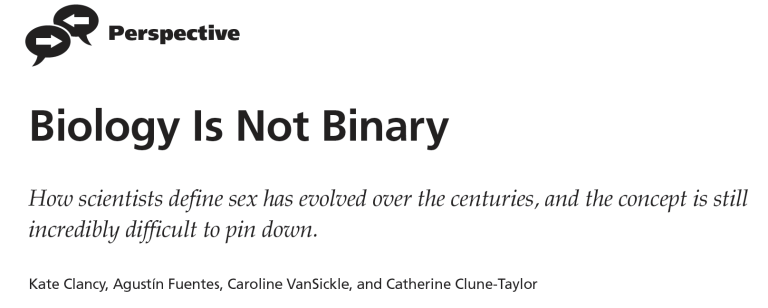
Really? Do I have to rebut the same arguments about the definition of biological sex again? Well, here in American Scientist is a group of two anthropologists, one anatomist, and a gender-and-sexuality-studies professor, all telling us that there is no clear definition of sex, using the same tired old arguments to rebut the gamete-based sex […]
Once again: the claim that sex is non-binary, but there are no new arguments
The RCT Agenda
12 Mar 2024 Leave a comment
in applied price theory, applied welfare economics, comparative institutional analysis, development economics, econometerics, economic history, economics of bureaucracy, economics of education, economics of information, economics of regulation, experimental economics, growth disasters, growth miracles, history of economic thought, human capital, labour economics, labour supply, law and economics, managerial economics, market efficiency, Marxist economics, occupational choice, organisational economics, property rights, Public Choice, public economics Tags: The fatal conceit

Randomized Controlled Trials: Could you be any more scientific? The book I’m now writing, Unbeatable: The Brutally Honest Case for Free Markets, insists that the randomistas of the economics profession actually have a thinly-veiled political agenda. Namely: To get economists to humbly serve the demagogues that rule the world instead of bluntly challenging their unabated…
The RCT Agenda
What media bias looks like
11 Mar 2024 Leave a comment
in labour economics, labour supply, politics - New Zealand, poverty and inequality, welfare reform Tags: marriage and divorce
Lindsay Mitchell writes – When news media took a pummelling last week at both TVNZ and TV3, a number of critics said part of the reason ratings are poor is the public don’t trust them. The public believe that the media is biased. The print media is similarly suspect. An article in Stuff on Sunday […]
What media bias looks like
Another gender gap
11 Mar 2024 Leave a comment
in economics of media and culture, gender, health and safety, labour economics, labour supply, occupational choice Tags: gender gap

Not Bridgeable
10 Mar 2024 Leave a comment
in comparative institutional analysis, discrimination, economic history, economics of crime, economics of education, economics of love and marriage, gender, income redistribution, labour economics, law and economics, liberalism, Marxist economics, politics - USA, Public Choice Tags: 2024 presidential election, free speech, political correctness, regressive left

In the last few years, especially after I started writing for this blog, I got more than a few comments about the need for bi-partisanship, not hating out ideological, let alone political opponents. What was notable about this was that they all came from the Right of the political spectrum. The Left seem quite happy […]
Not Bridgeable
The Irish reject a “Woke” constitutional change
10 Mar 2024 Leave a comment
in discrimination, economics of love and marriage, gender, human capital, labour economics, labour supply, law and economics Tags: Ireland
Ireland’s effort to remove old-fashioned family values from its constitution suffered a double defeat Saturday as voters rejected the amendments on offer as maddeningly vague and threatening to property rights… In final results announced Saturday night, the amendment to change the constitutional definition of family was rejected by 67.7 percent of voters. The proposed changes […]
The Irish reject a “Woke” constitutional change
#IWD2024
08 Mar 2024 Leave a comment
in discrimination, economics of education, gender, human capital, labour economics, labour supply, occupational choice, politics - Australia Tags: gender wage gap, sex discrimination

Longing for Auschwitz.
07 Mar 2024 Leave a comment
in discrimination, economics of crime, gender, International law, law and economics, laws of war, liberalism, war and peace Tags: Age of Enlightenment, Gaza Strip, Israel, Middle-East politics, Nazi Germany, political correctness, racial discrimination, regressive left, The Holocaust, war against terror

An article in Tablet Magazine with that title, “Longing for Auschwitz., that nails what lies at the heart of what happened in Israel last October 7. A couple of excerpts but as always… Hamas’s assault on Israelis on October 7th was not an act of war as we normally think of it but something far […]
Longing for Auschwitz.
 Utopia, you are standing in it!
Recent Comments