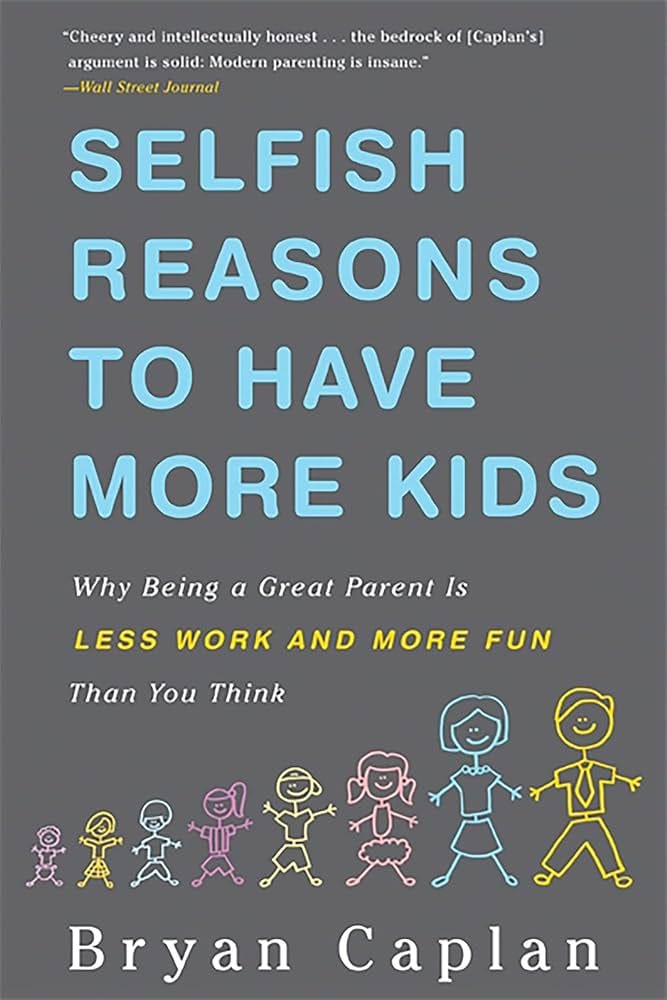
Bet On It reader Dan Barrett wrote these notes for his Book Nook book club on my Selfish Reasons to Have More Kids: Why Being a Great Parent Is Less Work and More Fun Than You Think. Dan’s idea:I’m organizing reading groups packaged as the Book Nook to help colleagues (1) guide their own learning…
Tweet… is from page 172 of the 2012 revised edition of Steven Landsburg’s great 1993 book, The Armchair Economist: [I]ncome statistics don’t account for everything we value. For one thing, we care about the quantity and quality of our leisure time. Here it’s by and large the poor who have made great strides, while the…
A new study debunks the myth of the gold-digging wife, finding that women are no more likely to marry above their social class than menBy Ben Spencer, Science Editor of The Sunday Times. Excerpts:”The young pretty women who seek to “marry up” for money and status, from the Bennet sisters in Pride and Prejudice to…
It’s time to pick up my recent thread of posts on the minimum wage (most recently in this post). I want to return for a moment to more conventional research on the minimum wage, specifically looking at the effects of higher minimum wages on employment. The majority of minimum wage research has focused on estimating…
Over the past half-century, the share of men enrolled in college has steadily declined relative to women. Today, 1.6 million more women than men attend four-year colleges in the U.S. This trend has not lowered marriage rates for college women, a substantial share of whom have historically married economically stable men without college degrees. Both […]
Don Brash and Michael Reddell write – When Don was young and Michael’s parents were young, New Zealand had among the very highest material standards of living in the world. It really was, in the old line, one of the very best places to bring up children. But no longer. For 75 years now, with […]
By David J. Deming, Christopher Ong, and Lawrence H. Summers. From NPR’s Planet Money. Summers was Secretary of the Treasury from 1999 to 2001, director of the National Economic Council from 2009 to 2010 and president of Harvard University from 2001 to 2006.”Obviously, there is a big fear right now that artificial intelligence will kill…
The subtitle is New Estimates of Productivity Growth in England from 1250 to 1870, and the authors are Paul Bouscasse, Emi Nakamura, and Jón Steinsson. Abstract: We estimate productivity growth in England from 1250 to 1870. Real wages over this period were heavily influenced by plague-induced swings in the population. Our estimates account for these […]
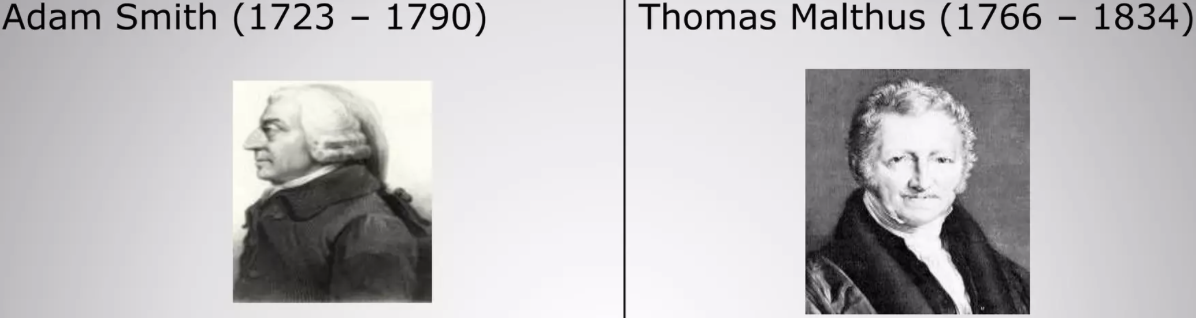
Tweet… is from page 53 of the late, great Harold Demsetz’s excellent 2008 book, From Economic Man to Economic System: Adam Smith and Thomas Malthus differed in their forecasts of mankind’s future. Smith (1776), in his Wealth of Nations, offered an optimistic view, basing this on his understanding of the new economic system that began…
In this 12-second video, Margaret Thatcher is talking about the Labour Party in the United Kingdom, but her warning has universal application. And when I say her warning has universal application, I’m not joking. Politicians generally can’t resist the temptation to buy votes. And I fear that this can and will happen at all levels […]
When Jacinda Ardern became Prime Minister, she was determined to increase income for children in welfare-dependent families – her magic bullet for solving child poverty. The Welfare Expert Advisory Group, led by Cindy Kiro, was convened to make the desired recommendations. A number of evidence briefs were provided to the group, one concerned the “likely…
Here is Daron Acemoglu’s Project Syndicate piece, mostly critical on high-skilled immigration. Here is the first argument from Acemoglu: …one would expect corporate America’s growing need for skilled STEM workers to translate into advocacy for, and investments in, STEM education. But an overreliance on the H-1B program may have broken this link and made American […]
TweetGMU Econ alum Holly Jean Soto busts the myth of “greedflation.” Scott Lincicome identifies an interesting contrast between the facts and opinion about China. George Will decries the spinelessness of the modern U.S. Congress. A slice: The incoming president will be able, on a whim, to unilaterally discombobulate international commerce — and the domestic economy…
Why Evolution is True is a blog written by Jerry Coyne, centered on evolution and biology but also dealing with diverse topics like politics, culture, and cats.
In Hume’s spirit, I will attempt to serve as an ambassador from my world of economics, and help in “finding topics of conversation fit for the entertainment of rational creatures.”


Recent Comments