Bryan Caplan and Daniel Klein both opine on Milei and populism, Dan being very enthusiastic, while Bryan praising Milei but more reserved in his praise of populism. I too am a big fan of Milei, and I think he is still on a good track. If his reforms do not succeed, likely it will not […]
Milei and populism
Milei and populism
23 Nov 2024 1 Comment
in applied price theory, budget deficits, comparative institutional analysis, constitutional political economy, development economics, economic growth, economics of bureaucracy, economics of regulation, fiscal policy, growth disasters, income redistribution, macroeconomics, monetarism, monetary economics, Public Choice, rentseeking, unemployment Tags: Argentina
Popuphobia’s Javier Milei Problem
22 Nov 2024 1 Comment
in development economics, economic growth, economics of bureaucracy, economics of regulation, fiscal policy, growth disasters, income redistribution, labour economics, law and economics, liberalism, libertarianism, macroeconomics, Marxist economics, monetary economics, property rights, Public Choice, public economics, rentseeking, unemployment Tags: Argentina

My dear friend and colleague Dan Klein wrote this. He loves feedback, so please share your thoughts in the comments. And he’d especially appreciate reactions from friends Shikha Dalmia and Nils Karlson, which I’d definitely be glad to run.P.S. Dan asked me to link to the latest Milei news.I define popuphobe as someone who propagates…
Popuphobia’s Javier Milei Problem
Another zero lower bound prediction bites the dust
28 Sep 2024 Leave a comment
in applied price theory, budget deficits, business cycles, economic growth, fiscal policy, history of economic thought, labour economics, macroeconomics, monetary economics, public economics, unemployment Tags: New Keynesian macroeconomics
Popular New Keynesian macroeconomic models predict that cuts in various types of distortionary taxes are contractionary when monetary policy is constrained at the zero lower bound. We turn to a long span of history in the United Kingdom to test this hypothesis. Using a new long-run dataset of narrative-identified tax changes from 1918to 2020, we […]
Another zero lower bound prediction bites the dust
Proof that NZ’s Reserve Bank has Inflicted Unnecessary Pain up and down the Nation.
27 Sep 2024 Leave a comment
in business cycles, economic growth, fiscal policy, labour economics, macroeconomics, monetary economics, politics - New Zealand, politics - USA, unemployment Tags: economics of pandemics, monetary policy
In the past few hours, it has been stated that the US economy grew at a solid 3% rate last quarter, as given in the American government’s final estimate. New Zealand’s economy, on the other hand, shrank at a rate of -0.2%. The US Federal Funds rate (the equivalent of NZ’s Official Cash Rate, OCR)…
Proof that NZ’s Reserve Bank has Inflicted Unnecessary Pain up and down the Nation.
Interview with Greg Mankiw: New Keynesian Macro, Growth, and Economic Policy
04 Sep 2024 Leave a comment
in applied price theory, budget deficits, business cycles, development economics, econometerics, economic growth, economic history, Edward Prescott, fiscal policy, great depression, history of economic thought, labour economics, law and economics, macroeconomics, Milton Friedman, monetarism, monetary economics, politics - USA, Public Choice, Robert E. Lucas, unemployment
Jon Hartley interviews Greg Mankiw on topics including New Keynesian macroeconomics, growth, and economic policy more broadly at his Capitalism and Freedom website (August 20, 2024, video and transcript available). Here are a few of the comments that caught my eye. On big models and small models in studying the macroeconomy: [O]n the issue of…
Interview with Greg Mankiw: New Keynesian Macro, Growth, and Economic Policy
Telephone Operators: The Elimination of a Job
20 Aug 2024 Leave a comment
in economic growth, economic history, gender, history of economic thought, industrial organisation, labour economics, labour supply, macroeconomics, market efficiency, occupational choice, survivor principle, unemployment Tags: creative destruction
My tradition on this blog is to take a break (mostly!) from current events in the later part of August. Instead, I pre-schedule daily posts based on things I read during the previous year about three of my preoccupations: economics, editing/writing, and academia. With the posts pre-scheduled, I can then relax more deeply when floating…
Telephone Operators: The Elimination of a Job
Basic income, again
09 Aug 2024 Leave a comment
in applied price theory, econometerics, labour economics, labour supply, poverty and inequality, unemployment, welfare reform Tags: universal basic income
This week’s column for the Stuff papers covered the excellent new US work testing the effects of a UBI. From November 2020, 3000 low-income people were randomly assigned into two groups for three years. One thousand people each received $1000 per month in unconditional funds for three years. Two thousand people each received $50 per month.Both…
Basic income, again
The Minimum Wage, Rent Control, and Vacancies or Who Searches?
31 Jul 2024 Leave a comment
in applied price theory, comparative institutional analysis, econometerics, economic history, economics of regulation, income redistribution, labour economics, labour supply, law and economics, minimum wage, politics - USA, property rights, Public Choice, regulation, rentseeking, unemployment, urban economics Tags: housing affordability, regressive left, rent control

In an interesting new paper Federal Reserve economists Marianna Kudlyak, Murat Tasci and Didem Tüzemen look at what happens to job vacancy postings when the minimum wage increases. The vacancy data in our analysis come from the job openings data from the Conference Board as a part of its Help Wanted OnLine (HWOL) data series. […]
The Minimum Wage, Rent Control, and Vacancies or Who Searches?
Thought and Details on the Fiscal Theory of the Price Level
30 Jul 2024 Leave a comment
in applied price theory, budget deficits, business cycles, economic growth, economic history, history of economic thought, labour economics, macroeconomics, monetarism, monetary economics, unemployment Tags: monetary policy

The Fiscal Theory of the Price Level has been percolating among monetary theorists for over three decades: Eric Leeper being the first to offer a formalization of the idea, with Chris Sims and Michael Woodford soon contributed to its further development. But the underlying idea that the taxation power of the state is essential for […]
Thought and Details on the Fiscal Theory of the Price Level
Treasury says one thing in a speech but quite another in the BEFU
28 Jul 2024 Leave a comment
in budget deficits, business cycles, economic growth, fiscal policy, inflation targeting, labour economics, macroeconomics, monetary economics, politics - New Zealand, unemployment Tags: monetary policy

I picked up The Post this morning to find the lead story headlined “Recession hits homes harder than businesses”, reporting a speech given earlier this week by Treasury’s deputy secretary and chief economic adviser Dominick Stephens. There was an account of the same speech, but with some different material, on BusinessDesk a couple of days […]
Treasury says one thing in a speech but quite another in the BEFU
Interview with Edmund Phelps: Macro and Capitalism
21 Jul 2024 Leave a comment
in business cycles, fiscal policy, great depression, great recession, history of economic thought, job search and matching, labour economics, labour supply, macroeconomics, monetary economics, unemployment
Edmund Phelps won the Nobel prize in economics in 2006 for “for his analysis of intertemporal tradeoffs in macroeconomic policy.” However, he has spent a considerable chunk of this time in the last few decades musing over strengths and weaknesses of capitalism and, more generally, a dynamic economy. Jon Hartley interviews Phelps on both topics,…
Interview with Edmund Phelps: Macro and Capitalism
College premium
18 Jun 2024 Leave a comment
in economics of education, human capital, labour economics, labour supply, occupational choice, poverty and inequality, unemployment Tags: graduate premium

Price controls deter voluntary, wealth-creating transactions: CA minimum wages increase to $20/hour
17 Jun 2024 Leave a comment
in applied price theory, labour economics, minimum wage, unemployment
When staking out a position, it is rare for a politician to acknowledge any tradeoffs. For example, a politician in favor of a minimum wage increase will praise the increased wages for workers, but won’t acknowledge that businesses will shut down or fire workers. That job is left to those on the other wide of…
Price controls deter voluntary, wealth-creating transactions: CA minimum wages increase to $20/hour
More Good Results from Argentina
28 Apr 2024 Leave a comment
in budget deficits, business cycles, comparative institutional analysis, development economics, economic growth, economic history, economics of bureaucracy, economics of regulation, fiscal policy, growth disasters, income redistribution, labour economics, liberalism, libertarianism, macroeconomics, Marxist economics, monetary economics, Public Choice, rentseeking, unemployment Tags: Argentina
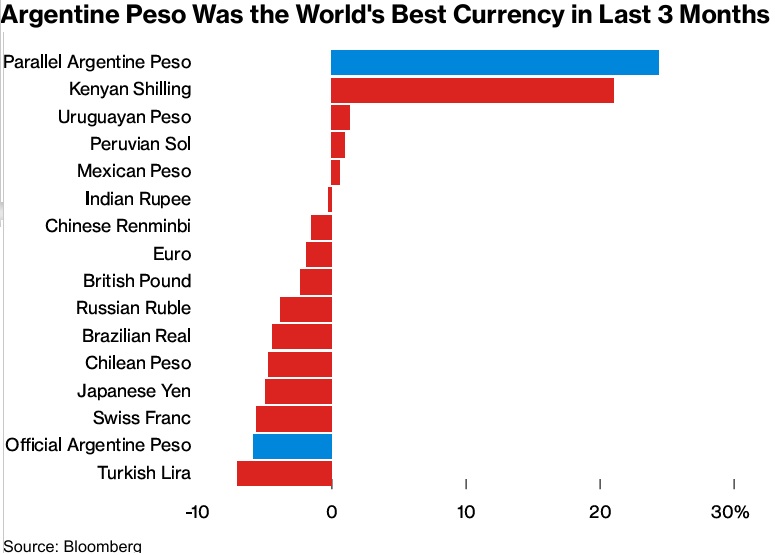
The most important election of 2023 took place in Argentina, where that nation’s voters elected the libertarian candidate, Javier Milei, as their new president. I discussed the outlook for Milei’s agenda on a recent appearance of the Schilling Show. Here’s a brief excerpt. As you can see, I’m worried that Milei faces enormous obstacles. Argentina […]
More Good Results from Argentina
 Utopia, you are standing in it!
Recent Comments