The Herald reports: She said the current system was problematic in that many entitlements were claimed by wealthy people and paid for by hiking taxes on workers of all income levels. “There are a lot of entitlements and support that have crept into the middle and upper class, and I would prefer to have a […]
Willis on targeting vs universality
Willis on targeting vs universality
12 Jan 2025 Leave a comment
in labour economics, politics - New Zealand, welfare reform
Ratbag Kainga Ora tenants finally face consequences
31 Dec 2024 Leave a comment
in labour economics, law and economics, politics - New Zealand, property rights, welfare reform
https://www.stuff.co.nz/nz-news/360528298/huge-increase-evictions-disruptive-kainga-ora-tenants-due-new-approach Not sure what is more amazing – that the “reporter” couldn’t bring itself to mention that this is National led government policy in action after Labour evicted zero KO tenants for years, or that National have completely failed to trumpet this announcement in their own press release. Anyway, this is great news for long […]
Ratbag Kainga Ora tenants finally face consequences
The NZ Treasury’s Lack of Imagination Threatens our Future. It has no faith in Economic Magic (Einstein did).
07 Oct 2024 Leave a comment
in applied price theory, health economics, labour economics, labour supply, poverty and inequality, public economics, welfare reform Tags: retirement savings
Our Treasury is at it again. Telling Kiwis a bleak future awaits them, especially in retirement. Its latest report about how NZ Demographic Change will affect the Country’s Finances is enough make the PM’s eyes glaze over, Finance Minister Willis fall asleep, NZ First leader Peters to press Delete on his laptop & everyone else…
The NZ Treasury’s Lack of Imagination Threatens our Future. It has no faith in Economic Magic (Einstein did).
European Policies = European Stagnation
31 Aug 2024 Leave a comment
in applied price theory, applied welfare economics, Austrian economics, comparative institutional analysis, constitutional political economy, economic growth, economic history, economics of bureaucracy, entrepreneurship, human capital, income redistribution, labour economics, labour supply, liberalism, macroeconomics, Marxist economics, politics - USA, poverty and inequality, Public Choice, public economics, rentseeking, welfare reform Tags: Europe, social insurance
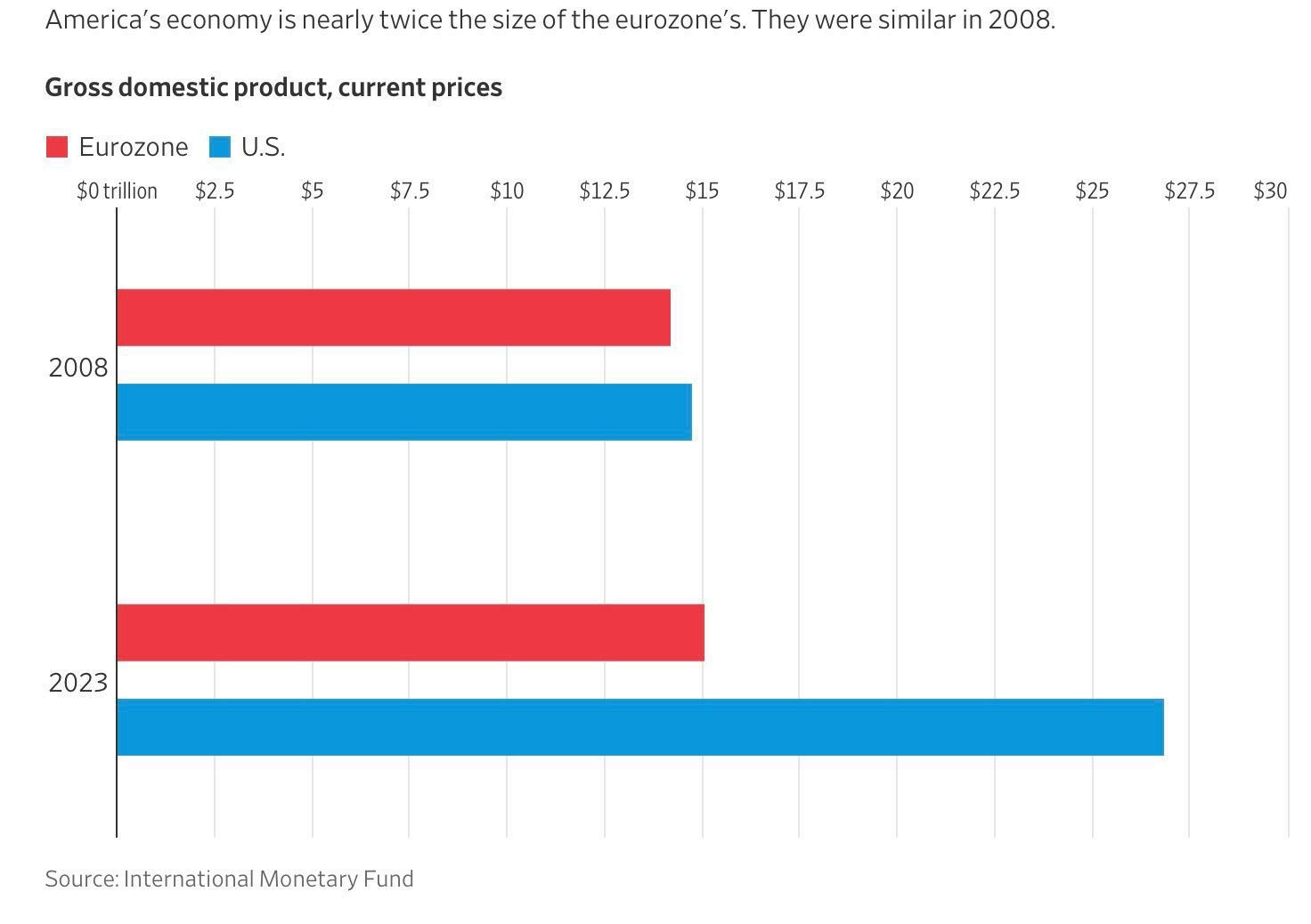
I’ve written many times about how Americans are much richer than Europeans. And I’ve also written many times that the U.S. economy has been growing faster (which shouldn’t happen according to convergence theory). There’s a simple reason for America’s superior performance. The U.S. is burdened by a medium-sized welfare state and a bad tax system […]
European Policies = European Stagnation
The child poverty conundrum
30 Aug 2024 Leave a comment
in income redistribution, kittens, labour economics, politics - New Zealand, poverty and inequality, Public Choice, welfare reform Tags: child poverty, family poverty

Lindsay Mitchell writes – The Child Poverty Report 2024 has just been published. It’s an overview and selected findings, as opposed to a full report which is due in 2025. Poverty can be measured in various ways.
The child poverty conundrum
Basic income, again
09 Aug 2024 Leave a comment
in applied price theory, econometerics, labour economics, labour supply, poverty and inequality, unemployment, welfare reform Tags: universal basic income
This week’s column for the Stuff papers covered the excellent new US work testing the effects of a UBI. From November 2020, 3000 low-income people were randomly assigned into two groups for three years. One thousand people each received $1000 per month in unconditional funds for three years. Two thousand people each received $50 per month.Both…
Basic income, again
What media bias looks like
11 Mar 2024 Leave a comment
in labour economics, labour supply, politics - New Zealand, poverty and inequality, welfare reform Tags: marriage and divorce
Lindsay Mitchell writes – When news media took a pummelling last week at both TVNZ and TV3, a number of critics said part of the reason ratings are poor is the public don’t trust them. The public believe that the media is biased. The print media is similarly suspect. An article in Stuff on Sunday […]
What media bias looks like
Child poverty – complex or simple?
26 Feb 2024 Leave a comment
in applied price theory, applied welfare economics, labour economics, labour supply, politics - New Zealand, poverty and inequality, unemployment, welfare reform Tags: child poverty, family poverty
Question: Do you understand how the child poverty statistics are derived? Clearly some people do not. Last week the latest child poverty statistics were all over the media. But there are a number of misunderstandings that need addressing. Like this one from NewstalkZB’s John MacDonald who wrote: “Living in households that get-by on less than…
Child poverty – complex or simple?
My TLS essay on the Clinton administration
10 Feb 2024 Leave a comment
in human capital, labour economics, labour supply, poverty and inequality, welfare reform
Here is the link, I am reviewing a bad book on the Clinton administration (A Fabulous Failure, by Lichtenstein and Stern). Here is one excerpt: Clinton-era welfare reform is another area where many commentators go astray, and Lichtenstein and Stein are no exception. The Clinton pronouncement “I have a plan to end welfare as we […]
My TLS essay on the Clinton administration
LINDSAY MITCHELL: Labour hid developing welfare crisis
08 Feb 2024 Leave a comment
in applied price theory, economics of education, gender, human capital, labour economics, labour supply, occupational choice, politics - New Zealand, poverty and inequality, welfare reform Tags: child poverty, family poverty
Lindsay Mitchell writes- When National became government in 2008, Finance Minister Bill English’s determination to understand the extent of benefit-dependency led them to commission Taylor Fry to produce annual actuarial reports. These were duly published at the MSD website every year but ceased when the government changed in 2017. Now however, an Official Information request […]
LINDSAY MITCHELL: Labour hid developing welfare crisis
Breaking the Culture of Welfare Dependency
02 Feb 2024 Leave a comment
in comparative institutional analysis, development economics, economic history, economics of education, entrepreneurship, health economics, human capital, income redistribution, labour economics, labour supply, law and economics, liberalism, property rights, Public Choice, unemployment, welfare reform Tags: Canada

One hope that has occasionally been expressed since the beginning of the modern era of Treaty of Waitangi (ToW) settlements, has been that the Iwi showered with money and empowered with control of hundreds of millions or even billions of dollars worth of assets, would be able to then make a difference to all the […]
Breaking the Culture of Welfare Dependency
The Right and Wrong Way to Reduce Poverty, Part II
16 Jan 2024 Leave a comment
in applied price theory, economic history, human capital, income redistribution, labour economics, labour supply, occupational choice, politics - USA, poverty and inequality, Public Choice, public economics, welfare reform Tags: child poverty, family poverty
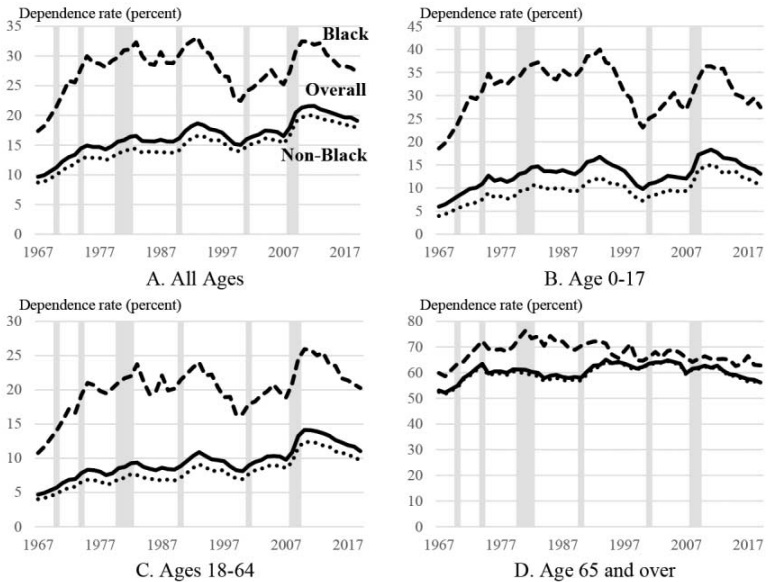
In Part I of this series, I explained that the War on Poverty, launched by Lyndon Johnson and expanded by other profligate presidents, has been bad news for both taxpayers and poor people. More specifically, I shared some academic research showing how it led to a big increase in dependency on government. Let’s expand on […]
The Right and Wrong Way to Reduce Poverty, Part II
Zwolinski on the UBI
11 Jan 2024 Leave a comment
in applied price theory, history of economic thought, income redistribution, labour economics, labour supply, Public Choice, public economics, welfare reform Tags: negative income tax, universal basic income

Philosopher Matt Zwolinski, co-author of Universal Basic Income: What Everyone Needs to Know, was a core member of the old Bleeding Heart Libertarians blog, which shut down in 2020. Now’s he’s singledly-handed revived the BHL brand on his new Bleeding Heart Libertarian substack. Matt recently published a critique of my response to Chris Freiman on…
Zwolinski on the UBI
LINDSAY MITCHELL: Oh, the irony
08 Dec 2023 Leave a comment
in labour economics, labour supply, occupational choice, poverty and inequality, welfare reform Tags: child poverty, economics of fertility, family poverty
Appointed by new Labour PM Jacinda Ardern in 2018, Cindy Kiro headed the Welfare Expert Advisory Group (WEAG) tasked with reviewing and recommending reforms to the welfare system. Kiro had been Children’s Commissioner during Helen Clark’s Labour government but returned to academia subsequently. In 2019 the WEAG reported back with 42 recommendations including:Recommendation 11: Remove…
LINDSAY MITCHELL: Oh, the irony
On the 50th anniversary of the DPB
16 Nov 2023 Leave a comment
in economics of education, gender, labour economics, labour supply, occupational choice, poverty and inequality, welfare reform Tags: economics of fertility, marriage and divorce
The Domestic Purposes Benefit has been variously described as a “disaster” (David McLoughlin 1995), an “economic lifeline” (Jane Kelsey 1995) and “an unfortunate experiment” (Muriel Newman 2009).Its effect on family formation can never be definitively ascertained. But the growth of the sole parent family dependent on welfare has correlated with more poverty, more child abuse…
On the 50th anniversary of the DPB
 Utopia, you are standing in it!
Recent Comments