See They Want More Babies: Now They Have Friends in the White House by Lydia DePillis of The NY Times. Excerpts: “In designing policy requests for federal legislators, however, pronatalists run into a problem: There’s little evidence that subsidies and protections have substantially raised the number of children women have over their lifetime. It’s not for…
There’s little evidence that subsidies and protections have substantially raised the number of children women have over their lifetime
There’s little evidence that subsidies and protections have substantially raised the number of children women have over their lifetime
13 Apr 2025 Leave a comment
in economics of love and marriage, labour economics, labour supply, law and economics, population economics Tags: economics of fertility
“Coercive Control”: Parents Could Lose Custody Under Proposed Colorado Law for “Misgendering”
11 Apr 2025 Leave a comment
in discrimination, economics of love and marriage, gender, health economics, law and economics, liberalism, Marxist economics, politics - USA, property rights Tags: free speech, political correctness, regressive left, sex discrimination

Parental rights are emerging as one of the major civil liberties movements of this generation — and one of the greatest conflicts between the right and the left in this country. For example, the United States Court of Appeals for the First Circuit ruled schools can hide a change of gender in young children from […]
“Coercive Control”: Parents Could Lose Custody Under Proposed Colorado Law for “Misgendering”
The Anatomy of Marital Happiness
22 Mar 2025 Leave a comment
in applied price theory, econometerics, economic history, economics of love and marriage, industrial organisation, labour economics, population economics Tags: dating markets, economics of fertility, marriage and divorce, marriage premium
How can I not link to a new Sam Peltzman piece on such a topic? Here goes: Since 1972, the General Social Survey has periodically asked whether people are happy with Yes, Maybe or No type answers. Here I use a net “happiness” measure, which is percentage Yes less percentage No with Maybe treated as […]
The Anatomy of Marital Happiness
Jane Austen was wrong: women don’t marry up for money and status
10 Mar 2025 1 Comment
in economics of love and marriage, economics of marriage, human capital, labour economics, law and economics, poverty and inequality Tags: dating markets, gender wage gap, marriage and divorce, sex discrimination
A new study debunks the myth of the gold-digging wife, finding that women are no more likely to marry above their social class than menBy Ben Spencer, Science Editor of The Sunday Times. Excerpts:”The young pretty women who seek to “marry up” for money and status, from the Bennet sisters in Pride and Prejudice to…
Jane Austen was wrong: women don’t marry up for money and status
If You Date Me, You Date My Debt
27 Feb 2025 Leave a comment
in applied price theory, economics of education, economics of love and marriage, gender, law and economics Tags: College premium, dating markets, marriage and divorce
Romance can pose challenges to those with large credit balances, student loans or other financial obligationsBy Julia Munslow of The WSJ. Excerpts:”For daters, debt can be a turnoff. In a 2024 survey from the Achieve Center for Consumer Insights, 64% of respondents said they wouldn’t want to date someone with a lot of debt.””The economics…
If You Date Me, You Date My Debt
Gender gaps in education and declining marriage rates
06 Feb 2025 Leave a comment
in applied price theory, econometerics, economics of love and marriage, economics of marriage, human capital, labour economics, law and economics, poverty and inequality Tags: assortative mating, economics of fertility
Over the past half-century, the share of men enrolled in college has steadily declined relative to women. Today, 1.6 million more women than men attend four-year colleges in the U.S. This trend has not lowered marriage rates for college women, a substantial share of whom have historically married economically stable men without college degrees. Both […]
Gender gaps in education and declining marriage rates
Babies and the Macroeconomy
02 Feb 2025 Leave a comment
in applied price theory, development economics, economic history, economics of love and marriage, economics of marriage, human capital, labour economics, labour supply Tags: ageing society, economics of fertility, marriage and divorce
By Claudia Goldin. From NPR’s Planet Money.”Countries around the world have seen a jaw-dropping decline in fertility rates. In this paper, Claudia Goldin, the 2023 winner of the Nobel Prize in economic sciences, offers a new theory to help explain why (listen to The Indicator’s conversation with her back in 2021). Goldin starts by providing…
Babies and the Macroeconomy
Quotation of the Day…
19 Jan 2025 1 Comment
in Adam Smith, applied price theory, comparative institutional analysis, development economics, economic history, economics of love and marriage, economics of regulation, entrepreneurship, history of economic thought, industrial organisation, labour economics, labour supply, law and economics, poverty and inequality, property rights, unemployment

Tweet… is from page 53 of the late, great Harold Demsetz’s excellent 2008 book, From Economic Man to Economic System: Adam Smith and Thomas Malthus differed in their forecasts of mankind’s future. Smith (1776), in his Wealth of Nations, offered an optimistic view, basing this on his understanding of the new economic system that began…
Quotation of the Day…
What does society expect from fathers?
27 Dec 2024 Leave a comment
in economics of crime, economics of love and marriage, law and economics, politics - New Zealand Tags: economics of fertility
We live in a society utterly confused about parenthood and the role of fathers. The last Labour government made fathers increasingly irrelevant. In 2020 a law change repealing section 70a of the Social Security Act meant mothers applying for a sole parent benefit no longer had to name the father of their child for the…
What does society expect from fathers?
So Much for the one child policy
01 Dec 2024 Leave a comment
in development economics, economic history, economics of love and marriage, growth miracles, human capital, labour economics, labour supply, law and economics, population economics Tags: China

Desired Fertility versus the Mueller Effect
28 Nov 2024 Leave a comment
in applied price theory, economics of love and marriage, labour economics, labour supply, law and economics, population economics Tags: economics of fertility
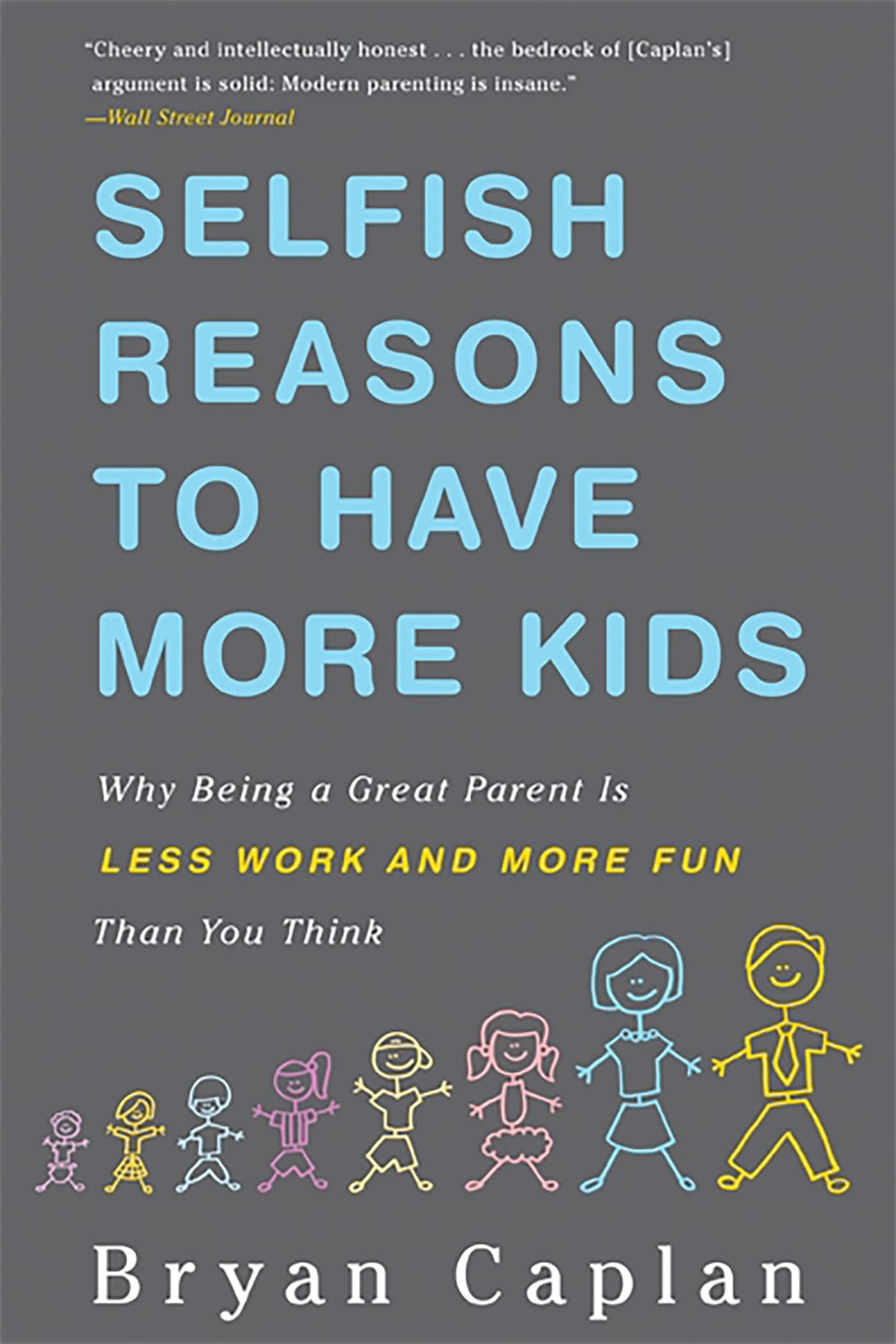
Six months ago, I’m not sure that I’d ever heard of demographer Lyman Stone. Now, people in my circles randomly drop his name on a weekly basis. His favorite topic, in case you haven’t heard, is global fertility decline. As a longtime natalist, I share his concerns. One of Stone’s top takeaways: Instead of talking…
Desired Fertility versus the Mueller Effect
Who Matters More in a Move: You or Your Spouse?
04 Nov 2024 Leave a comment
in applied price theory, discrimination, econometerics, economics of love and marriage, gender, human capital, labour economics, labour supply, law and economics, occupational choice, poverty and inequality Tags: gender wage gap, marriage and divorce, sex discrimination
New research finds couples are more likely to move for a job when it benefits the man, even when the woman’s career stands to benefit more by movingBy Dalvin Brown of The WSJ. Excerpts:”Couples are moving again for better job opportunities. They are more likely to make those moves when the husband’s earnings stand to…
Who Matters More in a Move: You or Your Spouse?
Further evidence for the babysitting theory of education
08 Oct 2024 Leave a comment
in applied price theory, applied welfare economics, economics of education, economics of love and marriage, human capital, labour economics, labour supply, law and economics Tags: economics of fertility
Bryan Caplan will feel vindicated: This paper asks whether universal pre-kindergarten (UPK) raises parents’ earnings and how much these earnings effects matter for evaluating the economic returns to UPK programs. Using a randomized lottery design, we estimate the effects of enrolling in a full-day UPK program in New Haven, Connecticut on parents’ labor market outcomes […]
Further evidence for the babysitting theory of education
Living in sin
23 May 2024 Leave a comment
in economics of love and marriage, law and economics Tags: economics of fertility


Recent Comments