For every 100 single women in China in 2050-54 there will be up to 186 single men
economist.com/news/asia/2164… http://t.co/ntkQxYR3Un—
Patrick Foulis (@PatrickFoulis) April 20, 2015
The marriage squeeze in China and India
19 Sep 2015 Leave a comment
in economics of love and marriage, law and economics Tags: China, dating markets, family demographics, India, marriage and divorce, marriage markets, Population demographics, search and matching, sex-ratios
Supply and demand in the dating market
15 Sep 2015 Leave a comment
in economics of love and marriage, law and economics Tags: dating market, marriage and divorce, search and matching
Single motherhood and the feminisation of poverty
31 Aug 2015 Leave a comment
in discrimination, economics of love and marriage, gender, labour economics, labour supply, politics - USA, poverty and inequality, welfare reform Tags: asymmetric marriage premium, child poverty, economics and fertility, engines of liberation, family poverty, marriage and divorce, marriage premium, single mothers, single parents
43.1% of single mothers are living in poverty this #MothersDay statusofwomendata.org http://t.co/OgWcmvLnDZ—
IWPR (@IWPResearch) May 10, 2015
Did Mass Incarceration Destroy the Black Family?
28 Aug 2015 Leave a comment
in discrimination, economics of crime, economics of love and marriage, labour economics, law and economics, politics - New Zealand, population economics, poverty and inequality, unemployment, urban economics, welfare reform Tags: crime and punishment, criminal deterrence, economics of the family, racial discrimination, single mothers, single parents, teen pregnancies
Did Mass Incarceration Destroy the Black Family? Not exactly. bit.ly/1f8jgXm http://t.co/1q2nKJnU9W—
City Journal (@CityJournal) August 13, 2015
Marginal tax rates of 2-income couples with 2 children in USA, UK, Australia and New Zealand since 2000
23 Aug 2015 Leave a comment
in economic history, economics of love and marriage, labour economics, labour supply, politics - Australia, politics - New Zealand, politics - USA, public economics Tags: Australia taxation and labour supply, British economy, marriage and divorce
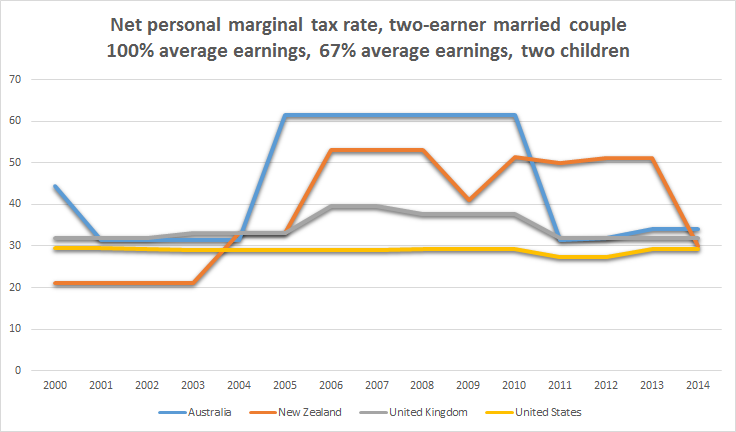
Source: OECD StatExtract.
Marginal tax rates of a nuclear family in USA, UK, Australia and New Zealand since 2000
22 Aug 2015 Leave a comment
in economic history, economics of love and marriage, labour economics, labour supply, politics - Australia, politics - New Zealand, politics - USA Tags: Australia, British economy, marriage and divorce, taxation and labour supply
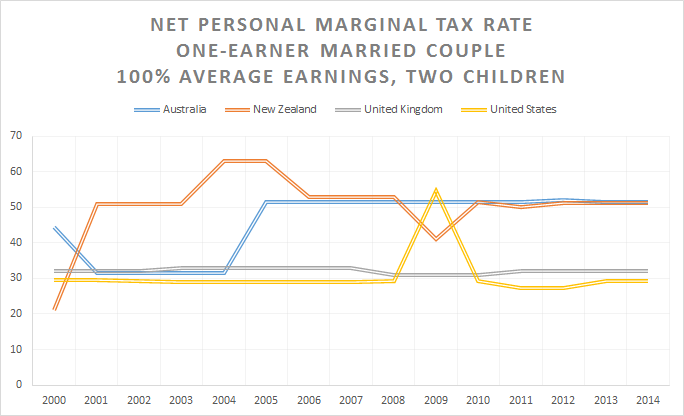
Source: OECD StatExtract.
Another aspect of helicopter parenting
15 Aug 2015 Leave a comment
in economics of love and marriage, human capital, labour economics, law and economics, welfare reform Tags: child rearing, economics of families, marital division of labour, marriage and divorce
More time with mom has little to no effect on children's well-being: thesocietypages.org/socimages/2015… http://t.co/zyirz1QvQs—
(@SocImages) April 08, 2015
Females/male earnings ratio by partner status and motherhood – USA, UK, Canada
12 Jul 2015 Leave a comment
in discrimination, economics of love and marriage, gender, labour economics, labour supply, law and economics, occupational choice, politics - USA, poverty and inequality Tags: asymmetric marriage premium, British economy, Canada, gender wage gap, marriage and divorce, motherhood penalty
Figure 1: Female/male earnings ratio by partner status and motherhood, 2004 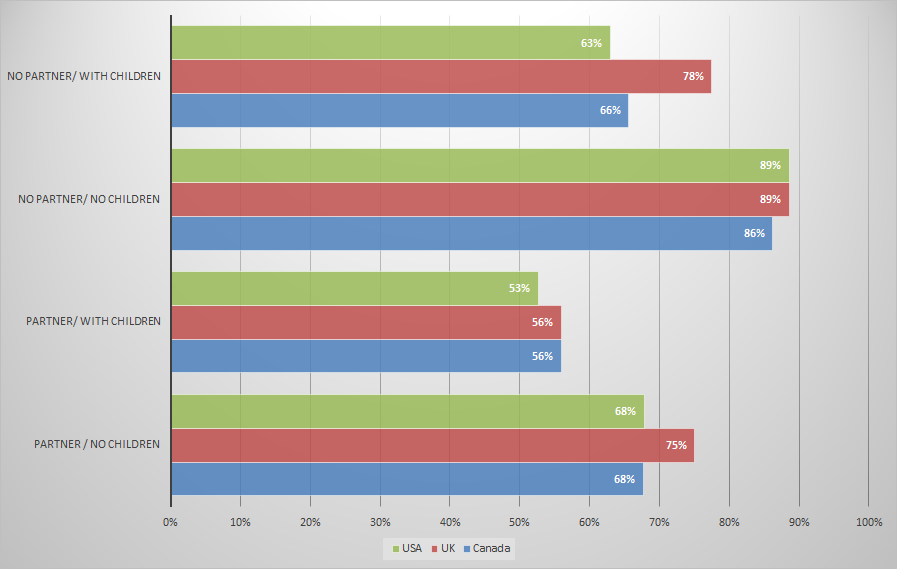 Source: LIS Cross-National Data Center in Luxembourg – Wave VI; individuals with positive earnings only. .
Poverty rates by age of youngest child – USA, UK, Canada and Australia
11 Jul 2015 Leave a comment
in economics of love and marriage, labour economics, labour supply, law and economics, politics - Australia, politics - USA, poverty and inequality, welfare reform Tags: Australia, British economy, Canada, child poverty, family poverty, marriage and divorce, single mothers, single parents
Figure 1: poverty rates by age of youngest child, 2004

Employment patterns of couples differential with families differ greatly across the OECD
10 Jul 2015 Leave a comment
in economics of love and marriage, gender, labour economics, labour supply, occupational choice Tags: economics of family, female labour force participation, labour force participation, maternal labour force participation, my labour force participation, part-time work
American exceptionalism: U.S parents more likely to both be working full time than almost any other OECD country http://t.co/QYBEeUmws4—
Kay Hymowitz (@KayHymowitz) July 08, 2014
Age differences in marriage
07 Jul 2015 1 Comment
in economics of love and marriage, law and economics Tags: family demographics, marriage and divorce
Most People Marry Someone Their Own Age: dadaviz.com/i/3343 #dataviz http://t.co/bZ90LtK508—
Randy Olson (@randal_olson) February 24, 2015
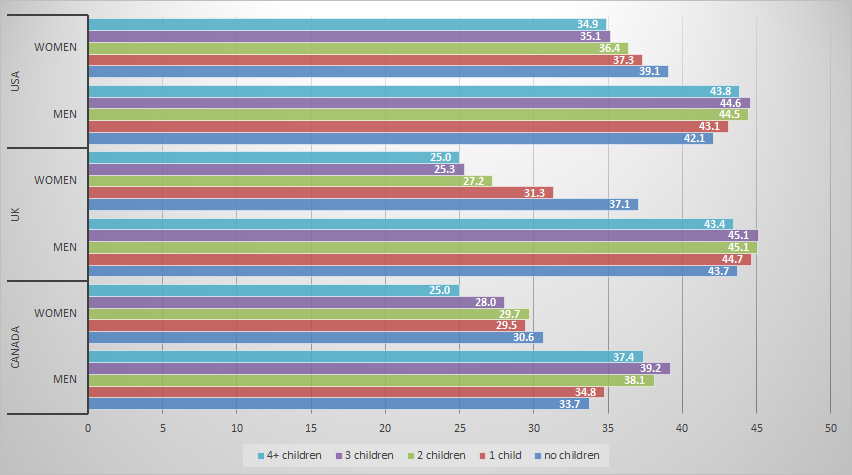
Average weekly working hours by gender and presence of children, Canada, UK and USA
07 Jul 2015 Leave a comment
in discrimination, economics of love and marriage, gender, labour economics, labour supply, law and economics Tags: economics of fertility, female labour force participation, household division of labour, marriage and divorce, maternal labour force participation
Figure 1: average weekly working hours for Current or Last Job(s) Held aged 20-54 by gender, 2004
Average age of marriage by gender since 1890 in the USA
05 Jul 2015 Leave a comment
in economic history, economics of love and marriage, economics of media and culture, law and economics, politics - USA Tags: economics of families, family demographics, marriage and divorce
Mawwiage. Mawwiage is wut bwings togetha… men who are about 2.5yrs older than their female counterparts. http://t.co/KQqKmNJn7P—
Tyler Vigen (@TylerVigen) May 25, 2015
 Utopia, you are standing in it!
Recent Comments