We were driving home the other night when the two cars in front of us came to a stop after we left the roundabout near the airport.
When they had slowly cleared the left lane of the highway, a young man was walking towards the traffic. He was obviously on drugs – the glazed look and strange walking.
I moved the car around him slowly and locked the car without much thought.
Half a second later, I hear the outside door handle on Luz’s side of the car. This lunatic was trying to break into moving cars on the highway.
I immediately sped away. I did not care about him. I wanted to get away as quickly as possible
We drove home, which is about two minutes away, then we rang the police. After a little bit of time working out the exact name of the street, they said they had received a number of reports about a man on the highway and police had been sent.
If I heard any bump or other evidence that he was actually injured as I sped away, I would have still sped away. There is a difference between leaving the scene of an accident and fleeing a carjacking by a crazed drug fiend.
If there was any suspicion that I had injured the carjacker while speeding away, I would have driven to the nearest police station, which is nearby, given them a summary of the facts and then postponed further comment pending legal advice.
Traffic offences are example of the punishment dilemma: there but for the grace of god I as the offender.
That makes voters, most of who drive a car, reluctant to support strong punishments for crimes they might happen to commit somewhat accidentally rather than through some malicious intent.
Traffic offences are the breaches of the law where ordinary citizens are most likely to have encounters with the police and the courts.
This is where the punishment dilemma between obeying the law and brute self-interest are at their sharpest. Everyone wants other people to obey the law , but they are not so sure about themselves, especially when the punishments are harsh.
Juries would not convict drivers for manslaughter so new offences such death by dangerous driving and by negligent driving were introduced with lighter prison terms. People would get a few months for killing people when drunk.
That has changed in recent decades with a hardening of community attitudes to dangerous driving and drunk driving.
An important reason is that with rising incomes, more people can afford a taxi so they a less likely to go down the steps because they are less likely to be caught in a situation of drink-driving or dangerous driving.
Norway has the strictest drink driving laws in Europe:
The maximum blood alcohol content is equal to a small glass of a weak drink and heavy punishments with few second chances.
The blood-alcohol limit for impaired driving is .02, with stiffer penalties for every point over that.
Driving under the influence of alcohol is punishable by at least 1 day in jail, a heavy fine and the loss of the driver’s license for a year.
Driving with a blood alcohol level of over 1.5 may lead to one year of prison.
Many Norwegians take a taxi to parties while others make arrangements to stay over with the hosts.
The virtue of a democratic system [with a constitutionally guaranteed right to free speech] is that it readily enables the people, over time, to be persuaded that what they took for granted is not so and to change their laws accordingly
United States Supreme Court Justice Antonin Scalia
How can prison numbers be too high? There are unsolved crimes: murders, robberies, sexual assaults and burglaries to name a few.
There are people out there who should have been arrested, convicted and sent to prison for serious crimes. Many of them are repeat offenders and career criminals.
I have never understood the reasoning behind the notion that prison numbers are too high.
Concerns about prison numbers being too high is exclusively a concern about the criminals who were sent to prison. Their victims are never mentioned nor are victims of unsolved crime who have been denied justice.
There is an economic literature on the efficient level of crime. Those that are concerned about prison numbers being too high explicitly reject the economics of crime literature for the purpose of framing public policy about criminal justice. The reason is obvious from this passage by David Friedman:
The economic analysis of crime starts with one simple assumption: Criminals are rational.
A mugger is a mugger for the same reason I am a professor-because that profession makes him better off, by his own standards, than any other alternative available to him.
Here, as elsewhere in economics, the assumption of rationality does not imply that muggers (or economics professors) calculate the costs and benefits of available alternatives to seventeen decimal places-merely that they tend to choose the one that best achieves their objectives.
If muggers are rational, we do not have to make mugging impossible in order to prevent it, merely unprofitable.
If the benefits of a profession decrease or its costs increase, fewer people will enter it-whether the profession is plumbing or burglary.
If little old ladies start carrying pistols in their purses, so that one mugging in ten puts the mugger in the hospital or the morgue, the number of muggers will decrease drastically-not because they have all been shot but because most will have switched to safer ways of making a living.
If mugging becomes sufficiently unprofitable, nobody will do it.
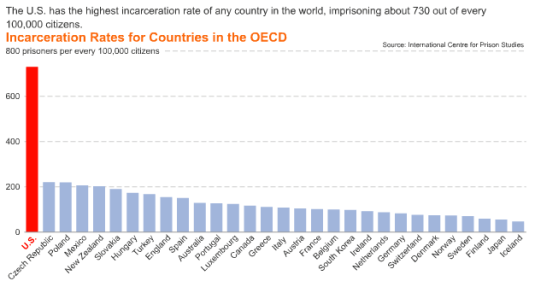
Putting more offenders in prison should decrease crime by both incapacitating incarcerated offenders and deterring potential offenders.
The decriminalisation of marijuana possession by American states doesn’t really matter that much because it is still illegal under Federal law. Marijuana markets moved into the open in the states that decriminalised it because the federal authorities have chosen not to enforce their laws against these traders.
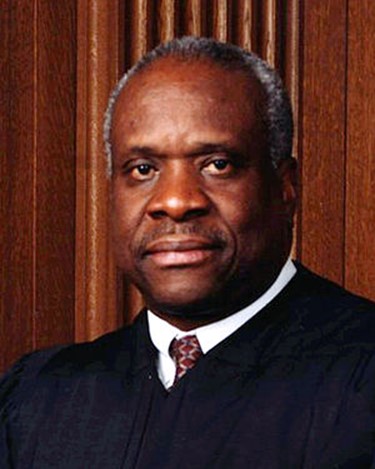
Justice Clarence Thomas is a radical view of the interstate commerce clause. This clause of the US Constitution at the height of the new deal was reinterpreted to allow Congress to regulate both interstate commerce and intrastate markets that affected interstate commerce.
The current interpretation of this clause supported by everyone on the US Supreme Court but Thomas is Congress can regulate the possession of marijuana because this affects interstate commerce. Justice Scalia explains:
…the Commerce Clause permits congressional regulation of three categories:
(1) the channels of interstate commerce;
(2) the instrumentalities of interstate commerce, and persons or things in interstate commerce; and
(3) activities that "substantially affect" interstate commerce.
As …the Court affirms today, Congress may regulate noneconomic intrastate activities only where the failure to do so "could … undercut" its regulation of interstate commerce.
… This is not a power that threatens to obliterate the line between "what is truly national and what is truly local.
Justice Thomas rejects this view and wants to return to the original meaning of the interstate commerce clause:
Respondent’s local cultivation and consumption of marijuana is not "Commerce … among the several States."
Certainly no evidence from the founding suggests that "commerce" included the mere possession of a good or some personal activity that did not involve trade or exchange for value.
In the early days of the Republic, it would have been unthinkable that Congress could prohibit the local cultivation, possession, and consumption of marijuana
and
If the Federal Government can regulate growing a half-dozen cannabis plants for personal consumption (not because it is interstate commerce, but because it is inextricably bound up with interstate commerce), then Congress’ Article I powers – as expanded by the Necessary and Proper Clause – have no meaningful limits.
and further:
If the majority is to be taken seriously, the Federal Government may now regulate quilting bees, clothes drives, and potluck suppers throughout the 50 States.
This makes a mockery of Madison’s assurance to the people of New York that the "powers delegated" to the Federal Government are "few and defined", while those of the States are "numerous and indefinite."
In closing, Thomas said:
The majority prevents States like California from devising drug policies that they have concluded provide much-needed respite to the seriously ill.
Our federalist system, properly understood, allows California and a growing number of other States to decide for themselves how to safeguard the health and welfare of their citizens.
The adoption of the view of Thomas could not be more unlikely. Most federal regulation in the United States is based on linking it to the power of the Congress to regulate interstate commerce and foreign commerce. Thomas once noted that:
[w]hen asked at oral argument if there were any limits to the Commerce Clause, the Government was at a loss for words
The decriminalisation of marijuana in the United States will have to be based on more and more states choosing to decriminalise in the hope that the Federal Government does not enforce its rather savage criminal laws on drugs in their state. That’s is what seems to be happening. Whether that will still happen when a Republican wins the White House in 2016 remains to be seen.
Three American States have even passed hopelessly unconstitutional right to try laws. These laws purport to allow the residents try experimental drugs that have not yet received approval of the Federal level by the FDA.
Even under the narrow interpretation of federal powers by Justice Thomas, these laws are unconstitutional. These laws nonetheless have social value because they are push the boundaries of the current political sense consensus.
This evaluation applies to marijuana decriminalisation laws too. They test the current boundaries and can create the possibility of social change through democratic action.
Many who want a strong central government forget that the social agendas of the crazies to the left and right of them will also be implemented all in good time at the national level as well. Power rotates in any democracy so with enough time the meddlesome preferences of most sides of politics will be legislated into law so that everyone ends up been annoyed and over-regulated and more than a few end up before the courts and even in prison.
A wiser course in constitutional design is to give the parliament as much powers as you might wish those wreckers and crazies that make up your political opponents to have when they come to office, as they surely must in six or nine years time. Even the British Labour Party took an interest in devolution and an assembly for London after 15 years of Maggie Thatcher, good and hard.
The massive re-deployment of police after the July 2005 London bombings is a test of whether more police reduce crime.
There was a 34% increase in hours worked by police in central-inner London in the six weeks that followed the attacks.
Draca, Machin and Witt in Panic on the Streets of London found a 11% fall in crime. A 10% increase in police leads to a 3% fall in crime. This is broadly consistent with previous casual estimates of the impact of police on crime.
Klick and Tabarrok (2005) found that increases in the Terror Alert levels in the Mall area of Washington, D.C cut crime. A 10% increase in police leads to a 3% fall in crime.
One important result of this preoccupation with the monopoly problem is that if an economist finds something—a business practice of one sort or other—that he does not understand, he looks for a monopoly explanation. And as in this field we are very ignorant, the number of ununderstandable practices tends to be rather large, and the reliance on a monopoly explanation, frequent.
After this foray written in 1971, Coase went further in an appreciation written for George Stigler’s Nobel Prize in 1982:
…for reasons which are not altogether clear to me, it is a field [of industrial organisation] which has come to concentrate on The Monopoly Problem and, more specifically in the United States, on the problems thrown up by the administration of the antitrust laws.
The result has not been a happy one for economics.
By concentrating on the problem of monopoly in dealing with an economic system which is, broadly speaking, competitive, economists have had their attention misdirected and as a consequence they have left unexplained many of the salient features of our economic system or have been content with very defective explanations.
Much more commonly, [economic imperialism] is used by Marxists to describe–and attack–foreign investment in “developing” (i.e., poor) nations.
The implication of the term is that such investment is only a subtler equivalent of military imperialism–a way by which capitalists in rich and powerful countries control and exploit the inhabitants of poor and weak countries.
There is one interesting feature of such “economic imperialism” that seems to have escaped the notice of most of those who use the term.
Developing countries are generally labour rich and capital poor; developed countries are, relatively, capital rich and labour poor. One result is that in developing countries, the return on labour is low and the return on capital is high–wages are low and profits high. That is why they are attractive to foreign investors.
To the extent that foreign investment occurs, it raises the amount of capital in the country, driving wages up and profits down.
The effect is exactly analogous to the effect of free migration. If people move from labour-rich countries to labour-poor ones, they drive wages down and rents and profits up in the countries they go to, while having the opposite effect in the countries they come from.
If capital moves from capital-rich countries to capital-poor ones, it drives profits down and wages up in the countries it goes to and has the opposite effect in the countries it comes from.
The people who attack “economic imperialism” generally regard themselves as champions of the poor and oppressed.
To the extent that they succeed in preventing foreign investment in poor countries, they are benefiting the capitalists of those countries by holding up profits and injuring the workers by holding down wages.
It would be interesting to know how much of the clamour against foreign investment in such countries is due to Marxist ideologues who do not understand this and how much is financed by local capitalists who do.
David D. Friedman
Opposition to immigration might protect the wages of local workers. Opposition to foreign investment might increase the profits of local capitalists.
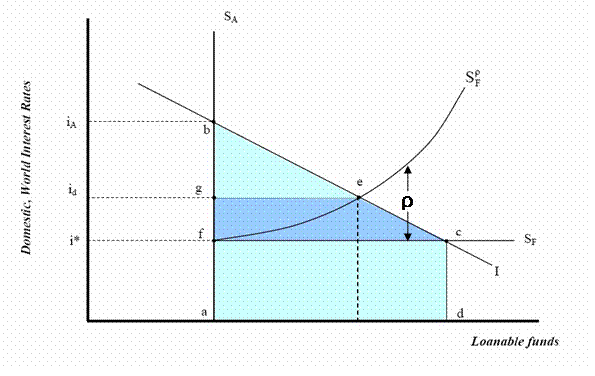
How does more competition help the local capitalists? The foreign investment is in response to the high returns in the local market and that inflow of foreign capital will continue until local rates of return match those in other countries.
Equalisation of risk-adjusted rate of returns is central to the operation of capital markets.
Stopping this process of equalisation through regulation only benefits the capitalists inside the country. It reduces the wages of workers because they have less capital and fewer modern technologies to work with.
All solutions have costs, and there is no reason to suppose that governmental regulation is called for simply because the problem is not well handled by the market or the firm.
Satisfactory views on policy can only come from a patient study of how, in practice, the market, firms and governments handle the problem of harmful effects….
It is my belief that economists, and policy-makers generally, have tended to over-estimate the advantages which come from governmental regulation.
But this belief, even if justified, does not do more than suggest that government regulation should be curtailed. It does not tell us where the boundary line should be drawn.
This, it seems to me, has to come from a detailed investigation of the actual results of handling the problem in different ways.
Raising the minimum wage by a substantial amount would price working poor people out of the job market.
A far better way to help them would be to subsidize their wages or – better yet – help them acquire the skills needed to earn more on their own…
Raise the legal minimum price of labour above the productivity of the least skilled workers and fewer will be hired.
If a higher minimum means fewer jobs, why does it remain on the agenda of some liberals?
A higher minimum would undoubtedly raise the living standard of the majority of low-wage workers who could keep their jobs. That gain, it is argued, would justify the sacrifice of the minority who became unemployable.
The argument isn’t convincing. Those at greatest risk from a higher minimum would be young, poor workers, who already face formidable barriers to getting and keeping jobs. Indeed, President Reagan has proposed a lower minimum wage just to improve their chances of finding work.
The minimum wage is specifically intended to take aim at the inherent imbalance in power between employers and low-wage workers that can push wages down to poverty levels.…
The weight of the evidence shows that increases in the minimum wage have lifted pay without hurting employment
Both the White House and the New York Times are not the best of Bayesian updaters because the author of the one study on which they are very much hang their hats for their policy conclusions about no job losses from a minimum wage increase interprets his results with very much less zeal than they do:
I think careful research on the topic has found that for this range of minimum wage increase, the almost unmistakable conclusion is that there will be little in the way of job losses, while the wages of low-end workers will get a boost (his underlining).
The claims of the White House and the New York Times that the minimum wage can be lifted without hurting employment are a long bow from what Andrajit Dube said about small changes in the minimum wage having small adverse effects on unemployment:
What Andrajit Dube said s not much different from everyone else on the minimum wage – Nuemark is an example:
a 10 per cent increase in the minimum wage could reduce young adult employment by up to 2 per cent
David Card was always very careful amount about how his pioneering research was about how small increases in the minimum wage not reducing employment in the presence of search and matching costs:
From the perspective of a search paradigm, these policies make sense, but they also mean that each employer has a tiny bit of monopoly power over his or her workforce.
As a result, if you raise the minimum wage a little—not a huge amount, but a little—you won’t necessarily cause a big employment reduction. In some cases you could get an employment increase.
There is always offsetting behaviour: Barry Hirsch found that when the federal minimum wage went up in 2007, businesses just made their employees work harder to justify the expense.
I am always surprised that people might think that the minimum wage will have anywhere near its intended effects after market participants have had time to act to counter its effects as Peltzman explains:
Regulation creates incentives for behaviour to offset some or even all of the intended effect of the regulation…
Regulation seldom changes the forces that produces the particular results the regulators seek to change. So we need to ask whether the regulation really changes result or only the form in which the market forces assert themselves.
Is a minimum wage increase a Pareto improvement – a policy action done in an economy that harms no one and helps at least one person?
Obviously there are winners and losers from a minimum wage increase and these wins and loses must be summed up in some way as they are for all public policy changes.
When there are winners and losers from deregulation, the only thing seems to matter to many of those who support a minimum wage increase are the losses to the incumbent industry and its often well-paid workers rather than the gains to consumers, rich or poor.
For there to be a Marshall improvement, the sum of all of the gains and losses must sum to a positive.
A Marshall improvement from a minimum wage or any other change is measured by adding utilities as if everyone receives the same utility from a dollar. A dollar is a dollar to everyone as David Friedman explains:
A net improvement in the sense used by Marshall–what I have elsewhere called a Marshall improvement–is a change whose net value is positive, meaning that the total value to those who benefit, measured as the sum of the number of dollars they would each, if necessary, pay to get the change, is larger than the total cost to those who lose, measured similarly.
The advantage of the Marshall improvement criterion is we commonly observe people’s values of different things by seeing how much they are willing to pay for it.
Alfred Marshall was aware that treating people as if they all had the same utility for a dollar was a stretch but this was considered less relevant for policy changes that affect large and diverse groups of people. Individual differences could be expected to cancel out over a broad suite of policies in a well-functioning democracy so that most people gain in net terms through time. David Friedman explains:
I prefer to use the Marshallian approach, which makes the interpersonal comparison explicit, instead of hiding it in the ‘could be made but isn’t’ compensating payment…
a change that benefits a millionaire by $10 and costs a pauper $9 is a potential Pareto improvement, since if combined with a payment of $9.50 from the millionaire to the pauper it would benefit both. If the payment is not made, however, the change is not an actual Pareto improvement.
The ‘potential Paretian’ approach reaches the same conclusion as the Marshallian approach and has the same faults; it simply hides them better. That is why I prefer Marshall…
It is worth noting that although a Marshall improvement is usually not a Pareto improvement, the adoption of a general policy of ‘Wherever possible, make Marshall improvements’ may come very close to being a Pareto improvement…
Add up all the effects and, unless one individual or group is consistently on the losing side, everyone, or almost everyone, is likely to benefit.
This is the latest review of the minimum wage research from David Neumark:
The potential benefits of higher minimum wages come from the higher wages for affected workers, some of whom are in poor or low-income families.
The potential downside is that a higher minimum wage may discourage employers from using the low-wage, low-skill workers that minimum wages are intended to help.
If minimum wages reduce employment of low-skill workers, then minimum wages are not a “free lunch” with which to help poor and low-income families, but instead pose a trade-off of benefits for some versus costs for others.
Research findings are not unanimous, but evidence from many countries suggests that minimum wages reduce the jobs available to low-skill workers.
George Stigler set-out the conditions for a minimum wage to achieve its purported objectives in 1946, which have not been bettered:
If an employer has a significant degree of control over the wage rate he pays for a given quality of labour, a skilfully-set minimum wage may increase his employment and wage rate and, because the wage is brought closer to the value of the marginal product, at the same time increase aggregate output…
This arithmetic is quite valid but it is not very relevant to the question of a national minimum wage. The minimum wage which achieves these desirable ends has several requisites:
1. It must be chosen correctly… the optimum minimum wage can be set only if the demand and supply schedules are known over a considerable range…
2. The optimum wage varies with occupation (and, within an occupation, with the quality of worker).
3. The optimum wage varies among firms (and plants).
4. The optimum wage varies, often rapidly, through time.
A uniform national minimum wage, infrequently changed, is wholly unsuited to these diversities of conditions.
The case for a minimum wage was therefore hung, drawn and quartered in 1946 by Stigler. Not every cause and effect is open to policy manipulation because of the lack of the necessary knowledge about the relationship and insufficiently deft policy tools to exploit that knowledge in a timely fashion and as circumstances change. This information and organisational burden is such that the process of setting minimum wage increases is an example of public policy making that is groping about in the dark. Success can be neither appraised in advance nor later retrospectively determined.
Why Evolution is True is a blog written by Jerry Coyne, centered on evolution and biology but also dealing with diverse topics like politics, culture, and cats.
In Hume’s spirit, I will attempt to serve as an ambassador from my world of economics, and help in “finding topics of conversation fit for the entertainment of rational creatures.”
“We do not believe any group of men adequate enough or wise enough to operate without scrutiny or without criticism. We know that the only way to avoid error is to detect it, that the only way to detect it is to be free to inquire. We know that in secrecy error undetected will flourish and subvert”. - J Robert Oppenheimer.




 The massive re-deployment of police after the July 2005 London bombings is a test of whether more police reduce crime.



 Utopia, you are standing in it!
Recent Comments